
The Ultimate Tennis Bracelet Buying Guide: Quality, Craftsmanship, and Style

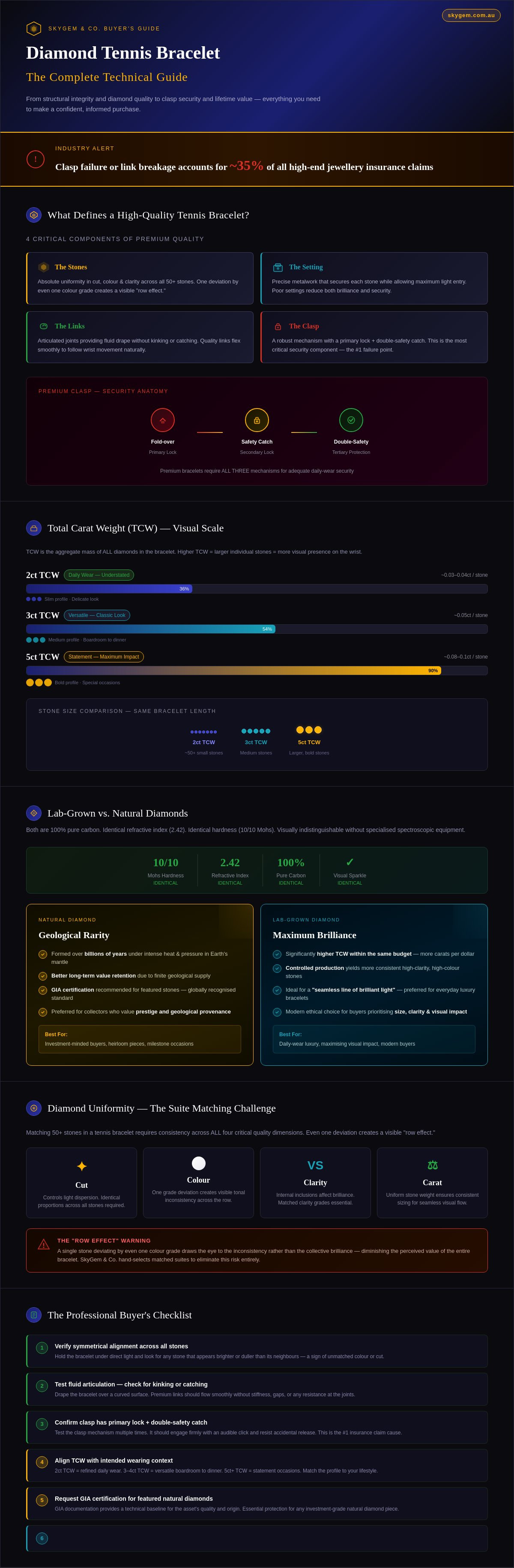
A diamond's brilliance is secondary to the structural engineering that keeps it on your wrist; in fact, industry data indicates that clasp failure or link breakage accounts for approximately 35% of high-end jewellery insurance claims. Most collectors prioritise the visual fire of tennis bracelets, but without a rigorous assessment of mechanical integrity, a significant investment can quickly become a loss. You want a piece that balances aesthetic excellence with the durability required for daily Australian life, from the boardroom to the coast.
We agree that navigating the technical specifications of stone grading and metal fatigue shouldn't be a guessing game. This guide provides the professional clarity you need to master the details of diamond quality, link construction, and clasp security to choose a bracelet that lasts a lifetime. We'll examine the reality of total carat weight (TCW) versus individual stone size, compare the long-term value of lab-grown and natural diamonds, and outline the maintenance schedules that ensure your piece remains a secure and shimmering asset for decades.
Key Takeaways
- Understand the technical specifications of high-quality tennis bracelets, focusing on the precision of symmetrical alignment and fluid articulation required for a luxury finish.
- Evaluate the chemical and optical equivalence of lab-grown versus natural diamonds to make an informed selection based on performance and long-term value.
- Examine the structural integrity of link construction and clasp security to ensure your investment is engineered for both movement and durability.
- Utilise a professional selection framework to align metal choices and carat weights with your existing jewellery collection and lifestyle requirements.
- Discover the advantages of a bespoke design process for achieving custom gemstone patterns and technical details tailored to Australian standards.
What defines a high-quality tennis bracelet?
A tennis bracelet is defined by its architectural precision. It consists of a continuous, symmetrical line of diamonds or gemstones, linked together in a flexible metal chain. This design prioritises a seamless flow of light, where no single stone overpowers its neighbour. The style gained global recognition during the 1987 US Open, when professional player Chris Evert halted a match to find her diamond bracelet after the clasp broke. This event, detailed in the History of the Tennis Bracelet, transformed what was once called an "eternity bracelet" into a staple of modern jewellery.
For a piece to be considered premium, symmetry is the primary metric. High-quality tennis bracelets must maintain perfect alignment across four key components:
- The stones: Absolute uniformity in cut, colour, and clarity to ensure even light dispersion.
- The setting: Precise metalwork that secures each stone while allowing maximum light entry.
- The links: Articulated joints that provide a fluid drape on the wrist without kinking or catching.
- The clasp: A robust mechanism, typically featuring a primary lock and a double-safety catch, to ensure the piece remains secure during movement.
The importance of diamond uniformity
Matching colour and clarity across a suite of 50 or more stones is a significant technical undertaking. Even a single stone that deviates by one colour grade can create a "row effect," where the eye is drawn to the inconsistency rather than the collective brilliance. This break in visual continuity diminishes the perceived value of the entire piece. At SkyGem & Co., we mitigate this risk by hand-selecting matched suites of diamonds. This ensures every stone in the row shares identical light performance and tonal characteristics. You can learn more about our rigorous selection standards through our diamonds online Melbourne service.
Total Carat Weight (TCW) vs. individual stone size
Total Carat Weight (TCW) is the standard measurement for tennis bracelets and represents the sum of the weights of all diamonds in the piece. A 2ct TCW bracelet offers a delicate, understated profile suitable for daily wear. In contrast, a 5ct TCW version provides a more substantial aesthetic, as each individual stone must be larger to reach the higher total weight. TCW is the aggregate mass of every diamond set into the bracelet. When selecting a piece, it's vital to consider how the TCW affects the physical width of the bracelet and its presence on the wrist.
Lab-grown vs. natural diamonds: Choosing your sparkle
Modern Australian buyers face a definitive choice between two identical crystalline structures. Whether mined from the earth or grown in a controlled laboratory, both options represent 100% pure carbon. They share the same refractive index of 2.42 and a score of 10 on the Mohs scale of hardness. This means they're visually indistinguishable, even to a trained gemmologist without specialised spectroscopic equipment. For large-scale pieces like tennis bracelets, the decision often balances the prestige of geological history against the desire for maximum visual impact.
Natural diamonds: Rarity and enduring value
Natural stones carry a legacy of geological rarity. These diamonds formed over billions of years under intense heat and pressure deep within the mantle. For many collectors, the appeal lies in this finite supply, which often translates to better long-term value retention. When selecting stones for high-end Natural Diamonds in a bracelet, consistency is essential. While individual stones in a tennis bracelet are often smaller, any larger featured diamonds should ideally come with GIA (Gemological Institute of America) certification. This documentation provides a technical baseline for the asset's quality and origin, ensuring the investment is protected by globally recognised standards.
Lab-grown diamonds: Maximising size and brilliance
Lab-grown diamonds offer a different strategic advantage for the modern wearer. They allow for a significantly higher Total Carat Weight (TCW) while maintaining a strict budget. Because the production process is controlled, engineers can produce high-clarity, high-colour stones more consistently than what's often found in nature. This makes them a preferred choice for "everyday luxury" tennis bracelets where the goal is a seamless line of brilliant light. Buyers looking for deeper technical details on Chemical Vapour Deposition (CVD) or High Pressure High Temperature (HPHT) methods can consult the 2026 Lab-Grown Diamond Buying Guide. These stones are physically, chemically, and optically identical to mined counterparts, offering a premium aesthetic without the rarity premium.
Ethical considerations also influence the final decision. Lab-grown diamonds generally involve less surface disruption, while many natural diamond mines now operate under strict Australian and international environmental regulations. The choice often comes down to whether you value the unique story of a natural mineral or the ability to secure a larger, more brilliant piece for the same financial outlay. You can explore our range of precision-set tennis bracelets to see how both diamond types perform in various lighting environments.
Structural integrity: Settings, links, and safety
While the brilliance of the stones often captures the initial attention, the distinction between a luxury piece and a mass-market alternative lies in the hidden engineering. High-quality tennis bracelets rely on precision articulation. This refers to the fluid movement of the individual links; it allows the piece to drape naturally across the wrist without kinking or catching on clothing. A bracelet with poor articulation feels rigid and is prone to mechanical stress, which eventually leads to link failure. A well-constructed piece should move like silk, reflecting a level of craftsmanship that prioritises long-term wearability over fast-fashion shortcuts.
Metal selection is a critical factor in maintaining this structural integrity over decades. In Australia, 18k gold is the industry standard for premium jewellery, containing 75% pure gold. This composition provides the ideal balance of durability and malleability for complex link systems. Platinum is another excellent choice, offering superior density that ensures prongs don't wear down easily over time. You should generally avoid 9k gold for these specific designs. Because 9k gold only contains 37.5% pure gold, the high percentage of base metals makes the structure brittle. This brittleness often leads to hairline fractures in the delicate hinges that hold the bracelet together, especially under the repetitive motion of daily use.
Types of settings: Prong vs. Bezel vs. Channel
The setting style dictates both the aesthetic profile and the security of the stones. Prong settings, usually featuring three or four metal claws, are designed for maximising light entry. This allows for the highest possible brilliance from every angle. When sourcing diamonds online in Melbourne, ensure the prongs are hand-finished to prevent snagging. Bezel settings offer a more contemporary look by encircling the stone with a thin rim of metal. This provides maximum protection against impact. Channel settings create a continuous stream of light by securing stones between two parallel walls of metal, resulting in a sleek, snag-free surface with no visible metal between the diamonds.
The Clasp: Your primary security feature
A bracelet is only as secure as its weakest link, which is almost always the clasp. A professional-grade piece should feature a "Box Clasp" integrated into the design. This mechanism should always be reinforced with "Figure-Eight" safety wings on one or both sides. When you close the bracelet, you should hear a distinct, audible click. This sound signals that the internal tongue has fully engaged with the locking mechanism. It's a simple but vital indicator of security. We recommend checking the tension of these safety wings every six months. If the click feels soft or the wings move too easily, a jeweller can tighten the mechanism to prevent accidental loss during your daily activities.
The buyer’s checklist: Carat weight, sizing, and style
Procuring a tennis bracelet requires a systematic approach to ensure the piece meets both aesthetic expectations and structural requirements. Following a technical checklist prevents common purchasing errors and ensures the investment maintains its value over time.
- Step 1: Define the primary application. Determine if the piece is intended for daily wear or high-impact evening events. A bracelet for daily use typically features a lower total carat weight and a more robust setting, such as a bezel or a heavy four-prong mount, to withstand the rigours of movement.
- Step 2: Align with existing assets. Select a metal that integrates with your current jewellery collection. Consistency in metal choice ensures the bracelet complements your watch or engagement ring rather than creating a visual disconnect.
- Step 3: Calculate the "Goldilocks" fit. A bracelet that's too tight risks clasp failure under tension, while one that's too loose increases the likelihood of impact damage. Precision in measurement is the only way to achieve the correct drape.
- Step 4: Technical diamond specifications. For tennis bracelets, industry standards focus on F-G colour and VS-SI clarity. Because the individual stones are smaller than those in a solitaire ring, these grades provide an optimal balance of brilliance and cost-effectiveness without visible inclusions to the naked eye.
Sizing for the perfect drape
The "One-Finger Rule" is the professional benchmark for sizing. You should be able to slide one finger comfortably between the bracelet and your wrist. If the fit is tighter, the links will experience unnecessary tensile stress during movement. Conversely, a bracelet with excessive slack is prone to snagging on knitwear or striking hard surfaces, which can loosen the prongs over time. To find your base measurement, wrap a soft measuring tape snugly around the widest part of your wrist bone without adding extra slack.
Metal choice: Platinum, White Gold, or Yellow Gold?
Material selection dictates the overall character and durability of the piece. 18k yellow gold, composed of 75% pure gold, offers a traditional warmth that suits vintage-inspired designs and complements warmer skin tones. For those seeking a modern aesthetic, 18k white gold or platinum is the preferred choice. These "white" metals create a disappearing setting effect, where the metal blend recedes into the background to highlight the refractive performance of the diamonds. For a deeper technical analysis of material performance, consult our Definitive Guide to Gold Jewellery. While platinum offers superior density and natural whiteness, 18k white gold remains a popular Australian standard for its excellent hardness and high-lustre finish.
Selecting the right combination of technical specifications ensures your piece remains a timeless staple in your collection. To see these configurations in person, you can browse our range of precision-set tennis bracelets designed for the Australian lifestyle.
Bespoke luxury: The SkyGem & Co. tennis bracelet collection
SkyGem & Co. approaches the curation of tennis bracelets with the technical precision and structural integrity required for high-end Australian jewellery. Our collection serves as a benchmark for local craftsmanship, offering a dual-stream selection of both earth-mined and lab-grown diamonds. By maintaining a strict focus on material science, we ensure every piece meets rigorous standards for durability and aesthetic performance. We exclusively utilise premium 18k gold and platinum alloys, which provide the necessary tensile strength to secure each stone while resisting the daily wear common in active lifestyles.
Our bespoke process allows clients to move beyond off-the-shelf options. We provide a technical framework where you can specify the exact Total Carat Weight (TCW) or design unique gemstone patterns that reflect specific requirements. This architectural approach to jewellery design ensures the final product isn't just a purchase, but a long-term asset designed for permanent value. We focus on the intersection of engineering excellence and aesthetic appeal, ensuring every link and clasp operates with total reliability.
Standout pieces from the collection
The Classic 5ct TCW Round Brilliant remains a foundation piece for any collection. It's engineered for timeless elegance, featuring stones selected for their consistent colour and clarity across the entire length of the piece. For those seeking maximum visual impact, the Lab-Grown 10ct Statement Bracelet offers unmatched brilliance. These lab-grown stones provide a high-performance alternative that achieves significant scale without compromising on technical standards. For a more personalised aesthetic, our bespoke gemstone variations allow for the integration of sapphires or rubies into the traditional diamond line, creating a sophisticated rhythmic pattern.
Why a bespoke consultation matters
A technical consultation with SkyGem & Co. is essential for balancing diamond quality with specific budgetary goals. We help you navigate the trade-offs between carat size and clarity grades to ensure you receive the best possible value for your investment in tennis bracelets. Our role is that of a technical consultant, providing the data needed to make an informed decision rather than relying on aggressive sales tactics.
Every piece we produce is backed by our commitment to future-proofing, which includes lifetime maintenance and professional cleaning services at our Melbourne studio. This ensures your investment retains its structural integrity and luminous quality for decades. We treat every client relationship as a long-term partnership, dedicated to the success and preservation of your fine jewellery collection.
Explore the full SkyGem & Co. Tennis Bracelet collection here to view our current availability and technical specifications.
Securing Your Investment in Timeless Craftsmanship
Selecting high-quality tennis bracelets involves more than just admiring the sparkle; it requires a technical understanding of structural integrity and stone quality. We've highlighted how the security of the clasp and the precision of the link articulation determine the long-term durability of the piece. By choosing GIA certified diamonds, you're ensuring that every stone meets rigorous international standards for clarity, colour, and cut. At SkyGem & Co., we bridge the gap between architectural precision and luxury through our bespoke CAD design process. This allows for customisations that reflect individual requirements while maintaining the engineering excellence required for a lifetime of wear.
Our commitment to your piece extends well beyond the initial acquisition. Each bracelet is crafted with ethically sourced materials and backed by our lifetime professional cleaning and inspection service to ensure the settings remain secure and the stones perform at their peak. This technical oversight provides peace of mind that your investment remains a permanent asset in your collection. Explore our range to find a piece that aligns with your specific standards for design, ethics, and structural performance.
Shop the SkyGem & Co. Tennis Bracelet Collection
We look forward to helping you select a piece that delivers both technical excellence and sophisticated elegance for years to come.
Frequently Asked Questions
Can I wear my tennis bracelet every day?
You can wear a tennis bracelet daily if the piece features high structural integrity and a secure double-locking clasp. These bracelets were engineered for durability, famously demonstrated during the 1987 US Open when Chris Evert's match was paused to retrieve hers. Australian standards for daily wear recommend 18ct gold or platinum to resist mechanical wear. A monthly inspection of the 50 to 60 individual prongs ensures stones remain seated during active use.
How much should I spend on a high-quality tennis bracelet?
Quality tennis bracelets in the Australian market typically start from A$3,500 for entry-level carat weights and can exceed A$30,000 for high-clarity investment pieces. Your budget allocation should prioritise metal purity and total diamond weight. A 2.00ct 18ct gold bracelet serves as a benchmark for professional-grade jewellery. Ensure your investment includes an independent valuation certificate, as retail prices fluctuate based on the 2024 global diamond indices and the AUD exchange rate.
What is the best diamond clarity for a tennis bracelet?
The optimal clarity for these pieces is VS1 to SI1, as these grades offer a balance of visual brilliance and cost-efficiency. Because the diamonds are smaller than those in engagement rings, inclusions are often invisible to the naked eye at a standard viewing distance. Selecting stones within this range ensures maximum light return without paying the premium for Flawless grades. This technical choice allows for a higher total carat weight across the entire setting.
How do I know if my tennis bracelet is real?
You can verify your bracelet by checking for hallmark stamps such as "750" for 18ct gold or "950" for platinum on the clasp mechanism. Professional authentication involves using a thermal conductivity probe to distinguish diamonds from simulants. Genuine tennis bracelets also feature precision-engineered hinges that allow for fluid 360-degree movement without catching. For absolute certainty, Australian buyers should request a certificate from an independent laboratory like the GSL or GIA to confirm gemstone specifications.
Should I choose lab-grown or natural diamonds for my bracelet?
Your choice depends on whether you prioritise immediate value or long-term asset appreciation. Lab-grown diamonds are chemically identical to natural stones and cost 60% to 80% less according to 2023 market data, allowing for a larger aesthetic impact. Natural diamonds represent a finite resource with a historical track record of value retention in the Australian secondary market. Both options meet the technical requirements for high-performance jewellery, provided the setting craftsmanship maintains necessary security.
What happens if a diamond falls out of my tennis bracelet?
If a stone becomes dislodged, you should immediately cease wearing the piece and contact a specialist jeweller for a prong reconstruction. Most high-quality tennis bracelets use individual four-prong settings to localise any potential loss. A technical assessment will determine if the failure resulted from mechanical impact or gradual metal fatigue. Proactive maintenance every 12 months reduces the risk of stone loss by 90% through professional prong tightening and link inspection.
How do I clean my diamond tennis bracelet at home?
Clean your bracelet by soaking it in a solution of warm water and mild detergent for 20 minutes. Use a soft-bristled brush to gently remove accumulated oils from the underside of the settings, which restores the diamond's refractive index of 2.417. Rinse under warm running water with the drain plugged and pat dry with a lint-free cloth. This simple maintenance routine prevents the buildup of organic matter that can dull the brilliance of your tennis bracelets over time.
Disclaimer
This article is for general informational purposes only and may include AI-assisted content. Pricing, specifications, and availability are subject to change. For accurate advice and current information, please contact SkyGem & Co. directly. Nothing in this content constitutes professional or financial advice.