
What is Rhodium Plating and How Often is it Needed? A Professional Guide

Have you ever wondered why a pristine white gold engagement ring begins to develop a faint yellow tint after only a few months of wear? It's a common frustration that often leads to questions about the quality of the precious metal, yet the technical reality is quite simple. To maintain a mirror-like, ultra-white finish, it's essential to understand what is rhodium plating and how often is it needed to protect your investment. Rhodium, a rare member of the platinum group that traded at over $8,100 per ounce in July 2026, serves as a vital technical shield rather than a mere cosmetic layer.
We recognise the uncertainty surrounding professional maintenance, particularly the concern that the electroplating process might impact a delicate Australian sapphire or a bespoke lab-grown diamond setting. This guide details the scientific necessity of this procedure and establishes a clear maintenance schedule tailored to your lifestyle. You'll learn how a standard application of 0.75 to 2.0 microns preserves the brilliance of your jewellery, what to expect regarding service frequency, and practical methods to extend the life of the finish. This professional overview provides the clarity you need to ensure your fine jewellery remains a permanent and evolving asset.
Key Takeaways
- Understand how rhodium, a rare platinum-group metal, provides the essential technical shield and brilliance required for high-grade white gold pieces.
- Clarify exactly what is rhodium plating and how often is it needed by examining the impact of daily friction on various types of jewellery.
- Discover why a professional maintenance cycle, typically every 12 to 18 months for rings, is necessary to preserve both the structural integrity and aesthetic of bespoke settings.
- Learn the critical steps of the restoration process, from deep ultrasonic cleaning to the final electroplating bond, ensuring your gemstones remain secure and protected.
- Identify the specific lifestyle factors that accelerate surface wear and how to implement a care routine that extends the time between professional services.
Understanding Rhodium Plating: The Technical Brilliance of Fine Jewellery
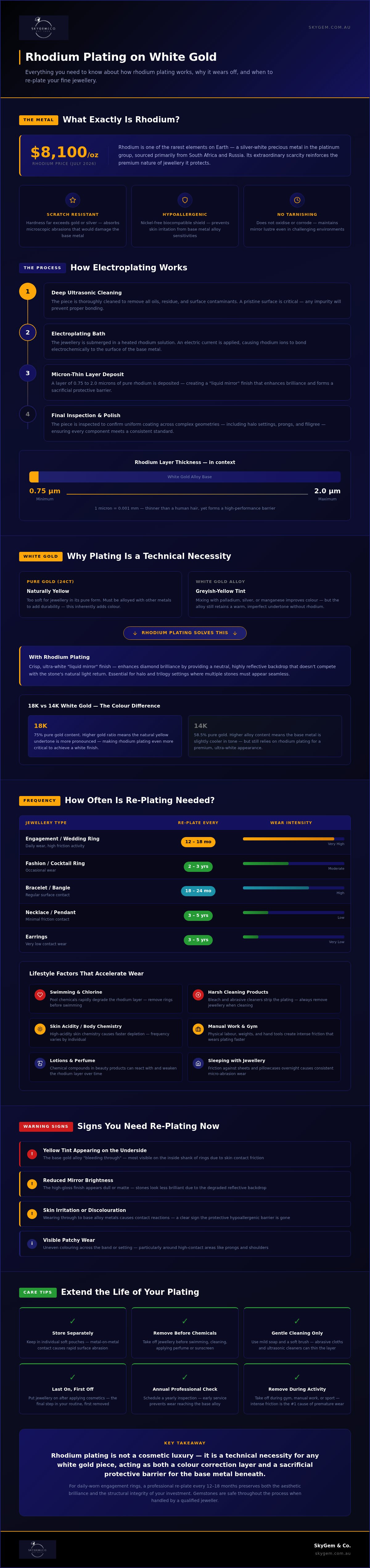
Rhodium is an exceptionally rare, silver-white precious metal belonging to the platinum group. It is prized in the jewellery industry for its high reflectivity and extreme durability. During the electroplating process, a piece of jewellery is submerged in a heated plating solution where an electric current causes a microscopic layer of rhodium to bond to the surface of the base metal. This layer, typically ranging between 0.75 and 2.0 microns, creates a "liquid mirror" finish that defines premium white gold pieces. Rhodium plating is an electrochemical process used to enhance brilliance and durability.
For many collectors, the initial question is what is rhodium plating and how often is it needed to maintain a professional standard of finish. Because white gold is an alloy that naturally retains a faint yellow tint, rhodium is technically necessary to achieve the crisp, ultra-white aesthetic expected of high-end 18K white gold settings. This process doesn't just change the colour; it transforms the surface into a high-performance barrier that resists the rigours of daily wear.
The Physical Properties of Rhodium
The technical superiority of rhodium stems from its unique physical profile. It possesses a level of hardness that far exceeds that of gold or silver, making it remarkably resistant to scratches. Understanding Rhodium properties and use reveals why it remains one of the most expensive commodities globally, often trading at significantly higher prices than gold or platinum. Its key characteristics include:
- Corrosion Resistance: Rhodium does not tarnish or oxidise, maintaining its lustre even in challenging environments.
- Hypoallergenic Qualities: As a nickel-free metal, it acts as a biocompatible shield, preventing skin irritation for those with sensitivities to base metal alloys.
- Extreme Rarity: Sourced primarily from South Africa and Russia, its scarcity reinforces the premium nature of the jewellery it protects.
Why Rhodium is Essential for High-End Pieces
In bespoke manufacturing, rhodium plating serves as the final, critical step in the design process. It enhances the fire and brilliance of diamonds and gemstones by providing a neutral, highly reflective backdrop that doesn't compete with the stone's natural light return. This is particularly vital for intricate halo or trilogy engagement rings where multiple stones must appear seamless. Beyond the visual impact, the plating provides a sacrificial layer that absorbs microscopic abrasions, protecting the structural integrity of the underlying gold. By establishing a consistent, high-lustre finish across complex geometries, rhodium ensures that every component of a custom piece meets a uniform standard of excellence.
The White Gold Connection: Why Plating is a Necessity
Pure gold is an elemental metal that is inherently yellow. In its 24ct form, it is too soft for the structural demands of fine jewellery, requiring the addition of alloys to increase durability. To create "white" gold, jewellers must mix pure yellow gold with white metals such as palladium, silver, or manganese. However, even with these additions, the resulting alloy isn't perfectly white. It typically retains a distinct "warm" tint, often described as a greyish-yellow hue. This natural undertone is why rhodium is the indispensable final step in the manufacturing process, providing the crisp, high-contrast finish that defines modern luxury.
When clients first notice this warmth appearing on the underside of a ring, they often ask what is rhodium plating and how often is it needed to restore the original look. The answer lies in the fact that the rhodium layer is a surface treatment, not a permanent transformation of the metal itself. As the plating gradually wears away through contact with hard surfaces or skin oils, the natural colour of the gold alloy begins to "bleed" through. Understanding this molecular reality helps establish why professional maintenance is a technical requirement for white gold owners rather than an optional cosmetic choice.
18K vs. 14K White Gold: The Colour Difference
The ratio of pure gold to alloy significantly impacts the base colour of a piece. 18K white gold consists of 75% pure yellow gold, while 14K contains approximately 58.3%. Because 18K has a higher concentration of yellow metal, its natural unplated state is noticeably warmer and more "yellow" than 14K. Consequently, premium bespoke rings crafted in 18K often require a more disciplined maintenance schedule to keep them looking pristine. For a deeper look at metal compositions and purity, you can explore The Definitive Guide to Gold Jewellery.
Rhodium Plating vs. Platinum
Platinum is a naturally white metal that does not require any plating. Over time, it develops a soft, matte finish known as a patina, which many collectors value for its understated character. In contrast, rhodium-plated white gold maintains a high-gloss, "liquid mirror" brilliance until the plating begins to thin. Reviewing Rhodium safety information confirms that this plating is safe for daily wear, providing a hypoallergenic barrier between the skin and the base alloy. Choosing between these metals often comes down to whether you prefer the enduring shine of a plated finish or the low-maintenance character of platinum. If you're currently selecting a setting, our 18K white gold engagement rings offer the pinnacle of this brilliant, rhodium-enhanced aesthetic.
Maintenance Frequency: How Often is Rhodium Plating Needed?
While the technical properties of rhodium are fixed, the timeline for maintenance is not. For most collectors, the standard industry recommendation for daily-wear items is every 12 to 18 months. However, when determining what is rhodium plating and how often is it needed, one must consider that plating frequency is a variable dictated by skin chemistry and lifestyle. It's a technical necessity that evolves with how you interact with your environment.
Identifying the right time for a service often involves looking for specific visual cues. The most common indicator is a subtle yellowing on the underside of the ring shank. This area experiences the highest level of friction against surfaces, causing the microscopic rhodium layer to thin and reveal the warmer 18K gold alloy beneath. Because the process involves specialized electrochemical solutions, reputable workshops ensure all procedures adhere to professional plating safety standards to protect both the technician and the integrity of the piece.
Lifestyle Factors That Accelerate Wear
The longevity of the finish is directly influenced by external variables. Chemical exposure is a primary factor; daily contact with perfumes, high-alcohol sanitisers, and household cleaning agents can chemically weaken the bond between the rhodium and the base metal. Physical activity also plays a critical role. For example, the metal-on-metal friction encountered when using gym equipment or performing manual labour acts as an abrasive, stripping the plating faster than typical office wear. Finally, individual body chemistry matters. High acidity levels in skin pH can accelerate the degradation of the plating, meaning some individuals may require service more frequently than the standard 18-month window.
Frequency Based on Jewellery Type
The "friction factor" varies significantly across different types of jewellery, which dictates the maintenance schedule. Items with high surface contact require the most attention:
- Engagement and Wedding Rings: These are high-contact items. Because they're worn daily and frequently strike hard surfaces, they typically require annual attention to maintain a mirror-like finish.
- Earrings and Pendants: These are lower-contact pieces. Since they don't experience the same level of abrasion as engagement rings, the rhodium layer can often remain pristine for 3 to 5 years.
- Occasional-wear Jewellery: Pieces reserved for special events or "red carpet" moments may only need replating once a decade, provided they're stored correctly in a soft-lined environment.
By understanding these variables, you can establish a predictable maintenance cycle that ensures your collection remains a permanent and brilliant asset.
The Professional Process: Is Plating Safe for Your Jewellery?
The technical success of rhodium application depends entirely on the preparation of the metal surface. It is a common misconception that the plating simply hides existing wear. In a professional workshop, the process is a multi-stage restoration that ensures the microscopic layer bonds effectively. When clients ask what is rhodium plating and how often is it needed, they're often seeking reassurance that the process won't compromise their precious stones. Because gemstones like diamonds, sapphires, and rubies are non-conductive, they remain entirely unaffected by the electric current used during the bonding phase.
The professional procedure follows a methodical sequence to achieve a high-performance finish:
- Step 1: Deep Cleaning and Polishing: Technicians must first strip any remaining old plating and polish out surface scratches. Plating over a worn surface results in a dull, uneven finish, so achieving a mirror-polish on the base gold is the critical foundation.
- Step 2: Ultrasonic Cleaning: The piece is submerged in an ultrasonic bath where high-frequency sound waves remove microscopic polishing compounds and oils. This ensures the surface is chemically pristine.
- Step 3: The Electroplating Bath: The jewellery is immersed in a rhodium solution. An electric current facilitates the migration of rhodium ions to the gold, creating a uniform layer typically between 0.75 and 2.0 microns thick.
Extending the Life of Your Rhodium Finish
While the plating is durable, its lifespan is influenced by how you handle the piece daily. Adhering to the "Last On, First Off" rule is the most effective way to preserve the finish. Apply perfumes, lotions, and hairsprays before putting on your jewellery to prevent chemical degradation. Additionally, you should always remove white gold rings before swimming in chlorinated pools. Chlorine is a powerful oxidant that can micro-etch the plating and even weaken the underlying gold solder joints over time. When not in wear, store your pieces in individual soft-lined pouches to prevent the metal-on-metal friction that causes abrasive wear.
Potential Risks of DIY or Low-Quality Plating
Low-quality "flash plating" services often skip the essential polishing and cleaning stages to save time. This results in a layer that may wear off in just a few weeks. Furthermore, professional assessment is required to ensure the safety of delicate filigree or pavé settings. A seasoned expert will check the integrity of every prong before and after the process. This level of technical care is especially vital for complex Bespoke Engagement Rings where precision is paramount. If your ring is losing its lustre, contact us to schedule a professional inspection and restoration.
Professional Maintenance and Restoration Services
A professional approach to jewellery maintenance views rhodium plating as one component of a comprehensive restoration strategy. While the aesthetic transformation is immediate, the technical value lies in the simultaneous inspection of the piece's structural integrity. When considering what is rhodium plating and how often is it needed, it's helpful to treat the procedure as a scheduled health check for your most valued assets. Every time a ring is stripped and prepared for a new rhodium layer, a master jeweller has a clear, unobstructed view of the prongs, galleries, and stone seats.
This technical precision is what differentiates high-end restoration from simple cosmetic cleaning. At SkyGem & Co., our expertise in bespoke manufacturing allows us to assess the wear on engagement rings with an eye for long-term viability. We don't just apply a new finish; we ensure the security of every setting. Regular servicing maintains the beauty and market value of heirlooms, ensuring that the intricate details of a bespoke design remain as crisp as the day they were first rendered from CAD models. This methodical care reinforces the idea that fine jewellery is a permanent and evolving asset rather than a one-off purchase.
Comprehensive Jewellery Care
Regular servicing is the primary defence against stone loss and structural failure. Over time, prongs can thin or pull away from the gemstone due to microscopic impacts that occur during daily wear. During a full restoration, we perform stone tightening and prong re-tipping where necessary. This process, combined with professional ultrasonic cleaning, restores the fire and light return of your diamonds and sapphires. A clean, secure setting is essential for the longevity of high-grade precious metals, preventing the gradual degradation that leads to catastrophic metal failure.
Consulting with a Master Jeweller
Every piece of jewellery interacts with its environment differently, which is why we provide personalised maintenance plans. A trilogy ring worn by a healthcare professional may require a different schedule than a solitaire worn in an office environment. We believe in transparency throughout the restoration process, providing a detailed assessment of your jewellery's condition during your appointment. This consultative partnership ensures your collection remains as brilliant as the day it was created. To secure the future of your pieces, book a professional maintenance consultation at SkyGem & Co. today.
Preserving the Longevity of Your Bespoke Collection
Maintaining the mirror-like finish of fine jewellery requires a balance of technical understanding and disciplined maintenance. By identifying the subtle yellowing of 18K white gold early, you ensure the underlying alloy remains protected from the microscopic abrasions of daily wear. Understanding what is rhodium plating and how often is it needed allows you to transition from reactive repairs to a proactive care strategy that prioritises long-term structural integrity. This methodical approach is the most effective way to preserve the high-lustre brilliance that high-grade precious metals deserve.
SkyGem & Co. acts as a technical partner in your jewellery's journey, providing expert restoration for bespoke fine jewellery. As specialists in 18K white gold and platinum maintenance, our services include professional cleaning and safety inspections to verify the security of every setting. This commitment to precision ensures your collection remains a permanent and evolving asset rather than a one-off purchase. Restore the brilliance of your white gold jewellery with SkyGem & Co. and enjoy the confidence that comes with expert craftsmanship and technical excellence.
Frequently Asked Questions
Does rhodium plating make my ring thicker?
No, rhodium plating does not significantly increase the thickness of your ring. The standard application is between 0.75 and 2.0 microns, which is a microscopic layer designed to provide a brilliant finish without altering the ring's physical dimensions or fit. It acts as a protective skin rather than a structural addition; this ensures the design's intricate details remain sharp and clear after the process is complete.
Can you rhodium plate yellow gold to make it look like white gold?
Yes, you can plate yellow gold with rhodium to achieve a white finish, but this requires higher maintenance for daily-wear items. Because of the high contrast between the white rhodium and the yellow gold base, any wear or thinning of the plating becomes immediately visible. While it's a viable option for occasional-wear pieces, it's less practical for engagement rings that experience constant friction and contact.
How long does the rhodium plating process take at a professional jeweller?
The professional restoration process typically takes between one and three business days. This timeframe allows for the essential multi-stage preparation, including deep cleaning, ultrasonic degreasing, and surface polishing. Rushing this sequence can lead to poor adhesion; therefore, a methodical approach is necessary to ensure the finish meets technical standards for durability and brilliance. Most workshops prefer this steady rhythm to guarantee the best results.
Will rhodium plating hide deep scratches on my ring?
No, rhodium plating will not hide deep scratches. In fact, the high reflectivity of the metal can often highlight surface imperfections. This is why professional polishing is a mandatory first step in the maintenance cycle. Every scratch must be removed from the base metal to create a smooth foundation for the rhodium ions to bond effectively during the electroplating process, ensuring a mirror-like result.
Is rhodium plating safe for porous gemstones like emeralds or pearls?
The electroplating bath is not safe for porous or organic gemstones such as pearls, opals, and emeralds. The chemicals and ultrasonic cleaning required for the process can damage the internal structure or surface finish of these delicate stones. In a professional setting, these gems are either carefully masked or removed from their settings entirely before the plating begins to ensure their long-term safety and integrity.
Why does my white gold ring look yellow on the bottom but white on top?
This uneven wear is caused by friction against hard surfaces, which is why the bottom of the shank often reveals the yellow gold base first. The top of the ring is generally more protected from daily contact. Understanding what is rhodium plating and how often is it needed helps you recognise that this yellowing is a natural indicator that your piece is ready for its scheduled professional service.
How much does professional rhodium plating usually cost in Australia?
The cost of professional rhodium plating varies based on the size and complexity of the jewellery piece. Intricate designs with multiple stones or large surface areas require more intensive preparation and cleaning, which influences the final service fee. It's best to have your piece assessed by a specialist who can provide a precise quote based on the current condition of the metal and the specific requirements of the setting.
Can I rhodium plate my jewellery at home using a kit?
Using a DIY kit for rhodium plating is not recommended for high-end fine jewellery. Professional results require industrial-grade ultrasonic cleaners, high-speed polishing lathes, and precise temperature-controlled plating baths. Without these technical tools and strict safety protocols, home kits often produce a dull, uneven finish that lacks the durability and mirror-like brilliance achieved in a controlled laboratory environment. Professional intervention remains the only way to ensure a permanent and brilliant asset.