
The Ultimate Guide to Diamond Tennis Bracelets: Quality, Craftsmanship, and Selection

A diamond tennis bracelet is a feat of precision engineering where the weakest link dictates the value of the whole. While it remains a definitive staple of fine jewellery, the technical complexity required to maintain a continuous line of brilliance often goes overlooked. You likely recognise that a single loose prong or a mismatched stone can compromise the entire aesthetic and structural integrity of the piece. This concern is valid, especially as the market sees shifting dynamics, such as the August 2026 recovery in diamond prices and the GIA's recent transition to broader descriptors for lab-grown stones.
This guide provides the technical clarity you need to select a diamond tennis bracelet that aligns with your specific performance requirements and aesthetic standards. We'll move beyond surface-level sparkle to examine the mechanics of secure box clasps, the nuances of perfectly matched stone sets, and the practicalities of determining the correct length for daily wear. By understanding these engineering fundamentals, you'll secure a piece that reflects your personal style while ensuring the long-term viability of your investment. Whether you are navigating the distinctions between natural and lab-grown diamonds or evaluating setting durability, our methodical approach ensures your selection is both beautiful and built to last.
Key Takeaways
- Learn the technical specifications that define an authentic tennis bracelet, including its origins in high-performance sport and the requirement for structural flexibility.
- Understand why precision matching of colour and clarity across dozens of stones is critical for the visual continuity of a high-quality diamond tennis bracelet.
- Evaluate the security and aesthetic trade-offs between prong, bezel, and channel settings to ensure your jewellery withstands the rigours of daily wear.
- Master the "one finger" sizing rule to achieve a comfortable fit that prevents excessive movement and reduces the risk of mechanical failure.
- Discover the advantages of bespoke manufacturing, where hand-finished settings and individually selected diamonds offer superior longevity compared to mass-produced alternatives.
What is a Diamond Tennis Bracelet? The Anatomy of a Classic
A diamond tennis bracelet is defined by its symmetry and mechanical flexibility. It consists of a continuous, unbroken line of diamonds, each secured in its own individual setting. This specific configuration allows the piece to wrap comfortably around the wrist, maintaining a constant display of brilliance regardless of movement. Unlike rigid bangles, these bracelets are engineered to be fluid, acting as a flexible "ribbon" of light.
The term originated during a 1987 US Open match when professional player Chris Evert halted play to recover her jewellery after the clasp failed. This incident provides the foundation for the modern history of the tennis bracelet, transitioning the piece from a formal "eternity bracelet" to a versatile accessory suitable for active lifestyles. Today, the name implies a standard of security and design that balances elegance with the durability required for daily wear.
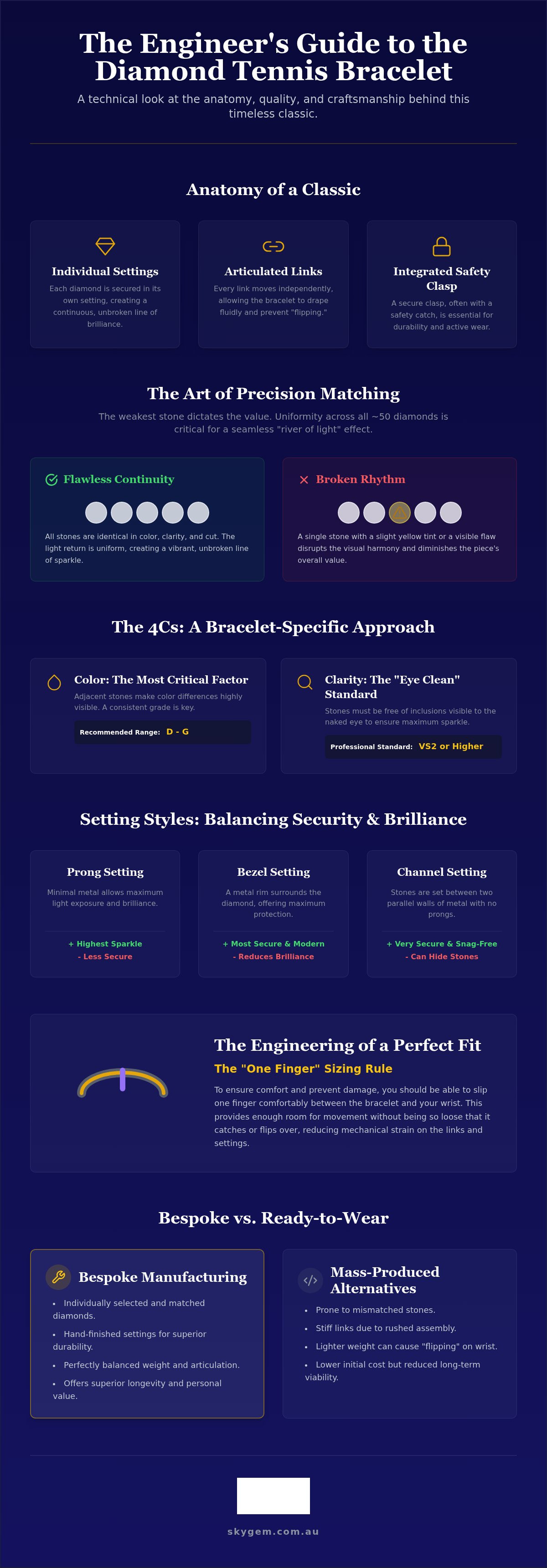
A high-quality assembly relies on three primary components: the individual settings, the articulated links, and the integrated safety clasp. Symmetry serves as the defining characteristic of a premium build. If a single stone sits slightly higher or if the metalwork varies in width by even a fraction of a millimetre, the visual continuity is broken. This technical precision ensures that the light return is uniform across the entire circumference of the wrist, creating the "endless" effect that defines the style.
The Significance of Articulation and Flow
Each link in a premium diamond tennis bracelet must move independently. In mass-produced jewellery, links often feel stiff or "catch" against the skin; this indicates poor casting or rushed assembly. A well-constructed piece uses a specific volume of metal to ensure the bracelet drapes naturally. This weight provides the necessary tension to keep the diamonds facing outward, preventing the "flipping" common in lighter, inferior designs. Proper articulation reduces stress on the metal joints, extending the long-term viability of the piece.
Modern Variations of the Continuous Line
While the uniform round brilliant cut remains the standard, modern engineering allows for diverse configurations. Graduated designs feature a larger central stone that tapers toward the clasp, while multi-row versions offer a bolder profile. We often see clients incorporating coloured gemstones like sapphires alongside diamonds to create a bespoke aesthetic. This approach maintains the classic silhouette while introducing personal character, ensuring the piece remains a unique reflection of the wearer's style.
Evaluating Diamond Quality: The Art of Precision Matching
Selecting a diamond tennis bracelet requires a different technical approach than choosing a solitaire engagement ring. While a ring focuses on the performance of a single hero stone, a bracelet relies on the collective harmony of approximately 50 individual diamonds. The primary challenge is precision matching. Every stone must share identical colour and clarity grades to maintain a seamless "river of light" effect. If even one stone exhibits a slight yellow tint or a visible inclusion, the visual rhythm of the entire piece is compromised, drawing the eye toward the flaw rather than the brilliance.
Consistency in Cut is equally vital for uniform light return across the wrist. Variances in pavilion depth or table percentages across a set will result in an uneven sparkle. Some stones will appear vibrant while others look dark, creating a "patchy" appearance that diminishes the premium feel of the jewellery. Achieving this level of uniformity requires a rigorous sorting process. At this scale, the weakest stone truly determines the perceived value of the entire diamond tennis bracelet.
The 4Cs Applied to Bracelet Selection
Colour is the most critical metric in this context. Because the diamonds are set in close proximity, the human eye is highly sensitive to colour variances between adjacent stones. We generally recommend staying within the D to G colour range to avoid the "yellow stone" trap. For clarity, "Eye Clean" (typically VS2 or higher) is the professional standard. Since these stones are smaller than centre stones in rings, microscopic inclusions aren't visible, but the diamonds must remain clear enough to ensure maximum transparency and light performance. Explore our range of natural diamonds to see how these technical grades translate into physical brilliance.
Lab-Grown Diamonds: A Modern Alternative
The rise of lab-grown diamonds in Australia has significantly expanded the options for those seeking a high-impact aesthetic. Lab-grown diamonds are chemically and physically identical to natural stones. In the current 2026 market, the GIA has transitioned to using broader descriptors like "premium" for these stones, which simplifies the selection of high-quality, uniform sets. This alternative allows for a more substantial total carat weight while maintaining the strict colour and clarity standards required for a cohesive look.
Whether you prefer the rarity of natural stones or the efficiency of lab-created options, technical matching remains the priority for a successful design. If you're unsure which grade suits your specific requirements, you can schedule a technical consultation to review our currently sourced stone sets and discuss your project.
Settings and Metals: Balancing Aesthetics with Security
Structural integrity is the primary performance metric when evaluating a diamond tennis bracelet. While the diamonds provide the aesthetic value, the underlying metalwork ensures the piece remains a permanent asset rather than a fragile accessory. The engineering of the clasp is the most critical safety feature to consider. A standard box clasp is insufficient for a high-value piece; it must be reinforced with a "safety wing" or a double-lock mechanism. This redundancy is non-negotiable for regular wear, as it prevents the bracelet from falling off if the primary latch is accidentally triggered during physical activity.
Channel settings offer a distinct structural advantage by securing diamonds between two parallel walls of precious metal. This design eliminates prongs entirely, creating a smooth, snag-free surface that is ideal for daily use. Because the metal protects the entire girdle of each stone, it's a highly durable configuration that prevents chipping. While it offers a sleek, architectural silhouette, it's important to recognise that channel settings can slightly limit light entry compared to more open styles. This makes the quality of the initial stone matching even more vital to ensure the piece maintains its brilliance.
Prong vs. Bezel Settings
Four-prong settings are the industry standard for maximising light performance. By minimising the metal covering the diamond, they allow for peak sparkle and fire. Bezel settings provide a "metal halo" that encircles the stone, offering superior protection against impact and a modern, bold aesthetic. For a minimalist look, two-prong settings create a "floating" diamond effect, though they require more frequent maintenance checks to ensure the stones remain secure over time. Each style represents a different balance between visual impact and physical security.
Choosing the Right Precious Metal
The choice of metal affects both the durability and the visual profile of your diamond tennis bracelet. 18ct White Gold is a popular choice for its brilliant, seamless finish, while Platinum is the ultimate option for security due to its extreme density and resistance to wear. Yellow and Rose Gold provide a warm contrast that can highlight the clarity of high-grade stones. For technical insights into metal purity and investment value, refer to The Definitive Guide to Gold Jewellery.
Sizing and Comfort: The Engineering of a Perfect Fit
Determining the correct size for a diamond tennis bracelet involves more than a simple wrist measurement. A technical "One Finger" rule is the industry standard: you should be able to slide one finger between the bracelet and your wrist. This specific gap provides sufficient room for movement without allowing the piece to slide too far down the hand or catch on the palm. To measure accurately at home for an online order, wrap a flexible measuring tape around the widest part of your wrist bone. If you don't have a tape, wrap a piece of string around the wrist, mark the overlap, and measure the result against a ruler. Add approximately 1.5cm to 2cm to that figure to find your ideal length.
Precision in sizing is a safety requirement. If a bracelet is too loose, the links are subjected to unnecessary centrifugal force during movement, increasing the risk of snagging on clothing or impact with hard surfaces. Conversely, a fit that is too tight places excessive tension on the internal pins and the clasp mechanism. The total carat weight also influences the feel; a 10-carat bracelet has a significantly higher profile and different weight distribution than a 3-carat piece, requiring a slightly more generous fit to account for the thickness of the metal settings.
Standard Lengths and Custom Adjustments
While the standard retail range is 17cm to 18cm, bespoke adjustments are often necessary to achieve a professional fit. When links are removed to shorten a piece, a technician must remove them from both sides of the clasp to maintain the visual symmetry of the continuous line. The perfect fit allows the bracelet to move but not flip over. This ensures the diamonds remain facing outward, providing consistent light return and preventing the metal underside from becoming the focal point during wear.
Daily Wear and Maintenance
Long-term viability depends on a disciplined maintenance schedule. We recommend a professional inspection every 12 months to check for prong wear and pin fatigue. Because a diamond tennis bracelet contains over 50 individual settings, the likelihood of a single prong loosening over time is statistically higher than with a solitaire ring. Regarding the "Tennis" myth, while the design is durable, we advise against wearing fine jewellery during high-impact sports. Sudden shocks can deform the metal links, even if the clasp remains secure. Regular cleaning with a soft brush and mild solution is essential to remove the oils that dull the fire of the stones.
Bespoke vs. Ready-to-Wear: Crafting Your Signature Piece
Choosing between a ready-to-wear piece and a bespoke commission is a decision between immediate convenience and long-term technical precision. Mass-produced items often suffer from uneven stone matching and the use of hollow links to reduce metal costs. While these pieces appear attractive at a glance, the lack of structural density can lead to link deformation over time. A bespoke diamond tennis bracelet, however, allows for the hand-selection of every stone. This ensures that the colour, clarity, and cut are perfectly synchronised, avoiding the patchy light return common in off-the-shelf alternatives.
The consultation process serves as a technical partnership where we balance your budgetary requirements with the desired brilliance of the piece. By working with a specialist, you can tailor the clasp and safety features to your specific lifestyle, ensuring the mechanism is robust enough for your daily activities. This level of customisation transforms the jewellery from a generic accessory into a high-performance asset designed for your unique physical requirements.
The Manufacturing Difference
The structural integrity of a bracelet starts at the bench. Most commercial pieces use mass-cast links that can be porous and brittle. In contrast, hand-finished links offer superior density and durability. Professional stone setting is the most effective way to prevent "lost diamond" anxiety, as each prong is individually adjusted to the specific dimensions of the stone it holds. You can explore our bespoke engagement rings to see how this rigorous attention to detail defines our approach to high-end craftsmanship.
Designing for Longevity
When designing for longevity, the total carat weight (TCW) must suit your daily wardrobe and physical environment. A larger TCW requires more substantial metalwork to remain secure, which adds to the overall weight and "drape" of the piece. Investing in higher-quality, solid settings may require a higher initial outlay, but it significantly reduces long-term repair costs and the risk of stone loss. This methodical approach to design ensures that your diamond tennis bracelet remains a permanent fixture in your collection rather than an evolving maintenance liability.
Book a consultation with SkyGem & Co. to design your bespoke tennis bracelet and discuss your technical specifications with our team.
Securing Your Investment in Precision Brilliance
Selecting a high-quality diamond tennis bracelet requires a methodical approach to both stone matching and structural engineering. By focusing on the precision of colour and clarity across the entire set, you ensure a visual continuity that defines a premium piece. The long-term viability of your jewellery depends on the integrity of the settings and the security of the clasp mechanism. These technical nuances distinguish a permanent asset from a temporary accessory.
SkyGem & Co. operates as a technical consultant to help you navigate these choices with quiet confidence. Our GIA-certified diamond specialists focus on bespoke craftsmanship to ensure every link and prong provides maximum security. We provide national Australian shipping and ongoing support to ensure your selection remains a reliable reflection of your style. Whether you choose natural or lab-grown diamonds, our commitment to technical precision ensures a result that balances breathtaking brilliance with enduring strength.
Design your bespoke diamond tennis bracelet with SkyGem & Co.
Our team is ready to assist you in sourcing the perfect stones and engineering a fit that provides both comfort and peace of mind for years to come.
Frequently Asked Questions
How many carats is a standard diamond tennis bracelet?
A standard diamond tennis bracelet typically ranges from 2.00 to 10.00 total carat weight (TCW), though bespoke pieces can exceed these figures. The total weight is a function of the individual stone sizes and the length of the bracelet. For example, a 3-carat bracelet might contain 50 stones of 0.06 carats each. The choice depends on whether you prefer a delicate, minimalist line or a more substantial, high-profile aesthetic for formal wear.
Can I wear my diamond tennis bracelet every day?
You can wear a diamond tennis bracelet every day provided it is constructed with high-quality 18ct gold or platinum and features a secure clasp. While the name implies athletic durability, we recommend removing the piece during high-impact sports or heavy manual labour to prevent link deformation. Regular maintenance, such as annual prong checks, ensures the structural integrity remains intact despite the rigours of daily movement and contact with various surfaces.
What is the difference between a tennis bracelet and a line bracelet?
There is no technical difference between a tennis bracelet and a line bracelet; they both describe a flexible strand of continuous diamonds. The term "tennis bracelet" became the industry standard following a famous 1987 incident where professional player Chris Evert lost her "line bracelet" during a match. While the nomenclature changed, the engineering requirements for a symmetrical, articulated strand of stones remain identical across both descriptions in modern fine jewellery.
Is it better to get a natural or lab-grown diamond tennis bracelet?
Choosing between natural and lab-grown diamonds depends on your priorities regarding rarity and budget. Natural GIA-certified diamonds offer traditional investment value and geological rarity. Conversely, lab-grown diamonds are chemically and physically identical to natural stones but allow for a higher total carat weight at a different price point. Both options provide the same levels of brilliance and durability, provided the stones are matched with technical precision during the manufacturing process.
How should a tennis bracelet fit on my wrist?
A diamond tennis bracelet should follow the "one finger" rule for an ideal fit. You should be able to comfortably slide one finger between the bracelet and your wrist. This gap ensures the piece has enough fluidity to move with your hand without being so loose that it slides down to the palm or flips over. A fit that is too tight can place unnecessary mechanical stress on the internal pins and clasp.
What is the most secure clasp for a diamond bracelet?
The most secure configuration is a box clasp reinforced with at least one safety wing, often referred to as a double-lock mechanism. This design ensures that if the primary internal latch fails or is accidentally triggered, the external safety wing keeps the bracelet on the wrist. For high-value pieces, an integrated safety chain or a hidden plunger clasp provides an additional layer of security, protecting the piece from loss during active movement.
How do I know if the diamonds in a bracelet are well-matched?
You can identify well-matched diamonds by observing the piece under natural light to ensure consistent colour and sparkle across the entire length. No single stone should appear noticeably yellow or dark compared to its neighbours. In a high-quality diamond tennis bracelet, every stone must share identical colour and clarity grades. This technical uniformity prevents the "patchy" appearance often found in mass-produced items where stones are sourced from varied, non-sequential parcels.
What is the average price of a high-quality diamond tennis bracelet in Australia?
The price of a diamond tennis bracelet in Australia is determined by the total carat weight, the origin of the diamonds, and the choice of precious metal. Natural diamond pieces generally command a higher premium due to their rarity, while lab-grown alternatives offer a different value proposition. Factors such as the complexity of the setting and the use of platinum over 18ct gold will also influence the final cost. Consult a specialist to discuss a piece tailored to your specific budget.
Disclaimer
This article is for general informational purposes only and may include AI-assisted content. Pricing, specifications, and availability are subject to change. For accurate advice and current information, please contact SkyGem & Co. directly. Nothing in this content constitutes professional or financial advice.