
Is Rose Gold Durable for a Wedding Band? A 2026 Technical Guide

While the soft, romantic aesthetic of a pink-hued ring suggests a delicate nature, the metallurgical reality is that rose gold is often the most resilient choice for a lifetime of wear. If you are questioning is rose gold durable for a wedding band in 2026, you aren't alone. With gold prices reaching historic highs earlier this year, including a peak of $5,597.23 in January, choosing a metal that offers both lasting value and structural stability is a critical technical decision for any couple.
It's natural to worry that a ring might tarnish or that its distinctive colour could fade after several years of daily activity. This guide clarifies why rose gold is one of the most robust precious metals available, detailing how its unique copper-alloy composition provides superior hardness compared to traditional yellow or white gold. You'll discover the specific performance differences between various karats and learn how bespoke 18k rose gold designs are engineered for multi-generational longevity. We will also address maintenance protocols and skin compatibility to ensure your choice remains a permanent, high-performing asset that retains its integrity for decades to come.
Key Takeaways
- Learn how the high copper content in rose gold alloys functions as a structural reinforcement, providing superior resistance to daily mechanical stress.
- Understand where 18k rose gold sits on the Vickers Hardness scale to determine if rose gold is durable for a wedding band subject to decades of wear.
- Discover the long-term maintenance benefits of rose gold, including its ability to retain its signature colour without the recurring requirement for rhodium plating.
- Gain technical insight into how bespoke jewellers use matching alloy solder to ensure that resizing and repairs maintain the ring's structural and aesthetic integrity.
- Identify why the 18k gold-to-copper ratio represents the optimal engineering balance between precious metal purity and lifelong durability.
Understanding Rose Gold Composition and Durability
Rose gold is a metallurgical achievement that balances aesthetic warmth with structural integrity. It's not a naturally occurring element; rather, it's a carefully engineered alloy of pure gold, copper, and a small percentage of silver. While some assume the "pink" hue implies a softer metal, the physical properties of the alloy suggest otherwise. When clients ask is rose gold durable for a wedding band, we focus on the specific Rose Gold Composition which typically involves 75% pure gold for an 18k hallmark. This ratio ensures the ring maintains the prestige of a precious metal while gaining the mechanical benefits of its copper components.
In the regional professional landscape, 18k gold is the established standard for premium wedding bands. This purity level provides a high concentration of gold without sacrificing the hardness required for a lifetime of daily wear. The misconception that rose gold is delicate often stems from its romantic colour, but copper is actually one of the hardest metals used in jewellery alloys. This makes rose gold a robust choice for those who lead an active lifestyle but don't want to compromise on a premium finish.
The Role of Copper in Metal Hardness
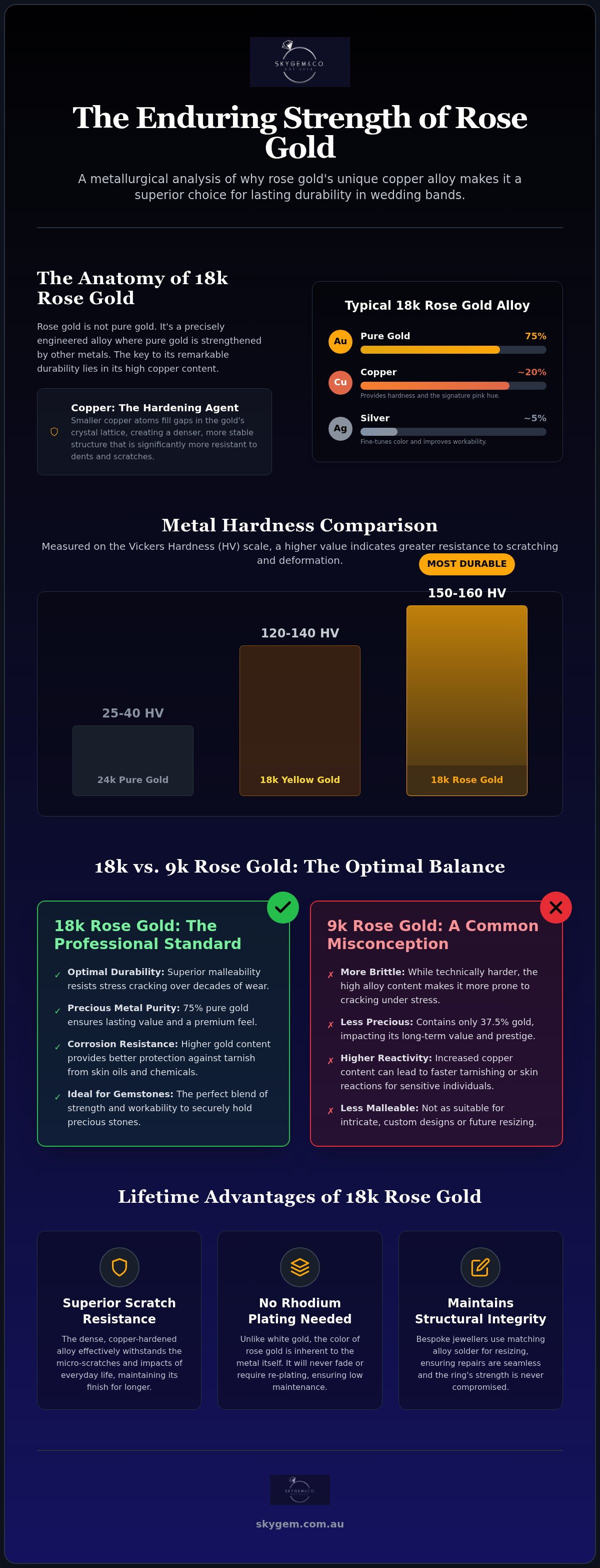
Pure gold is notoriously soft. It's unsuitable for the rigours of daily wear on its own. Copper serves as the primary hardening agent in this alloy. At a molecular level, copper atoms are smaller than gold atoms. When alloyed, these smaller atoms occupy the gaps in the gold's lattice structure, creating a more compact and stable matrix. This internal reinforcement makes the alloy significantly more resistant to dents and scratches than high-purity 22k or 24k gold. It's this specific density that allows rose gold to withstand the friction and impact associated with decades of use.
18K vs. 9k Rose Gold: Which Lasts Longer?
There's a common belief that 9k gold is more durable because it contains more base metal. However, 9k alloys are often more brittle and prone to stress cracking over time. In contrast, 18k rose gold offers superior malleability. This is essential for securely holding lab-grown diamonds or natural stones in a bespoke design. Higher gold content also provides better long-term resistance to corrosion. While the high copper content in lower karats can react with skin oils or environmental chemicals, 18k gold maintains its finish and structural health. When evaluating if rose gold is durable for a wedding band, 18k consistently outperforms lower karats in long-term viability and craftsmanship potential.
The Metallurgical Advantage: Why Rose Gold is Tougher
To accurately assess whether rose gold is durable for a wedding band, we must look at measurable performance metrics rather than aesthetic appeal alone. The Vickers Hardness (HV) scale is the primary industrial standard for quantifying a metal's resistance to permanent deformation. In technical comparisons, 18k rose gold consistently ranks higher than its yellow or white gold counterparts. While standard 18k yellow gold typically registers around 120 to 140 HV, 18k rose gold can reach levels exceeding 150 to 160 HV. This increased hardness is a direct result of the metallurgical properties of gold alloys, where the copper content creates a more resilient grain structure.
A critical factor in the longevity of a wedding band is the "work hardening" that occurs during the crafting process. As our specialists forge or roll the alloy to create a bespoke band, the mechanical stress reorganises the metal's internal crystal lattice. This process significantly enhances the surface hardness beyond the initial cast state. The result is a ring that doesn't just look premium; it possesses a physical density that feels substantial and secure on the hand. This structural stability is why rose gold is often recommended for pieces intended for lifelong, daily utility.
Scratch Resistance and Daily Wear
Everyday environments present constant abrasive challenges. Rose gold is particularly adept at handling the micro-scratches that accumulate over years of wear. Because the alloy is inherently denser, it resists deep gouging more effectively than traditional high-purity yellow gold. In the context of 18k rose gold, Vickers Hardness serves as a reliable predictor of surface endurance. The metal maintains its finish for longer periods, reducing the frequency of professional resurfacing. This makes it an excellent choice for those who value a low-maintenance yet high-performance material.
Structural Integrity for Stone Settings
The durability of a band also dictates the security of its gemstones. Rose gold's high yield strength makes it an exceptional choice for the delicate prongs found in engagement rings. The alloy exhibits a specific "springiness" or elastic memory. This property ensures that prongs remain tight against the stone and are less prone to lifting if they catch on fabric or hard surfaces. For individuals prioritising the safety of their investment, a custom-designed rose gold setting provides a level of technical security that is difficult to match with softer alloys.
Rose Gold vs. White and Yellow Gold: A Longevity Comparison
When evaluating if rose gold is durable for a wedding band, the comparison often turns to maintenance requirements over a fifty-year horizon. Unlike white gold, which relies on a surface layer of rhodium to achieve its bright finish, rose gold is a "colour-through" alloy. The pink hue is consistent from the surface to the core. This means that as the ring experiences the inevitable friction of daily life, there is no secondary metal waiting to be exposed. In contrast, white gold requires periodic re-plating, a process that involves stripping and re-applying a chemical coating. Rose gold avoids this cycle entirely, positioning it as a technically superior choice for long-term structural and aesthetic stability.
The cost-to-durability ratio of rose gold also presents a significant advantage over platinum. While platinum is denser and more expensive, it's also more ductile, meaning it displaces metal into a "patina" of scratches rather than resisting them. 18k rose gold is harder on the Vickers scale, which allows it to maintain a high-polish finish for longer periods without professional intervention. For a wedding band that needs to withstand the rigours of 2026's active lifestyles, rose gold offers a balance of hardness and value that traditional yellow gold and platinum struggle to match.
The Rhodium Plating Factor
White gold's maintenance cycle is its primary technical drawback. Every 12 to 24 months, most white gold bands require rhodium plating to mask the natural yellowish tint of the underlying alloy. Each time a jeweller prepares a ring for plating, they must polish the surface to remove existing scratches, which microscopically thins the band over decades. Rose gold eliminates this recurring metal loss. It's the low-maintenance alternative for professionals who require a high-performance material that doesn't demand annual workshop visits. While yellow gold also lacks plating, rose gold's higher copper content gives it a slight edge in hardness, making it more resilient against the thinning effects of environmental wear.
Aesthetic Longevity: Will it Stay Pink?
A common concern is whether the signature blush of rose gold will fade or tarnish. Because the colour is derived from the copper integrated into the gold lattice, it's a permanent physical characteristic. Over time, rose gold doesn't fade; instead, it develops a deep, lustrous lustre. This aged finish is often described as a vintage glow, which many collectors prefer over the sterile brightness of new metal. For those commissioning custom-made engagement rings, this predictable aging process is a significant advantage. The alloy remains chemically stable, ensuring the pink hue remains a permanent feature of the piece rather than a temporary aesthetic trend.
Practical Realities: Maintenance, Resizing, and Skin Sensitivity
Prospective owners often encounter anecdotal claims that rose gold is difficult to repair or resize. When investigating is rose gold durable for a wedding band, it's vital to separate these myths from technical reality. Most complications during resizing arise from "mystery" alloys found in mass-produced jewellery, where inconsistent ratios of zinc or silver make the metal brittle. In contrast, 18k rose gold crafted with precise metallurgical standards remains a highly workable and reliable material for professional jewellers. It doesn't suffer from the same structural vulnerabilities as lower-carat alternatives.
The long-term aesthetic of rose gold is defined by its evolving patina. Over decades, the copper content reacts subtly with the environment; this results in a deeper, more lustrous pink that characterises high-end vintage jewellery. This isn't a sign of degradation but a testament to the metal's organic resilience. To maintain this brilliance at home, use a soft-bristled brush and a pH-neutral detergent solution to remove surface contaminants. This simple protocol preserves the metal's surface without the need for the aggressive chemical treatments often required by other alloys.
Resizing and Repairing Bespoke Bands
A high-quality 18k alloy is perfectly suitable for resizing and restoration. Skilled technicians use matching alloy solder to ensure that joins are both invisible and structurally sound. This maintains the uniform Vickers hardness established during the initial crafting phase. If you are considering a custom-made engagement ring, you can be confident that the piece is designed for a lifetime of adjustments. Professional maintenance ensures the ring's integrity remains uncompromised as your needs evolve over the years.
Managing Copper Sensitivity
Because 18k rose gold contains 75% pure gold, it's generally hypoallergenic and safe for daily wear. The "green finger" effect, occasionally associated with copper alloys, is an oxidation reaction often triggered by trapped moisture or high skin acidity rather than a metal deficiency. You can prevent this by ensuring the band is dried thoroughly after washing and by scheduling occasional professional cleanings. For the small percentage of individuals with extreme copper sensitivities, platinum remains the recommended technical alternative. However, for most users, the high gold-to-copper ratio in 18k alloys provides a stable, non-reactive environment for the skin.
Ready to begin your project? Explore our range of bespoke design services to ensure your wedding band is engineered for both beauty and longevity.
Selecting Your Bespoke Rose Gold Wedding Band
Selecting a wedding band is a decision that balances aesthetic preference with the technical requirements of daily use. In 2026, rose gold has solidified its position as a high-performance material for those who value both warmth and resilience. When determining is rose gold durable for a wedding band for your specific project, we evaluate the ring's geometry and profile to ensure maximum longevity. By choosing an 18k alloy, you're opting for a metal that provides the ideal density for a lifetime of wear while maintaining a premium gold purity. This ensures your band remains a stable, high-performing asset regardless of your daily environment.
The versatility of this alloy allows it to serve as a secure foundation for a wide range of designs. Whether you're interested in natural diamonds or the technical efficiency of lab-grown diamonds, rose gold's structural integrity provides a reliable setting for your stones. The alloy's inherent hardness ensures that even the most intricate details in a bespoke design remain crisp and secure for decades. This makes it a premier choice for those who want a ring that combines modern engineering with a timeless, romantic glow.
Pairing Rose Gold with Diamonds and Gemstones
The visual synergy between rose gold and various gemstones is a significant factor in its selection for custom projects. The alloy's warm spectrum is uniquely suited to enhancing the depth of Australian sapphires and the delicate tones of peach sapphires. For those selecting lab-grown diamonds, the metal's soft pink reflection offers a sophisticated contrast to the stone's sharp scintillation. Additionally, rose gold's ability to harmonise with many skin tones creates a "disappearing metal" effect, where the setting feels like a natural extension of the wearer, allowing the light performance of the stones to take centre stage.
The SkyGem & Co. Bespoke Experience
Our approach at SkyGem & Co. is rooted in technical precision and partnership. We act as your project consultants, moving beyond a simple retail transaction to ensure your design is engineered for multi-generational wear. The consultation process begins with a detailed discussion regarding your lifestyle and aesthetic goals, allowing us to recommend specific band widths that will maximise the metal's inherent strength. This methodical review of the ring's geometry ensures that every 18k alloy we craft meets the rigorous standards required for a lifetime of utility. We encourage you to review our comprehensive buyer's guide for wedding rings to explore how these engineering principles are applied across different silhouettes.
Every piece we create is a testament to quality over hype. When you're ready to start your project, book a consultation to design your durable rose gold band with our specialist team. We'll ensure your selection is a permanent, high-performing asset that reflects your unique design vision while meeting the highest standards of regional craftsmanship.
Engineering Your Forever Aesthetic
The metallurgical evidence is clear: rose gold is a superior choice for those seeking a balance of technical performance and distinctive design. By leveraging the hardening properties of copper, this alloy achieves a higher Vickers rating than traditional 18k yellow gold, ensuring it withstands the mechanical stresses of daily life. Understanding why is rose gold durable for a wedding band comes down to its unique lattice structure allows you to choose this metal with quiet confidence. Because the pink hue is integrated throughout the metal, you won't face the recurring maintenance costs or metal loss associated with rhodium-plated alternatives.
When you select 18k rose gold, you're investing in a material designed for multi-generational wear. It's a resilient foundation that supports both natural and lab-grown diamonds with exceptional security. Our team acts as your technical consultant, providing expert metallurgical consultations to ensure your bespoke piece meets the highest standards. We look forward to partnering with you to create a solution that remains a permanent, beautiful asset for decades to come.
Design your bespoke rose gold wedding band with SkyGem & Co. and benefit from our specialized expertise in bespoke 18k gold alloys and ethically sourced diamonds and gemstones.
Frequently Asked Questions
Is rose gold durable enough for everyday wear?
Yes, rose gold is exceptionally durable for everyday wear. Its copper content acts as a structural reinforcement, making it more resilient than traditional yellow or white gold alloys. This internal stability ensures the band maintains its form even under consistent mechanical stress, providing a reliable foundation for lifelong use.
Does rose gold tarnish or change colour over time?
Rose gold doesn't tarnish in the traditional sense, nor does its colour wear off. Since the pink hue is a result of the integrated gold and copper alloy rather than a surface plating, the colour is permanent. Over several decades, it may develop a lustrous patina that adds a vintage character to the piece.
Can rose gold wedding bands be resized easily?
High-quality rose gold bands can be resized by professional jewellers without compromising their structural integrity. While some lower-quality or mass-produced alloys can be brittle, bespoke 18k rose gold is a stable material. Using matching alloy solder ensures a seamless join that maintains the ring's original metallurgical properties.
Is 14k or 18k rose gold more durable for a wedding ring?
While 14k rose gold is technically harder due to its higher copper concentration, 18k gold offers the optimal balance of purity and long-term durability. 18k gold is less prone to environmental corrosion and provides a more stable setting for high-value gemstones. When assessing is rose gold durable for a wedding band, 18k remains the professional standard for longevity.
Will rose gold make my finger turn green?
It's highly unlikely for an 18k rose gold ring to turn your finger green. This effect is usually a reaction between copper and skin acidity or trapped moisture. Maintaining a clean, dry environment under the band and choosing high-purity 18k alloys significantly reduces the risk of these oxidation reactions.
How does rose gold durability compare to platinum?
Rose gold typically ranks higher on the Vickers Hardness scale than platinum. While platinum is denser and won't lose metal when scratched, it's more ductile and prone to surface displacement. Rose gold's hardness makes it more resistant to the initial scratches and dents that occur during heavy daily activity.
Are rose gold rings more likely to scratch than yellow gold?
Rose gold is actually less likely to scratch than yellow gold of the same karat. The copper used to create the rose hue is a naturally harder metal than the silver or zinc typically found in yellow gold alloys. This increased surface density provides a measurable advantage in scratch resistance for active wearers.
Is rose gold a good choice for a man's wedding band?
Rose gold is an excellent technical choice for a man's wedding band. Its superior hardness makes it suitable for larger, more substantial designs that may be subject to frequent impact. The warm, understated tone also complements a wide range of styles, from men's plain wedding bands to contemporary diamond-set designs.
Disclaimer
This article is for general informational purposes only and may include AI-assisted content. Pricing, specifications, and availability are subject to change. For accurate advice and current information, please contact SkyGem & Co. directly. Nothing in this content constitutes professional or financial advice.