
Worried Your Custom Ring Design Won’t Turn Out Right? A Practical Guide

A custom ring is shaped by a series of decisions, from the stone and metal to the setting and proportions. The most useful way to approach those choices isn’t to expect a flawless result by guesswork, but to make sure each design decision reflects your priorities and is clearly understood before work proceeds.
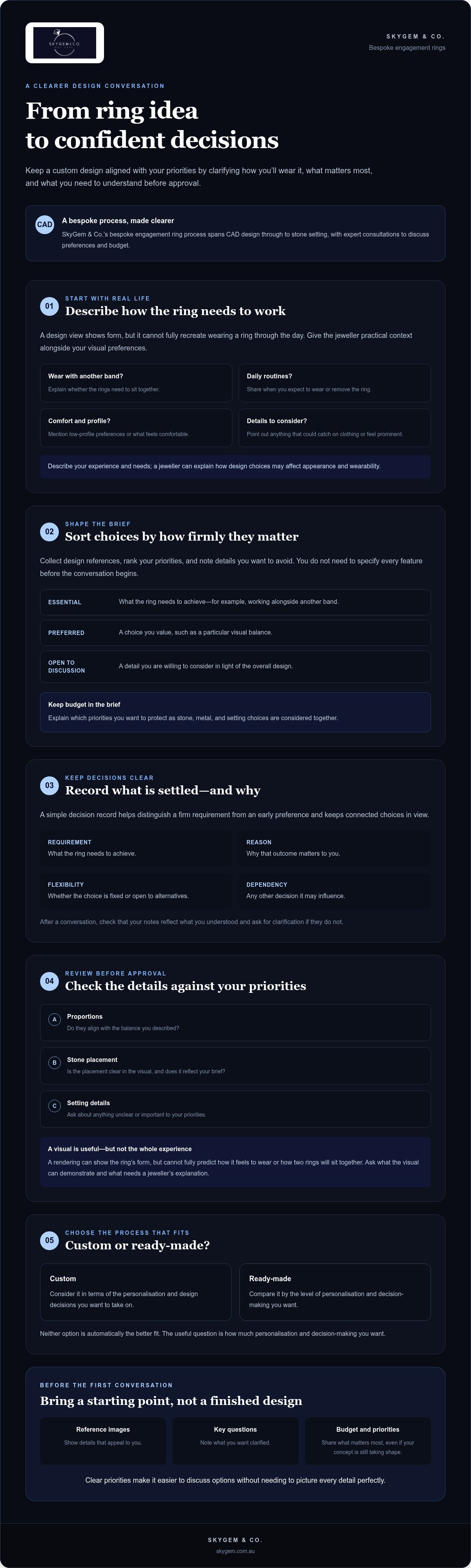
This guide focuses on the checkpoints that help keep a bespoke ring aligned with your brief. You’ll learn how to organise design references, assess the details shown in available visuals, clarify what approval means and compare custom and ready-made options. SkyGem & Co.’s bespoke engagement ring process spans CAD design through to stone setting, with expert consultations to help clients discuss their preferences and budget. Use the steps ahead to prepare for a clearer, more informed design conversation.
Key Takeaways
- Make your design brief more useful by collecting references, ranking what matters most and noting details you want to avoid.
- If you feel the fear of the custom ring design not turning out right, focus on the choices you can clarify rather than expecting to picture every detail perfectly.
- Before approving a design, check how its proportions, stone placement and setting details align with your priorities, and ask about anything unclear.
- Compare custom and ready-made rings by how much personalisation and decision-making you want, as neither option is automatically the better fit.
- Prepare for an initial conversation with reference images, key questions and a clear idea of your budget, even if your design concept is still taking shape.
Why custom ring design can feel risky, and what you can control
A ring’s success isn’t only about how it looks in a design view. It also needs to suit the way you plan to wear it. The challenge is that comfort and practicality depend on personal routines, hand movement and how the ring sits alongside other jewellery. Thinking through those use conditions early gives the design conversation a real-world reference point, rather than relying on appearance alone.
Consider how the ring fits into everyday life. Do you expect to wear it alongside a wedding band? Will you keep it on during regular activities, or prefer to remove it for some tasks? Are there details that could catch on clothing or feel prominent against neighbouring fingers? These aren’t technical specifications you need to solve yourself. They’re useful context for a jeweller when discussing design choices and what may need closer consideration.
Which parts of a custom ring can you define in advance?
You can describe the conditions the ring needs to suit, such as how it should sit with another band, whether a low-profile appearance matters to you, and what feels comfortable for daily wear. Be clear about which needs are essential and which are preferences. For instance, wearing two rings together may be a firm requirement, while the exact spacing between them may be open for discussion. That distinction helps the jeweller explore suitable options without assuming every preference carries equal weight.
It can also help to explain what you’re used to wearing now and what you’d like to feel different. Keep the focus on your experience, rather than prescribing a technical solution. A jeweller can then explain how design decisions may affect wearability as well as appearance.
What makes a design feel difficult to picture?
A design view can show the ring’s form, but it can’t fully recreate wearing it through the day. A profile that looks understated on screen may feel more noticeable on your hand; two rings that appear to fit together in a drawing may sit differently when worn. These are reasons to ask what a visual can demonstrate and what questions require a jeweller’s explanation, not reasons to expect a rendering to predict every sensation.
SkyGem & Co.’s bespoke engagement ring process includes CAD design through to stone setting. In a consultation, describe how you expect to wear the ring and ask how practical considerations can inform the design discussion. This brings lived use into the decision-making process alongside appearance.
How to turn your ring idea into a clear design brief
A design brief becomes useful when it helps distinguish essential outcomes from choices that can be resolved during design. Rather than trying to specify every feature, organise your decisions so the jeweller can see what must be preserved, what can be adapted and where a choice may affect another part of the ring.
How can you rank design decisions?
Sort your requirements into three levels: essential, preferred and open to discussion. An essential might be that the ring works alongside another band; a preference could be a particular visual balance; an open decision might be a detail you’re willing to consider in light of the overall design. This ranking gives the jeweller a practical way to discuss alternatives without losing sight of what matters most.
Include budget as a design parameter, not just a final check. Explain which priorities you’d like to protect if the stone, metal and setting choices need to be considered together. That lets the conversation focus on options that fit your priorities and budget, rather than assuming a specific feature must be changed.
How should you record agreed choices?
Keep a simple decision record as the design develops. Note the choice made, why it matters and whether it is settled or still under discussion. This can help prevent an early preference from being mistaken for a final requirement, or a key constraint from disappearing as other details are explored. After a conversation, check that your notes reflect what you understood and ask for clarification if they don’t.
- Requirement: what the ring needs to achieve.
- Reason: why that outcome matters to you.
- Flexibility: whether the choice is fixed or open to alternatives.
- Dependency: any other decision it may influence.
This approach gives a jeweller a concise working framework and gives you a way to track how decisions connect. SkyGem & Co. offers expert consultations to help clients shape bespoke engagement rings around their preferences and budget. Use the discussion to make sure your priorities are understood before moving further into design.
How to review a custom ring design before approving it
A design review is most useful when you compare the proposal with the priorities you’ve already discussed, rather than judging it against an undefined idea of perfection. If you’re feeling the fear of the custom ring design not turning out right, focus your review on what can be checked: whether the design reflects your agreed preferences, and whether any uncertainties have been answered.
SkyGem & Co.’s bespoke process includes CAD design through to stone setting, but the design visuals, revision options and approval checkpoints available should be confirmed directly with the jeweller. Don’t assume a particular view or change is included. Ask what you’ll be able to review, what each visual is intended to communicate, and when decisions need to be confirmed.
What should you check in a design visual?
If more than one view is provided, compare them to understand how the ring looks from different angles. Check that the agreed stone shape, setting direction and broad proportions are represented. A visual can help you assess the arrangement, but may not communicate the finished material, scale on your hand or exact appearance as reliably as seeing the ring in person. Ask what it can and can’t show.
- Does the design reflect the priorities you identified?
- Is the stone positioned and oriented as discussed?
- Do the band and setting proportions look consistent with your preferences?
- Which aspects of the finished ring can’t be judged from this visual?
What should you clarify before giving approval?
Before approving, make sure unresolved preferences and requested adjustments are recorded clearly, so you and the jeweller are referring to the same decisions. Ask what approval means in this process, what happens next, and whether further changes can be considered afterward. The answers may depend on the jeweller’s process, so confirm the details rather than assuming a revision policy or a specific approval procedure.
Use this short checklist in a consultation or design review:
- Match: Which stated priorities does the proposal address?
- Questions: Are proportions, stone placement and setting details clear?
- Limits: What can’t the visual reliably communicate?
- Record: Are open questions and requested adjustments documented?
- Approval: What are you confirming, and can any details be changed afterward?
You don’t need to eliminate every uncertainty to make a considered decision. You do need to understand what the design shows, what remains unclear and what your approval authorises. If any answer is still uncertain, pause and ask for clarification before confirming.
How to reduce uncertainty when comparing custom and ready-made rings
Custom and ready-made rings involve different kinds of decisions. With a ready-made design, you can assess an existing ring and its stated specifications before choosing. A custom ring offers more scope to bring personal preferences together, but asks you to discuss and review design decisions before the finished piece exists. Neither approach is automatically the better choice. The right fit depends on what you value and how comfortable you feel making decisions along the way.
When might a ready-made ring reduce decision stress?
If the fear of the custom ring design not turning out right comes from having to imagine an unfinished design, an existing ring may feel more straightforward. You can compare completed designs and, where possible, assess the specific piece rather than interpreting a visual proposal. SkyGem & Co.’s ready-to-wear engagement rings offer a place to explore existing designs.
Before choosing, check the confirmed specifications of the ring you’re considering, including its stone and metal details. If you’re viewing it in person, consider how its scale and proportions look to you. An existing design can reduce some unknowns, but it may not include every feature you have in mind, and seeing it doesn’t guarantee it will suit your preferences once worn.
When might custom design be worth considering?
Bespoke design may be worth discussing if you have specific preferences that you’d like to bring together in one ring, such as a particular stone choice alongside a certain setting or overall feel. It can offer a collaborative way to shape the design around your priorities, but it also involves engaging with choices that aren’t present in a finished ring yet. Consider whether you’re comfortable explaining what matters, asking questions and reviewing the available design information before decisions are confirmed.
SkyGem & Co. creates bespoke engagement rings from CAD design through to stone setting, and consultations can help clarify design preferences and budget considerations. Before proceeding, ask what visuals, revision options and approval checkpoints are available, since these details should be confirmed rather than assumed.
To compare the two routes, consider which statement fits you better:
- Ready-made: “I’d rather assess an existing design and its confirmed details.”
- Custom: “I have preferences I’d like to discuss and I’m comfortable reviewing design choices.”
Your answer doesn’t need to be final. Use it to identify what you’d like to explore, then ask questions that clarify how each option fits your priorities.
A practical next step if you still fear the design will be wrong
You don’t need a finished concept before speaking with a jeweller. If the fear of the custom ring design not turning out right is holding you back, treat an initial conversation as a chance to clarify what’s possible and what you’d need to understand before deciding whether to proceed. Bring enough information to explain your preferences, but leave room for the jeweller to help you shape them into a workable direction.
What can you prepare before speaking with a jeweller?
Keep your preparation simple and organised. A short set of references is more useful when you can explain the feature that appeals in each, rather than asking the jeweller to interpret a collection of images without context. Note your priorities alongside any concerns about how the finished ring might look or feel.
- References: images with a note on the detail you like in each.
- Must-haves: features that are central to the design.
- Flexible preferences: choices you’re open to discussing.
- Concerns: proportions, details or appearances you’re unsure about.
- Budget parameters: the amount you’re comfortable working within, so material, stone and design options can be discussed in context.
Also write down what information would help you feel comfortable taking the next step. You might want to understand what design visuals are available, how the review process works, or which decisions need to be confirmed. You don’t need to know the answers before the conversation; identifying the questions is enough.
How can a consultation help you decide whether bespoke is right?
A consultation can help you talk through design priorities, discuss options in relation to your preferences and budget, and identify questions that still need answers. SkyGem & Co. offers expert consultations for clients shaping bespoke engagement rings, with a process that spans CAD design through to stone setting. Ask how the process works, what you’ll be able to review and what approval means before committing to design decisions.
The conversation is a way to assess whether the approach suits you, not a guarantee of a particular result. You can use it to clarify what’s known, what remains uncertain and whether bespoke design feels like the right fit. Questions are a normal part of making an informed decision, so raise concerns before moving forward.
Move forward with clearer design decisions
Confidence in a bespoke ring comes from knowing what matters to you and making space to clarify the details, not from predicting exactly how every element will look before it’s made. A concise brief, specific questions and a careful review of the available design information can help turn uncertainty into informed decisions. The fear of the custom ring design not turning out right doesn’t mean you need to arrive with a complete concept; it’s a reason to ask what you need to know before proceeding.
SkyGem & Co. offers expert consultations to help clients shape tailored jewellery around their preferences and budget. Its bespoke engagement ring process spans CAD design through to final stone setting, giving you a starting point for discussing how your idea may develop. Confirm what visuals, review options and approval checkpoints are available so expectations are clear.
Bring your questions, take the decisions at a considered pace, and remember that seeking clarity is part of designing a ring that feels personal to you.
Frequently Asked Questions
What if I don’t like the first custom ring design?
Explain what feels different from your priorities and ask which adjustments can be considered. Be specific: perhaps the stone placement feels too prominent, or the overall proportions don’t match your references. Don’t assume that revisions are unlimited or included. Before design work proceeds, ask the jeweller what options are available, how requested changes are handled and whether they affect the process or cost. Clear, timely feedback gives the jeweller useful direction.
How can I make sure a custom ring looks like my inspiration photos?
You can’t guarantee an exact match, since references may show different rings, materials, lighting and proportions. Use each photo to identify a particular feature you like, such as the stone shape, setting or band profile, then explain that detail to the jeweller. Ask how those preferences can be translated into one design and what the available visuals can show. This helps address the fear of the custom ring design not turning out right without treating images as exact templates.
Can I change a custom ring design after approving it?
Whether changes are possible depends on the jeweller’s process and the stage of work, so ask before giving approval. Clarify what your approval authorises, whether adjustments can be considered afterward and whether they may affect the work or cost. Request that any agreed details or outstanding questions are recorded. SkyGem & Co.’s bespoke service spans CAD design through to stone setting, but its revision options and approval checkpoints should be confirmed directly.
What should I check before approving a custom engagement ring design?
Check the proposal against your stated priorities, including the agreed stone shape, setting direction and broad proportions. Ask about any detail you can’t judge from the visual, such as how it conveys scale or finished appearance. Confirm that unresolved preferences and requested adjustments are documented, then ask what approval means and what happens next. If an important point remains unclear, pause to get an answer before confirming the design.
Is a custom ring riskier than buying a ready-made ring?
Neither option is automatically riskier; each involves different unknowns. With a ready-made ring, you can assess an existing design and check its confirmed specifications, though it may not include every feature you want. A custom ring allows more personalisation but requires you to discuss and review design decisions before the finished piece exists. Consider whether you value seeing an existing ring or tailoring design choices to your preferences.
What if I don’t know exactly what design I want?
You don’t need a complete design concept to start a conversation. Bring a few references and explain what you like or want to avoid in each. You can also note priorities, flexible choices, concerns and questions. A consultation can help you clarify options and discuss how preferences, stone and material choices relate to your budget. The aim is to find a useful starting point, not arrive with every detail decided.
How do I find a jeweller I can trust with a custom ring?
Look for a jeweller who listens carefully, explains how preferences become design decisions and answers questions clearly. Ask what the bespoke process includes, what design visuals and review options are available, and how decisions and requested changes are recorded. Confirm relevant costs, terms and expectations before proceeding. SkyGem & Co. offers expert consultations to help clients shape tailored jewellery, but you should discuss the process directly and decide whether the communication feels clear and collaborative.
Disclaimer
This article is for general informational purposes only and may include AI-assisted content. Pricing, specifications, and availability are subject to change. For accurate advice and current information, please contact SkyGem & Co. directly. Nothing in this content constitutes professional or financial advice.