
What to Do If Your Custom Ring Isn’t What You Wanted

If you’re deciding what to do if your custom ring isn't what you wanted, pause before requesting a remake or alteration. First identify what feels disappointing and whether the finished ring appears different from the design you approved. That distinction gives you a clear starting point for a constructive discussion.
You may be unsure whether the concern is about the ring’s proportions, setting, comfort or appearance on your hand. You might also worry that raising it will feel confrontational, or that changing the design could affect the gemstone or setting. A calm, specific conversation can help clarify the issue before you decide what to do.
This guide explains how to describe your concern, compare the finished ring with the approved design and discuss possible next steps. Gathering the relevant records and observations first can make it easier to consider your preferences alongside the ring’s construction.
Key Takeaways
- Pause wear if the ring feels loose, has a sharp edge, shows damage or appears to have an unstable stone or setting.
- Compare the finished ring with the final approved design and written specifications, not an early draft.
- Describe what you observe specifically and include clear photographs and relevant design records.
- Before authorising an adjustment, understand what it will change and how it could relate to the ring’s construction and gemstone.
- A considered discussion can help you identify a practical next step without rushing into a change.
What to Do First When Your Custom Ring Feels Wrong
Disappointment can be unsettling, especially after making a series of personal choices about a ring. Your reaction matters, but it doesn’t by itself show that the ring is defective or was made incorrectly. Start by describing what feels different, then keep the ring and its design records in their current condition while you assess the concern.
If the ring feels too loose, catches on your skin, has a sharp edge or shows visible damage, stop wearing it for now. If a gemstone or setting appears unstable, handle the ring as little as possible and store it securely. Don’t try to tighten, bend, polish or repair it at home, as this could change the piece before its construction has been assessed.
First steps:
- Set the ring aside if you’re concerned about fit, sharp edges, damage or a loose stone.
- Identify whether your concern relates to appearance, scale, comfort, fit or finish.
- Take clear photographs and note when and how you first noticed the issue.
- Gather the approved design records and relevant correspondence.
Separate the feeling from the specific concern
A ring can feel unfamiliar because it looks different on your hand than it did in a drawing or design image. That’s different from an observable detail you can compare, such as a band that appears wider than the approved specification or a setting that seems to sit differently.
Write down what you notice without guessing why it happened. Is the concern about appearance, scale, comfort, fit or finish? Note when you first noticed it, such as in daylight or during an everyday activity. This turns “it doesn’t feel right” into a clearer observation. Jewellery combines different materials and forms; this overview of jewellery provides general context, while your design records are the relevant reference for your ring.
Preserve the ring while you assess it
Keep the ring as it is while you gather information. Home adjustments, abrasive polishing or attempted repairs can alter its surface or construction and make the original concern harder to assess. If a stone or setting seems unstable, place the ring somewhere secure where it won’t be knocked or misplaced. Avoid repeatedly testing whether the stone moves.
Photograph the ring against a plain background in even lighting. Take an overall view and close-ups of the area that concerns you, without manipulating a potentially loose setting. Consistent lighting and angles make it easier to compare images without shadows or perspective distracting from the detail. Keep the photos with the approved drawings, specifications and design messages. A measured first assessment is more useful than changing the ring before you’ve identified the issue.
Compare the Finished Ring With the Approved Custom Design
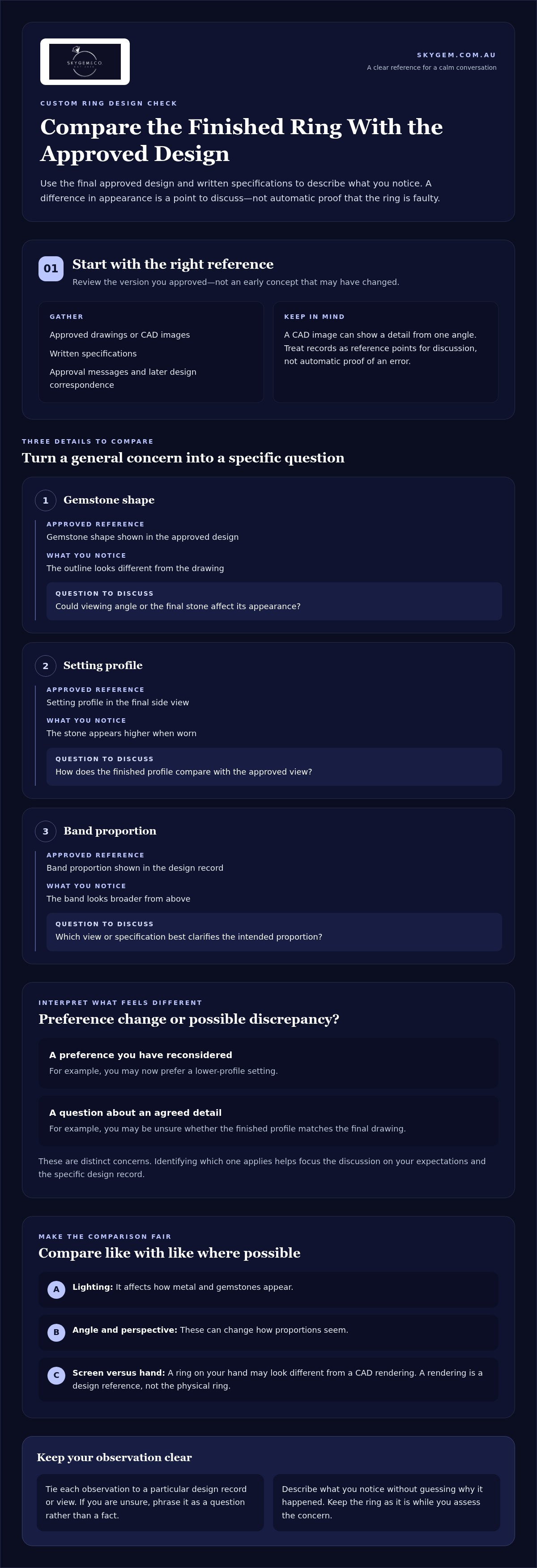
Once you’ve pinpointed what feels different, compare the ring with the final design records. Approved drawings, CAD images and written specifications can help clarify what was agreed. They’re reference points for discussion, not automatic proof that a ring is faulty or was made incorrectly.
Which design details should you review?
Start with the version you approved, not an early concept that may have changed during the process. Look at documented choices such as gemstone shape, setting style, band proportions and metal. Check approval messages and later correspondence for any revised decisions. A CAD image may show a detail from a particular angle, so record what you observe without treating an impression as a confirmed difference.
Be precise. Instead of writing “the setting is wrong,” you could note, “the centre stone appears higher than in the approved side view.” If the band looks broader, record the view you’re comparing. Clear descriptions make it easier to discuss the detail without assuming why it looks that way.
Preference change or possible discrepancy?
A finished ring can look different in person even when it follows the approved design. Lighting affects how metal and gemstones appear, while camera perspective and viewing angle can change how proportions seem. The ring on your hand may also look different from a CAD rendering on a screen. Compare like with like where possible, remembering that a rendering is a design reference rather than the physical ring.
Separate a preference you’ve reconsidered from a question about whether an agreed detail was followed. You might now prefer a lower-profile setting, or you might be unsure whether the finished profile matches the final drawing. These are distinct concerns. Explaining which one applies helps focus the conversation on your expectations and the specific design record.
Use a simple comparison record to organise your observations:
| Agreed detail | Observed result | Question to discuss |
|---|---|---|
| Gemstone shape shown in the approved design | The outline looks different from the drawing | Could viewing angle or the final stone affect its appearance? |
| Setting profile in the final side view | The stone appears higher when worn | How does the finished profile compare with the approved view? |
| Band proportion shown in the design record | The band looks broader from above | Which view or specification best clarifies the intended proportion? |
Tie each observation to a particular record or view. If you’re unsure, phrase it as a question rather than a fact. Comparing the design reference, the finished feature and your concern gives the discussion a practical focus.
How to Raise a Concern About a Custom Ring Constructively
Contact the jeweller once you’ve identified what you want to discuss. A concise message focused on observable details gives them a useful starting point. You don’t need to settle every question in your first note; the aim is to explain your concern and arrange a conversation about it.
Before getting in touch, decide what would help you move forward. You may want an explanation of a design detail, a discussion about comfort or an assessment of how the finished ring compares with the approved design. State your main priority and be open to discussing the piece before settling on a solution.
Prepare the information before the conversation
Gather the final design approval, relevant specifications and correspondence so you can refer to the same agreed version. Note what concerns you, when you first noticed it and whether it affects wearing the ring. Photographs can help illustrate a visible detail, but explain what each one shows rather than expecting the jeweller to infer the issue.
- Concern: What specific detail or experience do you want to discuss?
- Context: When did you notice it, and under what conditions?
- Priority: Are you seeking clarification, improved comfort or a design discussion?
- Reference: Which approved drawing, specification or message relates to it?
This preparation is useful for questions about appearance, fit or a detail that seems different from the design records. It also helps keep the discussion focused on the outcome that matters most to you.
Describe the issue clearly and respectfully
Use neutral, specific wording. “The ring feels loose during normal wear” or “the setting appears higher than in the approved side view” explains what you want assessed. Saying “you made it wrong” assigns blame before you’ve discussed the details and can make it harder to establish what happened.
Ask for an assessment and a discussion of suitable next steps without assuming which remedy is appropriate. Design and construction choices are connected, so the jeweller may need to examine the piece and compare it with the approved records before discussing options. Wait until you understand the proposed work before authorising a change.
Sample message structure: “Hello, I’d like to discuss a concern about my custom ring. I’ve noticed [specific observation] when [situation or viewing condition]. I’ve attached [relevant photograph or design record]. My main priority is [clarification, comfort or design discussion]. Could we arrange an assessment and discuss suitable next steps? I’d appreciate a written note of any agreed follow-up actions.”
Keep a copy of your message and any response. If you speak in person or by phone, summarise any decisions in writing afterward. A shared record helps clarify what was discussed without committing you to a change before you’re ready.
Assess Possible Ring Adjustments Before Authorising Work
Assess any proposed adjustment in relation to the feature you want changed and the ring’s construction. A fit-related request is different from a change to the height or appearance of a setting. The gemstone, setting and band form a connected design, so an adjustment should be considered in the context of the whole piece, not treated as a generic fix.
Ask the jeweller to explain the proposed work in clear terms before agreeing to it. Find out which part of the ring would be altered, what the change is intended to address and what would remain the same. If your concern is visual, discuss how the work relates to the appearance you want. If it’s about comfort or fit, make sure the recommendation addresses that practical concern.
Questions to resolve before a change
The ring may need to be examined before a recommendation can be properly discussed. Ask what the assessment is intended to establish and what options can be considered afterward. This helps distinguish an initial possibility from a recommendation based on the specific piece. Before authorising work, make sure you understand its purpose and how it relates to your concern.
- What specific feature will the proposed work change?
- What will remain the same after the adjustment?
- How could the work affect the setting or gemstone?
- What result is the recommendation intended to achieve?
- Are there limitations or trade-offs to consider before proceeding?
Ask for technical details to be explained in plain language. You can also ask how the proposed result would look or feel different from the ring as it is now. Clear answers help you judge whether the suggested approach fits your priorities instead of agreeing simply because it has been offered as an option.
Consider the recommendation before deciding
Take time to review the proposed work and any written assessment. Check that the recommendation reflects the concern you raised and that it addresses that concern without creating a different outcome you don’t want. If anything remains unclear, ask for an explanation before giving approval. A consultation can bring the design, manufacturing and stone-setting considerations into the same discussion.
SkyGem & Co. offers bespoke design and manufacturing, from CAD design to final stone setting. A consultation can help you discuss your ring’s construction and possible next steps before you decide whether to proceed with an adjustment.
Reach a Clear Next Step With Bespoke Jewellery Guidance
A useful sequence is straightforward: document the concern, compare the ring with the approved design, discuss the difference and then decide what should happen next. You don’t need to arrive with a diagnosis or a preferred alteration. The purpose of the conversation is to understand the ring and your priorities well enough to make an informed decision.
For a bespoke piece, the design history can connect the original concept with the finished ring. SkyGem & Co.’s bespoke work includes CAD design, manufacturing and stone setting, providing relevant context for discussing how design choices relate to the completed piece. Bring the records and observations that relate to your question so the conversation can focus on the details that matter to you.
What a useful consultation should clarify
A consultation gives you the opportunity to explain what you expected, what you notice now and which outcome matters most. The discussion can bring together the relevant design approval, your observations and any practical effect on wearing the ring. From there, you can consider a next step based on the piece and the concern, rather than starting with an assumed solution.
You can discuss whether the issue relates to a documented design detail, comfort, appearance or another point that needs closer assessment. If the ring needs to be examined before a recommendation is possible, ask what the assessment is intended to establish. The aim is shared understanding, not pressure to choose an alteration during the conversation.
Move forward without rushing the decision
Before agreeing to proposed work, make sure you understand its purpose, scope and possible implications for the ring’s construction, setting or gemstone. Take time to review any written recommendation and decide whether it addresses your priority. Asking for clarity is a constructive part of resolving a concern.
If you’re still deciding what to do if your custom ring isn't what you wanted, focus on the detail that concerns you, the relevant design record and the outcome you want to discuss. A bespoke jewellery consultation can help you work through those points before you decide on a next step.
Make Your Next Decision With Confidence
When a ring doesn’t feel as expected, an immediate change may not be the most useful first step. Clarify what you’re noticing, compare it with the approved design and ask questions about any recommendation. You can take time to consider whether proposed work aligns with your priorities before agreeing to it.
If you’re weighing what to do if your custom ring isn't what you wanted, treat the next conversation as a chance to understand the difference, not a commitment to a particular outcome. Raising a concern respectfully is a reasonable way to seek clarity about a piece made to personal specifications.
With the relevant information and an open discussion, you can make your next decision with greater confidence and care for the ring.
Frequently Asked Questions
What should I do first if my custom engagement ring looks wrong?
Identify whether your concern is about appearance, how the ring feels or a feature that seems damaged. That distinction helps you decide what to discuss. If you’re working out what to do if your custom ring isn't what you wanted, focus on the outcome that matters most, such as comfort or understanding a design choice. Set the ring aside if you’re concerned about its condition.
Can I ask a jeweller to change a custom ring after it is finished?
Yes. You can ask to discuss a change after the ring is finished, without agreeing to proceed or assuming a particular alteration or result. Explain what you would like to be different and ask about the options. You can then decide whether to proceed, ask more questions or take time to consider the recommendation.
How do I know whether my custom ring differs from the approved design?
Compare it with the final approved version, not an earlier draft that may have changed during the process. Approval emails or messages can help identify which version was accepted. If a feature remains unclear, ask the jeweller to explain how that design point was interpreted. The comparison is easier when you can identify the specific detail rather than relying on a general impression.
Should I keep wearing a custom ring I am unhappy with?
That depends on whether the concern is about preference or a practical issue. If you simply need time to get used to the look, you may choose to wear it briefly in ordinary settings and consider how it feels. If it causes discomfort or you’re concerned about its condition, set it aside and discuss the issue before wearing it again.
Can I resize or alter a custom ring myself?
Don’t attempt resizing or other alterations yourself. A ring’s design and construction may be affected by a change, and an improvised adjustment can make it harder to restore the intended form. Describe the result you want to the jeweller instead, so the ring can be assessed before any professional alteration is considered.
What if I changed my mind about the ring’s design after approving it?
Explain which choice you would now make differently and what you learned from seeing the finished ring. You may, for example, have found that a particular proportion doesn’t suit your style or that you prefer a different visual balance. Be clear that your preference has changed, then discuss what options may be practical for the ring.
What are my rights if a custom ring is not as agreed in Australia?
Australian Consumer Law may be relevant if a product doesn’t meet a consumer guarantee, but how the law applies depends on the facts of the purchase and the concern. Keep your agreement and communications available, and explain clearly what you believe wasn’t supplied as agreed. For guidance about your circumstances, consult the Australian Competition and Consumer Commission or your state or territory consumer protection agency.
Disclaimer
This article is for general informational purposes only and may include AI-assisted content. Pricing, specifications, and availability are subject to change. For accurate advice and current information, please contact SkyGem & Co. directly. Nothing in this content constitutes professional or financial advice.