
What If I Don't Like the Final Custom Ring?

The "big reveal" of a custom engagement ring shouldn't be a moment of high-stakes anxiety, yet many clients find themselves lying awake wondering, what if I don't like the final custom ring? It's a valid concern when you're investing in a bespoke piece that, by industry standard, is non-refundable and non-exchangeable. The gap between a technical CAD drawing and a physical ring can feel wide, especially when your financial and emotional stakes are so high. We understand that this investment represents more than just a purchase; it's a commitment to a long-term asset that requires absolute precision.
This guide clarifies how a professional bespoke process replaces guesswork with technical certainty. You'll learn how prototyping, 3D modeling, and transparent consultation ensure the final piece aligns with your specifications before the metal is cast. We'll also examine the practical modifications available, from resizing to stone resetting, should your vision require a post-production adjustment. By focusing on precision and partnership, you can approach your custom project with the confidence that the final result will be a permanent and successful reflection of your intent.
Key Takeaways
- Distinguish between aesthetic preference and technical non-conformance to identify the specific nature of any design concern.
- Learn how high-resolution CAD renders and physical stone inspections mitigate the anxiety of what if I don't like the final custom ring before production begins.
- Evaluate technical factors such as proportional balance and setting height to understand why a bespoke piece might feel visually misaligned.
- Identify the technical remedies available post-production, including prong re-shaping and band refinishing, to refine the final aesthetic.
- Discover how a structured, transparent design partnership ensures long-term viability and satisfaction with your custom investment.
Custom Design Risk: Aesthetic vs. Technical Regret
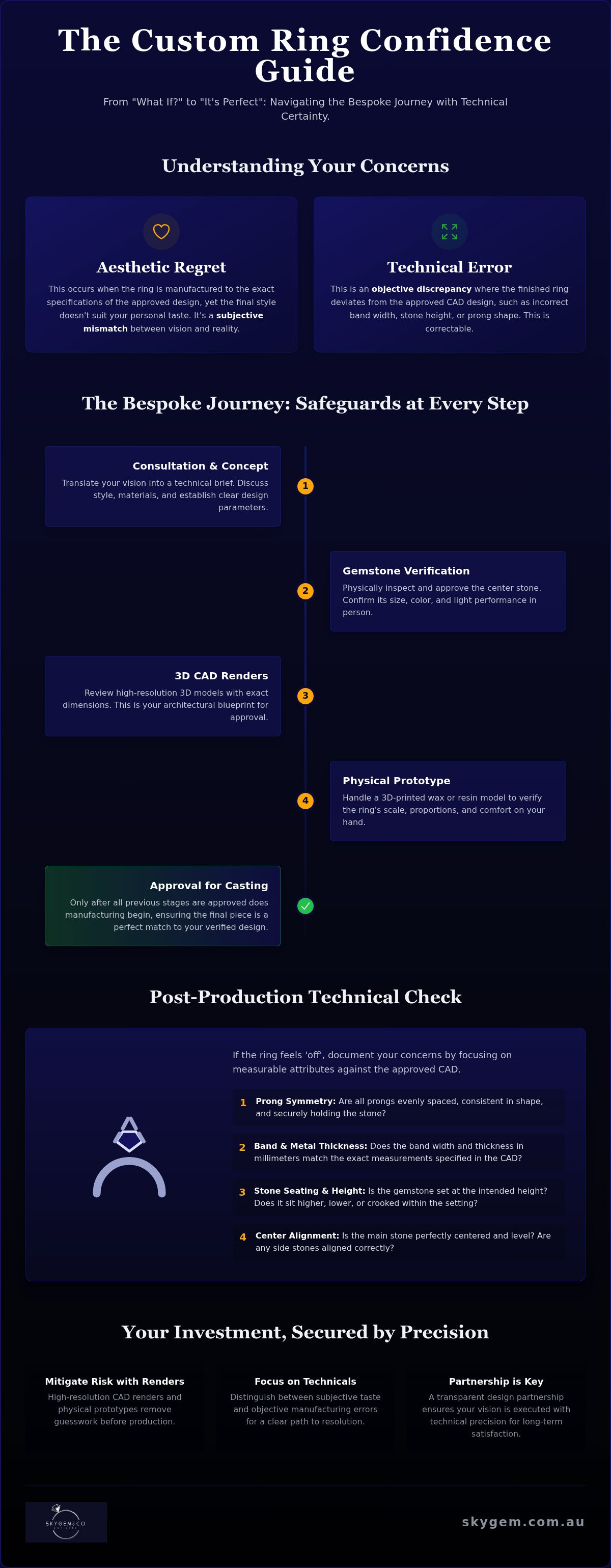
The transition from a conceptual drawing to a physical asset involves a complex series of technical transitions. When a client asks, "what if I don't like the final custom ring," they are often reacting to a fear of the unknown. To address this anxiety, we must distinguish between two distinct types of dissatisfaction: aesthetic regret and technical error. Identifying which category a concern falls into is the first step toward a technical resolution.
Aesthetic regret occurs when a piece is manufactured to the exact specifications of the approved design, yet the wearer finds the style does not suit their hand or personal taste. This is a subjective mismatch. In contrast, a technical error is an objective discrepancy where the finished piece deviates from the agreed-upon CAD (Computer-Aided Design) proportions. Most instances of dissatisfaction stem from a breakdown in technical communication during the initial bespoke design process. When specific dimensions like band width, setting height, or stone orientation aren't clearly quantified, the "expectation gap" widens.
The Psychology of the Bespoke Reveal
The moment of reveal is a significant sensory shift. You are moving from a flat, 2D screen or a matte 3D-printed wax model to a high-polish metal finish with active light refraction. This change in material properties can be jarring. Initial shock is frequently a matter of the eye adjusting to the physical weight and brilliance of the precious metals and gemstones. The art of jewellery design relies on managing these visual expectations through consistent technical consultations. A professional partner should explain how the light performance of a centre stone will change once it is secured in a setting versus viewed as a loose gem.
Identifying Manufacturing Discrepancies
If the final piece feels "wrong," it is essential to compare the physical ring against the approved technical specifications. Objective issues are much easier to remedy than subjective ones. When documenting your concerns for a consultation, focus on measurable attributes:
- Prong Symmetry: Are the prongs evenly spaced and consistent in shape?
- Metal Thickness: Does the band width match the millimetre measurements provided in the CAD?
- Stone Seating: Is the gemstone set at the height specified, or does it sit higher or lower than intended?
- Alignment: Is the centre stone perfectly centred and level within the setting?
Documenting these specific elements allows your jeweller to identify whether the issue is a manufacturing deviation or a design preference that requires a different technical approach. Precision in your feedback ensures that any necessary adjustments are based on data rather than vague impressions.
The Bespoke Design Journey: Safeguards Against Uncertainty
A professional bespoke journey is a structured technical partnership, not a single "reveal" event. It's a series of verified checkpoints designed to eliminate the variables that lead to dissatisfaction. Many clients approach the design phase with a lingering doubt: what if I don't like the final custom ring? A methodical process answers this by treating every design choice as a technical specification that requires your explicit verification before moving to the next stage of production.
By establishing clear technical parameters at each stage, the final outcome becomes a predictable result of engineering rather than a gamble of artistic interpretation. This sequence ensures that the aesthetic vision is physically viable and aligns with your expectations for scale, comfort, and light performance. It's about building confidence through transparency and data.
Stone Selection and Procurement
The foundation of any custom piece is the centre gemstone. Viewing a natural or lab-grown diamond in person is vital for establishing confidence. Digital certificates provide data on dimensions and clarity, but they don't capture the unique light performance or the "face-up" size of the gem. For designs featuring Australian sapphires or unheated rubies, seeing the specific hue under various light sources is a technical requirement. This stage ensures the primary visual element of your ring is exactly as you intended before any metal is cast.
Mastering the CAD Approval Process
Computer-Aided Design (CAD) serves as the technical blueprint for your piece. It's essential to understand that CAD renders often look slightly "bulkier" than the final product. This is because the digital model represents the ring before the final hand-polishing and finishing stages, which remove microns of metal to create a refined profile. During this phase, you should verify specific metrics such as band width and setting height. If the digital model feels misaligned with your vision, requesting adjustments at this stage is a standard part of the process that prevents post-production regret.
The Physical Advantage of Wax Models
The transition from a digital render to a physical 3D-printed wax model is the ultimate insurance policy. This model allows you to test the scale of the centre stone relative to your finger size and verify the "stackability" with future wedding bands. It provides a tactile sense of the ring's proportions that a screen cannot replicate. If you find yourself questioning the design, this is the final opportunity to refine the geometry. You might find that exploring our range of precious gemstones helps you better visualize how the final colour and light play will interact with the physical form of the wax prototype.
Pinpointing the Issue: Why a Custom Ring Might Feel 'Wrong'
Even with a robust approval process, the final physical piece can sometimes feel visually discordant once it's on the hand. If you find yourself asking, what if I don't like the final custom ring, the issue usually lies in a specific technical attribute rather than the overall quality of the build. Identifying these nuances requires a methodical look at the ring's geometry and how it interacts with light and the wearer's anatomy.
Dissatisfaction often stems from subtle mismatches in scale or material interaction. For instance, the choice of metal can significantly alter the perceived colour of a centre stone. While platinum offers a naturally cool, greyish-white lustre, 18K white gold has a slightly warmer undertone that is masked by rhodium plating. If that plating wears or if the diamond has a lower colour grade, the interaction might not be what you envisioned. Similarly, the "stacking" problem occurs when a setting is designed too low, preventing a wedding band from sitting flush against the engagement ring. This creates a functional gap that can be frustrating for those seeking a seamless bridal set.
Proportions and Visual Weight
The technical balance between structural integrity and delicate aesthetics is a fine line. A band that appeared thin in a CAD render may feel surprisingly substantial in solid metal. This is particularly true for a solitaire engagement ring, where the band's taper dictates the visual impact of the centre stone. If the band is too wide, it can overwhelm a smaller gemstone; if it's too narrow, it might lack the durability required for lifelong wear. Identifying whether the issue is the setting style, such as a trilogy versus a halo, helps determine if a redesign is necessary or if simple modifications can restore the visual balance.
The Impact of Setting Style on Stone Performance
The way a gemstone is secured directly affects its brilliance and fire. "Heavy" prongs or thick bezels can block essential light paths, reducing the performance of even a high-quality natural diamond. A professional jeweller focuses on hand-finishing to ensure prongs are as unobtrusive as possible. You should evaluate the following elements to see if they contribute to the ring feeling "off":
- Prong Style: Claws or eagle prongs offer a sharper, more modern look, while round prongs feel traditional and soft.
- Setting Height: A high-profile setting maximizes light entry but increases the risk of catching on daily items; a low-profile setting is practical but may dampen light return.
- Metal Volume: Excessive metal around the gallery can make the centre stone appear smaller than its actual carat weight.
By pinpointing these specific technical factors, you move away from a vague sense of dislike toward a clear, actionable list of refinements. This clarity is essential for a productive consultation with your design partner.
Understanding that bespoke jewellery is generally non-refundable can be daunting. However, unlike mass-produced items, custom pieces are engineered with specific technical tolerances that allow for post-production refinement. If you find yourself asking, what if I don't like the final custom ring, you aren't stuck with a static object. You have a physical asset that can be modified through several precise mechanical processes. These technical remedies bridge the gap between a finished piece and your ultimate satisfaction.
Minor adjustments often resolve the majority of aesthetic concerns. Resizing is the most common modification. While standard rings can often be adjusted by several sizes, pieces with intricate pavé or eternity settings require more delicate handling to ensure the structural integrity of the side stones remains intact. Beyond fit, refinishing the metal's texture from high-polish to matte or satin can fundamentally change the ring's visual weight and character without altering its core geometry. These surface-level changes are efficient ways to align the piece with your personal style.
For more significant shifts in vision, prong modification or head replacement offers a technical solution. If the prongs feel too dominant, a master jeweller can thin or re-shape them into eagle claws or soft rounds to better showcase the centre stone. In cases where the entire setting style feels incorrect, the "head", which is the part holding the stone, can sometimes be replaced while retaining the original "shank" or band. This targeted intervention preserves much of the initial investment while delivering a completely different aesthetic profile.
Minor Adjustments vs. Major Overhauls
Technical limits define the scope of any modification. Resizing a band with diamond-set shoulders, for example, is restricted to approximately two sizes to avoid loosening the settings. Using professional jewellery repair and maintenance techniques ensures that these refinements don't compromise the piece's long-term viability. While aesthetic refinements are often straightforward, structural changes like lowering a setting height may require a partial remake of the ring's gallery to maintain the stone's security.
The 'Remake' Policy
The distinction between a technical error and aesthetic regret is crucial for manufacturing guarantees. If a final piece deviates from the approved CAD specifications, a reputable jeweller will typically rectify the discrepancy as part of their commitment to precision. If the ring matches the brief but you desire a change in style, a remake fee usually applies to cover the labour and additional materials. Establishing a clear, written design brief is the most effective way to ensure your vision translates accurately into metal. If you're ready to begin a project built on technical transparency, you can consult with a technical design partner to explore your options.
The SkyGem & Co. Approach: Precision Through Partnership
At SkyGem & Co., we view the bespoke journey as a technical consultancy rather than a simple retail transaction. We understand that the underlying anxiety of "what if I don't like the final custom ring" usually stems from a lack of transparency in the manufacturing process. To mitigate this risk, we have engineered a "no-surprises" model that prioritizes data-driven design and open technical communication. We don't rely on vague artistic interpretations; we rely on precise specifications that you verify at every critical milestone.
Our commitment to long-term viability begins with the raw materials. We provide expert guidance on selecting the right precious gemstones for your specific design requirements. Whether you are choosing a high-performance lab-grown diamond or a rare Australian sapphire, we explain how the stone's physical properties will interact with the metal setting. This technical alignment ensures that the final piece is not only aesthetically pleasing but structurally sound for decades of daily wear. Our Melbourne-based master craftsmen then execute the design with hand-finished precision, ensuring every prong and gallery meets our rigorous internal standards.
Technical Expertise Meets Aesthetic Vision
We provide high-resolution CAD renders and physical 3D prototypes for every project to bridge the gap between imagination and reality. As a boutique specializing in bespoke engagement rings, we focus on the granular details that mass-market retailers often overlook. This includes verifying the metal volume, the exact millimetre width of the band, and the clearance required for a flush-fitting wedding band. Our adherence to regional regulatory standards and premium sourcing protocols acts as a recurring signature of reliability for our clients.
Your Path to a Perfect Custom Ring
The process starts with an intensive discovery session where we align on design language and functional requirements. We manage the complex transition from a loose gemstone to a finished heirloom by treating each stage as a verified checkpoint. This methodical approach ensures that by the time the ring is cast in metal, all uncertainty has been engineered out of the project. If you are ready to move forward with a partner who values performance over hype, we invite you to book a technical design consultation. We'll explore your vision with the confidence that comes from professional expertise and transparent manufacturing.
Securing Your Vision Through Technical Precision
Bespoke design is a methodical partnership that prioritizes technical accuracy over guesswork. By distinguishing between subjective preference and objective manufacturing specifications, you gain a clear framework for evaluating your investment. The integration of high-resolution CAD renders and physical wax prototypes ensures that every proportion is verified before the final casting. This structured approach effectively eliminates the common anxiety regarding what if I don't like the final custom ring, as each checkpoint serves as a formal verification of your design intent.
As a Melbourne based boutique specializing in GIA certified diamonds and rare Australian sapphires, our focus remains on hand-finished precision and long-term viability. We believe that a successful custom project is built on the foundation of expert consultation and transparent manufacturing protocols. If you're ready to transform your vision into a permanent asset with absolute confidence, we invite you to Book a Bespoke Design Consultation with Our Experts. We look forward to engineering a piece that meets your technical requirements and aesthetic expectations with quiet confidence.
Frequently Asked Questions
Can I return a custom-made engagement ring if I don't like it?
Custom-made items are generally non-refundable and non-exchangeable because they're engineered to your specific requirements. Since the piece is unique to your design brief and finger size, it cannot be easily resold. This industry-standard policy is why professional design partners use multi-stage approval processes to ensure the final product matches your expectations before the manufacturing phase begins.
What is the difference between a CAD render and the final ring?
A CAD render is a digital technical blueprint, whereas the final ring is a hand-finished piece of fine jewellery. You'll notice that CAD models often look slightly "bulkier" or heavier than the finished product. This is intentional; the digital model accounts for the metal that will be removed during the final stages of hand-polishing and refining. The final ring will have a much higher lustre and more delicate proportions than the screen render suggests.
Is it possible to change the setting of a custom ring after it's finished?
Technical modifications are possible after production, though the scope depends on the ring's construction. Simple changes like thinning the prongs or altering the metal's finish from polished to matte are relatively straightforward. However, significant changes to the setting style, such as moving from a solitaire to a halo, typically require remaking the entire head or melting down the metal for a total redesign.
How much does it cost to redesign a custom ring?
The cost of a redesign varies based on the complexity of the technical changes and whether the original materials can be salvaged. If you're simply resetting a stone into a new mount, you'll primarily be covering the labour and any additional metal required. Since bespoke work is highly specific, costs are calculated based on the precise requirements of the new design brief rather than a flat fee.
Will a wax model look exactly like my final ring?
A 3D-printed wax model accurately represents the physical scale and proportions of your design but lacks the aesthetic finish of the final metal. It's a prototype designed for you to test the finger coverage and the "stackability" with other bands. The wax is opaque and won't show the light performance of the gemstones, but it serves as the ultimate insurance policy for verifying the ring's physical dimensions.
What happens if the jeweller makes a mistake in the custom design?
If a manufacturing discrepancy occurs where the final piece deviates from the approved CAD specifications, the jeweller is responsible for rectifying the error. This is a primary reason why clients worry, "what if I don't like the final custom ring?" Technical errors are objective mismatches that a reputable boutique will correct as part of their commitment to precision and partnership. Documenting specific deviations from the brief ensures a swift technical resolution.
Can I use my own gemstone for a bespoke setting?
Most bespoke specialists allow you to provide your own gemstone, provided it passes a thorough technical inspection for structural integrity. The setting must be engineered to the exact millimetre dimensions of your stone to ensure a secure fit and optimal light return. Using an heirloom stone in a new bespoke setting is a common way to blend personal history with modern technical design standards.
How long does the bespoke design process typically take?
The bespoke journey generally requires four to eight weeks from the initial discovery session to the final reveal. This timeline accounts for the technical stages of stone procurement, CAD development, wax prototyping, and the meticulous hand-finishing performed by master craftsmen. While complex designs may take longer, this steady pace ensures that every regulatory standard and quality checkpoint is met without compromising the piece's long-term viability.