
Unheated Peach Sapphire Value: The 2026 Professional Appraisal Guide

An unheated peach sapphire isn't just a stylistic choice; it's a commitment to a rare geological event that no laboratory heat treatment can truly replicate. You're likely looking for a stone that balances delicate aesthetics with long-term durability, yet the market's technical jargon often makes it difficult to distinguish an investment-grade specimen from a common treated stone. Understanding the nuances of unheated peach sapphire value requires looking beyond the surface color to the structural integrity and geochemical origin of the crystal.
This guide provides the technical framework you need to evaluate these specimens with the precision of a professional consultant. We'll examine the critical distinctions between standard peach and certified Padparadscha classifications, the impact of the January 2026 GIA fee updates on origin reporting, and how to verify the untreated status that drives significant market premiums. By focusing on the intersection of light performance and rarity, you'll gain the confidence to select a high-quality sapphire that serves as a permanent asset for your fine jewellery project.
Key Takeaways
- Learn how trace element composition and the absence of thermal intervention define the premium unheated peach sapphire value in the current 2026 market.
- Identify the exponential price thresholds at key carat weights and understand why mid-tone saturation often provides superior aesthetic performance over vivid hues.
- Evaluate the technical superiority of sapphire’s Mohs hardness of 9 against softer alternatives like morganite to ensure the long-term structural viability of daily-wear rings.
- Assess the impact of geographic origin, specifically the "Ceylon Premium," on crystal clarity and the overall rarity of your selected specimen.
- Discover how strategic metal selection and sourcing loose stones allow for greater technical precision and design integration in bespoke jewellery projects.
What Defines the Value of an Unheated Peach Sapphire?
The value of a gemstone isn't just about its visual appeal; it's about the specific conditions of its formation. A peach sapphire is a specific Sapphire mineral variety known as corundum. While most sapphires are celebrated for their vivid blues, the peach variety occupies a unique niche where the crystal’s chemical composition hits a precise equilibrium. When we discuss unheated peach sapphire value, we're referencing stones that achieved their delicate balance of colour entirely through geological pressure and temperature over millions of years.
Most gemstones found in the earth don't possess a commercially desirable colour in their raw state. Consequently, the vast majority of all sapphires undergo thermal enhancement to improve clarity or saturate hues. An unheated specimen is a rarity; it's a stone that emerged from the ground already possessing a refined aesthetic. Because of this scarcity, unheated stones typically command a premium of 30 to 50 percent over their heated counterparts. This baseline is a fundamental component of the unheated peach sapphire value in professional appraisals. For collectors and investors, this premium represents the stone’s status as a finite, natural artifact.
The Chemistry of the Peach Hue
The specific peach aesthetic is the result of a complex interplay between iron and chromium trace elements. Iron typically introduces yellow or orange tones, while chromium provides the pink or red spectrum. In a high-quality peach sapphire, these elements exist in a delicate ratio. Unlike heated stones, which can sometimes appear flat due to the alteration of internal structures, unheated specimens often possess a natural glow. This is frequently attributed to the preservation of the stone’s original crystal lattice and the presence of secondary overtones, such as soft violet or vibrant orange, which add depth to the primary hue.
Thermal Treatment vs. Natural Stability
Thermal treatment is a standard industrial process used to fix colour by dissolving silk or altering the oxidation state of trace elements. While this produces a beautiful result, it removes the stone's status as a purely natural product. Unheated sapphires are often called geological miracles because they require no such intervention to reach professional standards. When selecting stones for precious gemstones collections, the disclosure of treatment is paramount. A lack of thermal intervention ensures the stone’s colour is naturally stable and preserves its long-term appraisal value. The market continues to place a higher price on untreated rarity.
Primary Factors Influencing Unheated Peach Sapphire Value
Assessing unheated peach sapphire value involves a multi-layered technical framework. Unlike standardized white diamonds, sapphires are evaluated on a sliding scale where geological rarity and aesthetic balance carry equal weight. Carat weight represents the most immediate price driver. You'll observe exponential value increases at the 1ct, 2ct, and 3ct thresholds. Finding a high-clarity, unheated specimen over 2 carats is statistically improbable, which accounts for the sharp market premium at these levels compared to smaller stones.
Colour saturation provides the next layer of the appraisal. While deep saturation is prized in blue varieties, the peach aesthetic relies on a delicate pastel balance. The Gemological Institute of America classifies these as fancy sapphires, a category that includes the prestigious pinkish-orange Padparadscha. For a standard peach sapphire, the goal isn't necessarily "vivid" saturation, which can push the stone into a brownish or overly orange territory. Instead, the value lies in a sweet spot of medium-light saturation that maintains its brilliance across different environments. If you are currently comparing stones for a project, reviewing a curated selection of natural sapphires can help you identify these subtle shifts in saturation.
The Colour Spectrum: Champagne, Apricot, and Rose
The most valuable peach sapphires sit within a specific colour window often described as apricot or rose-champagne. Brown or grey modifiers are the primary enemies of value; even a slight "muddy" undertone can lead to significant price depreciation. It's also vital to evaluate the stone in varied lighting. A stone that appears vibrant in daylight may lose its life under incandescent bulbs. Professional appraisals prioritise specimens that maintain a consistent, warm "glow" regardless of the light source.
Clarity and Inclusions in Unheated Specimens
In the world of untreated gems, total transparency is exceptionally rare. You'll often find "fingerprint" inclusions, which are tiny fluid-filled tubes that actually serve as a hallmark of natural, unheated origin. These internal features are proof that the stone hasn't been subjected to the high temperatures required to dissolve them. Eye-clean clarity for peach sapphires is defined as the total absence of visible inclusions when the stone is viewed at a distance of 15cm under standard lighting conditions.
Cut Precision and Light Performance
The cut of a sapphire determines how effectively it handles light. A "windowed" stone, where the pavilion is cut too shallow, allows light to leak through the centre rather than reflecting it back to the eye. Such a defect can cause a stone to lose up to 40% of its potential unheated peach sapphire value. Precision faceting ensures the stone displays an even "scintillation" or sparkle across its entire surface, which is critical for light-toned gems that rely on brilliance to showcase their colour.
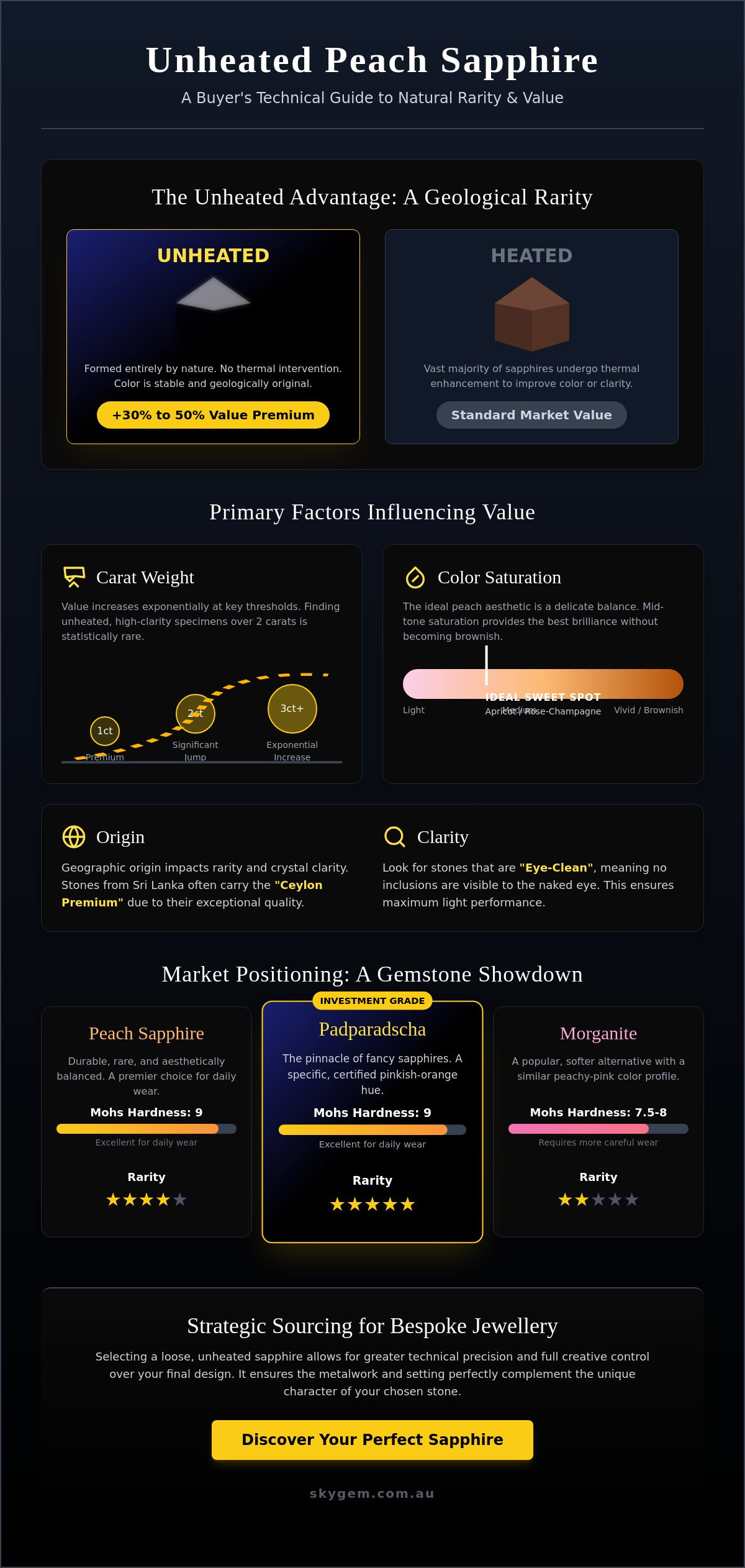
Market Positioning: Peach Sapphires vs. Padparadscha and Morganite
A frequent objection in the professional consultation process is the visual similarity between peach sapphires and morganite. While both stones offer a romantic, pastel aesthetic, the technical and financial justifications for choosing corundum are significant. The unheated peach sapphire value is underpinned by its physical resilience and its position within the global gemstone hierarchy. In contrast, morganite is a variety of beryl that, while beautiful, lacks the structural density and light performance required for a lifetime of daily wear.
The market distinguishes these stones through three primary metrics: hardness, refractive index, and rarity. Sapphire boasts a Mohs hardness of 9, making it the second hardest natural mineral used in jewellery. Morganite sits between 7.5 and 8. While this may seem like a narrow margin, the Mohs scale is non-linear; sapphire is significantly more resistant to the micro-abrasions that dull a stone's surface over time. For those selecting stones for engagement rings, this durability is the primary factor in long-term value retention.
The Padparadscha Distinction
The most prestigious tier of the peach spectrum is the Padparadscha sapphire. To qualify for this specific trade name, a stone must exhibit a delicate, simultaneous blend of pink and orange with no dominant brown modifiers. A laboratory certificate confirming the Padparadscha status can triple the stone's value compared to a standard peach specimen. In the 2026 market, unheated Padparadscha specimens over 2 carats have reached prices between $12,000 and $25,000 per carat. This reflects their status as one of the world's rarest geological artifacts, often sparking debates between "Sunset" (orange-dominant) and "Lotus" (pink-dominant) colour preferences among high-end collectors.
Sapphire vs. Morganite: The Longevity Argument
Beyond hardness, morganite has a technical affinity for oils and dirt, which causes it to lose its lustre far more quickly than sapphire. This "clouding" effect requires frequent cleaning to maintain the stone's refractive performance. Sapphire’s higher refractive index ensures it maintains a superior "sparkle" even when slightly soiled. From an investment perspective, unheated natural sapphires historically retain or increase in value, whereas semi-precious stones like morganite often depreciate once they enter the secondary market. Current data indicates that unheated peach sapphires in the 1-carat range typically trade between $400 and $1,500 per carat, providing a stable middle ground between the affordability of semi-precious beryl and the extreme rarity of certified Padparadscha.
Evaluating Rarity: Origin, Treatment, and Supply Dynamics
The geographic source of a gemstone acts as a primary determinant of its market liquidity and long-term appreciation. While peach-toned corundum is found in several global deposits, the market for untreated specimens is increasingly segmented by origin. Sri Lanka, Madagascar, and Tanzania represent the primary sourcing hubs. However, the unheated peach sapphire value is not distributed equally across these regions. Collectors often prioritise historic mining locations that have a proven track record of producing crystals with superior internal chemistry and light-handling properties.
As of mid-2026, the supply chain for high-quality unheated stones remains constrained. Increased regulatory scrutiny in mining regions and a shift towards domestic value-addition in source countries have limited the volume of rough stones reaching international markets. This scarcity has reinforced the premium for stones with documented, ethical provenance. Buyers now demand a "birth certificate" for their gems, viewing traceability as a non-negotiable component of a stone’s professional appraisal.
The Prestige of Ceylon Origin
Sri Lanka, historically known as Ceylon, remains the most prestigious source for peach sapphires. The island's unique geological conditions frequently produce stones with a characteristic "silky" glow. This effect is caused by microscopic rutile inclusions that remain intact because the stone has never been subjected to thermal intervention. When these inclusions are fine and well-distributed, they scatter light internally, creating a soft, velvet-like brilliance that is difficult to find elsewhere. Ceylon origin can command a 15-20% premium over Madagascar stones of equal quality. This historic prestige is a significant driver of unheated peach sapphire value in the secondary and auction markets.
The Importance of Independent Certification
Verifying the absence of heat is a technical task that requires advanced spectroscopic analysis. Independent reports from GIA, GRS, or the ICA are essential for any significant purchase. These documents confirm the "No Indication of Thermal Treatment" status, which is the cornerstone of the stone’s rarity. You must also be wary of "diffused" stones. This is a process where beryllium or other elements are forced into the crystal lattice at high temperatures to create an artificial peach hue. A reputable lab report is the only way to ensure you aren't paying natural prices for a laboratory-altered product. If you are ready to secure a verified, investment-grade specimen, you can browse our current inventory of natural sapphires to find a stone with the necessary credentials.
For those managing a bespoke jewellery project, understanding these supply dynamics is vital for realistic timeline and budget planning. To begin your selection process with expert guidance, explore our collection of ethically sourced precious gemstones today.
Strategic Sourcing for Bespoke Jewellery
The final stage of securing a high-quality asset involves the strategic integration of the stone into a finished design. The choice of metal is a primary technical consideration that directly impacts the perceived unheated peach sapphire value. Rose gold is frequently selected for its ability to enhance the warm, apricot overtones of the crystal. Alternatively, using platinum or white gold provides a neutral backdrop that highlights the stone’s clarity and refractive brilliance. Each choice should be made based on the specific saturation levels and secondary overtones of the individual specimen to ensure the final piece achieves its maximum aesthetic potential.
Opting for loose stones rather than pre-set jewellery provides the necessary transparency for a professional appraisal. This approach allows for a comprehensive inspection of the pavilion and girdle, ensuring no hidden inclusions or structural flaws are masked by prongs or heavy metal work. For clients commissioning bespoke engagement rings, this methodology ensures that the mounting is engineered specifically to the stone's unique dimensions and light-performance requirements. It's a process that prioritizes the integrity of the gemstone over the convenience of a ready-made setting.
Designing Around the Stone
Settings should be chosen to maximize light entry and maintain the stone's natural glow. A halo setting is an effective strategy for stones in the 1-carat range, as it increases the visual footprint while protecting the stone's edges from accidental impact. Prong placement must be precise; poorly positioned claws can block the very light paths that define a sapphire's brilliance. You can explore our curated collection of precious gemstones to see how different cuts interact with various setting styles and metal tones.
The SkyGem & Co. Consultation Process
Our approach to sourcing unheated specimens is rooted in technical precision and partnership. We act as consultants for our clients, identifying stones that meet rigorous quality benchmarks before they ever reach the design phase. This process prioritizes transparency in pricing and comprehensive gemstone education, ensuring you understand the market variables affecting your purchase. Every stone we source undergoes a strict verification process to confirm its untreated status, aligning with the highest laboratory standards. This methodical path ensures that the unheated peach sapphire value is preserved from the initial mine-gate sourcing through to the final handcrafted setting. We focus on the long-term viability of the asset, considering how the setting will protect the stone during decades of daily wear while maintaining its original brilliance and investment appeal.
Securing Your Investment-Grade Specimen
Selecting an unheated peach sapphire is a technical decision that balances geological rarity with long-term structural integrity. As established in this guide, unheated peach sapphire value is fundamentally driven by the absence of thermal intervention and the prestige of documented origins like Sri Lanka. These stones offer a level of light performance and durability that softer alternatives simply can't match; this ensures your piece remains a permanent asset rather than a depreciating purchase.
Our team acts as your technical consultant throughout the sourcing process. We specialize in the acquisition of GIA-certified unheated sapphires and the engineering of custom-designed engagement rings that prioritize both aesthetic precision and daily-wear resilience. With our comprehensive national shipping and consultation services, we ensure that every client has access to expert oversight regardless of their location. Begin your journey with a bespoke gemstone consultation to find a specimen that meets your exact technical and stylistic requirements. We look forward to partnering with you on your next design project.
Frequently Asked Questions
How much does a 1 carat unheated peach sapphire cost in 2026?
The cost of a 1-carat specimen is determined by its hue, saturation, and geographic origin rather than a fixed price list. High-clarity stones with a balanced pink-orange ratio command a significant premium due to their scarcity in the untreated market. You should expect the unheated peach sapphire value to reflect the stone's individual light performance and the current supply constraints seen in the 2026 market.
Is an unheated peach sapphire more expensive than a diamond?
Generally, a standard peach sapphire is more accessible than a natural white diamond of equivalent size and quality. However, the pricing hierarchy shifts dramatically when comparing top-tier unheated specimens to lab-grown diamonds or smaller natural diamonds. Rare, certified Padparadscha varieties can occasionally exceed the price per carat of commercial-grade diamonds due to their extreme geological rarity and collector demand.
Can you tell the difference between heated and unheated peach sapphires by eye?
It's almost impossible to distinguish between heated and unheated stones with the naked eye. Professional gemologists use microscopic analysis to identify intact "silk" or fluid inclusions that would otherwise dissolve or alter under high heat. Because visual inspection is unreliable for determining treatment status, you should always insist on a report from a recognized laboratory to verify the stone's history.
Do unheated peach sapphires make good engagement rings?
These sapphires are excellent choices for engagement rings because of their superior hardness and chemical stability. With a Mohs rating of 9, corundum is highly resistant to the scratching and chipping that often affects softer stones like morganite. This durability ensures the gemstone maintains its original lustre and polish through decades of daily wear, making it a technically sound choice for a lifetime asset.
Why is Ceylon origin so important for peach sapphire value?
Ceylon origin is highly valued because Sri Lankan mines have a historic reputation for producing crystals with exceptional clarity and a unique internal "glow." Following the GIA fee updates on January 1, 2026, obtaining an origin report has become a more deliberate part of the professional appraisal process. This certification serves as a signature of quality that can significantly influence the unheated peach sapphire value in the global trade.
What is the best metal to pair with a peach sapphire to maximize its colour?
Rose gold is the most effective metal for enhancing the warm, apricot undertones of a peach sapphire. For those who prefer a cooler aesthetic, platinum or white gold provides a crisp contrast that emphasizes the stone's internal brilliance and pink secondary hues. The choice of metal acts as a technical tool to either harmonize with or highlight the specific saturation and light performance of your selected gem.
Is a peach sapphire the same as a Padparadscha sapphire?
A peach sapphire is not technically the same as a Padparadscha, though they belong to the same colour family. The term Padparadscha is reserved for a very specific, narrow range of pink-orange hues that must be certified by a reputable laboratory like GIA or GRS. While all Padparadschas can be described as having a peach tone, only a small fraction of peach sapphires meet the rigorous criteria for the Padparadscha trade name.
How do I care for my unheated peach sapphire jewellery?
You can maintain your sapphire jewellery by using warm water, mild detergent, and a soft-bristled brush. This simple cleaning routine removes the oils and dust that can accumulate behind the setting and dull the stone's refractive performance. You should avoid using harsh household chemicals or ultrasonic cleaners if the stone has significant internal inclusions, as these can occasionally compromise the stone's long-term stability.
Disclaimer
This article is for general informational purposes only and may include AI-assisted content. Pricing, specifications, and availability are subject to change. For accurate advice and current information, please contact SkyGem & Co. directly. Nothing in this content constitutes professional or financial advice.