
The Meaning of a Ruby Engagement Ring: Symbolism, History, and Value

A high-quality ruby can command a price per carat that exceeds a diamond of the same weight, with some "pigeon's blood" specimens fetching over A$1.5 million at auction. While the diamond remains the conventional standard, it's often the ruby that offers the greatest combination of rarity and structural integrity. You might worry that the meaning of a ruby engagement ring is somehow less formal or that the stone lacks the durability required for a lifetime of daily wear. It's a valid concern for anyone investing in a piece of fine jewellery that must withstand the rigours of an active Australian lifestyle.
Discovering the technical and historical significance of these stones validates them as a prestigious, high-value choice. This stone, a variety of the mineral corundum, boasts a Mohs hardness rating of 9.0, making it the second hardest natural gemstone available. We'll examine the specific trace elements like chromium that define its vivid red hue, the royal history that cements its status, and the practical grading tips you need to select a stone that offers long-term performance and aesthetic excellence.
Key Takeaways
- Explore the historical prestige and profound meaning of a ruby engagement ring, from its ancient status as the "Stone of Kings" to its modern symbolism of enduring passion.
- Assess the technical durability of rubies, which boast a 9/10 rating on the Mohs scale, making them a high-performance and resilient alternative to traditional diamonds for daily wear.
- Identify the critical factors in selecting a premium gemstone, including why colour density takes precedence over clarity and how specific cuts influence the ring's architectural character.
- Understand the value of bespoke Australian design and ethical sourcing to ensure your selection is both a sustainable investment and a unique reflection of your personal story.
The Core Symbolism: What Does a Ruby Engagement Ring Represent?
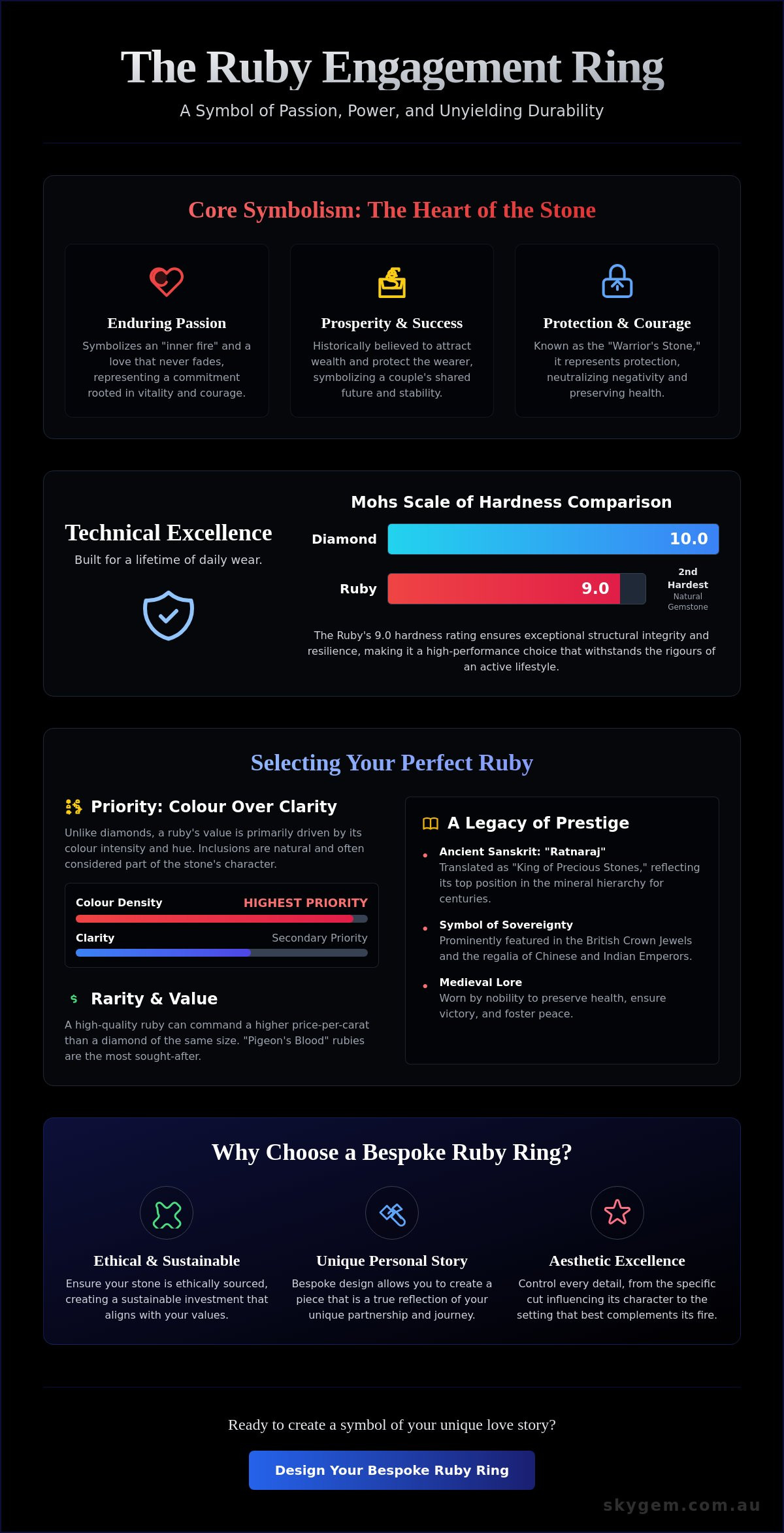
The ruby has occupied a position of pre-eminence for centuries. It's often called the "Stone of Kings" because it historically commanded higher market values and prestige than traditional diamonds in many ancient cultures. When exploring the meaning of a ruby engagement ring, you'll find it represents a deliberate departure from convention toward a more intense, enduring symbolism. This gemstone is a variety of the mineral corundum. Its structural integrity is reflected in Ruby gemstone properties, specifically its 9.0 rating on the Mohs scale. This hardness ensures the ring survives the rigours of daily wear in the Australian climate while maintaining its aesthetic excellence for decades.
The fiery red hue is inextricably linked to the heart and what many traditions call the "blood of the earth." Unlike other stones, the ruby's colour comes from chromium, which creates a natural fluorescence that appears to glow from within. This "inner fire" symbolises a passion that doesn't dim over time. For the modern partnership, choosing a ruby signifies a commitment rooted in vitality and courage. It's a bold statement for couples who value a relationship that's both resilient and energetically charged, moving away from the passive aesthetics of clearer stones.
The Emotional Connection: Love, Desire, and Commitment
The colour red has a documented psychological impact, often associated with increased heart rates and heightened emotional responses. In the context of a lifelong commitment, a ruby serves as a permanent visual anchor for intense devotion. Ancient gemstone lore describes the ruby as an inextinguishable flame that burns within the stone to guide and protect the wearer's heart. This makes it a powerful choice for those seeking engagement rings that prioritise depth of feeling over simple tradition. It acts as a daily reminder of the heat and energy required to sustain a long-term bond.
Rubies as a Symbol of Prosperity and Success
Beyond emotional depth, rubies have a long-standing association with material and professional success. Historical records suggest that owners of high-quality rubies believed the stones would attract and preserve wealth while protecting the wearer from misfortune. This makes the ring a symbolic talisman for a couple's shared future and long-term financial stability. As the July birthstone, it carries additional significance for summer engagements, representing the peak of solar energy and growth. Selecting a stone from a range of loose rubies allows for a bespoke approach to this tradition, ensuring the final piece aligns with both personal values and technical standards.
Historical and Cultural Significance of the Ruby
The ruby's status as a premier gemstone is not a recent development. In ancient Sanskrit, the stone was known as "Ratnaraj," translated as the King of Precious Stones. This designation wasn't merely poetic; it reflected the stone's rare chemical composition and its position at the top of the mineral hierarchy, which directly influences the modern meaning of a ruby engagement ring. With a rating of 9 on the Mohs scale, the ruby's physical durability matches its historical stature, making it a technically sound choice for daily wear. Understanding the historical and cultural significance of rubies reveals why they remain a benchmark for luxury and reliability in fine jewellery.
Historical records indicate that the ruby was a cornerstone of royal identity across diverse geographies. Its presence was prominent in several key contexts:
- The British Crown Jewels: Rubies have traditionally symbolised sovereignty and were often placed in coronation rings.
- Eastern Regalia: Emperors in China and India used rubies to represent divine protection and absolute authority.
- Medieval European Lore: The stone was frequently worn to preserve physical health and neutralise negative thoughts or disputes.
By the time rubies became central to European and Asian courts, they represented structural stability within a dynasty. Today, the meaning of a ruby engagement ring draws on this heritage of strength and permanence. It's a choice that communicates a sense of legacy and architectural integrity. When a couple selects a ruby, they're honouring a record of rarity that spans thousands of years.
Protection and Safety: The Warrior’s Stone
Historically, warriors in ancient Burma believed that rubies provided invincibility when worn on the battlefield. Some even inserted the stones under their skin to ensure safety. While physical combat is no longer the primary context for the stone, this concept translates effectively into a modern partnership. The stone represents emotional security and the protective nature of a committed marriage. Ancient legends also claim that a ruby's hue would darken to alert the wearer of impending danger. This characteristic symbolises a heightened sense of intuition and the shared vigilance required to maintain a successful long-term relationship.
Rubies in Eastern vs. Western Traditions
In Asian cultures, the ruby is a primary symbol of good fortune and vital energy. It's often associated with prosperity and the heart's life force, making it a popular choice for significant milestones. Conversely, Western traditions saw a distinct evolution during the Victorian era. As designers moved away from traditional white diamonds, coloured gemstones became the standard for expressing deep romantic sentiment. This shift allowed for greater individual expression in engagement rings, a trend that continues in the Australian market today. For those prioritising a combination of historical depth and technical durability, selecting a stone from our ruby collection provides a foundation for a truly bespoke and enduring design.
Technical Excellence: Is a Ruby Durable Enough for an Engagement Ring?
When assessing the meaning of a ruby engagement ring, technical durability is just as significant as its symbolic value. A ruby is a variety of the mineral corundum, earning a 9 out of 10 on the Mohs Scale of Hardness. Only a diamond, which sits at 10, is harder. This rating ensures the stone resists scratches from common environmental contact and household dust, which often contains quartz. While diamonds are harder, rubies possess superior toughness. They lack a cleavage plane, meaning they are less likely to chip or split if they take a direct hit against a hard surface. This structural integrity makes them an ideal choice for the active Australian lifestyle.
The chemical composition of a ruby is primarily aluminium oxide. The presence of chromium is what creates the iconic red hue. Beyond aesthetics, chromium influences the stone's physical performance by causing fluorescence. Understanding these technical specifications helps clarify the meaning of a ruby engagement ring as a durable, long-term asset. For those interested in the cultural background of these stones, the GIA provides extensive resources on Ruby History and Lore, which details how these physical properties influenced ancient beliefs and modern standards.
Most rubies on the market undergo heat treatment. This is a standardised industry practice used to improve clarity and saturate the colour. While unheated rubies exist, they are exceptionally rare and carry a significant price premium in the Australian market. Heat treatment is permanent and does not compromise the stone's structural integrity; it simply completes the process nature started underground.
The Science of the Glow: Fluorescence and Colour
Chromium allows rubies to glow from within when exposed to ultraviolet light, including natural sunlight. This effect can make the red appear more vibrant and "alive" compared to other gemstones. While many stones show a pinkish-red or purplish-red secondary tone, the industry benchmark is "Pigeon Blood" red. This term describes a high-saturation red with a soft, glowing fluorescence. Natural rubies also contain "silk," which refers to fine rutile inclusions that intersect at 60-degree angles, acting as a definitive marker that the stone is natural and not synthetic.
Practical Care for a Forever Ring
Maintaining a ruby's brilliance is straightforward over decades of wear. Use warm, soapy water and a soft-bristled brush to remove skin oils and lotions that can dull the surface. Because rubies are chemically stable, they don't react to most household cleaners, though we recommend removing jewellery before heavy manual labour or contact with harsh industrial chemicals. This resilience is why the ruby is one of the few stones suitable for a "forever" setting that can be passed down through generations. You can explore our detailed guide on gemstones to see how the ruby's technical data compares to other durable options for daily wear.
Selecting the Perfect Ruby: A Meaningful Choice Guide
Selecting a ruby requires a technical understanding of gemstone physics. While diamond grading focuses heavily on clarity, color is the primary driver of value for rubies, often accounting for 50% or more of the final price. The GIA assesses this through hue, tone, and saturation. A deep, vivid red with high saturation is the objective. Clarity remains important; however, most natural rubies contain "silk" or tiny rutile inclusions. These inclusions aren't flaws; they're diagnostic features that prove the stone's natural origin and can even enhance light dispersion.
The shape of the stone dictates the aesthetic personality of the piece. Oval cuts are the most traditional choice because they follow the natural shape of the ruby crystal, which minimizes weight loss during cutting. Round rubies are exceptionally rare in sizes exceeding 1.5 carats due to the significant raw material wastage required to achieve the shape. For those seeking a vintage profile, cushion cuts offer a soft, romantic geometry that emphasizes the stone's depth of color.
Origin plays a critical role in the technical and historical meaning of a ruby engagement ring. Burmese (Myanmar) rubies are the historical benchmark, known for their strong fluorescence. Mozambique rubies, which entered the global market in significant volume around 2009, are prized for their exceptional transparency and larger clean crystals. Thai rubies generally exhibit a darker, more brownish-red tone due to higher iron content. Metal choice further influences the stone's "mood." 18ct yellow gold creates a warm, harmonious look, while platinum or white gold provides a sharp, high-contrast frame that makes the red appear more intense.
The "Pigeon Blood" Standard and Its Allure
The term "Pigeon Blood" originated in Burma to describe a specific, vivid red hue with a soft blue secondary undertone. This saturation level is the rarest in the world. Technically, these stones often possess high fluorescence, which causes the ruby to glow when exposed to the UV rays in natural sunlight. When viewing rubies, it's essential to observe them under different lighting. A stone that looks magnificent under a jeweler's halogen lamp may shift its appearance in the overcast light common in southern Australia.
Bespoke Design: Creating a Ring with Personal Meaning
A custom made engagement ring allows for the integration of technical details that reflect a couple's history. This might include "hidden" birthstones set inside the band or a specific halo configuration to protect the stone. Choosing natural rubies ensures the ring functions as a long-term investment in heritage. A solitaire setting focuses entirely on the stone's purity, while a diamond halo can increase the overall luminous efficacy of the piece, making the central red core pop against the white brilliance of the surrounding diamonds.
Why Choose a Bespoke Ruby Ring from SkyGem & Co.?
Selecting a gemstone of this magnitude requires more than just an aesthetic preference; it demands a technical understanding of mineralogical properties and market rarity. At SkyGem & Co., we specialise in sourcing ethically mined, high-quality natural rubies that meet the most rigorous GIA standards. The meaning of a ruby engagement ring is deeply rooted in its longevity and resilience. Rubies sit at a 9 on the Mohs scale of hardness, making them one of the few stones suitable for a lifetime of daily wear. We prioritise stones with superior clarity and structural integrity, ensuring your investment maintains its brilliance for decades.
Our commitment to transparency means you receive full disclosure regarding any heat treatments or origin data. We don't rely on mass-produced settings that compromise the safety of the stone. Instead, we focus on hand-finished, bespoke pieces that act as a permanent asset. This engineering-led approach ensures that your ring isn't just a piece of jewellery, but a technically sound structure designed to withstand the rigours of everyday life while maintaining its architectural elegance.
The SkyGem & Co. Experience
We believe the design process should be a collaborative partnership based on data and visual evidence. You shouldn't have to choose a stone based on a digital render or a pre-set mount that obscures the gem's true character. Our experience allows you to view loose gemstones under controlled lighting conditions, ensuring you can verify the fire and brilliance of the ruby before it's set. This architectural focus on design ensures the mount is engineered specifically for the stone's unique dimensions. For a broader look at the local industry, consult our Engagement Rings Melbourne: The Definitive 2026 Guide to Bespoke Jewellery.
Starting Your Journey
Your path to a custom piece begins with a technical consultation where we translate your vision into a structural reality. During this session, we discuss procurement timelines and design specifications to ensure the final product reflects the meaning of a ruby engagement ring in your personal story. We source stones specifically for your project, ensuring a level of exclusivity that ready-made alternatives cannot match. You can book a consultation for a bespoke engagement ring to start the curation process with our specialists.
This technical rigour extends to every piece we create, whether it's a completely custom build or a selection from our curated inventory. If you require a high-quality piece without the bespoke lead time, Explore our collection of ready-to-wear ruby rings which adhere to the same stringent grading standards as our custom commissions. Our focus remains on providing Australian-led design that meets both aesthetic goals and the highest standards of durability.
Securing Your Legacy with a Bespoke Ruby Selection
Choosing a ruby involves more than just selecting a gemstone; it's an investment in a legacy of passion and endurance. The meaning of a ruby engagement ring is rooted in its 9.0 Mohs scale hardness rating, making it the second hardest natural gemstone available for daily wear. This technical durability ensures that your piece maintains its structural integrity over decades of use. By prioritising GIA certified natural rubies, you're guaranteed a stone that meets rigorous international standards for colour saturation and clarity without compromising on authenticity.
Our approach at SkyGem & Co. focuses on technical precision and premium Australian craftsmanship. We provide expert bespoke design consultations to ensure your ring's architecture supports the gemstone's optical performance while reflecting your personal history. Every custom piece we develop is engineered to be a permanent asset that withstands the rigours of the Australian lifestyle. We don't just supply a product; we act as technical consultants for your most significant purchase.
Create your custom ruby engagement ring with SkyGem & Co. and begin the journey of designing a piece that balances aesthetic brilliance with long-term reliability. Your vision deserves the precision of local expertise.
Frequently Asked Questions
Is a ruby engagement ring a good idea for daily wear?
Rubies are an excellent choice for daily wear because they possess a hardness of 9 on the Mohs scale. This rating makes them the second hardest natural gemstone, trailing only the diamond. Their structural integrity ensures they withstand the rigours of everyday activity without significant risk of scratching or chipping. For an Australian lifestyle, this durability provides a reliable, long-term solution for a permanent piece of jewellery.
What is the most expensive colour for a ruby engagement ring?
The most expensive colour for a ruby is a specific hue known as Pigeon's Blood red. This grade features a vivid, high-intensity red with a slight blue undertone, often enhanced by natural fluorescence. In high-end auctions, such as the 2015 sale of the Sunrise Ruby, prices reached over A$1.3 million per carat. This premium pricing reflects the rarity of the chromium levels required to produce such a saturated, vibrant profile.
Are rubies rarer than diamonds?
High-quality rubies are significantly rarer than diamonds, especially in sizes exceeding 2 carats. While diamond production reaches millions of carats annually, the supply of gem-quality untreated rubies remains extremely limited. The scarcity of large, eye-clean stones means the meaning of a ruby engagement ring often includes a sense of exclusivity. This rarity makes them a high-performance asset for collectors seeking unique geological specimens.
Can I use a ruby in a custom engagement ring design?
You can certainly integrate a ruby into a custom engagement ring design to meet specific architectural and aesthetic requirements. Their thermal stability and toughness allow for various setting techniques, including bezel, channel, or traditional claw mounts. A custom design ensures the setting protects the stone's edges while maximising light return. This bespoke approach allows for a technical partnership between the designer and the client to ensure structural longevity.
What does a ruby symbolise in a relationship?
The meaning of a ruby engagement ring focuses on themes of deep passion, vitality, and enduring protection. Historically, these stones were believed to safeguard the wearer and ensure a prosperous future. In a modern relationship, they represent a commitment to a vibrant and resilient partnership. This human-centric symbolism bridges the gap between technical gemstone properties and the emotional significance of a lifelong union.
How do I know if a ruby is real or lab-grown?
Identifying a real ruby versus a lab-grown alternative requires a detailed analysis of the stone's inclusion profile. Natural rubies typically contain silk inclusions or tiny mineral crystals, whereas lab-grown stones often show curved growth lines or microscopic gas bubbles. Professional verification through a laboratory like the Gemmological Association of Australia (GAA) provides a definitive technical report. This documentation ensures compliance with industry standards and protects your investment.
What is the difference between a ruby and a red sapphire?
The primary difference between a ruby and a red sapphire is the level of colour saturation, though both stones belong to the corundum mineral family. Gemological standards dictate that a stone must meet a specific threshold of red hue to be classified as a ruby. If the stone is too light or leans toward pink, it's technically a pink sapphire. This distinction is vital for accurate valuation and adherence to international trade definitions.
Is a ruby engagement ring cheaper than a diamond?
A ruby engagement ring isn't always cheaper than a diamond; in fact, top-tier rubies often command higher prices per carat than D-flawless diamonds. While commercial-grade rubies are more affordable, untreated stones with superior clarity are exceptionally valuable. Market data shows that fine rubies have seen price increases of 10 percent annually over the last decade. Choosing a ruby is a strategic decision based on performance and long-term value rather than simple cost-cutting.
Disclaimer
This article is for general informational purposes only and may include AI-assisted content. Pricing, specifications, and availability are subject to change. For accurate advice and current information, please contact SkyGem & Co. directly. Nothing in this content constitutes professional or financial advice.