
The Definitive Guide to the Oval Ruby Ring with Diamond Halo

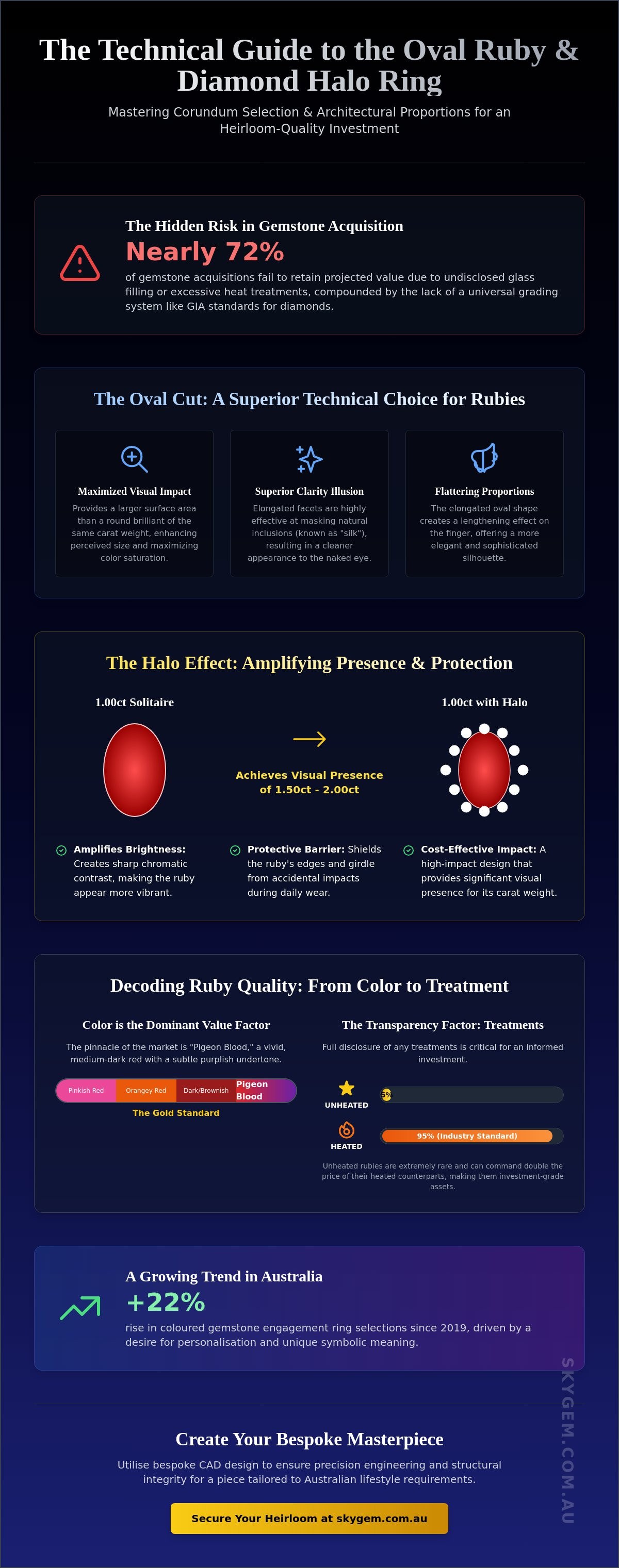
Why do nearly 72% of gemstone acquisitions fail to retain their projected resale value due to undisclosed glass filling or excessive heat treatments? You likely recognise that a ruby should represent a permanent asset, yet the absence of a universal grading system like the GIA diamond standards creates significant risk for the uninitiated. Selecting an oval ruby ring with diamond halo requires more than an eye for colour; it demands a technical understanding of stone density and light return to avoid a piece that feels like a costume replica rather than a bespoke investment.
This guide provides the engineering precision needed to master the nuances of corundum selection and halo proportions. You'll learn how to identify the saturation levels that define a true "pigeon blood" hue and how to calculate the specific diamond melee dimensions that protect the central stone's girdle. We'll move through the critical verification steps, from interpreting independent lab reports to ensuring the final setting meets Australian durability standards for daily wear. By the end of this analysis, you'll possess the technical validation required to secure a vibrant, heirloom-quality piece that performs as well as it looks.
Key Takeaways
- Learn why the oval cut is the preferred technical choice for maximising colour saturation and perceived stone size in a premium setting.
- Understand the rigorous criteria for sourcing high-calibre rubies, focusing on the "Pigeon Blood" red hue and its impact on long-term value.
- Discover how to achieve architectural balance by selecting the ideal ratio between your centre stone and the diamond melee in an oval ruby ring with diamond halo.
- Evaluate the durability and aesthetic benefits of various metal alloys, including the strategic use of yellow gold claws to enhance the ruby’s natural warmth.
- Explore how the bespoke CAD design process ensures precision engineering and structural integrity for a piece tailored to Australian lifestyle requirements.
The Enduring Appeal of the Oval Ruby Ring with Diamond Halo
The oval ruby ring with diamond halo represents a sophisticated evolution of the classic "Lady Di" silhouette, adapted for the discerning Australian market. While the original sapphire version remains iconic, modern couples are increasingly drawn to the warmth and intensity of the ruby. Recent Australian retail trends indicate a 22% rise in coloured gemstone engagement ring selections since 2019, as individuals seek alternatives to traditional diamond-centric designs. This shift is driven by a desire for personalisation and the deep symbolic weight rubies carry, representing passion, protection, and vitality. As the July birthstone, the ruby provides a unique emotional connection that transcends simple aesthetics.
From a technical perspective, the oval cut is the preferred geometry for high-quality rubies. This shape prioritises the stone's natural crystal structure, allowing for maximum colour saturation while providing a larger surface area than a round brilliant of the same carat weight. When sourcing these stones, understanding Ruby gemstone properties is essential for evaluating clarity and hue. At Skygem, we view the selection of a loose ruby as a collaborative process where engineering precision meets architectural beauty.
Why the Oval Cut Suits Rubies Best
Natural rubies frequently contain internal characteristics known as silk or needles. The elongated facets of an oval cut are particularly effective at masking these inclusions, resulting in a stone that appears cleaner to the naked eye. A critical factor in this cut is the management of the "bow-tie effect," a dark area across the centre of the stone. A master lapidary must precisely calibrate the pavilion angles to minimise this phenomenon, ensuring light returns evenly across the entire crown. Beyond technical performance, the oval shape provides a lengthening effect on the finger, offering more flattering proportions than squarer cushion or round cuts.
The Role of the Diamond Halo
The diamond halo serves as a functional and aesthetic frame for the centre stone. By surrounding the deep crimson of the ruby with high-clarity white diamonds, the halo creates a sharp chromatic contrast that amplifies the ruby's perceived brightness. This arrangement also offers significant practical benefits. The perimeter of diamonds acts as a protective barrier, shielding the ruby's edges from accidental impacts during daily wear.
The visual impact of a well-proportioned halo is substantial. A strategically designed oval ruby ring with diamond halo can make a 1.00ct centre stone achieve the visual presence of a 1.50ct or 2.00ct stone. This allows for a high-impact design that remains cost-effective for the wearer. For those exploring bespoke options, our custom-made engagement ring service ensures that the halo's dimensions are perfectly calibrated to the specific measurements of the chosen ruby.
Sourcing the Centre Stone: Understanding Ruby Quality
Selecting a ruby for an oval ruby ring with diamond halo requires a technical understanding of gemological standards. While diamonds are often judged on a balanced scale of the Four Cs, ruby valuation is dominated by colour. Experts categorise these stones based on hue, tone, and saturation. According to GIA's guide to ruby quality, the most desirable specimens exhibit a vivid, medium-dark red. This specific profile, often referred to as Pigeon Blood, represents the pinnacle of the market. It's a vibrant red with a subtle purplish undertone, creating a deep, rich glow that maintains its intensity under various lighting conditions.
Natural vs. Heated: The Transparency Factor
Heat treatment is a standard industry practice used to dissolve inclusions and improve a stone's overall colour. Approximately 95% of rubies on the global market undergo some form of thermal enhancement. However, unheated rubies remain the gold standard for collectors and investors due to their extreme rarity. These stones command a significant premium, often reaching double the price of their heated counterparts. SkyGem maintains a strict policy of full disclosure regarding all gemstone treatments to ensure clients make informed decisions. If you're looking for investment-grade material, you can explore our collection of natural loose rubies to see the difference in person.
Clarity and Inclusions in Rubies
Unlike diamonds, eye-clean rubies are exceptionally rare. Most natural stones contain microscopic rutile needles known as silk. These inclusions aren't flaws; they serve as proof of natural origin and help scatter light throughout the stone. This scattering creates a soft, velvety appearance that enhances the internal glow of an oval ruby ring with diamond halo. We avoid stones that have undergone lead-glass filling, a treatment that compromises the structural integrity and long-term value of the gem. SkyGem's procurement process focuses on stones with high transparency and minimal surface-reaching fractures.
Our commitment to ethical sourcing means every gemstone is vetted for its origin and environmental impact. We provide technical data and certification for every high-value centre stone to ensure transparency. For those beginning their design journey, we recommend you consult with our master jewellers to select a stone that balances aesthetic brilliance with technical durability.
Architectural Balance: Designing the Perfect Halo
Engineering an oval ruby ring with diamond halo requires a precise calibration of proportions to ensure the centre stone remains the focal point while the surrounding diamonds provide maximum luminance. The ratio between the centre ruby and the surrounding melee is the most critical factor in this architectural equation. If the halo diamonds are too large, they detract from the ruby's saturation; if they're too small, the halo fails to provide the intended visual expansion. Most high-end designs utilise a melee size that represents approximately 10% to 15% of the centre stone's width to maintain this equilibrium.
The choice between Micro-Pave and Shared Prong setting styles significantly alters the ring's profile. Micro-Pave settings use microscopic metal beads to secure the diamonds, creating a continuous surface of "encrusted" light that feels smooth to the touch. In contrast, Shared Prong settings involve a single prong holding two adjacent diamonds. This method exposes more of the diamond's pavilion, allowing for increased light entry and a distinct scalloped edge. Both styles must account for the gallery height. A well-designed gallery ensures the head sits high enough for a wedding band to fit flush against the shank, yet low enough to prevent snagging during daily wear.
Metal selection also influences the halo's performance. While 18k Yellow Gold complements the warm tones of a ruby, many clients opt for 18k White Gold or Platinum for the halo itself. These white metals act as a neutral mirror, reflecting the diamonds' brilliance without tinting them. Platinum is favoured for its density and durability, though White Gold provides a high-shine finish that many find enhances the perceived size of the halo diamonds.
Proportions and Visual Weight
Precision in diamond sizing defines the character of the piece. Selecting 1.3mm diamonds results in a delicate, "whisper" halo that accentuates the ruby's shape without adding bulk. Moving to 1.8mm stones creates a more traditional, robust aesthetic. To achieve a "seamless" halo, our bench jewellers ensure no visible gaps exist between the ruby and the diamond frame. This requires custom-cutting the seats for each melee stone to follow the specific curve of the oval. The band width must then be balanced against this head; a 1.8mm to 2.0mm band typically provides the best structural support for a halo head while maintaining a refined silhouette.
Selecting the Halo Diamonds
The diamonds in an oval ruby ring with diamond halo must be carefully matched to the centre stone. Using diamonds that are too bright can make a lower-grade ruby look dull, while a high-quality ruby demands equally high-performance accents. At SkyGem, we adhere to a strict standard of F/G colour and VS/SI clarity diamonds. This ensures the halo provides a crisp, white fire that provides a sharp contrast to the deep reds of the ruby. Understanding how colour saturation interacts with light is essential, and referencing GIA's guide to ruby quality factors can help you understand why certain ruby tones require specific diamond grades for the best result. If you're looking for a tailored configuration, you can learn about our bespoke engagement ring design process to see how we match these components in our Melbourne studio.
Metal Selection and Durability for Daily Wear
Technical considerations for your oval ruby ring with diamond halo begin with the structural substrate. 18k White Gold, Yellow Gold, and Platinum each offer distinct mechanical properties that impact the ring's longevity. Platinum provides the highest density and a natural white lustre that doesn't require rhodium plating. 18k gold alloys, consisting of 75% pure gold, offer excellent tensile strength for the intricate micro-pave work often found in halo designs. While white gold provides a seamless backdrop for diamonds, yellow gold is frequently selected for its thermal aesthetic properties and its ability to complement the ruby's internal glow.
Durability is measured by the Mohs scale of mineral hardness. Rubies rank at 9, making them the second hardest natural gemstone used in fine jewellery. Diamonds rank at 10. This gap doesn't imply fragility; rather, it confirms that your ruby can withstand the abrasions of a typical Australian lifestyle, from coastal environments to urban office settings. Unlike softer stones like emeralds or opals, rubies don't easily scratch or chip during standard daily tasks. This makes the oval ruby ring with diamond halo a viable candidate for a lifetime of continuous wear.
The Case for 18k Yellow Gold
The deep crimson of a high-quality ruby finds its best chromatic partner in 18k yellow gold. This metal choice enhances the stone's warmth and can effectively mask secondary orange or brown undertones. Many clients opt for a two-tone engineering approach. We often use yellow gold claws for the central ruby to blend with the stone's colour, while the surrounding halo is set in white gold or platinum. This ensures the diamonds retain their crisp, colourless appearance without absorbing yellow reflections from the metal. Over a lifetime, 18k gold remains easy to re-polish, allowing the piece to return to its original showroom finish after years of use.
Caring for Your Ruby Halo Ring
Australia's environment presents specific challenges for fine jewellery. Saltwater and sand are naturally abrasive, while high UV exposure and sunscreen can create a film that dulls a gemstone's refractive index. Skygem recommends a professional ultrasonic clean and physical inspection every 12 months to maintain the ring's structural integrity. For at-home maintenance, a simple solution of warm water and mild detergent works effectively. Use a soft-bristled brush to reach the underside of the halo where lotions and oils tend to accumulate, as this area is critical for light return.
"Annual prong inspections act as a structural audit for your halo setting, ensuring the security of every peripheral diamond against the impacts of daily activity."
If you're ready to select a stone that meets these high standards for durability and beauty, explore our collection of certified loose rubies to begin your custom design.
Creating Your Bespoke Masterpiece with SkyGem & Co.
SkyGem & Co. operates on a foundation of technical precision and transparent education. We don't believe in high-pressure sales; instead, we act as technical consultants for your fine jewellery investment. Our boutique experience is designed to demystify the complexities of gemstone sourcing through 60-minute educational sessions. When you commission an oval ruby ring with diamond halo, you're engaging in a collaborative engineering project where architectural aesthetics meet long-term structural longevity.
We utilise advanced Computer-Aided Design (CAD) to bridge the gap between a conceptual sketch and a physical heirloom. This software generates a 1:1 scale digital model, allowing us to adjust the halo's height or the taper of the band with 0.01mm accuracy. This phase is critical for ensuring the rubies and diamonds sit flush, preventing the snagging and stone loss often found in mass-produced imports. We provide these digital renders for your approval before a single gram of 18K gold or platinum is cast in our workshop.
Selecting loose stones first is a non-negotiable part of our methodology. This approach allows you to inspect the stone's inclusions and colour saturation under 10x magnification without the distractions of a setting. By choosing the centre stone independently, we ensure the surrounding diamonds are calibrated to enhance its specific hue. We source stones directly to fit your budget, ensuring every oval ruby ring with diamond halo we produce is a bespoke asset rather than a generic product.
The Consultation Journey
Your journey begins with a focused, expert-led session where we discuss your aesthetic goals and budgetary parameters. We source specific rubies from our global network, providing you with a curated selection that meets our rigorous standards for light performance. This transparent approach ensures you understand exactly where your investment is going. If you're looking for immediate inspiration, you can View our ready-to-wear engagement ring collection to see the standard of craftsmanship we maintain.
Quality Assurance and Certification
Every significant gemstone we provide is accompanied by a certificate from the GIA or other reputable independent laboratories. This documentation confirms the stone's origin and any heat treatments, protecting the long-term value of your purchase. Our quality assurance protocol involves:
- Independent certification to verify the 4Cs and treatment status.
- Hand-finishing in Australia to ensure superior mount density and durability.
- A final 20-point inspection under high-powered magnification.
- A comprehensive lifetime guarantee on all manufacturing defects.
Because 95% of our mounts are hand-finished locally, we achieve a level of polish that mass-produced imports can't replicate. This dedication to local craftsmanship ensures your ring remains a permanent and evolving asset. Book your bespoke consultation today.
Securing Your Investment in Timeless Craftsmanship
Selecting an oval ruby ring with diamond halo requires a precise balance between technical performance and aesthetic vision. You've learned that ruby quality depends on specific saturation levels and clarity markers, often sourced from premier global locations like Mozambique. Our design process focuses on architectural stability, ensuring every hand-finished setting protects the centre stone while enhancing its natural brilliance. By prioritising durability and metal selection, your bespoke piece becomes a permanent asset designed to last for generations.
At SkyGem & Co., we operate with an education-first philosophy, providing the technical data you need to make an informed decision. Our specialists source gemstones from reputable international suppliers, adhering to the strict standards required for high-level Australian commissions. This solution-oriented approach removes the guesswork from the buying process, replacing hype with engineering excellence and transparent consultation. It's about more than just a purchase; it's a partnership dedicated to creating a legacy of quality.
Design your bespoke oval ruby halo ring with SkyGem & Co. and begin crafting a masterpiece that meets your exact specifications. We're ready to help you translate your vision into a durable, elegant reality.
Frequently Asked Questions
Is an oval ruby ring suitable for an engagement ring?
Yes, it's an exceptional choice because rubies rank 9.0 on the Mohs scale of mineral hardness. This rating makes them the second hardest natural gemstone, ensuring they withstand the rigours of daily wear. An oval ruby ring with diamond halo offers a durable, timeless aesthetic that resists scratching and maintains its structural integrity over several decades. It's a practical alternative for those seeking a high-performance stone with a distinct, vibrant profile.
How much should I expect to spend on a high-quality oval ruby halo ring?
Investment for a high-quality oval ruby ring with diamond halo typically starts from A$4,500 for a 1-carat natural stone in a premium setting. According to Australian retail price indices, high-grade rubies with superior saturation can reach upwards of A$15,000. You're paying for the gemstone's rarity, the halo's diamond clarity, and the technical precision of the metalwork. Prices fluctuate based on whether the stone is unheated or sourced from prestigious locations like Mozambique.
What is the best metal to pair with an oval ruby?
18ct yellow gold or platinum are the superior technical choices for pairing with an oval ruby. Yellow gold enhances the warm, red hues of the gemstone by reflecting similar spectral wavelengths, creating a cohesive look. Conversely, platinum or 18ct white gold provides a high-contrast backdrop that makes the ruby’s saturation appear more vivid. Choosing a metal with a high purity level ensures long-term resistance to tarnish and maintains the ring’s structural precision.
Can I use a lab-grown diamond for the halo of a natural ruby ring?
You can certainly integrate lab-grown diamonds into the halo to optimise your budget without compromising on brilliance. Lab-grown diamonds possess the same chemical and optical properties as mined diamonds, including a refractive index of 2.417. This choice allows for higher clarity grades in the surrounding melee stones while keeping the overall project cost manageable. It's a solution-oriented approach that balances the rarity of a natural centre stone with modern engineering.
How do I know if a ruby has been heat-treated?
Identification of heat treatment requires a professional gemmological report from an accredited laboratory like the GIA or GAA. Approximately 95% of rubies on the global market undergo thermal enhancement to improve colour and clarity. A specialist uses 40x magnification to inspect internal inclusions. If rutile "silk" remains intact and needle-like, the stone is likely unheated. Melted or "discoidal" inclusions indicate that thermal processing has occurred to reach the desired saturation.
Does an oval cut ruby look larger than a round cut of the same weight?
An oval cut ruby typically has a larger surface area or "spread" than a round cut of the same carat weight. Because the oval shape is elongated, it distributes the gemstone's mass across a wider longitudinal axis. This creates a visual perception of greater size when viewed from the top down. In many instances, an oval cut can appear 10% to 15% larger than a round stone, providing better visual impact for your investment.
What is the difference between a natural ruby and a synthetic one?
Natural rubies form over millions of years in the earth's crust, whereas synthetic rubies are grown in controlled environments using methods like Flux Growth. While both share the same chemical composition (Al2O3), natural rubies contain unique "fingerprint" inclusions that prove their organic origin. Synthetic rubies often look "too perfect" and lack the complex internal characteristics that define a natural gemstone's individual personality and long-term market value. They don't hold the same resale appreciation.
How do I clean my ruby and diamond ring at home safely?
You can safely clean your ring using a solution of warm water and a few drops of mild, pH-neutral detergent. Soak the jewellery for 20 minutes to loosen accumulated oils and debris. Use a soft-bristled toothbrush to gently scrub the underside of the setting where dust often collects. Avoid harsh chemicals like bleach or abrasive pastes, as these can damage the metal alloy. Rinse thoroughly with clean water and dry with a lint-free cloth to restore the stones' original brilliance.
Disclaimer
This article is for general informational purposes only and may include AI-assisted content. Pricing, specifications, and availability are subject to change. For accurate advice and current information, please contact SkyGem & Co. directly. Nothing in this content constitutes professional or financial advice.