
The Custom Engagement Ring Design Process: A Masterclass in Bespoke Jewellery

A bespoke ring is more than a creative vision; it's a complex feat of precision engineering where aesthetic beauty must be balanced against structural longevity. You likely feel that your engagement ring should be a singular reflection of your story, yet the custom engagement ring design process can feel opaque when you're caught between digital CAD renders and the physical reality of precious metals. It's natural to worry if a delicate design will survive daily wear or if the final product will truly mirror the initial concept.
We're here to provide clarity on this technical journey, ensuring you have total confidence in every material and design choice. You'll discover how we transform raw materials and initial sketches into a hand-finished masterpiece that meets rigorous jewellery standards for both performance and poise. This masterclass outlines the essential phases of bespoke creation, from sourcing certified stones to the final quality control checks that ensure your piece remains a permanent asset for decades to come.
The most exceptional jewellery is found at the intersection of artisanal vision and rigorous technical specifications. While the transition from off-the-shelf retail to a personalised consultancy model offers unparalleled creative freedom, it requires a clear understanding of the underlying mechanics to ensure long-term viability. You likely recognise that an engagement ring is a permanent asset, yet the complexity of the custom engagement ring design process often leads to uncertainty regarding material performance, diamond sourcing, and structural longevity.
This masterclass provides a transparent view of the engineering required to build a piece that is as structurally sound as it is aesthetically striking. We will guide you through the five key stages of the technical journey, from initial concept alignment and 3D CAD modelling to the final hand-finishing of the setting. You will gain a comprehensive understanding of the science behind stone sourcing, comparing natural GIA-certified diamonds with lab-grown alternatives, and the essential engineering principles that protect your investment. By examining the physics of prong security and the "Goldilocks zone" of band thickness, we ensure your bespoke design meets the highest industry standards for durability and comfort.
The Bespoke Advantage: Why Custom Engagement Ring Design is the Modern Standard
The jewellery industry has undergone a significant transformation, moving from transactional retail models toward a more rigorous, personalised technical consultancy. Historically, consumers were limited to "off-the-shelf" designs that often required compromises in stone quality or band durability. By engaging in the custom engagement ring design process, you eliminate these trade-offs. You aren't just selecting a product; you're commissioning a piece of precision engineering. This shift reflects a deeper appreciation for the history and evolution of engagement rings, where the focus has moved from mere status symbols to highly individualised assets designed for a lifetime.
A primary advantage of bespoke jewellery is the direct relationship with a technical partner. Instead of a salesperson focused on inventory turnover, you collaborate with an expert who views the ring as a structural project. This partnership ensures that every component, from the prong thickness to the alloy composition, is optimised for performance. While mass-produced, cast-moulded rings are often prone to porosity and structural weaknesses, bespoke pieces are typically forged or milled to higher density standards. This results in superior long-term viability and a finish that retains its integrity through decades of daily wear.
Defining Your Aesthetic Vision
Translating abstract concepts into a physical masterpiece requires a methodical approach. We encourage the use of reference imagery to identify specific design cues, such as gallery detailing or claw styles. It's essential to balance current aesthetic trends with timeless architectural principles. While a trend might provide the initial spark, we apply engineering logic to ensure the silhouette remains elegant and functional as styles evolve. Every curve and angle must serve both the visual narrative and the structural requirements of the setting.
Setting a Realistic Project Scope
A successful project begins with a clear understanding of technical constraints. The volume of precious metal and the specific metrics of the centre stone directly influence the final investment. Generally, the timeline for a high-quality bespoke piece spans 4 to 8 weeks. This duration allows for meticulous CAD refinement, precision casting or forging, and rigorous hand-finishing. Navigating the custom engagement ring design process with a technical specialist ensures that these metrics are met. During the initial consultation, we perform a feasibility check to ensure your design is physically manufacturable without compromising the security of the gemstones or the comfort of the wearer.
The Technical Journey: 5 Key Stages of the Design Process
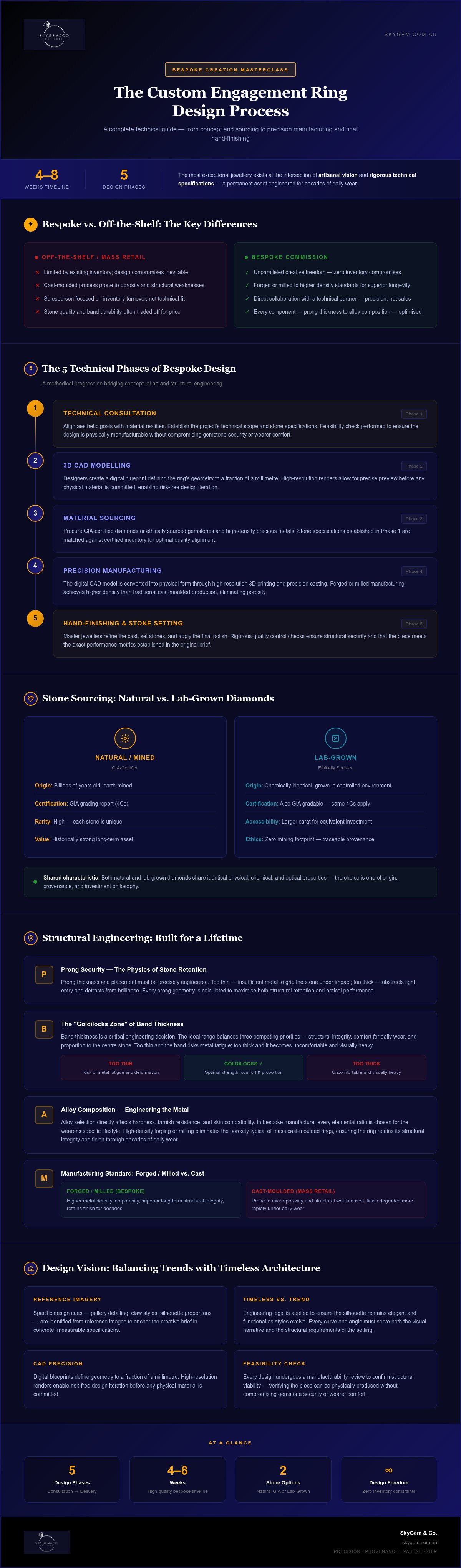
The custom engagement ring design process is a methodical progression that bridges the gap between conceptual art and structural engineering. Each stage is designed to mitigate risk and ensure the final assembly meets exact performance metrics. By following a structured workflow, we transform a series of technical specifications into a hand-finished masterpiece that stands the test of time.
- Phase 1: The Technical Consultation – We align your aesthetic goals with material realities, establishing the project's technical scope and stone specifications.
- Phase 2: 3D CAD Modelling – Our designers create a digital blueprint that defines the ring's geometry to a fraction of a millimetre.
- Phase 3: Material Sourcing – We procure GIA-certified diamonds or ethically sourced gemstones and high-density precious metals.
- Phase 4: Precision Manufacturing – The digital model is converted into a physical form through high-resolution 3D printing and casting.
- Phase 5: Hand-Finishing and Setting – Master jewellers refine the cast, set the stones, and apply the final polish to ensure structural security.
The Power of CAD (Computer-Aided Design)
Digital modelling has revolutionised the way we approach bespoke jewellery. By utilising CAD, we provide high-resolution renders that allow you to visualise the stone-to-band ratio before any metal is cast. This phase is critical for fine-tuning the design's balance. You can see how a specific claw style interacts with the light or how the band thickness affects the overall silhouette. These millimetre-perfect adjustments ensure the final piece is perfectly proportioned to your specific requirements, allowing for a level of precision that traditional hand-carving simply cannot match.
From Digital Model to Precious Metal
Once the CAD design is finalised, the transition to physical form begins with high-resolution 3D printing. We create a resin or wax replica of the ring, which is then used in the "lost wax" casting process. This involves encasing the model in a ceramic investment and replacing the wax with molten gold or platinum. To maintain the highest standards of quality, we adhere to FTC guidelines for precious metals, ensuring the purity and density of the alloy are verified and consistent throughout the piece.
Casting is only the beginning. Raw casts often feature surface artifacts and microscopic textures that must be removed through meticulous hand-finishing. Our artisans refine every surface, ensuring the metal's density is consistent and the finish is mirror-smooth. This manual intervention is what separates a high-performance bespoke ring from a mass-produced alternative. If you're ready to begin your own journey, you can explore our custom-made engagement ring process to see how these technical stages come together to create your ideal piece.
The Science of Sourcing: Diamonds and Coloured Gemstones
Sourcing the centre stone represents a critical technical pivot within the custom engagement ring design process. It's the stage where abstract design concepts meet the physical realities of mineralogy and light physics. Selecting a stone isn't merely an aesthetic choice; it's a data-driven evaluation of light performance, refractive indices, and structural durability. Whether you're prioritising the classic brilliance of a diamond or the unique hue of a sapphire, understanding the technical metrics of your gemstone ensures the finished piece performs optimally under various lighting conditions.
GIA certification serves as the primary benchmark for verifying these performance metrics. By utilising independent laboratory grading, we can confirm that a stone's cut, clarity, and colour meet the exact specifications required for your bespoke setting. This transparency is vital for ensuring the long-term value and integrity of your investment. In 2026, the lab-grown diamond segment is projected to capture 30% of the engagement ring market, reflecting a significant shift toward technologically advanced alternatives that offer identical physical properties to their natural counterparts.
Diamond Selection and Performance
The cut grade is the most influential factor in a diamond's brilliance, as it dictates how effectively the stone handles light. When comparing natural white diamonds and lab-grown alternatives, it's essential to look beyond the surface. We evaluate the inclusion profile and fluorescence to ensure the stone remains "eye-clean" and vibrant. While lab-grown diamonds provide a high-clarity option at a lower price point, natural diamonds offer a unique geological history and market stability that many collectors prefer for high-value bespoke commissions.
Coloured Gemstone Sourcing
There has been a notable rise in the popularity of coloured gemstones, with sales increasing 55% year-over-year. Australian Sapphires have become a staple in contemporary design, valued for their structural resilience and unique teal or bi-colour variations. When sourcing these stones, we prioritise unheated varieties whenever possible to preserve their natural chemical composition. We also assess every gemstone against the Mohs scale to ensure it's suitable for daily wear. Sapphires and rubies, both scoring a 9, provide the necessary hardness for an engagement ring, whereas softer stones may require more protective bespoke settings to prevent surface abrasion over time.
Structural Integrity: Engineering Your Ring for a Lifetime
While the aesthetic appeal of a bespoke piece is often the initial focus, the custom engagement ring design process must prioritise mechanical engineering to ensure long-term durability. A ring is a functional object subjected to constant physical stress. Without rigorous attention to structural integrity, even the most beautiful design can fail through metal fatigue or stone loss. We view the ring as an architectural assembly, where every component must be calculated to withstand the rigours of daily wear while maintaining its refined silhouette.
One of the most critical aspects of this engineering is the "Goldilocks zone" of band thickness. Mass-market retail often favours exceptionally thin bands to reduce material costs, but these are prone to warping and cracking over time. In a bespoke environment, we typically recommend a minimum thickness that ensures the shank remains rigid without sacrificing comfort. This structural baseline prevents the ring from losing its circular form, which is essential for keeping the centre stone's setting aligned and secure.
Choosing the Right Precious Metal
The physical properties of your chosen alloy significantly impact the ring's performance. Platinum is highly valued in technical jewellery design for its extreme density and "displacement" property. Unlike gold, which loses microscopic amounts of metal through abrasion, platinum merely shifts when scratched. This makes it a superior choice for holding stones securely, as the prongs are less likely to thin out over decades. Conversely, 18K gold offers a classic aesthetic and excellent hardness, though white gold requires periodic rhodium plating to maintain its lustre. By choosing a custom design, you can specify a higher metal volume in high-stress areas, a luxury rarely found in cast-moulded alternatives.
The Architecture of the Setting
The height and style of the setting dictate how the ring interacts with its environment. A high-profile solitaire might offer maximum light exposure for a diamond, but it's more susceptible to snagging on clothing or impacting hard surfaces. Low-profile settings, often seen in Halo Engagement Rings, provide a more streamlined silhouette that protects the centre stone's girdle from lateral force. During the design phase, we also account for the "flush fit" of future wedding bands. By engineering the gallery with a slight elevation, we ensure that a straight wedding band can sit perfectly adjacent to the engagement ring, preventing the abrasive "rubbing" that leads to premature metal wear.
Ensuring your ring is technically sound requires a partner who understands the physics of precious metals. If you're ready to engineer a piece that lasts a lifetime, you can start your custom design consultation with our technical specialists today.
The SkyGem & Co. Approach: Precision and Partnership
SkyGem & Co. operates as a technical consultant rather than a traditional retailer. We understand that a bespoke commission is a significant project requiring precision, transparency, and a long-term view of asset viability. By guiding you through the custom-made engagement ring process, we ensure that every design decision is backed by engineering logic and artisanal expertise. Our commitment to technical excellence means we only work with GIA-certified diamonds and ethically sourced gemstones that meet rigorous performance standards. This analytical approach guarantees that your investment is as reliable as it is visually striking.
Before any piece leaves our studio, it undergoes a final quality assurance phase. This isn't a cursory glance; it's a multi-point technical audit. We perform microscopic inspections of prong tension to ensure every stone is securely locked into position. We verify the symmetry of the setting against the original CAD blueprint and ensure the metal density meets our internal benchmarks for durability. This methodical testing ensures that your custom engagement ring is structurally sound and ready for a lifetime of wear, acting as a permanent asset rather than a fragile accessory.
A Collaborative Design Experience
You have direct access to our expert consultants at every stage of the project. We believe in a transparent pricing model where manufacturing costs and material specifications are clearly defined, eliminating the ambiguity often found in the high-end jewellery market. While the custom engagement ring design process allows for total personalisation, many clients find our ready-to-wear collections useful as a baseline for design cues. These existing pieces demonstrate our standard of craftsmanship and help you refine your preferences for band width, stone orientation, and metal finish before we begin your unique build.
Your Next Steps in Custom Design
Moving from a conceptual idea to a physical blueprint is a structured transition that respects your professional time. To prepare for your initial consultation, we recommend gathering reference images that highlight specific technical elements you admire, such as claw shapes or gallery heights. Consider how the ring will integrate with your daily environment, as this influences our recommendations for metal choice and setting profile. You can also use our online ring builder tools to explore various stone shapes and setting styles in a digital environment. Once you're ready to proceed, booking a technical consultation allows us to align your vision with our manufacturing standards, setting the foundation for a successful bespoke partnership.
Securing the Future of Your Bespoke Design
The custom engagement ring design process is a synthesis of artisanal vision and rigorous technical standards. By prioritising structural engineering and millimetre-perfect CAD modelling, you ensure that your ring is as durable as it is beautiful. Selecting GIA-certified diamonds and high-density metals isn't just about aesthetics; it's about the long-term viability of an asset that will be worn every day. This methodical approach transforms a conceptual idea into a physical reality that meets the highest industry benchmarks for performance and poise. Every decision, from prong placement to band thickness, contributes to a piece that remains structurally sound for decades.
Our GIA-trained consultants are ready to help you navigate these complex technical decisions through a 100% bespoke, CAD-driven workflow. You can begin your bespoke journey with a technical design consultation today. With access to global ethical stone sourcing and a commitment to precision manufacturing, we act as your dedicated technical partner in creating a piece that stands the test of time. We look forward to helping you translate your unique vision into a hand-finished masterpiece that reflects both your story and our shared commitment to excellence.
Frequently Asked Questions
How long does the custom engagement ring design process typically take?
The custom engagement ring design process typically requires 4 to 8 weeks from the initial consultation to final hand-finishing. This duration allows for precision CAD modelling, high-resolution 3D printing, and rigorous quality control checks. While specific timelines vary based on design complexity, we prioritise structural integrity and artisanal quality over speed to ensure every piece meets our technical standards.
Is a custom engagement ring more expensive than a pre-made one?
A bespoke ring isn't inherently more expensive; it simply offers better value by allowing you to allocate your budget toward specific material priorities. You avoid the costs associated with retail inventory and instead pay for the exact stone quality and metal density you require. This transparent approach ensures your investment is focused on the technical specifications that matter most to you.
Can I use my own heirloom diamond in a custom design?
We can often integrate heirloom diamonds into a new bespoke setting after a thorough structural assessment. Our specialists examine the stone's girdle and facet integrity to ensure it can withstand the mechanical pressure of the setting process. This allows you to update the ring's architecture to modern safety standards while preserving the sentimental value of your original gemstone.
What is the difference between a 3D CAD render and the final ring?
A 3D CAD render acts as a millimetre-perfect digital blueprint to verify proportions and stone placement. While the render provides a high-resolution visual guide, the final ring possesses a tactile depth and mirror-like lustre that software cannot replicate. The hand-finishing phase removes microscopic casting artifacts, transforming the digital model into a refined physical masterpiece with superior structural density.
Do you provide GIA certification for diamonds used in custom rings?
Every natural and lab-grown diamond sourced for the custom engagement ring design process is accompanied by a GIA certificate or equivalent independent laboratory report. These documents provide verified data on the stone's performance metrics, including cut grade, clarity, and colour. This certification is essential for confirming the stone's authenticity and ensuring the long-term value of your commission.
How many design revisions am I allowed during the CAD phase?
We generally provide up to three rounds of minor revisions during the CAD phase to ensure the silhouette matches your vision. This structured feedback loop allows you to fine-tune the setting height and band profile before we commit the design to precious metal. Maintaining a clear project scope during this stage helps keep the manufacturing timeline on schedule while ensuring technical accuracy.
What happens if the final ring doesn't fit correctly?
If the final piece doesn't fit as expected, we provide professional resizing services to achieve a secure and comfortable diameter. Most bespoke designs allow for minor adjustments without compromising the structural security of the side stones or the shank's integrity. It's best to confirm your size during the initial consultation to ensure the setting remains perfectly balanced on your finger.
Is Platinum or 18K Gold better for a custom engagement ring setting?
Platinum is technically superior for stone security because its high density prevents prongs from thinning over time due to abrasion. 18K gold is a durable alternative that offers higher surface hardness and classic colour variations like yellow or rose gold. Your choice should depend on your aesthetic preference and how the specific properties of the metal interact with your chosen setting style.
Disclaimer
This article is for general informational purposes only and may include AI-assisted content. Pricing, specifications, and availability are subject to change. For accurate advice and current information, please contact SkyGem & Co. directly. Nothing in this content constitutes professional or financial advice.