
Sapphire vs Emerald Durability Comparison

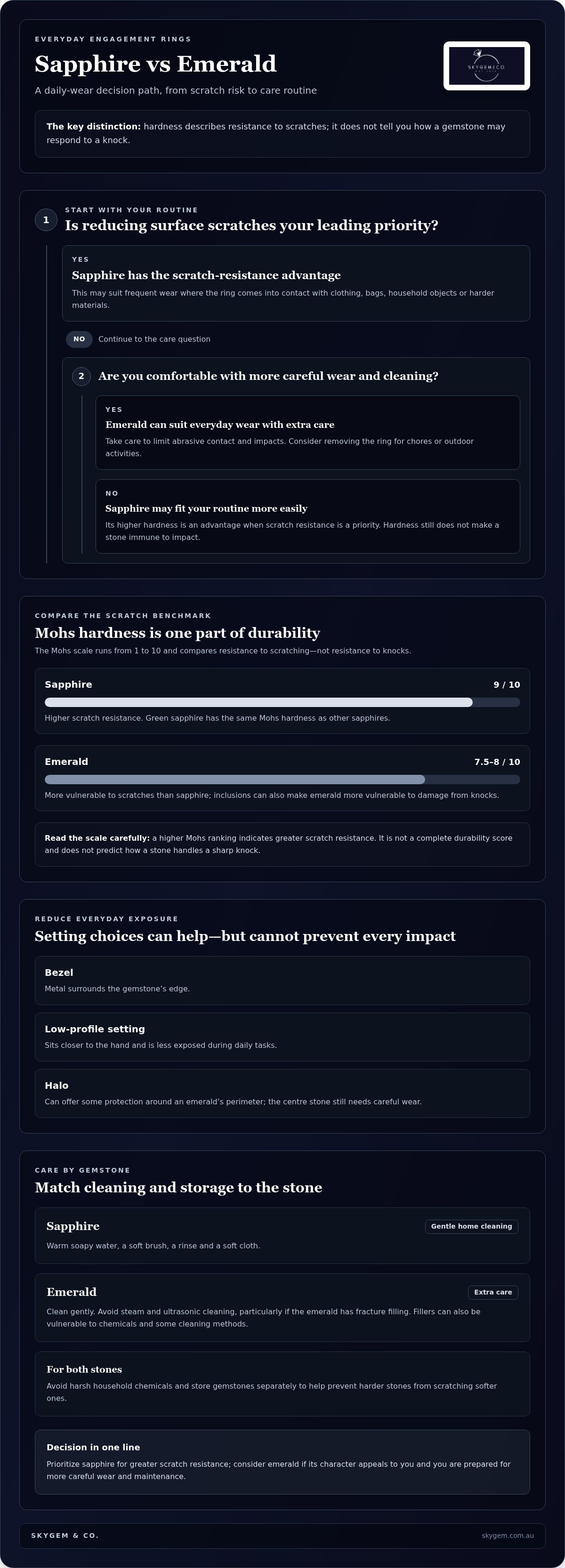
For a ring worn every day, sapphire is generally the more durable choice: it ranks 9 on the Mohs scale, while emerald ranks 7.5-8. The durability of sapphire versus emerald for daily wear also depends on toughness, because emerald inclusions can make it more vulnerable to damage from knocks. An emerald can still suit a daily ring, but it benefits from more careful wear and a protective setting.
Both sapphires and emeralds can make compelling engagement rings, and an emerald need not be reserved for special occasions. The practical difference is how each stone responds to scratches and impacts, and what care it needs, not just how hard it is.
This guide compares hardness, toughness and emerald inclusions, then explains how settings and everyday habits affect wear. Use it to decide whether sapphire’s greater scratch resistance or emerald’s distinctive character better suits your routine.
Key Takeaways
- Compare a gemstone’s resistance to scratches with how it may respond to a knock; hardness alone doesn’t tell the whole story.
- Consider how emerald inclusions and fracture-filling treatments affect the care a ring may need.
- A protective, lower-profile setting can reduce a stone’s exposure during everyday tasks.
- Match your choice to your routine: frequent hands-on activities call for more consideration of impact and maintenance.
- Use gentle cleaning and careful storage to help preserve your ring’s appearance over time.
Sapphire hardness and everyday wear
Sapphire ranks 9 on the Mohs scale, making it more resistant to scratches than emerald. The Mohs scale runs from 1 to 10 and compares a gemstone’s resistance to scratching. This higher ranking helps sapphire retain a polished surface through routine contact with clothing, bags and household objects. It’s a practical advantage for an engagement ring worn throughout the week, although hardness alone doesn’t prevent damage from impact.
Green sapphire has the same 9 Mohs hardness as other sapphires. Its colour doesn’t change that ranking, so a green sapphire offers the same scratch-resistance benchmark as blue sapphire. For the durability of sapphire vs emerald for daily wear, this distinction matters: colour choice needn’t mean giving up sapphire’s hardness advantage. A gemstone’s overall performance still depends on more than its position on the Mohs scale.
Emerald ranks 7.5-8 Mohs. That lower hardness means its surface is more vulnerable to scratches than sapphire’s, especially through repeated contact with harder materials. A ring can meet everyday surfaces during work, dressing and household tasks, so how it’s worn affects how quickly marks may accumulate. An emerald isn’t automatically unsuitable for daily wear, but its owner should take greater care to limit abrasive contact.
If you handle hard objects or do hands-on tasks, sapphire’s higher hardness gives it an advantage against surface scratches. An emerald may need to come off for activities where it could be scraped or struck. These precautions address different risks: scratch resistance concerns the surface, while toughness concerns how the stone responds to knocks.
| Gemstone | Mohs hardness | Scratch resistance | Daily-wear consideration |
|---|---|---|---|
| Sapphire | 9 | Higher | Better suited to frequent wear where scratches are a concern |
| Green sapphire | 9 | Higher | Colour variation doesn’t reduce its hardness ranking |
| Emerald | 7.5-8 | Lower than sapphire | Needs more care to limit scratches and impacts |
Treat hardness figures as a starting point, not a complete durability score. Gemstones with similar hardness can differ in toughness, and the Mohs scale does not predict how a stone will handle a sharp knock. For an heirloom ring intended to last, consider both the stone’s properties and how you will handle it over time.
- Choose sapphire if reducing surface scratches is a priority for frequent ring wear.
- Choose emerald with a plan for careful handling and avoiding abrasive contact.
Choose sapphire if scratch resistance is your priority. Consider emerald if you are prepared to wear and care for it more attentively.
Which Engagement Rings Can You Wear Every Day According to Durability and Hardness Factor?
For everyday engagement rings, assess hardness, toughness and stability together. Sapphire ranks 9 Mohs, while emerald ranks 7.5-8, but a higher hardness rating doesn’t show how a stone will respond to a knock. Your work, hobbies and comfort with ongoing care all help determine which gemstone fits your routine.
Setting design can help reduce exposure. A bezel surrounds the gemstone’s edge with metal, while a low-profile setting sits closer to the hand and is less exposed during daily tasks. A halo can offer some protection around an emerald’s perimeter, but the centre stone still needs careful wear. No setting makes a gemstone immune to impact.
Match the stone and setting to how you use your hands. If you regularly handle equipment or do household chores, you may value sapphire’s scratch resistance and a low-profile design. Emerald can suit someone willing to remove a ring for chores or outdoor activities. Emerald earrings or pendants avoid some of the risks that rings face during daily wear.
Durability alone does not determine an engagement ring’s price. Colour, clarity, size and treatment also affect a gemstone’s value, so consider these qualities separately from how well it withstands wear. Emerald inclusions and fracture filling can influence its appearance and care needs; sapphire’s hardness is a separate factor, not a complete measure of value.
Take care with heat, sunlight and household chemicals. Avoid harsh household chemicals and clean both stones gently. Emerald fracture fillers can be vulnerable to chemicals and some cleaning methods, so do not use steam or ultrasonic cleaning on emeralds.
Gemstone durability can inform how you care for a ring, but it does not automatically determine insurance coverage or warranty protection in Australia. These terms depend on the relevant policy or written warranty, so read its exclusions and care conditions alongside information about the stone.
Choose a cleaning method that suits the gemstone and its treatment. You can clean sapphire jewellery at home with warm soapy water, a soft brush, a rinse and a soft cloth. Clean emerald gently and avoid steam or ultrasonic devices, particularly if it has fracture filling. Store stones separately to help prevent harder gemstones from scratching softer ones.
- Choose sapphire if scratch resistance is a leading priority.
- Consider emerald if its appearance matters more and you can follow careful-wear and cleaning practices.
- Use a protective, lower-profile setting to reduce exposure during everyday tasks.
Before choosing, picture a typical day in Australia: desk work, hands-on tasks, or time outdoors. Select the stone and setting that suit those activities, then consider the care each requires.
Emerald inclusions and fracture-filling treatments
Emeralds commonly contain inclusions, internal features that form as the gemstone develops. Even an emerald with excellent clarity may have slight inclusions visible to the naked eye. These features give each stone character, but they also matter when assessing its structure for a ring. A clear-looking surface does not mean an emerald has no internal features.
Some emeralds have fractures filled with oil or resin to improve their appearance. The filler can make fractures less noticeable, but it does not remove them. Appearance and structural durability are related, but they are not interchangeable measures. A fracture-filled emerald still needs careful handling, especially if a ring could knock against hard surfaces.
Inclusions and fractures can affect how an emerald responds to impact. Emeralds are more brittle than rubies and sapphires because of their inclusions, and a strong knock can chip a vulnerable area. Risk depends on the stone’s internal features and how exposed it is in its setting. An inclusion does not mean a chip is inevitable, but it is a reason to consider protection and wearing habits.
Clarity is a practical selection factor as well as an aesthetic one. Prioritising excellent clarity may make an emerald less prone to damage, though visible inclusions are common even in clearer stones. Examine the stone closely and consider where its inclusions sit in relation to the edges and exposed facets. Pay particular attention to a fracture that reaches the edge of a ring stone that may meet objects during daily activities.
Fracture filling also affects how to clean an emerald. Oil or resin can be vulnerable to chemicals and some cleaning methods, so avoid harsh products, ultrasonic devices and steam. Clean gently and keep the ring away from substances that could affect its filler. These steps help preserve the stone’s appearance and treatment.
- Look for inclusions and fractures, especially near exposed edges.
- Consider clarity alongside colour and the way the stone will be worn.
- Choose careful handling and gentle cleaning for a fracture-filled emerald.
An emerald’s green hue may catch your eye first, but consider its internal features too. Diamonds are also assessed for clarity, but emeralds commonly retain visible inclusions even when their clarity is excellent. For an emerald intended for frequent wear, balance the appearance you value with the stone’s visible characteristics and treatment-related care needs. A protective setting can reduce exposure, but careful wear remains important.
Scratch resistance versus toughness and stability
A ring’s long-term performance depends on more than a gemstone’s material properties. Your routine, the mounting and how you handle the ring all affect its exposure. Start your comparison with likely contact points and daily habits, rather than treating one durability measure as a complete prediction.
Scratch Resistance for Daily Wear
Consider scratch resistance in relation to the surfaces your ring regularly meets. Someone who often handles hard objects has a different wear profile from someone whose hands are mostly occupied with light tasks. This helps you decide whether surface preservation should be a priority, without assuming that one rating describes the ring’s overall performance.
For a practical assessment, list the activities you do while wearing jewellery and note where contact is likely. Keyboard work creates a different contact pattern from carrying bags or handling equipment. This routine-based approach makes the comparison specific to your life, rather than relying on a generic label such as “everyday durable.”
Sapphire Scratches and Impact Damage
Assess exposure to impact separately from contact with surfaces. A ring that may knock against door frames or benchtops faces different conditions from one that mainly brushes against clothing. This distinction helps you consider gemstone stability and ring design without treating resistance in one area as proof of performance in another.
Consider stability in relation to the stone, its mounting and how you use the ring. The gemstone’s position, the amount of protection around it and how the ring sits on your hand all influence its exposure. These design factors matter alongside the stone’s properties, but they cannot guarantee protection from damage.
Compare your options in a few clear steps: identify likely contact risks, decide which kind of wear matters most, then weigh that against the look you want. If surface appearance is your priority, you may focus on one set of trade-offs; if accidental knocks concern you more, you may focus on another. This makes the choice more deliberate than relying on a single durability label.
- Map routine contact points, such as work surfaces and carried objects.
- Separate concerns about surface wear from concerns about accidental knocks.
- Consider the stone’s position and protection within the ring design.
Personal meaning can also guide your decision. A ring may represent loyalty or mark an important commitment, while its intended use still deserves practical thought. Choose a design that reflects the symbolism you value and suits the conditions in which you plan to wear it.
Sapphire and emerald durability for everyday rings
Make your final comparison against your own routine, not an imagined average wearer. Note when you expect to wear the ring, which aspects of its appearance matter most and what compromises you can accept. For example, a particular colour may matter more to you than choosing the lowest-maintenance option.
Think through a typical week, including work, social occasions and times when you prefer not to wear jewellery. This helps you distinguish a ring intended for continuous wear from one you will wear selectively. That distinction can help you decide whether sapphire or emerald better suits your expectations; neither is right for every wearer.
Compare the individual stones rather than relying on their gemstone names alone. Look at each stone’s appearance and visible features, then consider how they suit the ring you want. Two emeralds can look quite different, so base your preference on the particular stone, not just a general description.
Write down your priorities in order. Separate non-negotiables, such as your preferred colour, from adjustable preferences, such as wearing the ring for every activity. This makes trade-offs clearer and gives you a practical basis for comparing options without reducing the decision to a single durability label.
- Prioritise appearance if a particular gemstone colour or character is central to your choice.
- Prioritise routine fit if you expect to wear the ring across varied parts of daily life.
- Compare individual stones so the specific gem, rather than a broad category, informs your choice.
An engagement ring’s personal meaning can be as important as its technical qualities. Choose the sapphire or emerald that suits your priorities and feels right for the way you intend to wear it.
SkyGem & Co.: Solitaire Engagement Rings
SkyGem & Co. offers solitaire, halo and trilogy engagement rings for those considering how design affects everyday wear. After weighing sapphire’s scratch resistance against emerald’s need for careful handling, consider how the setting style and stone placement fit your routine. Lab-grown diamonds are another centre-stone option in the engagement ring collection.
A solitaire draws attention to a central stone, while halo and trilogy designs create different visual arrangements. Use the durability factors in this guide to inform your choice of gemstone and ring style, then consider the care each design will need in daily use.
Visit SkyGem & Co. to explore the engagement ring options.
Choose a Ring That Fits Your Real Routine
Before choosing a gemstone, picture the activities in an ordinary week. Consider when you wear a ring, when you take it off and how much care you can comfortably maintain. A realistic routine is a more useful guide than an idealised version of everyday life, and it gives you clear priorities for the design decision.
The durability of sapphire versus emerald for daily wear should be weighed alongside the appearance and ring style you want to live with. Note which qualities matter most, then use those priorities to make a considered choice rather than treating durability as the only deciding factor.
SkyGem & Co. can help you explore engagement ring options that reflect your preferences. Bring your priorities to a personalised consultation and discuss a direction that feels right for you.
A thoughtful choice can make a ring feel distinctly yours from the first fitting onward.
Frequently Asked Questions
Which gemstones suit everyday wear?
Sapphire is a strong choice for frequent ring wear, while emerald can suit someone whose routine allows for more attentive care. Consider whether you want to wear the ring through most activities or reserve it for particular occasions. Compare the individual stones too, since colour, visible features and overall appearance vary. This practical assessment helps you choose a gemstone that fits your preferences and expected use.
Which one is right for me?
Choose the stone that best balances your visual priorities with how you plan to wear the ring. Write down what matters most, such as colour, the appearance of a particular stone or wearing the ring through varied activities. Compare actual stones against that list instead of deciding from a general description alone. If your priorities conflict, decide which one you are least willing to compromise.
What is the Mohs hardness of sapphire and emerald?
Sapphire measures 9 Mohs, while emerald measures 7.5-8 Mohs. The Mohs scale runs from 1 to 10 and indicates resistance to scratching. These figures are useful when comparing stones, but they don’t describe every aspect of performance. Treat them as one part of your selection criteria, alongside the individual gem’s appearance, how you intend to wear it, and the design you prefer.
How do sapphire and emerald compare in toughness and resistance to chipping?
Both stones can be damaged by impact, so neither is indestructible. Consider where a ring might encounter hard surfaces in your routine, such as during work or hobbies. The particular stone and how it sits in its mounting matter too. Thinking through these circumstances helps you assess likely exposure instead of relying on a broad label.
How do emerald inclusions and fractures affect durability for daily wear?
Assess the particular emerald, not just its overall clarity description. Look at it in good light and note whether visible features affect the areas that concern you most. Ask for clear information about any fracture-filling treatment and the care guidance for that stone. Keep those details with your jewellery records to make future handling and cleaning decisions more informed.
Which gemstone is better for an everyday engagement ring, sapphire or emerald?
Sapphire is generally the more straightforward option if you want a ring for frequent wear; emerald may suit you better if you value its individual appearance and accept more attentive care. Consider the ring’s intended role: will you wear it through most activities, or mainly when you can be mindful of it? That distinction can guide your decision more clearly than appearance alone.
What protective settings reduce the risk of damage to an emerald or sapphire?
Choose a setting to suit the particular stone and how you plan to wear the ring. Consider how much of the gemstone will remain exposed and whether the design suits your routine. Compare the finished design from several angles, including how it sits on your hand and works alongside other jewellery. A considered setting can reduce avoidable exposure, but no design eliminates the risk of damage.
How do treatments such as oiling affect emerald durability and care?
Oiling can improve the appearance of fractures in some emeralds, so treatment information matters for ongoing care. Keep treatment details and care instructions with your purchase records, and refer to them before cleaning or maintenance. This is especially useful if someone else later handles the ring. Knowing the stone’s treatment helps you avoid using a routine intended for a different gemstone.