
Risks of Sourcing Your Own Gemstone for a Custom Design: What to Check First

What if the gemstone you bought for its colour or character can’t be safely set into the design you have in mind? The risks of sourcing your own gemstone for a custom design can arise before the jeweller starts work. A stone’s dimensions, condition or treatment may affect which settings are suitable, while unclear documentation can make its history difficult to assess.
Choosing a stone independently gives you more control, and it’s reasonable to want to include a meaningful find in a bespoke piece. The key is to check compatibility and responsibilities before buying or settling on a design. A jeweller may need to assess the stone against your preferred design. Clarify how its condition will be recorded, which reports can be reviewed, and who is responsible if it is damaged during handling or setting.
This guide covers practical checks to make before commissioning work, questions to put in writing, and when jeweller-led gemstone procurement may simplify coordination. A consultation with SkyGem & Co. can help you discuss suitability, documentation and project responsibilities before choosing how to proceed.
Key Takeaways
- Discuss a customer-sourced gemstone with a jeweller before you buy it or finalise the design.
- Share the stone’s measurements, shape and available condition details early, so the jeweller can consider how they may affect the setting.
- Check that documentation relates to the exact stone, and understand what a report or seller description does and doesn’t confirm.
- Agree in writing how assessment, handling, storage and return responsibilities will be managed before work begins.
- If coordinating a separate purchase feels complicated, ask about gemstone options that can be considered alongside the design.
What are the risks of sourcing your own gemstone for a custom design?
A customer-sourced gemstone is one you select or already own and then ask a jeweller to use in a custom piece. When a jeweller sources the stone, its selection can be coordinated with the design brief and project planning. Either approach can work, but sourcing independently means you’ll need to coordinate the stone’s details and suitability with the design process.
The main risks are practical. The stone may not suit the proportions or setting you want, its condition may affect the design, and its documentation may not support the claims you’re relying on. Buying separately can also add coordination steps. Responsibilities for assessment, handling and setting need to be discussed rather than assumed. A stone may have personal significance, perhaps as an heirloom or a gem you chose yourself, but suitability depends on the individual stone and the proposed design.
Which parts of a custom project can be affected?
A gemstone helps determine the shape and structure of the piece around it. Its outline and proportions can influence the setting, the balance of the design and which details are feasible. General information about understanding gemstone characteristics can provide background, but a jeweller needs to consider the individual stone in the context of your intended piece.
Gem quality and project coordination are separate considerations. A stone may appeal to you but still require design adjustments. Separately, its arrival, assessment or documentation may affect the project schedule. A photograph can help start the conversation, but it can’t establish every detail needed to judge suitability. The stone itself needs to be assessed before the design is settled.
When can independent gemstone sourcing make sense?
An heirloom or personally selected gemstone can bring meaning and individuality to a custom piece. That significance doesn’t make the stone suitable for every design, so speak with a jeweller early, ideally before purchasing or committing to a fixed setting. Early input can keep more design options open while the stone is considered.
If you’d rather coordinate gemstone selection with the design process, jeweller procurement is another option. SkyGem & Co. creates bespoke jewellery and can procure gemstones to client specifications. A consultation can help you discuss design preferences and gemstone choices. Whether you have a stone in mind or are considering jeweller-sourced alternatives, clarify what can be assessed and which responsibilities apply before proceeding.
Will your gemstone suit the design, setting and everyday wear?
A gemstone needs to work as part of the finished piece, not just look right in a photograph. Its outline, length, width and depth affect how a setting can hold it and how the design sits on the hand or body. The stone’s measured dimensions guide the setting design, because differences in shape or depth can change how it can be secured.
How do cut, dimensions and condition affect the setting?
Before design work progresses, ask the seller for precise measurements and share them with the jeweller, along with clear photographs from several angles. A stone with unusual proportions may need a setting designed around its specific shape rather than a standard setting. Ask the jeweller what further assessment is needed. Images alone can’t confirm whether a stone is suitable.
Discuss visible inclusions, chips or abrasions before the stone is handled or set. These features don’t automatically rule out a design, but they may influence setting choices or how the stone should be handled during the project. Ask the jeweller to record the stone’s visible condition at the outset, creating a shared reference if questions arise later.
Does the gemstone suit the intended way of wearing it?
Consider how often you’ll wear the piece and what it may encounter. A ring worn daily can face more knocks and contact with surfaces than a pendant reserved for occasional use. Your routine and preferences matter too. The design may need to account for how exposed the stone is, without assuming that every gem of a particular type will behave alike.
Sapphires and rubies are generally considered durable choices, while emeralds may need more careful consideration because inclusions and treatments can affect an individual stone. These are broad comparisons, not a diagnosis or a guarantee of performance. The stone’s condition and any known common gemstone treatments are relevant to a jeweller’s discussion of wear and care. If you’re comparing materials, explore precious gemstone options as part of your design planning.
Assess the risks of sourcing your own gemstone for a custom design by discussing its measurements, condition and intended use before committing to a setting. A jeweller can consider those details alongside the design you have in mind.
How can you check a gemstone’s claims, treatments and documentation?
Gemstone paperwork can serve different purposes, so don’t treat every document as proof of the same thing. A seller’s description records claims about the stone, while an invoice records the transaction and its stated details. A gemmological report documents findings within the issuing laboratory’s stated scope. Don’t assume that any one of these establishes every characteristic, origin claim or the stone’s suitability for a design.
To reduce the risks of sourcing your own gemstone for a custom design, compare the paperwork with the stone being offered. Check whether identifying details, measurements or images correspond to that exact gem, and ask what the report does and doesn’t establish. A report is not automatically a valuation or a guarantee of future performance.
What should you ask the gemstone seller to provide?
Before purchasing, request a written description that includes the stone’s measurements and any treatments the seller discloses. Ask for available gemmological reports, purchase records and clear images of the exact gemstone, not just a representative example. If the seller claims natural or geographic origin, ask what documentation supports that description.
Clarify the seller’s return conditions before you commit, including how the stone must be returned and what documentation needs to accompany it. Keep the description, invoice and correspondence together so you can share a consistent record with the jeweller.
What can a gem report, and a jeweller, confirm?
Read a report for its stated findings and limitations. Depending on its scope, it may identify gem species, measurements or treatment observations, but it may not address every question about quality, origin or value. Ask whether the report can be checked with its issuing laboratory and whether the jeweller can review that specific document. Confirm what the jeweller can assess rather than assuming every report or claim can be verified during the design process.
Ask direct questions about treatments. Ask the seller to disclose known treatments and whether they may affect care, then clarify any implications with the jeweller before choosing a setting. Treat origin claims as claims to substantiate, not conclusions that can be inferred from colour or appearance alone.
A report can inform your decision, but it can’t establish by itself whether a stone suits a particular design. SkyGem & Co. offers gemstone information and options that can help you learn about materials such as sapphires, rubies and emeralds. During a consultation, ask which documents the jeweller can assess and whether further checks may be needed before design decisions are finalised.
What should you agree with the jeweller before bringing a stone?
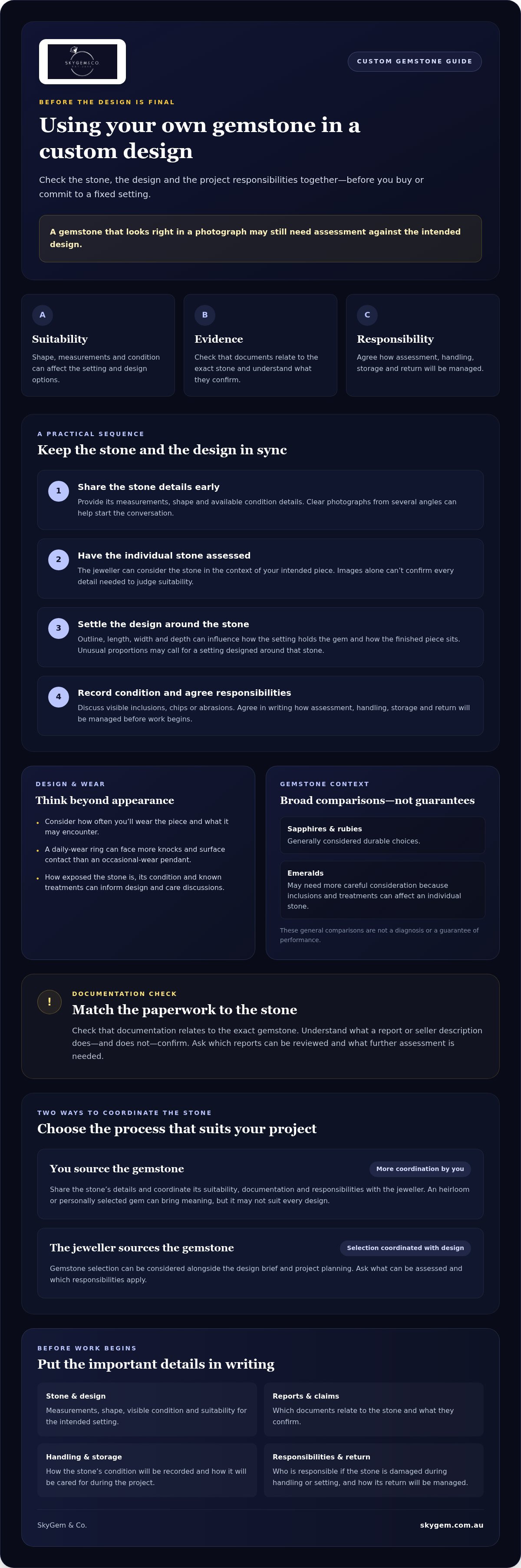
Make the gemstone part of the project conversation before you buy it or lock in a design. Work through these steps so the stone, setting and practical arrangements are considered together:
- Contact the jeweller to ask whether customer-supplied stones can be considered for your project.
- Share available details, including measurements, photographs and any reports or purchase records.
- Discuss the design and ask whether the proposed stone can be assessed against it before the design is finalised.
- Confirm the terms for assessment, handling, timing, responsibilities and what happens if plans need to change.
Confirm stone acceptance and project responsibilities before purchase or design finalisation. This is particularly useful if you’re buying a stone for a specific setting rather than working with a gem you already own.
Which questions should you ask before purchasing?
Ask whether the jeweller can assess the proposed stone for your intended design and what information they need. Confirm whether measurements, clear photographs or particular documents are required, and whether the stone itself needs to be examined before the design can be decided.
Discuss what could happen if the stone proves unsuitable for the original concept. Could the design be revised, or would you need to reconsider the stone? Ask how additional assessment or design changes would be handled, and record any points that remain undecided. These are project details to agree with the jeweller, not assumptions to make from a seller’s description.
How can you reduce handling and coordination uncertainty?
Before handing over a valuable or meaningful stone, clarify who will transport it, when the jeweller will hold it, and who may handle it during assessment and setting. Ask how it will be stored and returned, and what the process is if it needs to go elsewhere for work. If responsibilities for these hand-offs haven’t been discussed, they can become an additional uncertainty when sourcing your own stone.
Agree how the stone’s visible condition will be recorded before work begins and how you’ll be notified if a concern arises. Put the agreed design scope, responsibility for the stone, timing assumptions and unresolved questions in writing. Ask how changes or delays will be communicated and who must approve a revised design before work proceeds.
SkyGem & Co. offers consultations to help clients discuss design choices and project expectations. If you’re considering a customer-supplied stone, ask whether it can be assessed for your project and clarify the current handling and responsibility process before proceeding.
How can a custom jeweller help you use the right gemstone?
Bring gemstone selection into the design conversation early to help align the stone, setting and project expectations. A jeweller can discuss how your preferences relate to design choices and whether more information about a particular stone is needed before plans are finalised. This coordination can help whether you’re comparing options or already have a gemstone in mind.
If you prefer procurement and design to be considered together, jeweller-sourced gemstones are another route. SkyGem & Co. creates bespoke jewellery and can procure gemstones to client specifications, including natural sapphires, rubies and emeralds. This doesn’t mean every stone or design is automatically suitable. It gives you a way to discuss gemstone choices alongside the piece you want to create.
What if you have not bought a gemstone yet?
Start with the design you’re considering, the gemstone type you’re drawn to and the budget you want the project to fit. Discussing these together before choosing an individual stone can help keep the selection aligned with the intended design. SkyGem & Co.’s bespoke design service includes gemstone procurement tailored to client specifications. Discuss your design preferences and gemstone options before deciding which stone is right for your project.
What if you already own or have found a gemstone?
Share the stone’s available measurements, photographs and documentation before finalising the design. Ask whether the jeweller can assess it for your intended piece, which reports they can review and what information they need to advise you. Acceptance of a customer-supplied stone, along with assessment, handling and setting arrangements, must be confirmed directly with the jeweller. Don’t assume a stone can be used until those details are clear.
A consultation can help you discuss the design, gemstone information and project responsibilities before deciding how to proceed. The risks of sourcing your own gemstone for a custom design are easier to weigh when the stone and proposed piece are considered as one project, without assuming a particular outcome.
Make your gemstone choice part of the design plan
The risks of sourcing your own gemstone for a custom design are easier to manage when you involve the jeweller before buying or finalising the piece. Check that the stone’s measurements and condition suit the design, understand what its documentation does and doesn’t confirm, and agree how assessment, handling and responsibilities will be managed.
Independent sourcing can be meaningful, particularly if you have an heirloom or a specific stone in mind. If you’d prefer gemstone selection and design to be coordinated, SkyGem & Co. offers bespoke design with gemstone procurement tailored to client specifications. Consultations support informed choices suited to your design and budget, with natural sapphires, rubies and emeralds among the curated gemstone selection.
With clear discussions at the outset, you can make considered choices and work towards a custom piece that reflects both your preferences and the stone’s practical requirements.
Frequently Asked Questions
What are the main risks of sourcing your own gemstone for a custom design?
The main risks are that the stone may not suit the intended setting, its condition may affect design choices, or its documentation may not support the seller’s claims. Buying separately can also add coordination steps, and responsibilities for handling or setting need to be agreed with the jeweller. These risks don’t mean you should avoid sourcing your own gemstone, but they do make early communication important.
Can a jeweller set a gemstone I bought myself?
Some jewellers may consider customer-supplied gemstones, but acceptance and processes vary. Ask before purchasing or bringing in the stone. Check whether the jeweller can assess its suitability, what information they need, and how assessment, handling and setting responsibilities are managed. Don’t assume the service is available or that a particular stone can be used. Confirm the jeweller’s current process before making design or purchasing commitments.
How can I check whether a gemstone is suitable for a ring?
Ask a jeweller to assess the actual stone against your intended design and how you plan to wear the ring. Share its measurements, shape, depth, clear photographs and any available documentation. Discuss visible inclusions, chips or abrasions, as these may influence the setting or design. Gemstone type matters, but it doesn’t determine suitability by itself. A photograph can help start the conversation, but it can’t replace assessment of the individual stone.
Is a gemstone certificate enough to prove a stone is suitable?
No. A gemmological report records findings within its stated scope, but it doesn’t necessarily establish every seller claim, assign an insurance value or confirm that the stone suits a particular design. Check that the report relates to the exact gemstone and ask what its findings do and don’t cover. A jeweller can discuss the stone in relation to the proposed setting, but clarify which reports they can review and what further assessment may be needed.
Should I buy the gemstone before speaking with a custom jeweller?
It’s usually sensible to speak with a jeweller before buying a stone intended for a specific custom design. Share your design preferences and ask whether the proposed gemstone’s details can be assessed before you commit. This may help identify design constraints while options are still open. If you already own a meaningful stone, contact the jeweller before finalising the design to discuss what information they need and whether they can consider it.
Can a gemstone be damaged during custom jewellery making?
Damage is possible during handling or setting, though the risk depends on the individual stone and the work involved. Discuss the stone’s existing condition and any known concerns before work begins, without assuming it is damaged or unsuitable. Ask how its condition will be recorded, who will handle it at each stage, and what the jeweller’s process is if damage or a concern arises. Agree on responsibilities in writing before proceeding.
What information should I get from a gemstone seller?
Request a written description of the exact stone, including its measurements and any treatments the seller discloses. Ask for clear images, available gemmological reports and purchase records, and check whether report details correspond to the gemstone offered. If the seller makes an origin or other specific claim, ask what documentation supports it. Clarify the seller’s return conditions before purchase, and keep the records together to share with your jeweller.
Is it better to have a jeweller source the gemstone for a custom design?
Jeweller-led sourcing can be practical if you want gemstone selection and design decisions considered together. It may simplify coordination, while independent sourcing can suit someone with an heirloom or personally chosen stone. Neither approach is automatically better. Consider your priorities and confirm responsibilities with the jeweller. SkyGem & Co. offers bespoke design and gemstone procurement tailored to client specifications, with consultations to support informed choices suited to your design and budget.
Disclaimer
This article is for general informational purposes only and may include AI-assisted content. Pricing, specifications, and availability are subject to change. For accurate advice and current information, please contact SkyGem & Co. directly. Nothing in this content constitutes professional or financial advice.