
Repurposing Metal from an Old Family Ring: A Guide

What if preserving a family ring’s meaning doesn’t require keeping it exactly as it is? If you’re weighing what to do with metal from an old family ring, start by separating its sentimental value from the practical question of whether the metal can be reused. The ring’s composition, construction and condition matter, and not every piece is suited to melting or redesign.
It’s understandable to hesitate before changing a piece that carries family history. Keeping the ring intact, repairing it or giving it a new wearable form can each preserve that connection in a different way. A thoughtful design process can also identify which details, stones or features matter most to you.
This guide explains the options to consider before making an irreversible decision, what an assessment can help establish, and why reuse depends on the individual ring and proposed design. You’ll also find practical points to prepare for a jewellery design consultation, so you can make an informed choice between preserving, repairing or transforming the piece.
Key Takeaways
- Decide whether your priority is preserving the ring as it is, wearing it more often or changing its form.
- Metal reuse isn’t automatic. The ring’s material, construction, condition and intended design all inform the assessment.
- Compare keeping, repairing, redesigning and repurposing by how much of the original ring you want to remain recognisable.
- Before discussing what to do with metal from an old family ring, record its history and any details you know about its age, repairs and family ownership.
- A bespoke design consultation can help explore a wearable future for the ring while keeping your priorities and budget in view.
Old Family Ring Metal: Decide What to Preserve
A family ring can carry a story that has little to do with the value of its metal. Its shape, a familiar setting, an engraving or the memory of who wore it may be what makes it meaningful. Before deciding what to do with metal from an old family ring, identify what you want its future to protect.
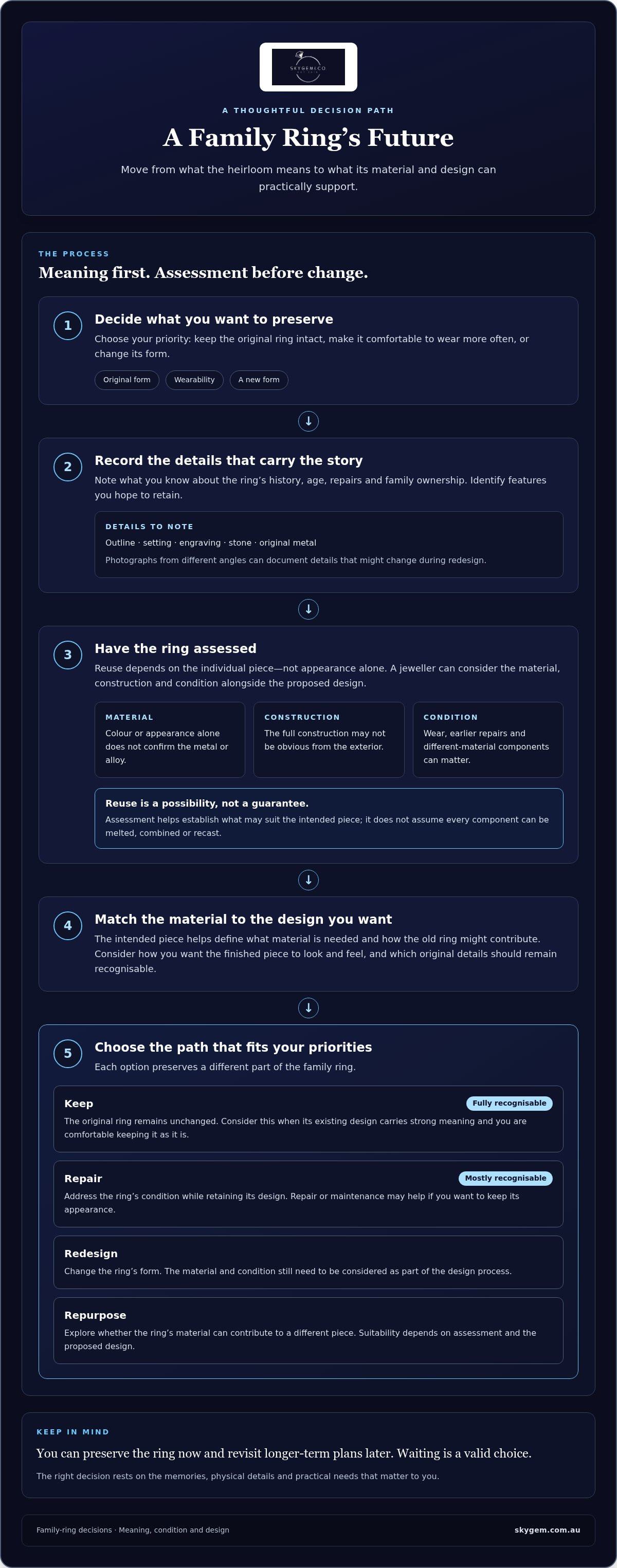
Start by choosing between three broad priorities: keeping the original ring intact, making it comfortable enough to wear more often, or changing its form. Keeping it intact preserves its current design. Repair or maintenance can address its condition while retaining that design. Redesign changes the ring’s form, while repurposing explores whether its material can contribute to a different piece. That last option needs an assessment; it isn’t an automatic outcome.
Is the family connection in the ring, its metal, or its design?
Consider what your family would recognise: the ring’s outline, a distinctive setting, an engraving, a stone or simply the original metal. Record what you know about its history and note which features you’d like to retain. Photographs from different angles can document details that may change during a redesign. These notes give a jeweller a clearer starting point for discussing possible directions.
Be specific about what matters most. You may want the ring to remain recognisable, or feel that carrying its original metal into a different piece would keep the connection alive. Neither choice is more meaningful by default. The decision rests on which physical details, memories and practical needs matter to you.
When is keeping the original ring the right choice?
Keeping the ring intact can be the right choice if its existing form holds the strongest memories or you aren’t ready to change it. If you’d like to continue wearing it, repair and maintenance may address its needs without redesigning it. You can also preserve the ring now and revisit longer-term plans later. Waiting is a valid choice and doesn’t close off future options.
Before moving towards a change, consider whether the ring is uncomfortable, difficult to wear or simply not part of your usual routine. Repair may better suit your priorities if you want to keep its appearance. If the current form no longer works for you, bespoke design can explore a different direction, with the ring’s material and condition assessed as part of the process. Separating what you want emotionally from what the piece can practically support makes the next conversation more focused.
Can Old Ring Metal Be Reused? What a Jeweller Needs to Assess
Reusing metal from an inherited ring is a design possibility, not a guaranteed outcome. Before deciding what to do with metal from an old family ring, have the piece and your intended design assessed. A ring’s colour or appearance alone doesn’t confirm its metal or alloy, so don’t treat a visual impression as a material identification.
Reuse suitability depends on the individual piece and the proposed design. The material, construction and condition all inform the assessment, as does the form the metal would need to take in a new piece. A ring that looks sound may still need closer evaluation, while a worn or previously repaired ring may present different considerations.
What can affect whether the metal is suitable for a new piece?
Unknown composition is one reason assessment matters: appearance doesn’t provide a complete account of what a metal is or how it may suit a particular design. Wear, earlier repairs and components made from different materials can also affect what can be considered. The ring’s full construction may not be obvious from its exterior.
These factors don’t automatically rule reuse in or out. They help shape an evaluation before decisions are made about the material’s role in a new piece. For wider context on how material properties inform jewellery-making choices, see Art Jewelry Forum’s Jewelry-Making Materials: Knowing What To Know.
Why does the new design matter as much as the old metal?
The intended piece helps define what material is needed and how the original ring might contribute. A design with different proportions or construction may call for a different approach from one that closely echoes the existing ring. The discussion should consider both what the heirloom is and how you want the finished piece to look and feel.
Bring your priorities into that conversation: which details should remain recognisable, what kind of piece would fit your life, and how closely you want the design to reflect the original. A jeweller can consider those aims alongside the ring’s material and condition, without assuming that every component can be melted, combined or recast.
If you’re weighing a new direction, a bespoke design consultation can help you discuss the ring and your priorities before settling on a plan.
Keep, Repair, Redesign, or Repurpose: Compare Your Family Ring Options
Each path preserves a different part of a family ring. Keeping it intact prioritises its existing form; repair aims to retain that form while addressing its condition; redesign changes its appearance; and repurposing centres on giving its material a different role. The right choice depends on what you want to retain, how the ring wears and what you want it to become.
| Option | How recognisable is the original ring? | Consider it when… |
|---|---|---|
| Keep | Fully recognisable and unchanged. | The existing design carries strong sentimental value, and you’re comfortable keeping it as it is. |
| Repair | Mostly recognisable; the ring’s identity and overall form remain. | Its condition or wear affects use, but you want to preserve its present appearance. |
| Redesign | Some features may remain recognisable, depending on the design. | You want a different look or improved wearability while exploring ways to retain selected details. |
| Repurpose | Little or none of the original ring may remain recognisable in the new form. | You’re open to a different piece and want to explore whether the original metal can contribute. |
What does repairing the existing ring preserve?
Repair focuses on addressing wear while keeping the ring’s overall identity, rather than starting with a new design. The work required depends on the individual piece, including its condition and construction. If you’re considering a substantial transformation, explore bespoke engagement ring design as one example of a made-to-order pathway.
How can redesign keep a family story in a different form?
A redesign can prioritise a recognisable detail, such as an engraving or a feature of the original setting, while changing the ring’s appearance or configuration. The result may be a different kind of piece, so be clear about which elements matter and which you’re willing to alter. Discussing your goals with a jeweller can help shape a design around the family story and how you want to wear the finished piece.
If you’re weighing what to do with metal from an old family ring, discuss the options before assuming reuse is feasible. A design consultation can explore your preferred outcome alongside the ring’s condition and material, without treating reuse as a given. SkyGem & Co.’s consultations consider tailored design and budget, helping you compare possibilities before choosing a direction.
Preparing to Repurpose Your Old Ring Metal
A little preparation can make a design conversation more focused, especially when the ring carries family memories as well as practical questions about wear. Before deciding what to do with metal from an old family ring, work through a simple sequence: record its history, identify what matters most, consider how you want to wear it, then discuss the options.
What should you record about the old family ring?
Photograph the ring from several angles before discussing repair or redesign. Capture its overall shape and any details you want to remember, such as an engraving or distinctive setting. Make a note of what you know about its age, previous repairs and family ownership. If relatives have shared stories about its materials or changes, record those too, but treat family recollections as background rather than confirmed specifications.
Also note visible damage, loose stones or features that affect comfort and everyday wear. You don’t need to diagnose the ring yourself. These observations help describe what you’ve noticed so the piece can be assessed in context.
Which questions help clarify the outcome you want?
Write down your priorities before exploring designs. Do you want to preserve the ring’s original form, make it more comfortable to wear or create a different piece? Identify which elements must remain recognisable to you or your family, and which parts you’d be open to changing. If you’re unsure, note that too; comparing possibilities can help you decide.
- History: What do you know about the ring’s age, ownership and past repairs?
- Condition: What visible wear or damage have you noticed?
- Wearability: When would you like to wear the finished piece, and what makes the current ring difficult to wear?
- Design: Which details should remain, and what would you change?
Bring these notes into a tailored design consultation. Discuss how the ring’s material and condition may affect the options, and how each design relates to your priorities. Assessment can help clarify what the original piece can contribute; don’t assume in advance that its metal can be reused. Preparation helps turn a sentimental preference into a clear design brief.
Give a Family Ring Metal a Thoughtful Future with Bespoke Jewellery Design
If the original ring no longer suits your style or feels comfortable to wear, bespoke design can offer a considered way to give its story a new form. The first step isn’t to assume its metal can be reused. A design conversation can explore your priorities alongside an assessment of the individual piece, so possible directions are grounded in what the ring can support.
For some people, honouring an heirloom means retaining a defining detail. For others, the connection matters more than keeping the original appearance. A new piece can acknowledge the family story without copying every feature or requiring the ring to remain recognisable in exactly the same way.
How can a bespoke design reflect the original ring?
A design might draw on a meaningful shape, setting detail or other visual reference, depending on the ring and the direction you want to take. You could also choose a different configuration that better suits everyday wear. Decide which elements carry the story for you, rather than treating every original feature as essential. If you’re considering a ring redesign, explore the bespoke engagement ring guide for further design context.
What happens in a design conversation about an heirloom?
Bring the ring’s known background, notes about its condition and your thoughts on how you’d like to wear the finished piece. Share what you hope to preserve and what you’d be comfortable changing. In a SkyGem & Co. consultation, tailored design is considered around your priorities and budget, while discussion of the ring’s material and condition helps inform practical directions. Reuse remains subject to the individual piece and proposed design.
This gives you a way to weigh the emotional purpose of the heirloom against the form and function of a new piece, without committing to an outcome before the ring has been considered. If you’re deciding what to do with metal from an old family ring, begin with its story, the use you have in mind and the design details you value most.
A focused conversation about those points can help clarify the next step, whether that means exploring a new design or choosing another way to care for the original ring.
Choose a Future That Honours the Ring’s Story
The best choice depends on what you want to preserve and how you hope to wear or remember the ring. Keeping it intact or choosing repair and maintenance can retain its original form, while bespoke design may offer a new wearable expression of its story. Whether the metal can be reused depends on assessment of the individual ring and the proposed design.
Before deciding what to do with metal from an old family ring, consider the details that matter most, the ring’s condition and the outcome you want. SkyGem & Co.’s expert consultations can explore your priorities and budget, whether you’re considering bespoke design and manufacturing or care for the existing piece.
A thoughtful next step doesn’t need to erase the past. With a clear sense of what the ring means to you, you can choose a future that feels personal, practical and worthy of its family story.
Frequently Asked Questions
Can metal from an old family ring be used to make a new ring?
It may be possible, but reuse isn’t automatic. The ring’s material, construction and condition, along with the requirements of the new design, all affect whether its metal is suitable. A jeweller can assess the individual piece before you make plans around it. If reuse isn’t suitable for the design, you can still discuss other ways to honour the ring’s story in a new piece.
Is it better to repair or redesign an inherited ring?
Repair may suit you if you value the ring’s existing form and want to address wear while keeping it recognisable. Redesign may be worth exploring if the current shape or style no longer suits how you want to wear it. The ring’s condition and construction also matter. Consider which features you want to preserve, then weigh those against your practical needs before choosing a direction.
What happens if I do not know what metal my family ring is made from?
That’s common with inherited jewellery, and appearance alone can’t confirm the metal or alloy. Share any family recollections or paperwork, and point out markings you’ve noticed, but treat these as clues rather than a confirmed identification. A jeweller can assess the ring as part of discussing possible options. Until then, keep your design plans open rather than assuming the metal can be reused.
Can different pieces of old jewellery be combined into one new ring?
It may be possible to consider materials or details from more than one piece in a single design, but suitability depends on each item and the proposed ring. Note the history and condition of every piece, and identify which elements matter most to retain. A design consultation can explore how the pieces might relate to your intended outcome without assuming their metals can be combined or reused.
Should I clean an old family ring before having it assessed?
You don’t need to make the ring look new before discussing it. Avoid polishing it or using a cleaning method you’re unsure about, particularly if it has loose stones, visible damage or an unknown finish. Take clear photographs and describe any changes you’ve noticed instead. If you’ve already cleaned it, mention what you used so the jeweller has that context during the assessment.
How can I keep the sentimental meaning if the ring is redesigned?
Choose one or more details that carry the story for you, such as an engraving, a recognisable shape or a setting feature, and discuss how they might inform the new design. You don’t have to reproduce the ring exactly for its meaning to continue. Recording its history and explaining why those details matter can help guide a design that feels connected to your family while better suiting how you’ll wear it.
Disclaimer
This article is for general informational purposes only and may include AI-assisted content. Pricing, specifications, and availability are subject to change. For accurate advice and current information, please contact SkyGem & Co. directly. Nothing in this content constitutes professional or financial advice.