
Questions to Ask to Ensure Your Jeweller Is Trustworthy

A jeweller’s trustworthiness often shows in how specifically they answer your questions, not in a polished sales pitch. The questions to ask to ensure your jeweller is trustworthy should reveal what supports a gemstone’s description, how a piece will be made and what the quoted cost includes.
It’s reasonable to want more than appealing photographs or confident assurances, especially when choosing a significant piece or commissioning a bespoke design. Ask what documentation is available for the stone, what each report verifies and whether claims about treatments or origin are supported. For craftsmanship, find out when you’ll review the design and which decisions you’ll make along the way. Clear answers give you concrete details to assess before committing.
This guide covers practical questions about gemstone information, workmanship, costs, design expectations and aftercare, along with the kinds of answers that make a process easier to understand. At SkyGem & Co., consultations are educational and tailored to your budget, while bespoke work moves through design stages from CAD to stone setting. Knowing what to ask can help you approach the conversation with confidence and decide whether the process feels right for you.
Key Takeaways
- Use questions to ask to ensure your jeweller is trustworthy, focusing on specific answers supported by relevant evidence.
- Match gemstone documents to the claims being made, since available records vary by stone and report.
- Clarify when you’ll review and approve the design, and how production and stone setting fit together.
- Ask what the agreed scope includes, how changes could affect the final amount and whether those details will be recorded in writing.
- Bring your priorities, inspiration and budget considerations to an educational consultation to make decisions with greater clarity.
What Does a Trustworthy Jeweller’s Answer Actually Look Like?
A polished explanation can sound reassuring, but confidence alone doesn’t show whether a recommendation is reliable. Look for answers that connect a claim to a clear explanation, relevant evidence where available, realistic expectations and consistent communication. A jeweller should be able to explain what they know, what supports it and which details depend on the stone or design.
Trustworthy jewellery advice connects a claim to an explanation or evidence. That might mean explaining why a gemstone is described in a particular way, showing relevant documentation or clarifying how a design choice affects the finished piece. The right evidence depends on the claim, but the reasoning should be understandable.
Specific answers give you something to assess. If a jeweller recommends one setting over another, for example, a useful response explains how it relates to your preferred appearance, intended use or design priorities. “It’s the best option” gives you little to compare. Ask what makes the setting suitable, request the explanation in writing and take time to consider the details before deciding.
Which answers show expertise rather than sales pressure?
Expertise is evident when a jeweller translates technical language into practical consequences. If a term is unfamiliar, they should explain it in plain English and relate it to the feature you’re considering, rather than relying on jargon to close the discussion. A useful answer addresses your priorities and explains the trade-offs involved in a recommendation. Evasive replies, unexplained terminology or pressure to commit immediately are reasons to pause and ask for clarification.
The questions to ask to ensure your jeweller is trustworthy don’t need to sound technical. Try: “Could you explain what that means for this piece?” or “What information supports that description?” If the answer raises another question, ask it. You shouldn’t need specialist vocabulary to understand an important decision.
How can you assess the consultation itself?
A productive consultation is a two-way conversation, not a presentation that ends with a quick decision. The jeweller should make room to discuss your preferences, budget and intended use, then explain options in relation to those priorities. Bring inspiration images or notes if they help, but you don’t need to arrive with a finished design or technical terminology.
Notice whether your questions receive direct answers and whether important details remain consistent as the conversation develops. If something is unclear, ask for it to be rephrased or recorded so you can consider it later. You’re entitled to pause; a considered purchase doesn’t require an immediate commitment.
SkyGem & Co.’s educational consultations are tailored to your budget and priorities. A clear conversation should leave you better equipped to decide, not obliged to decide on the spot.
What Should You Ask About Gemstone Origin, Treatments and Documentation?
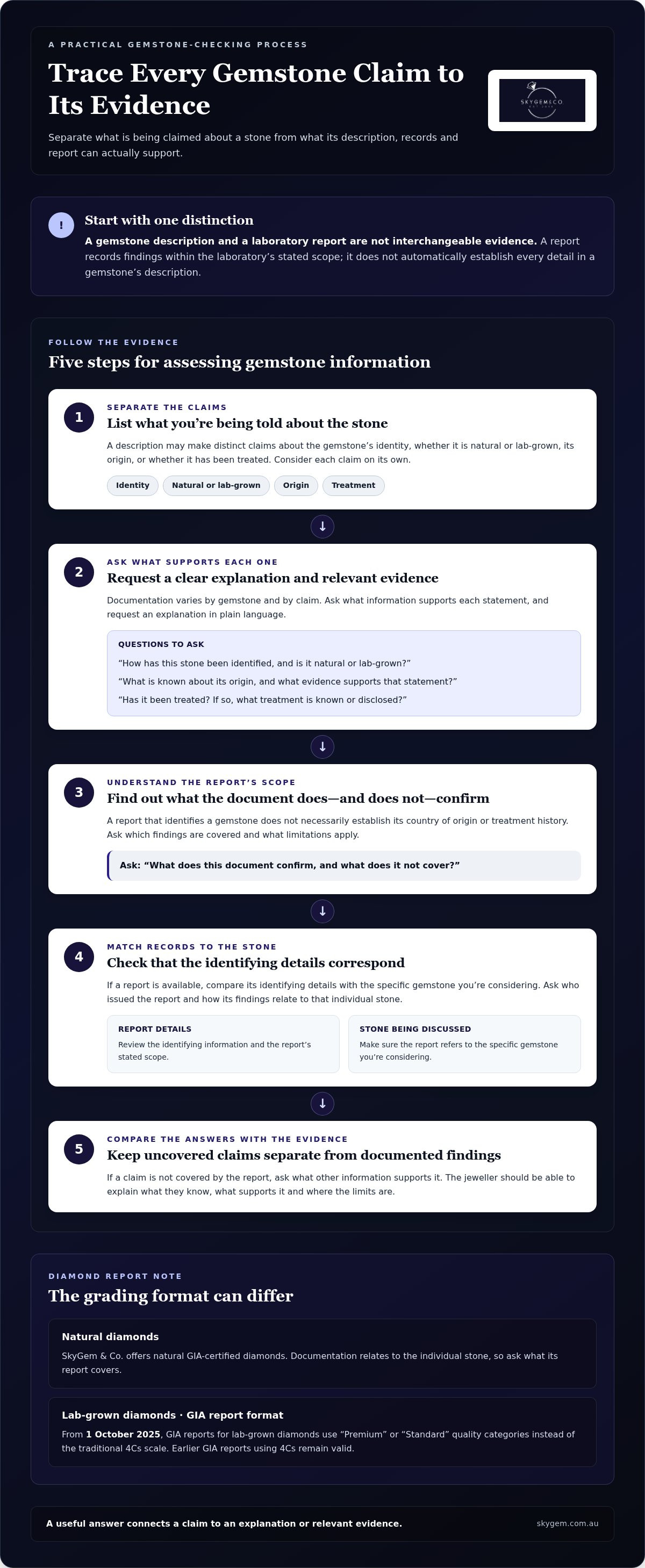
A gemstone’s description can include several separate claims: what the stone is, whether it is natural or lab-grown, where it originated and whether it has been treated. Ask about each claim rather than assuming one document verifies them all. The questions to ask to ensure your jeweller is trustworthy should help you understand what information is available and what it can establish.
A gemstone description and a laboratory report are not interchangeable evidence. A description tells you what the jeweller represents about the stone; a report records findings within the laboratory’s stated scope. Documentation varies by gemstone and claim. For example, a report that identifies a gemstone doesn’t necessarily establish its country of origin or treatment history. Ask what supports each statement, and request a plain-language explanation of the report’s scope and limitations.
- “How has this stone been identified, and is it natural or lab-grown?”
- “What is known about its origin, and what evidence supports that statement?”
- “Has it been treated? If so, what treatment is known or disclosed?”
- “What does this document confirm, and what does it not cover?”
Compare the answers with the stone and records being discussed. If a report is available, check that its identifying details correspond to the specific gemstone you’re considering. If a claim isn’t covered by that document, ask what other information supports it instead of treating the report as proof of every detail.
What questions clarify a diamond’s grading and report?
Ask which characteristics the report documents, who issued it and how the jeweller interprets those findings for the specific diamond. Match the report’s identifying details to the stone being shown, and ask for unfamiliar terminology to be explained. SkyGem offers natural GIA-certified diamonds. Documentation relates to the individual stone, so ask what its report covers.
For lab-grown diamonds, the report format matters too. From 1 October 2025, GIA reports for lab-grown diamonds use “Premium” or “Standard” quality categories instead of the traditional 4Cs scale; earlier GIA reports using 4Cs remain valid. Ask which grading approach a report uses and how its information helps you compare the specific stone, rather than assuming every report follows the same format.
How should you ask about coloured gemstone sourcing and treatment?
Ask what is known about the gemstone’s source, whether that origin is documented and whether the stone has undergone treatment. If treated, ask how that may affect its appearance or care, and what the available records state. SkyGem’s precious gemstone information can provide context for these discussions. Ask the jeweller to distinguish documented details from information that isn’t established.
Clear answers make it easier to decide what matters to you and what you’d like recorded before proceeding. For a guided discussion of gemstone information, you can arrange a jewellery consultation.
What Questions Reveal How a Jeweller Designs and Makes Your Piece?
For bespoke jewellery, clarity means understanding how an idea becomes a finished piece and when you’ll be able to review it. Ask about four stages: design, approval, production and stone setting. The answers should explain which decisions lie ahead, what you’ll see and how your preferences guide the work.
Start by describing how you expect to wear the piece. A ring intended for everyday wear may call for different design considerations from jewellery reserved for occasional use. Ask how the chosen stone, setting structure and metal relate to your routine, preferred appearance and care expectations. The aim isn’t to prescribe one design, but to understand the reasoning behind the proposed choices.
What should you clarify before approving a bespoke design?
Sketches or CAD can make an idea easier to evaluate by showing proportions and how the main elements relate. They communicate a proposed design, but don’t guarantee that the finished piece will look exactly like a screen image. Ask what the visuals represent, which details are still undecided and how you can request revisions before approval. SkyGem’s custom-made engagement ring design process uses CAD as part of bespoke work.
Before you approve, clarify exactly what you’re being asked to sign off on. You might ask:
- “Which design details can I review in the sketch or CAD?”
- “How are requested revisions discussed and recorded?”
- “What happens after I approve the design?”
Recorded design approval gives you and the jeweller a shared reference for the agreed proportions, materials and stone placement. Clear approval records help set expectations for bespoke work before production begins.
How can you evaluate craftsmanship and suitability for everyday wear?
Ask how the setting supports the chosen stone, how its structure relates to the design and what features may need attention over time. A useful explanation connects construction choices to your intended wear without promising that a piece is immune to damage or wear. If you wear a ring while working with your hands, describe that routine and ask how it informs the proposed setting and care advice.
Then clarify how production and setting fit together. Questions to ask to ensure your jeweller is trustworthy include: “At what stage is the stone set?”, “What parts of the piece can I review before setting?” and “What care or maintenance should I understand once it’s finished?” These questions help distinguish the visible design from the practical decisions involved in making it.
SkyGem’s bespoke process runs from CAD design through final stone setting, giving you clear decision points as the piece develops. Before proceeding, make sure you understand what has been approved, what happens next and which details you can still discuss.
Which Questions Clarify Budget, Scope and Ongoing Care?
A quote is easier to assess when you understand what it covers and which decisions could change the final amount. Ask the jeweller to explain the agreed design, stone and purchase arrangements in writing. For bespoke work, this gives you a reference for what’s included in the current scope and what might change if you make a different choice.
Useful questions include:
- “What does this quote include, and are any parts of the agreed design outside its scope?”
- “If I change the stone, material or design, how will that affect the final amount?”
- “Will I review and approve any cost changes before work proceeds?”
- “Which design and stone details will be recorded with the purchase arrangements?”
A written scope helps both parties share the same expectations before work proceeds. It gives you a practical reference for comparing the agreed design with later discussions, without relying on memory alone. The questions to ask to ensure your jeweller is trustworthy should clarify not just the quoted amount, but also how changes are handled and communicated.
How can you discuss budget without losing sight of priorities?
Sharing a comfortable budget range helps the jeweller shape recommendations around what matters most to you. Explain whether your priority is a particular gemstone, a design feature or the overall appearance, then ask which choices would have the greatest effect on the total. SkyGem’s consultations are tailored to client budgets, helping connect design options with spending priorities without requiring specialist knowledge.
Ask for alternatives to be compared in practical terms. If a proposed adjustment changes the stone or material, ask what that means for the design and final amount. You can request time to review an updated written scope before agreeing to a change. Clear communication makes it easier to keep decisions deliberate.
What should you ask about care and future maintenance?
Care guidance should relate to the specific gemstone, setting and metal, rather than rely on broad advice that may not suit every piece. Ask how to clean the jewellery, which routine practices to avoid and what signs may indicate it needs attention. Before you leave with the piece, make sure you understand the care guidance provided.
Keep care advice distinct from promises about future repairs, warranties or other services. Ask what the written purchase information says about those arrangements rather than assuming they’re included. A jeweller should explain the difference plainly, so you know which guidance applies to everyday care and which future commitments, if any, are documented separately.
How Does SkyGem Make a Jewellery Consultation Clear and Collaborative?
A consultation is useful when you leave knowing which decisions are settled and which still need thought. Before meeting with SkyGem & Co., consider what you want to understand by the end of the conversation. You might want to compare two design directions, understand a particular term or decide which preferences are essential rather than optional.
What can you bring to a first jewellery consultation?
A short note can help keep the discussion focused. Separate your thoughts into three groups: decisions you’ve already made, choices you’re still weighing and questions you want answered. This helps the jeweller respond to your priorities without assuming every idea is fixed. If you’re exploring ring designs, for instance, use engagement ring styles as a prompt to describe what appeals to you and what doesn’t.
You can also note any terms or recommendations you’d like explained in everyday language. There’s no need to prepare specialist questions. “What does that mean for my options?” gives the conversation a practical direction while leaving room to follow an unexpected but useful point.
How do you take the next step with confidence?
During the conversation, keep track of answers that affect your decision and note anything you’d like to revisit. Before wrapping up, ask the jeweller to recap the main points and distinguish settled choices from open questions. That recap can help you reflect later without feeling you need to decide everything during the meeting.
Confidence comes from understanding the proposal in your own terms. Take the time you need to consider whether the choices align with your priorities, and return to any question that remains unresolved. A jewellery consultation can be a constructive first step, even if you’re still exploring what feels right.
Make Your Next Jewellery Decision With Confidence
The questions to ask to ensure your jeweller is trustworthy are most useful when they help you decide what matters to you, not just assess someone else’s answers. Before your next conversation, choose the details you need to feel comfortable moving forward. You might want a particular point explained in writing, time to consider a proposal or a clearer picture of how a design choice affects the finished piece.
You don’t need to resolve every decision at once. A useful next step can be a conversation where you explain your priorities, ask follow-up questions and consider your options without feeling rushed. Use what you learn to decide whether the proposed process, communication and piece align with your expectations.
With clear information and room to make your own decision, you can approach choosing a meaningful piece with greater assurance.
Frequently Asked Questions
Is it reasonable to ask a jeweller for documentation about a gemstone?
Yes. Ask what records are available for the particular stone and what each one verifies. A report may identify a gemstone without confirming every detail in its sales description, such as origin or treatment history. Ask the jeweller to distinguish laboratory findings from information provided through sourcing records or the jeweller’s own description. Relevant documentation can differ between diamonds and coloured gemstones.
What questions should I ask about a diamond certificate?
Ask which organisation issued the report, which diamond it identifies and what characteristics it records. Check that the report’s identifying details correspond to the diamond you’re considering, rather than relying on a document shown for a similar stone. Then ask the jeweller to explain any grading terms that affect your choice. A report helps assess particular characteristics, but it doesn’t set out the full design, purchase arrangements or suitability of the finished jewellery.
Can I ask a jeweller to explain gemstone treatments?
Yes. Ask whether a coloured gemstone has been treated, what the treatment involves and whether it may affect appearance or care. If the answer is uncertain, ask what is known and what information is unavailable for that stone. This helps you compare stones on a clearer basis. Treatment information may also guide care choices, so request advice that relates to the specific gemstone rather than assuming all stones of the same type need identical handling.
How can I tell whether a jeweller’s answer is trustworthy?
Look for an answer that addresses your concern and explains the reason behind a recommendation. Follow up with a question such as, “How does that affect the piece I’m considering?” The questions to ask to ensure your jeweller is trustworthy should help you understand the decision, not leave you dependent on unexplained claims. If an answer remains unclear, take time to consider it before committing.
What should I ask before commissioning a bespoke engagement ring?
Ask how your initial ideas will be developed, which design details you’ll review and what approval means before work moves forward. Discuss how the selected stone relates to the proposed setting, and clarify which features form part of the agreed design. Record the main decisions so you can refer back to them during the process. This creates a shared reference as the concept becomes a finished ring.
Should a jeweller explain care and maintenance before I buy?
Yes. Ask how to care for the specific gemstone, setting and metal, and whether any cleaning practices should be avoided. Don’t assume a cleaning method suitable for one piece is appropriate for another. Request practical guidance for routine care and clarify separately what, if anything, is documented about repairs, warranties or future services. Keeping those terms distinct helps you understand the difference between caring for the jewellery and a separate service commitment.
Disclaimer
This article is for general informational purposes only and may include AI-assisted content. Pricing, specifications, and availability are subject to change. For accurate advice and current information, please contact SkyGem & Co. directly. Nothing in this content constitutes professional or financial advice.