
Platinum vs 18k White Gold: The Definitive Guide for Engagement Rings

The metal that resists surface scratches most effectively might actually be the one most likely to lose its structural integrity over time. It's common to feel overwhelmed when comparing platinum vs 18k white gold for engagement ring settings, particularly when technical terms like hardness and durability are often misunderstood. You deserve a setting that preserves its aesthetic brilliance while ensuring your centre stone remains perfectly secure for decades to come. We recognise that selecting a mount is about more than just initial appearance; it's about the long-term viability of the piece as a functional asset.
This guide provides a methodical technical analysis of these two premium alloys to help you choose a material that aligns with your lifestyle and maintenance preferences. We will examine the metallurgical differences between 95% pure platinum and 18k gold, the reality of rhodium replating schedules, and how each metal's physical properties impact the security of your diamond. By the end of this article, you'll have the technical clarity needed to select a setting that remains beautiful and structurally sound for a lifetime.
Key Takeaways
- Distinguish between the metallurgical compositions of 18k white gold alloys and 95% pure platinum to understand how they interact with your skin and the environment.
- Evaluate the choice of platinum vs 18k white gold for engagement ring styles by comparing surface scratch resistance against structural toughness and prong security.
- Assess the long-term maintenance requirements, including the frequency of rhodium plating for white gold versus the professional polishing needed to manage platinum's natural patina.
- Understand how metal density and melting points influence the initial investment and the technical complexity of bespoke manufacturing for your chosen setting.
- Gain confidence in selecting a metal that provides the optimal structural foundation for natural or lab-grown diamonds in solitaire, halo, or trilogy configurations.
Understanding the Composition: What Are Platinum and 18k White Gold?
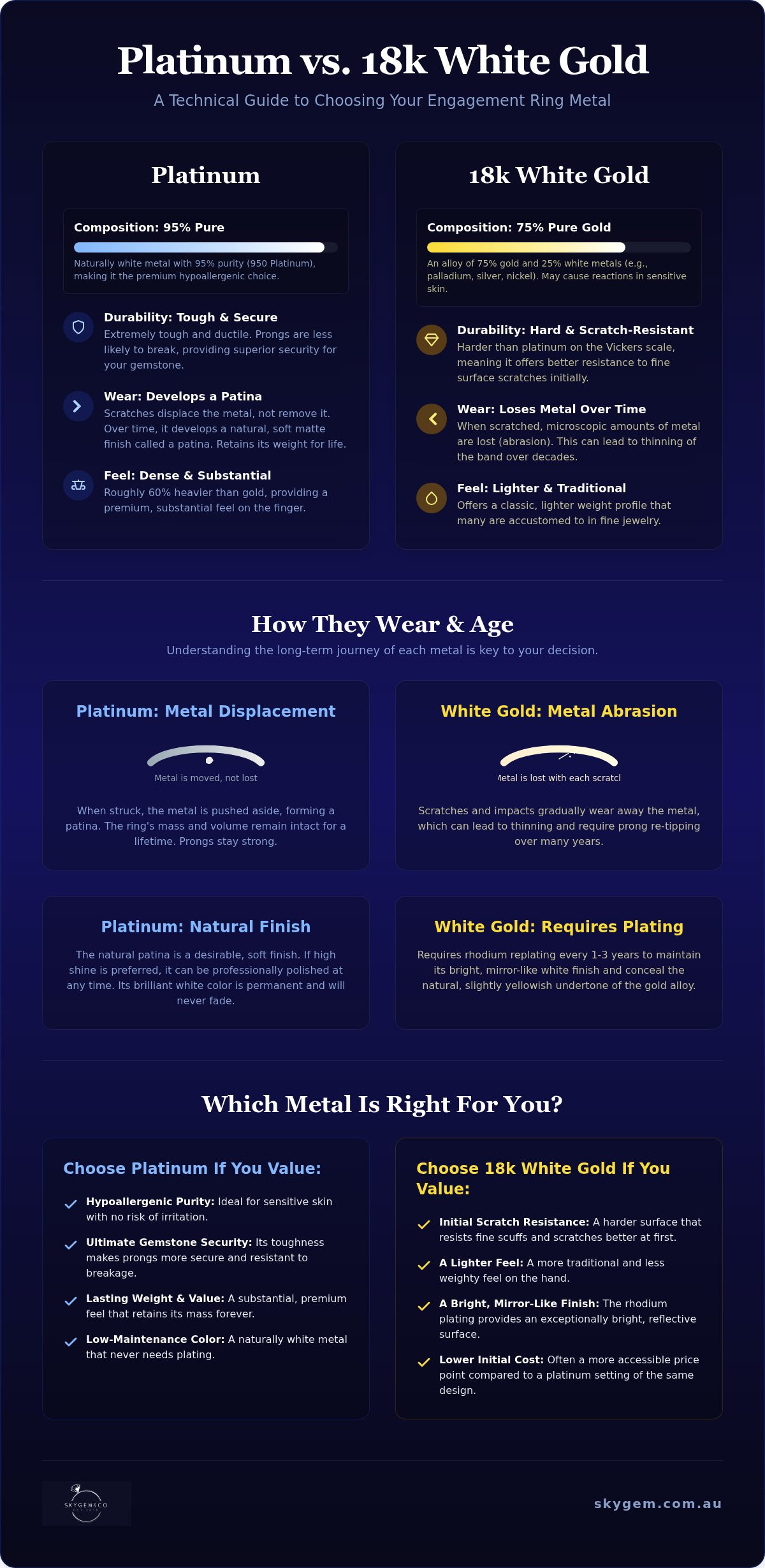
To select the ideal foundation for a lifetime piece, one must first evaluate the metallurgical makeup of the two primary contenders. 18k white gold is not a naturally occurring metal; it is a meticulously engineered alloy. It consists of 75% pure gold combined with 25% white metals such as silver or palladium to bleach the natural yellow hue. In contrast, platinum is a naturally white precious metal. Most high-end settings utilize 950 platinum, which indicates a 95% purity level. When investigating the properties of platinum, its extreme density becomes immediately apparent. Platinum is roughly 60% heavier than gold. This creates a substantial, premium feel on the finger that many clients associate with long-term value.
The choice between platinum vs 18k white gold for engagement ring settings often comes down to this physical presence. Because of its high atomic weight, a platinum setting requires more physical material to fill the same volume as a gold counterpart. For those who prefer a lighter, more traditional feel, 18k white gold engagement rings offer a classic aesthetic with a more delicate weight profile.
The Purity Factor and Skin Sensitivity
Platinum's high purity level makes it the definitive choice for those with sensitive skin. Because it lacks the base metal additives found in many gold alloys, it is considered hypoallergenic. Standard 18k white gold often incorporates nickel to achieve its colour; this can trigger dermatological reactions in a significant portion of the population. While some premium white gold alloys use palladium instead of nickel to mitigate this risk, platinum remains the gold standard for biocompatibility. 18k gold is favoured in fine jewellery because it provides the optimal balance between the prestige of high gold content and the hardness required to retain intricate details without being overly brittle.
Naturally White vs. Enhanced White
A critical distinction lies in the visual evolution of the metal. White gold possesses a subtle, warm undertone because its primary component is yellow gold. To achieve the stark, mirror-like finish seen in showroom displays, 18k white gold undergoes a process called rhodium plating. Rhodium is a member of the platinum family used for its extreme brilliance and hardness. Conversely, platinum is true white throughout its entire structure. It will never reveal a yellowish tint, even after decades of wear. This natural colour stability is a key factor when evaluating the long-term aesthetic of your setting. While white gold relies on an external layer for its brilliance, platinum's colour is an inherent property of the metal itself.
Durability and Wear: Hardness vs. Toughness
A common misconception in the jewellery industry is that hardness is the sole indicator of durability. In professional metallurgy, hardness refers to a material's resistance to surface scratching, while toughness describes its ability to resist fracturing under impact. When comparing platinum vs 18k white gold for engagement ring longevity, these distinctions are vital. 18k white gold is technically harder on the Vickers scale, meaning it resists fine surface scratches for a longer period than platinum. However, platinum possesses far greater toughness and ductility, making it less likely to break or snap when subjected to sudden force.
The way these metals wear over time is fundamentally different. When white gold is scratched, microscopic amounts of metal are actually shaved away through a process called abrasion. Over decades, this results in a gradual thinning of the band. Platinum, however, undergoes displacement. When it's struck, the metal is simply pushed to the side rather than lost. This is why a platinum ring will retain its original mass even after a lifetime of wear. Understanding What is white gold helps clarify why its alloyed nature leads to these specific wear patterns compared to the pure, dense structure of platinum.
For high-set solitaire diamonds, platinum is frequently the recommended choice. Its ability to withstand impact without losing material makes it a safer housing for valuable stones. While gold is an excellent material for many designs, the technical reality of metal loss through abrasion means that gold settings may require more frequent structural inspections over a forty-year period.
The Patina of Platinum vs. the Scratches of Gold
Because platinum displaces rather than abrades, it develops what is known as a patina. This is a soft, matte finish comprised of tiny ridges and valleys on the metal's surface. Many collectors value this look as it gives the piece a distinct vintage character and a sense of history. Conversely, 18k white gold maintains its crisp, sharp edges and mirror-like shine for a longer duration. If you prefer a ring that looks brand new for as long as possible, white gold may be your preference, provided you're comfortable with the eventual loss of metal mass through repeated polishing.
Prong Security and Stone Safety
For intricate solitaire or halo settings, prong security is a non-negotiable technical requirement. Platinum is the superior choice for securing large centre stones because of its ductility. If a platinum prong is hit, it will likely bend, keeping the stone held in place by tension. A white gold prong is more rigid and can, over time, become brittle. This risk increases during maintenance; every time a gold prong is adjusted, the metal undergoes work hardening, which can lead to snapping. For those with active lifestyles, we often recommend a bespoke engagement ring design that utilises platinum prongs for maximum security, even if the band itself is gold.
Maintenance and Aesthetics Over Time
Selecting the right metal is a commitment to its long-term upkeep. While many believe platinum is a "set and forget" option, the reality is that all precious metals require professional intervention to remain in showroom condition. The primary difference in the platinum vs 18k white gold for engagement ring debate lies in how that maintenance is performed. Over a five-year period, a white gold ring will likely undergo several chemical re-plating cycles, whereas a platinum ring will require physical mechanical restoration to manage its evolving texture and lustre.
The "colour journey" of these two metals diverges significantly after the first year of wear. White gold begins with a mirror-like, cool white finish that eventually softens into a creamy, pale yellow as the outer plating thins. Platinum starts with that same bright white but transitions into a matte, greyish-white patina. Neither metal is truly maintenance-free; the choice depends on whether you prefer the routine of chemical restoration or the character of a maturing metal surface.
The Rhodium Plating Cycle
Because 18k white gold is an alloy containing 75% yellow gold, it inherently possesses a subtle, warm tint. To achieve a bright, cool white finish, jewellers apply a thin layer of rhodium through an electroplating process. This layer is not permanent. Several environmental factors can accelerate its wear, including individual skin pH levels, frequent exposure to perfumes or lotions, and high-alcohol content in modern hand sanitisers. If you choose not to re-plate the metal, the ring will eventually reveal its "Champagne" undertone. At SkyGem & Co. Bespoke Engagement Rings, we ensure our settings are engineered to accommodate these regular maintenance intervals without compromising the structural integrity of the piece.
Restoring Platinum’s Brilliance
Platinum does not change colour, but it does lose its high-gloss shine as it develops a patina. Restoring its original brilliance requires a professional jeweller to burnish the metal. Unlike polishing gold, which removes a microscopic layer of material, burnishing involves using specialized tools to compress and move the displaced metal back into its original position. This process leverages the unique properties of platinum-group elements, specifically their incredible resistance to corrosion and high density.
A professional workshop polish is significantly more intensive than a simple home clean. It involves high-speed buffing wheels and specific abrasive compounds to smooth out the ridges of the patina. For bespoke engagement rings intended as heirlooms, the ability to restore the metal without losing mass is a decisive advantage. While white gold offers a lower initial maintenance hurdle, platinum provides a more stable, albeit textured, aesthetic journey over the decades.
Price and Investment Value: The Cost of Luxury
When evaluating the initial expenditure of a platinum vs 18k white gold for engagement ring purchase, the price gap often surprises clients. As of July 2026, the spot price of gold has reached approximately $5,000 per ounce, while platinum trades significantly lower, between $960 and $1,020 per troy ounce. Despite this lower raw material cost per ounce, a finished platinum ring typically commands a 40% to 60% premium over an identical 18k white gold design. This discrepancy is driven by two technical factors: the density of the metal and the purity of the alloy used in manufacturing.
The manufacturing process also contributes to the higher retail price of platinum. Platinum has an exceptionally high melting point of 1,768 degrees Celsius, compared to approximately 900 to 1,000 degrees Celsius for 18k gold alloys. Working with such extreme temperatures requires specialised equipment, dedicated clean-room environments to prevent contamination, and a higher level of artisanal expertise. These logistical requirements mean that labour costs for platinum settings are inherently higher than those for gold.
To view our range of high-performance gold settings, you can explore our 18k White Gold Engagement Ring Collection, which offers exceptional value without compromising on structural design.
Density and Metal Weight
Density plays a critical role in the final cost calculation. Because platinum is approximately 60% denser than gold, a ring cast from the same mould will weigh roughly 40% more in platinum than in 18k gold. Furthermore, while 18k gold is 75% pure, platinum jewellery is typically 95% pure. This means you are paying for more actual precious metal by weight in every millimetre of the setting. The result is a ring that feels substantially heavier and more secure, reflecting its status as a premium investment.
Long-term Maintenance Expenses
The "Total Cost of Ownership" is where the financial argument for platinum becomes most persuasive. 18k white gold requires rhodium re-plating every 12 to 24 months to maintain its bright white finish, with each service currently costing between $60 and $120. Over a 20-year period, these maintenance fees can accumulate to over $1,200. In contrast, platinum maintains its colour naturally and only requires occasional professional polishing to manage its patina. Platinum is approximately 30 times rarer than gold in the Earth's crust, which reinforces its long-term intrinsic value as a scarce resource. Over the decades, the initial premium paid for platinum often reaches a break-even point when compared to the ongoing chemical servicing required for white gold.
If you're ready to select a setting that balances initial investment with lifetime performance, we invite you to browse our full range of engagement rings or consult with our technical team for a bespoke recommendation.
Choosing the Right Metal for Your Design
The final decision between platinum vs 18k white gold for engagement ring settings requires a synthesis of technical performance and visual intent. While the previous sections established the metallurgical differences, the application of these metals in specific designs is where your choice becomes practical. It's a matter of aligning the physical properties of the alloy with the architectural requirements of your chosen setting. A high-set diamond has different structural needs than a low-profile vintage design. Your lifestyle, maintenance preferences, and aesthetic priorities will dictate which material serves as the superior foundation for your investment.
When pairing white metals with precious gemstones, the neutral, cool background of both alloys is exceptionally effective. For instance, the deep blue of an Australian sapphire or the vivid green of a natural emerald appears more saturated when set against a white metal compared to yellow gold. This is particularly true for D-F colour grade diamonds, whether natural or lab-grown. The metal won't "bleed" yellow light into the stone, preserving the icy brilliance of high-specification gems. Before making a final selection, consider this checklist:
- Lifestyle: Do you work with your hands or have a highly active daily routine? Platinum’s toughness offers better security against impact.
- Maintenance: Are you comfortable with a biennial rhodium plating schedule, or do you prefer a metal that never changes colour?
- Aesthetic: Do you prefer the crisp, mirror-like finish of white gold or the soft, historical character of a platinum patina?
- Design Complexity: Does your ring feature intricate milgrain or filigree that requires the hardness of gold to remain sharp?
Metal Choice by Ring Style
Design architecture often points towards a specific metal. Solitaire Engagement Rings, which rely on a single point of security, often benefit from the extreme ductility of platinum prongs. This ensures the centre stone remains locked in place even if the ring is accidentally struck. Conversely, intricate, vintage-style Halo Engagement Rings often look best in 18k white gold. The metal's hardness allows jewellers to create sharper edges and finer decorative details that might soften over time in platinum. Remember to match your engagement ring metal to your future wedding band to prevent "galvanic corrosion" or uneven wear between the two pieces.
The SkyGem & Co. Recommendation
Our expert consultants act as technical partners in your design journey. We help you weigh these performance metrics against your specific vision to ensure long-term success. We place a heavy emphasis on hand-finishing for both platinum and gold settings. This process compresses the metal more effectively than mass-casting alone, resulting in a denser, more durable piece. The best way to understand the weight, lustre, and feel of these materials is to experience them firsthand. We invite you to book a consultation at our studio to see and feel the difference between these premium alloys in person.
Securing Your Legacy with Technical Precision
Selecting between platinum vs 18k white gold for engagement ring settings is a decision that balances immediate aesthetic impact with long-term structural viability. You now understand that while white gold offers a harder surface resistant to fine scratches, platinum provides the superior toughness and ductility required to protect a centre stone for a lifetime. These metallurgical factors, combined with the predictable maintenance cycles of rhodium plating or professional burnishing, should guide your final selection based on your specific lifestyle and design goals.
As specialists in GIA certified natural and lab-grown diamonds, our team is dedicated to providing the technical consultation necessary for a confident investment. Located in the heart of the Royal Arcade, we combine expert bespoke design with a commitment to ethically sourced precious gemstones. We invite you to Book a Bespoke Consultation at SkyGem & Co. to evaluate these premium alloys in person. Your journey toward a perfect, permanent setting begins with clarity and expert partnership.
Frequently Asked Questions
Does platinum scratch easier than 18k white gold?
Platinum has a lower surface hardness than 18k white gold, which means it will show fine scratches more readily. However, there's a technical distinction in how these metals wear. While gold loses microscopic amounts of material when scratched, platinum simply displaces the metal. Over time, this displacement creates a matte texture known as a patina, which many collectors prefer for its vintage character.
How often does a white gold ring need to be rhodium plated?
Most white gold jewellery requires rhodium re-plating every 12 to 24 months to maintain its bright, mirror-like finish. This schedule depends on your skin's pH levels and how often the ring is exposed to abrasive chemicals or hand sanitisers. If you notice a subtle warm or yellowish tint appearing on the underside of the band, it's likely time for a professional servicing.
Can I wear a platinum engagement ring with a white gold wedding band?
It's generally not recommended to mix these two metals in a stacked set. Because platinum is significantly denser and tougher than gold, the constant friction between the two rings will cause the platinum to wear down the white gold band over time. To ensure the structural integrity of both pieces, we advise matching the metals in your bridal stack.
Is 18k white gold hypoallergenic?
18k white gold is not inherently hypoallergenic because it often contains nickel or other base metals as bleaching agents to achieve its white colour. If you have sensitive skin or a known nickel allergy, platinum is the gold standard for safety. Platinum's 95% purity level makes it naturally biocompatible and highly unlikely to cause dermatological irritation during daily wear.
Why does my white gold ring look yellow?
Your white gold ring appears yellow because the outer layer of rhodium plating has worn away, revealing the natural colour of the alloy beneath. Since 18k white gold is 75% pure yellow gold, the metal has an inherent warm undertone. This is a normal part of the metal's lifecycle and can be easily corrected with a professional polish and re-plating service.
Is platinum worth the extra cost for an engagement ring?
The decision to invest in platinum vs 18k white gold for engagement ring settings often comes down to long-term value and security. While the initial premium is higher due to platinum's density and purity, you'll save on the recurring costs of rhodium plating over the decades. Furthermore, platinum's superior toughness makes it a safer choice for protecting high-value centre stones in high-set designs.
Can platinum rings be resized easily?
Platinum rings can be resized, but the process requires a higher level of technical expertise and specialised equipment. Because of the metal's high melting point, jewellers must use high-heat torches or laser welders to ensure the join is invisible and strong. While more complex than resizing gold, it's a standard procedure for master jewellers who specialise in premium bespoke settings.
Which metal is better for a lab-grown diamond?
Both metals are excellent foundations for a lab-grown diamond, as their neutral white hue prevents yellow light from contaminating the stone's brilliance. When comparing platinum vs 18k white gold for engagement ring designs with lab diamonds, the choice is usually based on lifestyle. Platinum offers more security for those with active hands, while 18k white gold provides a classic, crisp aesthetic at a different price point.
Disclaimer
This article is for general informational purposes only and may include AI-assisted content. Pricing, specifications, and availability are subject to change. For accurate advice and current information, please contact SkyGem & Co. directly. Nothing in this content constitutes professional or financial advice.