
Incorporating Heirloom Stones into a New Design: A Thoughtful Guide

What if the best new design begins with the stone’s character, rather than a setting chosen in advance? Incorporating heirloom stones into a new design can preserve a family connection while creating a piece that feels right for the person who’ll wear it. Start by finding out whether the gemstone can be safely unset and reset. Its condition, cut and any damage concealed by the existing setting all affect the answer.
It’s understandable to feel cautious with a keepsake that can’t simply be replaced. An assessment can identify visible chips, fractures or other features that may influence how the stone is handled and set. The stone’s shape, colour and proportions then help guide a design that suits its characteristics while balancing inherited details with a contemporary look.
This guide covers what to consider before design begins, how different setting and style choices can suit an heirloom gemstone, and what to bring to a bespoke consultation. At SkyGem & Co., the design process is collaborative, giving you space to discuss the stone’s history alongside your preferences and how you plan to wear the finished piece.
Key Takeaways
- Gather what you know about the stone’s history and decide which parts of its story you want the new design to carry forward.
- An assessment of the stone’s shape, proportions, visible condition and existing setting helps inform practical design options.
- Compare a minimal setting, one that retains original details, and a fresh composition to find an approach that reflects your priorities.
- Prepare for your consultation by bringing the piece, photographs, any gemstone documentation and notes about previous repairs.
- Thoughtful incorporating heirloom stones into a new design can unite the gem’s character with the wearer’s preferences in a bespoke piece.
Why incorporate an heirloom stone into a new design?
An heirloom-stone redesign creates a new piece around a gemstone with personal or family significance. The stone may have belonged to a relative or marked an important moment. Its history gives the design meaning, while its colour, shape and proportions offer practical starting points for how the finished jewellery might look and feel.
Stone reuse places an existing gemstone in a newly designed piece; jewellery restoration aims to repair or recreate the original piece. The distinction matters: a new design can preserve the gem without copying the old setting. It can reflect the wearer’s taste and daily habits while keeping the stone, rather than the original jewellery, at the centre of the story.
Successful design brings together four considerations: the gem’s story, its appearance, its condition and the intended wearer. A distinctive cut may suit a clean, understated setting, while a family preference for certain details could influence the metalwork or overall form. For background on what makes a gemstone, its characteristics and classification, see the foundational overview. The individual stone still needs to be assessed before the design is settled.
What makes an inherited stone suitable for a new piece?
Suitability depends on an assessment of the individual gemstone, not simply its age or sentimental value. A jeweller considers its visible condition, shape and proportions, as well as how it is held in the existing setting. Wear or damage may affect how the stone can be handled and which designs are appropriate, so no single style can be assumed to suit every heirloom.
The previous setting can also offer useful clues. It may show how the stone has been worn or reveal areas that need closer examination once the gem is removed. Design decisions should follow the assessment: work with the stone’s actual characteristics rather than force it into a predetermined look.
How can a new design honour the stone’s history?
Start by deciding what carries the most meaning. It might be a distinctive detail in the family setting, a particular shape, or simply the gemstone itself. Some elements may be suitable to retain or reinterpret, while others can give way to a form better suited to the new wearer.
A contemporary setting can keep the heirloom gemstone as the visual focus without reproducing the original piece. A simpler surrounding design, for example, can draw attention to the stone’s colour and cut, while a considered detail can acknowledge its history. The goal of incorporating heirloom stones into a new design is not to erase the past, but to decide how it continues.
How a jeweller assesses an heirloom stone before designing
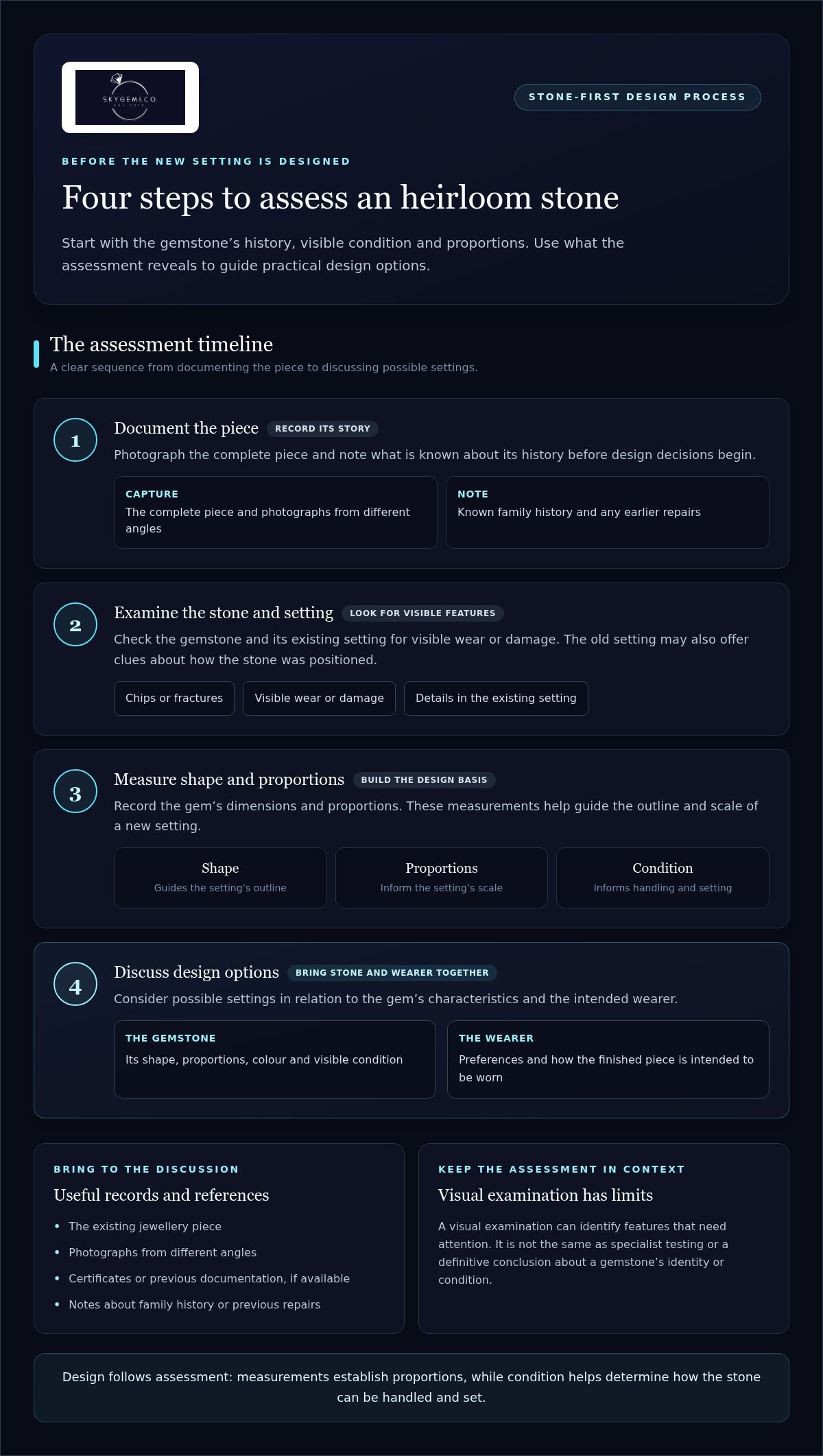
Design starts with information, not a setting sketch. A jeweller records the piece as it is, examines the gemstone, takes measurements and discusses options in light of the findings. This sequence helps distinguish family history and initial visual observations from the practical considerations that shape a wearable design.
- Document: Photograph the complete piece and note its known history.
- Examine: Look for visible wear or damage on the stone and its existing setting.
- Measure: Record the gem’s dimensions and proportions to guide the design.
- Discuss: Consider possible settings in relation to the stone and intended wearer.
A visual examination can identify features that need attention, but it isn’t the same as specialist testing or a definitive conclusion about a gemstone’s identity or condition. The Gemological Institute of America’s gem identification information explains the role of laboratory identification. If further assessment is needed, it can be treated separately from the initial design discussion.
What should be recorded about the stone and original jewellery?
Bring the piece, photographs from different angles, any certificates or previous documentation, and notes about family history or earlier repairs. The existing setting may show how the gem was positioned and offer details worth referencing in a new design. Its past use doesn’t prove that the stone suits every setting or can be reset without further assessment.
How can gemstone characteristics influence the design?
Shape and proportions guide the outline and scale of the setting. A long stone may call for a different layout from a compact one, while colour and visible inclusions can inform metal choice, accent stones and how much surrounding detail to use. Durability also matters: the design should take account of how the piece will be worn, including whether it’s intended for regular use.
Measurements establish the design’s proportions, while condition assessment helps determine how the stone can be handled and set. These findings give the jeweller a practical basis for discussing options rather than designing around assumptions. For incorporating heirloom stones into a new design, this distinction connects the gemstone’s physical characteristics with the wearer’s priorities.
A consultation with SkyGem & Co. provides an opportunity to discuss the stone’s characteristics and history, along with the intended piece, as part of a bespoke design process.
Which new design choices work best with an heirloom stone?
The design should respond to the gemstone rather than treat it as a detail to fit around a fixed concept. A restrained setting, a reinterpretation of the original, or a new composition can each give the heirloom a different role. The right direction depends on the stone’s characteristics, the wearer’s preferences, how the piece will be used and which inherited details matter most.
| Design approach | What it preserves | Key consideration |
|---|---|---|
| Minimal setting | The gemstone as the main visual feature | Its outline, proportions and setting needs guide the simple form. |
| Retained or reinterpreted details | A recognisable feature of the original jewellery | Existing components need assessment for condition and compatibility. |
| New composition | The heirloom stone within a fresh design concept | Supporting details should complement, not overwhelm, the gem. |
Should you keep the original setting or create a new one?
Keeping a recognisable motif, such as a distinctive band detail, can carry a visible link to the original piece. Starting fresh gives more flexibility to shape the setting around the heirloom gemstone and the new wearer’s style. The existing setting may inform the design, but its condition and the stone’s current fit affect whether any part can be reused. Don’t assume the original metalwork is suitable for the new piece.
A useful middle ground is to reinterpret one meaningful feature rather than reproduce the entire original. This can preserve a visual memory while allowing the rest of the design to feel cohesive and suited to its wearer.
How can you make an inherited gem feel personal today?
Personal expression often comes through proportion and profile. A lower or more prominent setting, a slim or substantial band, and the choice to include accent stones all influence the finished piece. For everyday wear, the setting should suit the wearer’s routine and the gemstone’s needs. This can help determine the balance between an open design and added protection.
Restraint can be powerful: a clean outline and limited supporting detail let the heirloom remain the focal point. Alternatively, carefully chosen accents can connect the gemstone to the wearer’s preferred style without competing for attention. Readers exploring the wider custom-ring process can review engagement ring designs, while the gemstone guide offers context on gemstone types and characteristics.
Incorporating heirloom stones into a new design works best when choices are considered together. SkyGem & Co.’s bespoke design process brings the stone’s characteristics and history together with the wearer’s preferences, from initial design through stone setting.
How to prepare for an heirloom-stone design consultation
A little preparation helps turn a meaningful family piece into a clear design brief. Before your consultation, gather the jewellery, record what you know about its history, decide which details matter most and think about how the finished piece should look and feel. You don’t need to arrive with a complete design. A few considered preferences give the discussion a useful starting point.
- Gather the piece: Bring the heirloom itself when practical so its form and setting can be discussed directly.
- Record its story: Note who owned it, what you know about its history, and any previous repairs.
- Clarify your priorities: Separate features you hope to preserve from those you’re open to changing.
- Discuss possible designs: Share how you want to wear the piece and the visual direction you have in mind.
What should you bring to the first design discussion?
Alongside the jewellery, bring any available gemstone certificates, appraisals or other documentation, plus notes about known repairs. Reference images can help communicate preferred proportions, setting profiles or an overall design direction, even if they show just one detail you like. Explain whether the finished piece is intended for regular wear, occasional use or a particular purpose. That helps frame the design conversation.
It can also help to make two short lists: must keep and open to change. A family setting or distinctive detail might be essential to the story, while the band shape or surrounding accents may be flexible. This distinction helps the design reflect your attachment to the heirloom without treating every original feature as fixed.
Which questions help clarify the design brief?
Use the consultation to explore practical and personal priorities together. For example: Which original details could be retained while creating a secure, wearable design? How might the new piece reflect the wearer’s style without obscuring the stone’s character? What design choices would suit the way the jewellery will be worn?
If the heirloom is intended for an engagement ring, reviewing engagement ring designs can provide context for the broader bespoke process. With SkyGem & Co., the consultation is a collaborative opportunity to discuss the gemstone, its history and the wearer’s preferences as the design develops.
Create a bespoke design around your heirloom stone with SkyGem & Co.
A family gemstone doesn’t need to fit a pre-selected setting. SkyGem & Co.’s bespoke design and manufacturing process develops a new piece around the heirloom, with the stone’s characteristics and the wearer’s priorities guiding the conversation. The aim is to bring its history into a design that feels considered for the person who will wear it.
How does a bespoke process keep the heirloom at the centre?
The design discussion can begin with the gemstone itself rather than a catalogue style. Its shape, proportions and colour can inform the form of the piece, while its story and the owner’s preferences can guide which details to retain, reinterpret or leave behind. This makes the stone an active part of the design brief, not simply an element added to a finished concept.
SkyGem & Co. creates bespoke jewellery and works with natural gemstones, including sapphires, rubies and emeralds, as well as natural and lab-grown diamonds. Bespoke manufacturing spans the design process through stone setting, connecting the initial concept with the finished piece. The design is developed around the heirloom and the intended wearer, with the consultation providing space to discuss practical needs alongside personal meaning.
What happens after you decide to explore a new design?
Bring the heirloom to your consultation when practical, along with any available documentation or photographs. It’s also useful to consider how often the finished jewellery will be worn, what styles appeal to you and which original details carry the strongest personal significance. These points help focus the discussion on the gemstone and possible design directions.
There’s no need to arrive with every decision made. You can discuss what matters most, hear how the stone’s characteristics may inform the design, and develop the concept collaboratively. For incorporating heirloom stones into a new design, this is where technical considerations and personal priorities come together: the stone, intended wear, preferred style and details worth preserving all contribute to the brief.
To discuss a new piece, schedule a consultation and bring the heirloom or its available documentation. It’s a considered first step, even if you haven’t worked out the complete design in advance.
Give your heirloom stone a considered new setting
Incorporating heirloom stones into a new design begins with understanding the gemstone. Its condition, proportions and existing setting help inform what’s practical, while its history and the wearer’s preferences shape the piece’s character. A new design can honour the past without reproducing the original jewellery.
Before a bespoke consultation, gather the stone or jewellery, any available documentation, and notes about its history or previous repairs. Consider which details are essential to preserve, how the finished piece will be worn, and what style feels personal. These priorities give the design discussion a clear starting point.
SkyGem & Co. brings a collaborative approach to bespoke design and manufacturing, from initial design through stone setting. Consultations are tailored to your preferences and budget, helping connect the heirloom’s distinctive qualities with a design intended for its next chapter.
Your family gemstone can remain part of your story while taking on a form that feels distinctly yours. Begin with the stone, and let its next design grow from there.
Frequently Asked Questions
Can an heirloom gemstone be reset into a new piece of jewellery?
It may be possible, but a jeweller should first assess the individual stone’s condition, dimensions and existing setting. If it suits the intended design, the setting can be developed around its characteristics. Some gemstones may call for a more protective design or a different role in the piece. An assessment helps guide the options; it can’t guarantee every inherited stone can be reset in every style.
How do I know if an inherited gemstone is suitable for a new design?
Suitability depends on the gemstone’s condition, shape, proportions and intended use. A jeweller can examine the stone and explain how its characteristics affect setting choices, including options for incorporating heirloom stones into a new design. Bring any available documentation and share what you know about the piece’s history. The assessment should inform practical design possibilities rather than assume the gem will suit every setting or style.
Is it better to keep the original setting or make a new one?
Neither option is automatically better. The right choice depends on the stone, the setting’s condition and which details hold sentimental value. Retaining a recognisable feature can maintain a visible connection to the original jewellery, while a new setting can be developed around the gemstone and the wearer’s style. A design consultation can help compare what each direction preserves or changes, without assuming the original metalwork can be reused.
Can an heirloom diamond or gemstone be used in an engagement ring?
An heirloom diamond or coloured gemstone may suit an engagement ring, subject to assessment of its condition, dimensions and suitability for the proposed design. A jeweller can discuss how the stone might shape the ring concept and how its intended everyday wear informs the setting. Not every gem suits every ring style, so the design should respond to the individual stone and the wearer’s priorities.
What should I bring to a consultation about an heirloom stone?
Bring the jewellery or loose gemstone if practical, along with any available certificates or previous documentation. Photographs can show details of the piece, while notes about family history or past repairs help explain its context. Reference images may communicate preferred proportions or setting styles. It’s also useful to describe how you expect to wear the finished piece, so the design discussion can account for both appearance and intended use.
Can a new design preserve the sentimental meaning of inherited jewellery?
Yes. A new design can carry forward a meaningful feature or recognisable detail without copying the original piece. Before making design choices, identify what matters most: perhaps the gemstone itself, a family setting detail or another element connected to its history. At SkyGem & Co., a bespoke consultation gives you a chance to discuss the heirloom and your preferences as the design takes shape around the stone.
Disclaimer
This article is for general informational purposes only and may include AI-assisted content. Pricing, specifications, and availability are subject to change. For accurate advice and current information, please contact SkyGem & Co. directly. Nothing in this content constitutes professional or financial advice.