
Hypoallergenic Metals for Sensitive Skin: The 2026 Jewellery Metallurgy Guide

Research indicates that nickel allergies now affect up to 20% of the global population, yet many consumers still find themselves reacting to jewellery labelled as safe. When you're searching for hypoallergenic metals for sensitive skin, the challenge isn't just finding a label; it's understanding the metallurgical composition that prevents contact dermatitis. We understand the frustration of investing in a bespoke piece only to have it cause chronic irritation because of hidden alloys or unregulated marketing terms. You deserve a piece that remains as comfortable as it is beautiful for decades of wear.
This guide provides the technical precision required to select truly biocompatible materials. We'll examine the science behind the EU REACH regulation's strict nickel release limits and explain why the base metal's stability matters more than the surface plating. You'll gain the confidence to choose between high-performance alloys like platinum and palladium-white-gold, ensuring your next investment is both a technical success and a permanent asset. We'll also clarify how rhodium plating affects sensitivity and why 2026 market standards demand total material transparency for long-term skin health.
Key Takeaways
- Learn the technical distinction between unregulated marketing labels and true biocompatibility to ensure your jewellery choices support long-term skin health.
- Identify the most stable hypoallergenic metals for sensitive skin, focusing on why high-purity alloys like platinum offer superior safety compared to standard commercial options.
- Understand the barrier effect of rhodium plating and why the composition of the underlying base metal remains the primary factor in preventing irritation.
- Discover how bespoke design allows for granular control over metallurgical purity, offering a reliable path for those requiring nickel-free white gold alloys.
- Evaluate the trade-offs between metal hardness and biocompatibility to select a material that balances aesthetic durability with dermatological safety.
What is Hypoallergenic Jewellery? Defining Biocompatibility in 2026
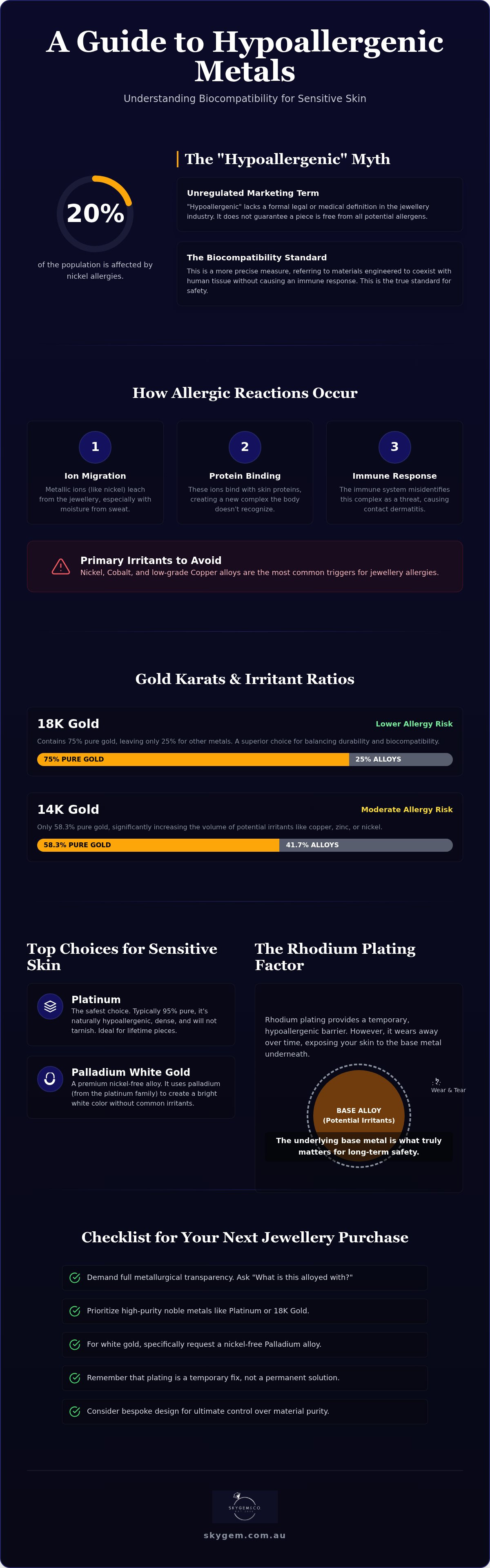
The term "hypoallergenic" is frequently used in 2026 marketing, yet it lacks a formal medical or legal definition in the global jewellery trade. For many, finding hypoallergenic metals for sensitive skin is a trial-and-error process because the label doesn't guarantee the total absence of allergens. Biocompatibility is a far more accurate standard; it refers to materials engineered to coexist with human tissue without triggering a systemic or localised immune response. While premium alloys aim to minimise risks, your unique skin chemistry, including pH levels and perspiration, can still cause metal ions to leach from seemingly safe pieces.
The primary culprits behind jewellery-related reactions are nickel, cobalt, and low-grade copper alloys. These elements are often used as "fillers" to lower costs or increase the hardness of precious metals. Even trace amounts can lead to common metal allergies that manifest as persistent itching or blistering. In 2026, informed consumers are looking past the vague "hypoallergenic" tag and demanding full metallurgical transparency from their jewellers to ensure long-term wearability.
The Science of Metal Hypersensitivity
Metal hypersensitivity occurs when metallic ions migrate from the jewellery and bind with skin proteins. This fusion creates a "hapten" complex that the immune system misidentifies as a threat. Allergic contact dermatitis is an immunologic response where the skin develops a localized inflammatory reaction after direct contact with specific metallic ions that the body perceives as foreign. Symptoms range from mild erythema to "jewellery dermatitis," where the skin becomes dry, scaly, or prone to weeping. Because perspiration acts as an electrolyte, it facilitates the migration of these ions, making reactions more likely during humid weather or physical activity.
The Nickel Problem: Why standard alloys fail
Nickel is prized in mass-market manufacturing because it provides exceptional hardness and a bright white finish to inexpensive alloys. Despite its utility, nickel is the most frequent cause of contact allergies, affecting up to 20% of the population. The European Union's REACH regulation has set strict limits on nickel release, restricting it to less than 0.2 µg/cm²/week for pierced items. These standards are increasingly influencing Australian bespoke manufacturing. You should remember that "nickel-free" and "hypoallergenic" aren't synonymous. A piece might be nickel-free but still contain cobalt or other irritants that trigger a reaction in highly sensitive individuals. Finding hypoallergenic metals for sensitive skin requires a deeper look at the specific alloy composition rather than relying on surface-level descriptions.
The Metallurgy of Sensitivity: Why Alloys Determine Safety
Understanding the structural limitations of pure metals is essential for any long-term jewellery investment. While 24K gold is essentially 100% pure, it's too malleable for daily wear, particularly for solitaire engagement rings that must secure a gemstone. Consequently, jewellers create alloys by mixing noble metals with base metals to increase durability. This process introduces a trade-off between mechanical strength and skin biocompatibility. For those seeking hypoallergenic metals for sensitive skin, the goal is to maximise the noble metal content while ensuring the secondary elements remain non-reactive.
Noble metals like platinum, gold, and palladium occupy the highest tier of the reactivity spectrum because they resist oxidation and corrosion. This chemical stability is why they're the preferred choice for medical implants and high-end jewellery. However, the rise of recycled metals adds a layer of complexity to alloy purity. While environmentally responsible, recycled stock must undergo rigorous refining to remove trace contaminants like lead or cadmium, which can compromise the final piece's safety profile and trigger unexpected reactions.
Gold Karats and Irritant Ratios
The ratio of pure gold to alloy fillers determines both the value and the safety of a piece. 18K gold contains 75% pure gold, leaving only 25% for secondary metals like silver, copper, and zinc. In contrast, 14K gold is only 58.3% pure, significantly increasing the volume of potential irritants. Jewellery allergy symptoms often arise from these fillers rather than the gold itself. Yellow gold typically uses a balance of silver and copper, while rose gold relies heavily on copper for its characteristic hue. If your skin is sensitive to copper, choosing a higher karat yellow gold or moving to a different metallurgical family is often the most reliable solution.
White Gold vs. The Nickel-Free Alternative
Traditional white gold achieves its silvery hue through the addition of nickel, a potent allergen that provides hardness at a lower cost. For a superior alternative, palladium-based white gold replaces nickel entirely. Palladium is a member of the platinum group, offering natural whiteness and exceptional biocompatibility without the need for constant replating. This alloy is the standard for high-end custom-made engagement ring designs because it maintains its structural integrity and skin safety over decades. Selecting a palladium-white-gold alloy ensures that your hypoallergenic metals for sensitive skin remain safe even as the piece experiences natural wear and surface scratches.
The Top 5 Hypoallergenic Metals Compared for Longevity
Selecting the right material requires a balance between biological safety and structural performance. While we have established that alloy composition is the primary driver of irritation, certain metals offer inherently higher stability. These five hypoallergenic metals for sensitive skin represent the current benchmark for longevity in 2026, providing options that range from traditional precious metals to modern industrial elements.
- Platinum: Comprising 95% pure metal, 950 platinum is the premier choice for those requiring absolute biocompatibility. It is naturally white and does not require rhodium plating.
- Titanium: This metal is prized for its high strength to weight ratio and is frequently used in surgical implants due to its inert nature.
- Tantalum: A dense, blue-grey metal that is highly resistant to corrosion and is becoming a preferred choice for modern masculine designs.
- 18K Yellow Gold: With a 75% purity level, it offers a traditional aesthetic while minimising the volume of base metal alloys compared to 9K or 14K options.
- Niobium: An elemental metal that is highly resistant to corrosion and can be anodised to produce vibrant colours without the use of potentially irritating dyes or platings.
Platinum: The Professional Choice for Engagement Rings
Platinum stands as the undisputed gold standard for fine jewellery due to its density and purity. Unlike white gold, which is an alloy that often requires chemical whitening, platinum's colour is permanent. It does not oxidise or tarnish, meaning it won't react with skin oils or perspiration. For a solitaire engagement ring, platinum provides the most secure setting for a diamond because it is "sticky" rather than brittle. When scratched, the metal is merely displaced rather than lost. This ensures the piece retains its mass over a lifetime of wear while remaining completely safe for the wearer's skin.
Industrial Biocompatibility: Titanium and Tantalum
Both titanium and tantalum have transitioned from medical engineering into the jewellery sector because of their remarkable biocompatibility. Titanium is exceptionally lightweight, which makes it ideal for those who find traditional precious metals cumbersome. However, its hardness makes resizing nearly impossible. Tantalum offers a compelling alternative. It is heavy, dense, and has a unique darkened aesthetic that appeals to those seeking Men’s Wedding Bands. Unlike titanium, tantalum is more ductile, allowing for limited resizing in professional workshops. Both metals are completely inert, ensuring they will never trigger a reaction even in the most sensitive individuals. Their industrial origins provide a level of durability that matches their high safety profile.
The Rhodium Factor: Understanding Plating and Sensitivity
Rhodium is a member of the platinum group, prized for its exceptional hardness and reflective properties. In white gold manufacturing, it serves a dual purpose: aesthetic enhancement and biological shielding. Because most white gold alloys possess a natural yellowish or greyish tint, a microscopic layer of rhodium is electroplated onto the surface to provide a mirror-like, silvery finish. This layer creates a temporary "Barrier Effect" that effectively isolates the skin from the underlying base alloy. For many wearers, this makes standard white gold feel like one of the hypoallergenic metals for sensitive skin, but this protection is only as durable as the plating itself.
The technical reality is that rhodium plating is measured in microns. It's a sacrificial layer that slowly erodes through daily contact. When this barrier is compromised, the skin is suddenly exposed to the base metal, which may contain nickel or other irritants discussed in previous sections. This explains the common phenomenon where a piece of jewellery remains comfortable for months before suddenly triggering a reaction. Maintaining this barrier requires a disciplined schedule of professional servicing to ensure the skin never comes into contact with the reactive elements of the core alloy.
When Plating Fails: The "Re-tipping" Timeline
Several variables accelerate the degradation of rhodium plating. High skin acidity, frequent use of alcohol-based lotions, and constant friction against hard surfaces all contribute to "burning through" the protective layer. You'll typically notice a slight yellowing on the underside of the band as the first sign that the barrier is failing. While re-plating is a standard maintenance procedure, the lifetime cost of these interventions often exceeds the initial price gap of a platinum setting. For a permanent solution, choosing a naturally white, non-plated metal like platinum or palladium-white-gold eliminates the need for this cycle entirely.
Rhodium Over Silver: A Temporary Solution?
Sterling silver (925) is frequently plated with rhodium to prevent tarnish and protect the wearer from its 7.5% copper content. While this makes silver more wearable for those with mild sensitivities, it's rarely a suitable long-term strategy for daily-wear items like engagement rings. Silver is a soft metal; as it dents or scratches, the brittle rhodium plating can flake away, leaving the skin vulnerable to copper-induced irritation. If you notice your white gold losing its lustre or causing unexpected redness, it's time for professional Jewellery Repair and Maintenance to restore the protective rhodium barrier and ensure your piece remains safe for daily wear.
Bespoke Solutions: Custom-Made Jewellery for Sensitive Skin
Choosing bespoke manufacturing is the most effective strategy for managing severe metal sensitivities. While off-the-shelf jewellery often relies on standardised alloys to facilitate mass production, a custom commission allows for total material control. By working directly with a technical consultant, you can dictate the exact metallurgical composition of your piece. This level of oversight ensures that hypoallergenic metals for sensitive skin are sourced from reputable refineries that guarantee the absence of trace contaminants like nickel or cadmium. This methodical approach transforms the design process from a simple purchase into a technical partnership focused on long-term wearability.
The technical superiority of bespoke jewellery also stems from the finishing process. Mass-produced items are frequently created through large-scale casting, which can leave the metal more porous and prone to trapping skin irritants. In contrast, hand-finished pieces are denser and more refined. At SkyGem & Co., we focus on high-purity settings, particularly platinum and 18K gold, which provide the chemical stability required for reactive skin. This commitment to material transparency means you receive a detailed understanding of what constitutes your ring, providing peace of mind that the metal will remain inert against your skin for decades.
The Custom Design Process and Material Sourcing
The journey toward a reaction-free piece begins with a detailed consultation to identify your specific history with metal allergies. This diagnostic phase allows us to select the optimal metal grade before any technical drawings begin. Whether you're integrating Australian sapphires or Custom Made Engagement Rings featuring GIA-certified diamonds, the setting must be engineered for your unique biology. We prioritise the use of palladium-based white gold or 950 platinum to ensure that the structural integrity of the ring never comes at the expense of your dermatological health.
Ensuring Long-Term Viability
Skin health is an ongoing consideration that extends beyond the initial delivery of your jewellery. Bespoke pieces are designed with maintenance in mind, allowing for easier cleaning and prong inspection. Regular professional servicing prevents the accumulation of soap residue and environmental debris, which can often be mistaken for a metal allergy. Because a custom-made piece is built to your specific requirements, it offers a permanent solution to sensitivity issues rather than a temporary fix. If you're ready to invest in a piece that balances aesthetic precision with biological safety, Book a consultation to design your hypoallergenic masterpiece and secure a lifetime of comfortable wear.
Ensuring Long-Term Biocompatibility for Your Fine Jewellery
Navigating the complexities of metallurgy is essential if you've experienced the discomfort of standard alloys. The key to lasting comfort lies in moving beyond temporary surface treatments and prioritising the inherent stability of noble metals. By choosing materials with high biocompatibility, you ensure your investment remains a source of joy rather than a health concern. Identifying the most effective hypoallergenic metals for sensitive skin is a technical process that rewards those who value transparency and precision engineering.
At SkyGem & Co., we provide expert metallurgical consultations to help you navigate these choices with quiet confidence. We specialise in 950 platinum and 18K gold settings, focusing on hand-finished bespoke designs that offer maximum purity and structural integrity. Our solution-oriented approach ensures every component of your piece is selected for long-term viability and performance. You don't have to compromise on aesthetic design to protect your skin's health.
Design your bespoke, hypoallergenic engagement ring with SkyGem & Co.
Your journey toward a beautiful, irritation-free collection starts with the right technical partnership. We look forward to helping you create a piece you can wear with total confidence every single day.
Frequently Asked Questions
Is 14K gold safe for people with sensitive skin?
14K gold is often unsuitable for those with significant sensitivities. Since it only contains 58.3% pure gold, the remaining 41.7% consists of base metal alloys that frequently include nickel or high concentrations of copper. These fillers are necessary for hardness but significantly increase the risk of contact dermatitis. For a more reliable experience, 18K gold or platinum provides a much higher ratio of noble metal to potential irritants.
Can I be allergic to platinum?
Allergic reactions to platinum are exceptionally rare due to its high level of biocompatibility. Most users who report irritation from platinum rings are actually reacting to a build-up of soap, moisture, or bacteria trapped beneath the band. This is known as "irritant contact dermatitis" rather than a true metal allergy. If a reaction occurs, a professional ultrasonic cleaning usually resolves the issue without needing to change the metal.
How can I tell if my jewellery contains nickel without a lab test?
You can use a dimethylglyoxime (DMG) spot test kit to detect nickel release at home. This chemical test is non-destructive and turns a distinct pink colour when nickel ions are present on the surface of the metal. While skin discolouration can sometimes provide a hint, green marks are typically a sign of copper oxidation. A DMG test is the only reliable way to verify nickel content without professional laboratory equipment.
What is the best metal for hypoallergenic earrings?
Medical-grade titanium and niobium are the superior choices for earring posts. These are among the most effective hypoallergenic metals for sensitive skin because they are elemental metals rather than complex alloys. Because earlobe tissue is particularly thin and prone to absorbing metal ions, using these inert materials prevents the redness and weeping often associated with standard fashion jewellery or low-karat gold earrings.
Is sterling silver actually hypoallergenic?
Sterling silver is generally not considered a hypoallergenic material for daily wear. It is composed of 92.5% silver and 7.5% copper, the latter of which is a frequent skin irritant. Many commercial silver items are finished with a "flash plating" that may contain trace amounts of nickel to enhance shine. For those with sensitivities, silver is better suited for occasional wear rather than permanent pieces like wedding bands.
Does rhodium plating make white gold 100% safe for nickel allergies?
Rhodium plating provides a physical barrier but does not offer a permanent solution for nickel allergies. The plating is a sacrificial layer that naturally erodes through friction and skin acidity. Once the rhodium wears thin, the underlying nickel-bearing white gold will make direct contact with your skin. For 100% security, it's better to choose an alloy that is white throughout, such as platinum or palladium-white-gold, which requires no plating.
What happens if I have a reaction to my engagement ring?
If you experience a reaction, remove the ring immediately and have the alloy composition verified by a specialist. Often, a "hypoallergenic" ring may still contain trace elements that trigger your specific sensitivity. The most effective resolution is often a "remount," where your stone is moved into a high-purity 950 platinum setting. This ensures the structural integrity of your engagement ring while providing a completely inert surface for your skin.
Are lab-grown diamonds better for sensitive skin settings?
The diamond's origin has no impact on skin sensitivity, as the chemical structure of a lab diamond is identical to a natural one. Biocompatibility is determined solely by the metal setting. However, choosing a lab-grown stone can often free up a larger portion of your budget to invest in a premium, hand-finished platinum setting. This ensures the highest level of purity and safety for your specific skin type without compromising on the gemstone's size.
Disclaimer
This article is for general informational purposes only and may include AI-assisted content. Pricing, specifications, and availability are subject to change. For accurate advice and current information, please contact SkyGem & Co. directly. Nothing in this content constitutes professional or financial advice.