
How to Give Feedback on a CAD Design Without Offending Your Jeweller

What if honest feedback is not a criticism of your jeweller, but the clearest way to protect the design you’re creating together? If you’re unsure how to give feedback on a CAD design without offending the jeweller, that hesitation is understandable. A ring can look polished in a render while still feeling too high, too delicate or unlike the piece you imagined. It can be hard to explain why without sounding dismissive.
Clear, considerate feedback gives your design team useful direction and keeps the process collaborative. You don’t need technical vocabulary or a perfect solution. Describe what you notice, what matters most to you and how you want the piece to look or feel when worn.
This guide explains how to turn broad reactions into specific requests, sort essential changes from preferences and prepare clear revision notes. It also covers how to compare options and decide whether a CAD design reflects your vision before approving the next stage.
Key Takeaways
- Constructive feedback focuses on the design, not the jeweller. Name the feature that concerns you and the result you’d prefer.
- Turn an initial reaction into a clear preference and an open question about possible adjustments.
- Separate essential changes from preferences, then compare options by how they affect the look and feel of the piece.
- Gather your notes before sharing them, and identify the specific view or feature so your design team can follow each comment.
- Use the CAD review as a collaborative decision point, bringing your personal vision together with practical design and craftsmanship.
Why Giving Feedback on a Jewellery CAD Design Can Feel Awkward
A CAD render can be polished and carefully presented, yet still look different from the piece you have in mind. Perhaps the centre stone seems too prominent, the band looks heavier than expected or the overall shape doesn’t feel like your style. That reaction doesn’t mean the design is poor or that your jeweller has misunderstood everything. It points to a preference that may need clearer expression before you decide whether the design feels right.
Constructive feedback is information about the design and how it relates to your priorities, not a judgement of the person who created it. The general idea of Feedback helps frame the distinction: useful feedback communicates information that can guide a next step. In a jewellery discussion, that next step is a clearer shared understanding of what you want the piece to look and feel like.
Respectful, specific feedback helps turn a personal vision into a clearer design brief. Silence can leave a concern unresolved, while a quick “looks good” may sound like approval even when you’re still unsure. Raising a concern gives the design conversation a chance to address it before you make a considered decision about moving forward.
Why clients hesitate to say what they really think
It’s common to appreciate the jeweller’s time and effort while worrying that a request for change will sound ungrateful or demanding. You may not know whether what bothers you is a small detail or a mismatch with your overall vision. Without technical vocabulary, it can be difficult to explain what you’re seeing.
Remember that a render is a design-stage visual, not the finished piece. It gives you an opportunity to communicate what you respond to and what you’d like to reconsider. You don’t need to diagnose the issue or suggest a precise technical fix. Describe your impression, point to the relevant feature and invite a conversation about how the design could better reflect your preference.
Separate the design from the person who created it
Keep your comments focused on a feature, proportion or impression rather than the jeweller’s ability. “This feels too high for me” describes your response to the setting. “You’ve made it too high” assigns responsibility and can sound accusatory. Likewise, “I’d prefer a slimmer-looking band” communicates a personal preference more clearly than “The band looks wrong.”
Using “for me” or “I’d prefer” isn’t a way to hide your opinion. It identifies your taste as useful information in a bespoke design. You can be direct and courteous at the same time: “The centre stone feels more prominent than I imagined. Could we explore a version that feels more balanced?” The shared goal is a design that reflects your priorities, shaped through the jeweller’s expertise.
How to Turn a First Reaction into Respectful, Useful CAD Feedback
A first reaction is useful, but “something feels off” doesn’t tell the design team what to examine. Make the comment actionable by moving from what you notice to the effect you want, then ask about a practical way forward. You don’t need to prescribe a technical fix. Your role is to explain the visual outcome that matters to you; your jeweller can help assess how to achieve it within the design.
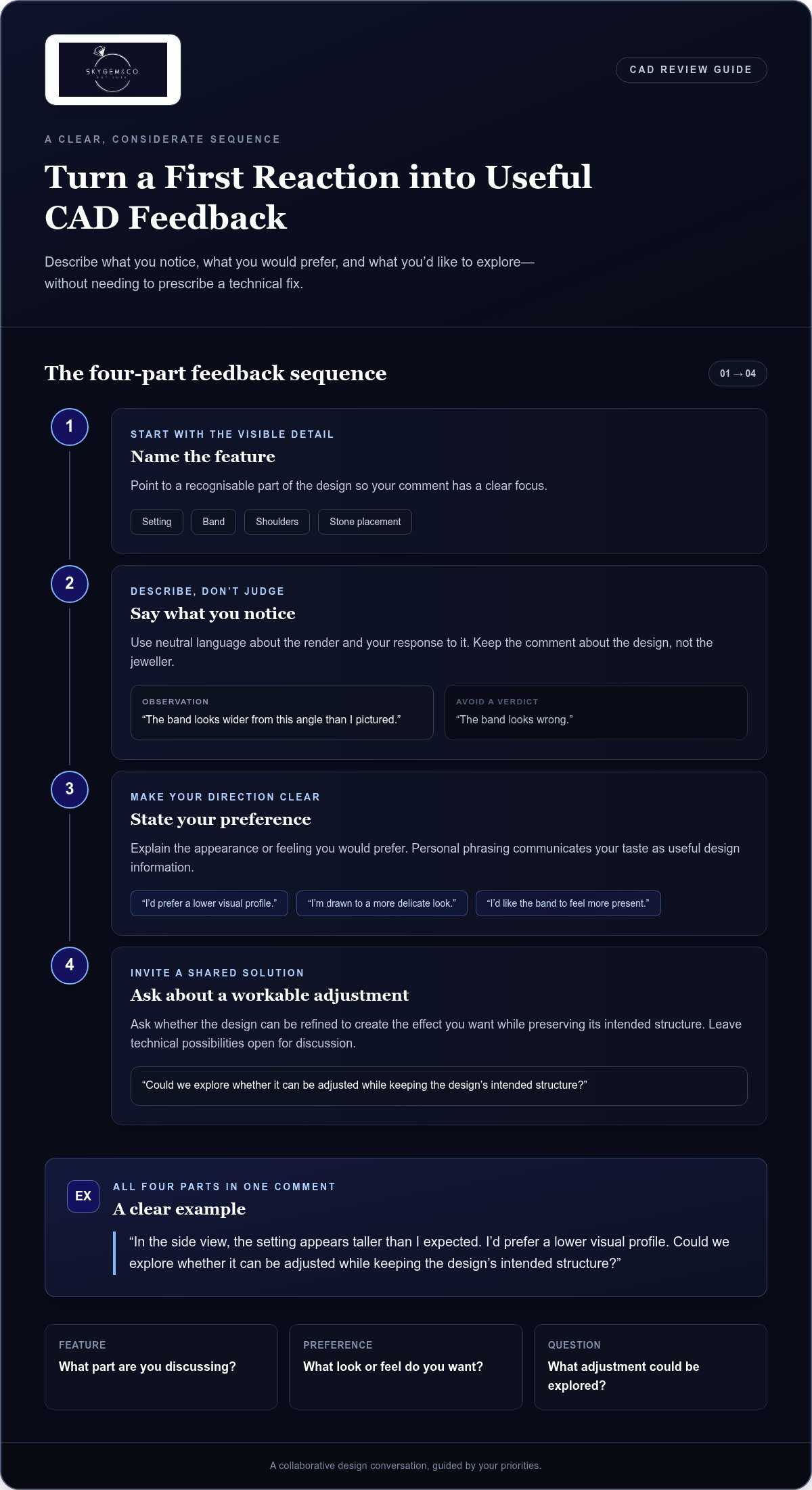
Actionable feedback identifies the feature, the desired effect and the question to resolve. Use this four-part sequence to shape a clear comment:
- Name the feature. Point to a recognisable part of the design, such as the setting, band, shoulders or stone placement.
- Describe your reaction. Say what you notice in the render, using neutral language rather than a verdict.
- State your preference. Explain the appearance or feeling you’d prefer, such as a more balanced profile or a less prominent setting.
- Ask about a workable adjustment. Invite the jeweller to discuss whether the design can be refined to create that effect while preserving its intended structure.
Use observation, preference and request in one comment
For example: “In the side view, the setting appears taller than I expected. I’d prefer a lower visual profile. Could we explore whether it can be adjusted while keeping the design’s intended structure?” This gives the jeweller an observable detail, your personal preference and a specific question to consider. It makes your direction clear without assuming the change is technically straightforward.
Distinguish what the render shows from a declaration that something is objectively wrong. “The band looks wider from this angle than I pictured” is a personal observation. “The band is badly designed” is a judgement that doesn’t explain what you want instead. Phrases such as “I’m hoping for”, “I’d prefer” and “I’m noticing” keep the focus on your experience without weakening the request.
Replace blunt or vague comments with collaborative wording
“I hate this” expresses a strong feeling, but leaves the jeweller guessing about the cause. Try: “The overall look isn’t quite aligned with what I had in mind. The setting feels visually dominant; could we look at an option that gives the band more presence?” Likewise, replace “make it better” with the outcome you want, such as a softer outline, a more understated profile or a more balanced relationship between the centre stone and band.
If you’re unsure how to describe the issue, ask a question rather than inventing a technical instruction: “I’m drawn to a more delicate look. Which part of the design is contributing most to its heavier appearance?” This gives the jeweller a useful starting point and leaves room for professional guidance. If you’re at the early stage of planning bespoke jewellery, a personalised jewellery consultation can help you articulate the design priorities you want to communicate.
In short, be candid about the result you want, precise about what prompted your reaction and open to discussing how the design can deliver it.
Which CAD Changes Should You Raise First, and How Should You Compare Options?
Once you’ve identified what isn’t quite working, decide which comments most affect your confidence in the design. Separate must-change elements, which are essential to your vision, from flexible preferences, which you’d be open to adjusting if the design permits. This helps your jeweller understand what needs attention first and where there may be room to explore options.
Prioritise the details that shape the overall design
Start with the features that have the greatest effect on the piece as a whole, such as the centre stone’s position, the setting silhouette or the overall proportions. A concern about visual height may matter more to you than a preference for a decorative finish. Put smaller details, such as surface treatments or minor accents, in a separate group for later discussion. There’s no universal ranking; your priorities depend on the piece you want.
When several comments relate to the same outcome, raise them together. For example, if you want the centre stone to feel less prominent, group comments about its position and the setting’s visual profile. This gives the design team a coherent goal to consider, rather than disconnected requests that may be difficult to compare.
Compare possible changes by the effect you want, not simply by which version looks more appealing in isolation. Ask whether an option makes the setting appear lower, creates more balance between the stone and band, reduces visual prominence or better suits your everyday comfort. A change can improve one quality while affecting another, so explain the intended effect to keep the discussion focused.
| Current impression | Desired effect | Question for the jeweller |
|---|---|---|
| The setting looks tall from the side. | A lower visual profile. | Could the profile be adjusted while preserving the intended structure? |
| The centre stone dominates the band. | A more balanced overall appearance. | Which design elements could help balance the proportions? |
| The decorative detail draws my eye first. | A more understated look. | Could we explore a simpler treatment? |
Use reference images as guidance, not instructions
A reference image can clarify a silhouette, detail, scale or mood, but it may combine features you don’t want to reproduce. Note what appeals, such as the curve of a band, and what doesn’t, such as the stone size or setting style. Pair each image with a short explanation of the effect you want. That turns inspiration into useful context rather than an instruction to copy every detail.
A considered priority list and clear comparisons make the design conversation more productive. If you’re shaping a bespoke engagement ring and want to talk through your priorities, you can schedule a personalised jewellery consultation.
How to Prepare and Share a Clear, Calm Set of Revision Notes
Before sending comments, step away from the render and return to it when you can review it calmly. A little distance can help you distinguish a lasting concern from a first impression. Then collect your observations in one organised message rather than sending separate reactions as they occur. This gives the jeweller a clearer picture of your priorities and shows how your comments relate.
For each note, identify the view and the feature you mean. If possible, annotate a screenshot and mark the relevant area. Otherwise, describe it clearly, such as “side view, the space beneath the centre stone”. Keep each point focused, and label it as a requested change, a preference or a question. This makes clear which direction you’ve decided on and where you’re seeking guidance.
Organise notes before sending them
Group related comments by design area, then use short numbered points so each one can be addressed clearly. Keep setting comments together and separate them from notes about the band or finish. Label every point as a requested change, a preference you’re open to discussing or an open question. That distinction helps prevent a question from being mistaken for a firm instruction.
- Requested change: “Please show a version with a less prominent profile.”
- Preference: “I’m drawn to a smoother transition between the band and setting.”
- Question: “Could you explain how changing this feature might affect the overall design?”
Before sending, check that each point describes one issue and includes enough context to locate it. If you’re referring to a particular image, state whether it’s the front, side or another view. Avoid bundling several unrelated requests into one sentence. It can be unclear which detail matters most or what outcome you’re seeking.
Keep the exchange constructive if you disagree
If the latest design still doesn’t reflect a key preference, acknowledge the work while stating what remains unresolved. For example: “Thanks for refining the setting. I’m still unsure about its visual height, and I’d like to understand what options could bring it closer to the profile I imagined.” This is appreciative without disguising your concern. If an adjustment may affect another feature, ask the jeweller to explain the trade-offs before deciding.
After a discussion, send a brief written summary of the agreed direction and any questions still to resolve. That gives both you and the jeweller a shared reference for the next review, reducing the chance that a preference or decision gets lost among separate messages. Preparing clear notes keeps the conversation focused on the design and your priorities.
Make CAD Approval a Collaborative Step in Your Bespoke Jewellery Journey
CAD approval is most useful when it reflects a shared understanding, not a wish to avoid an uncomfortable conversation. Your preferences explain what the design needs to express; your jeweller’s design and craftsmanship expertise helps translate those priorities into a considered piece. Clear feedback brings personal taste and practical design into the same discussion, so you can decide whether the design fits your vision.
What a productive design conversation should achieve
By the time you’re ready to decide, you and your jeweller should share an understanding of the details under discussion and the priorities guiding them. You should be able to distinguish between requirements that need to be met, details you prefer and questions that still need an answer. That clarity gives you a sound basis for approval, rather than agreement driven by gratitude, uncertainty or concern about seeming difficult.
A considered decision doesn’t require you to know how to solve every design challenge. It means you understand what you’re approving and feel that the important preferences have been heard. If a detail remains unresolved, say so plainly and invite further discussion. A collaborative exchange allows the design team to explain relevant considerations while keeping your intended outcome central.
At SkyGem & Co., bespoke jewellery is shaped through collaboration between the client and experienced jewellery professionals. The team brings over 100 years of combined experience across designers, diamond setters, jewellers and gemologists. Sharing what feels important to you gives that expertise a clear direction, connecting your personal vision with design and craftsmanship.
Carry your preferences into a bespoke design
If you’re still forming your ideas, consider which qualities matter most: the way a centre stone sits, the balance between the band and setting, or the overall character of the ring. Exploring custom-made engagement ring design can help you think about how individual choices contribute to a piece that feels personal. References to particular engagement ring styles can also help you describe the mood or silhouette you’re drawn to without needing to prescribe every detail.
Use that context to guide your next conversation. You might explain that you value a particular outline but want the final design to feel more understated, or that a detail appeals visually but needs to suit your everyday priorities. These distinctions help your jeweller understand not only what you like, but why it matters, leaving room for professional guidance and considered design decisions.
Giving feedback on a CAD design without offending the jeweller comes down to treating approval as a shared decision. Be honest about what remains uncertain, recognise where the design reflects your preferences and allow the conversation to clarify the details before you decide. Your feedback is part of shaping the bespoke piece, not a judgement of the people creating it.
Move Forward with Confidence in Your Design
Approving a CAD design doesn’t mean every detail must match an image in your mind perfectly. It means you’ve had the chance to express what matters, understand the choices in front of you and make a considered decision. If you’re still wondering how to give feedback on a CAD design without offending the jeweller, remember that respectful honesty gives the design conversation useful direction.
Your next step is simple: identify the preference you want to discuss and bring it into a conversation focused on the piece you hope to create. A personalised consultation offers space to talk through your ideas and consider how bespoke craftsmanship can bring them together. You don’t need every answer before you begin; clarity can develop through discussion.
Trust your perspective. With open communication, you can move towards a design that feels meaningfully your own.
Frequently Asked Questions
Is it rude to ask a jeweller to change a CAD design?
No. Asking for a CAD change isn’t inherently rude; it’s part of clarifying a bespoke design. Tone and specificity shape how the request lands. Try, “I’m not sure the current band shape suits me; could we explore a softer curve?” This describes your response rather than criticising the maker. Keeping the intended result in view helps both of you discuss the design as a shared project.
Can I tell my jeweller that I do not like the CAD render?
Yes, you can be honest without being harsh. Explain what you’d like the design to achieve instead. For example, say the profile feels too prominent and you’d prefer a more understated look. A render shows the design visually, so focus your comment on what you see rather than judging how the finished piece will look.
How do I explain what I want changed if I do not know the jewellery terms?
You don’t need specialist vocabulary to describe a design preference. Use everyday comparisons such as “a little lower”, “wider through this section” or “more delicate overall”, and point to the area you mean. If a word doesn’t come to mind, mark the feature on a screenshot or write a short description of where it appears. The jeweller can help interpret your observation and clarify the design detail.
Should I send reference photos when giving feedback on a ring design?
Yes, reference photos can help communicate a silhouette, detail or overall mood. Since a single image may show several features, explain exactly what appeals to you and what you don’t intend to copy. For example, you might like the curve of one band but want to retain the stone position in your own design. A brief note beside each image makes its purpose clearer.
What should I do if my partner and I disagree about the CAD design?
Start by identifying the preference behind each reaction. One of you may value a lower profile, while the other prefers a more prominent centre stone. Agree on any essential requirements, then identify details where either person could be flexible. Present both priorities to the jeweller and ask about options that support your shared goal. This turns a difference in taste into a design discussion, rather than a contest to win.
Can I approve a CAD design if one small detail still feels uncertain?
Don’t use approval to avoid an awkward conversation. If a detail is still troubling you, describe what’s unclear and ask for an explanation before deciding. For instance, you could ask how a particular design feature will appear from another viewing angle. Approval is meaningful, so take the time to understand what you’re accepting and consider whether the design meets your principal priorities.
Disclaimer
This article is for general informational purposes only and may include AI-assisted content. Pricing, specifications, and availability are subject to change. For accurate advice and current information, please contact SkyGem & Co. directly. Nothing in this content constitutes professional or financial advice.