
How to discuss ring budget and compare price ranges

The three-month salary rule is outdated, and an engagement ring does not have to cost two months’ salary. Set a budget that suits your circumstances, protects your financial priorities and reflects what matters to you both. Learning how to discuss a ring budget without it being awkward starts with treating it as a shared decision, not a test of commitment.
It’s understandable if the conversation feels uncomfortable. You may have different expectations, priorities or ideas about who should contribute. A calm, practical discussion can help you understand those differences without turning the ring’s price into a measure of how much you care.
This article will help you compare expectations, agree on an affordable limit and prioritise the features that matter most. You’ll also find ways to discuss shared and individual contributions, avoid taking on debt and choose a private setting where you can both speak openly.
Key Takeaways
- Set a ring budget around your shared finances and priorities, not a salary-based rule or outside expectations.
- Compare what feels comfortable to each of you, then identify which ring features matter most before weighing options.
- Keep existing commitments and long-term financial stability in view; a ring purchase shouldn’t create debt or ongoing bill anxiety.
- Choose a quiet, private moment for the conversation so both partners can explain their expectations without pressure.
- Discuss whether the expense will be shared or contributed to individually, and make room to understand different perspectives.
1. Budgeting together and prioritising needs over wants
Start with your monthly income and recurring expenses, then decide what you can spend without displacing essentials. Each partner can name financial priorities, such as housing, savings or upcoming repayments, before you agree on a comfortable limit. This makes the budget a shared decision rather than a test of commitment.
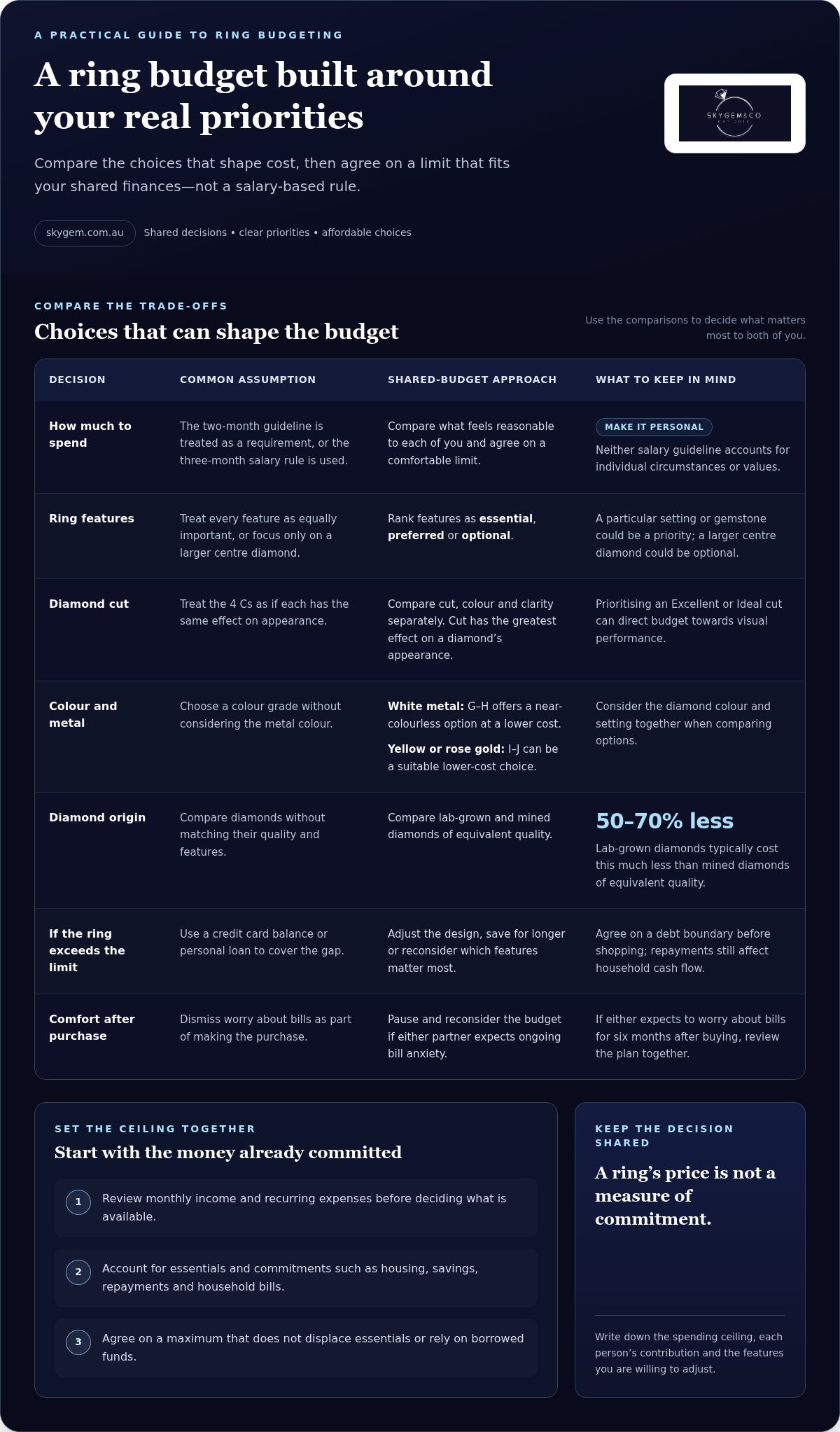
The two-months’ salary guideline is not a requirement, and the three-month salary rule is an outdated way to set a ring budget. Neither accounts for individual circumstances or values. Compare what feels reasonable to each of you, then agree on a limit that supports your wider financial priorities. To discuss a ring budget without it being awkward, start with a shared limit, not assumptions about what a partner should spend.
Rank each ring feature as essential, preferred or optional. For example, you might prioritise a particular setting or gemstone, while treating a larger centre diamond as optional. This helps separate emotional meaning from features you can adjust. If the proposal is meant to be a surprise, discuss broad style preferences and a comfortable spending limit beforehand, without revealing the timing or exact design. You can also share examples of rings you like without asking your partner to choose one.
For diamond quality, compare cut, colour and clarity as separate choices rather than treating every grade as equally visible. Among the 4 Cs, cut has the greatest effect on a diamond’s appearance, so prioritising an Excellent or Ideal cut can help direct the budget towards visual performance. For a white diamond in white metal, G-H offers a near-colourless option at a lower cost. With yellow or rose gold, I-J can be a suitable lower-cost choice.
Lab-grown diamonds typically cost 50-70% less than mined diamonds of equivalent quality. That difference may give a couple more room to prioritise cut, setting or another financial goal, depending on what matters most. Compare equivalent quality and features, rather than judging a diamond by one specification alone.
Turn your preferences into a specific plan: set a maximum, identify your top ring priorities and choose a realistic timeframe if you need to save. Discuss financial beliefs you learned growing up without criticism, as those experiences can shape what each of you considers reasonable. Make sure both partners have a say in the ring’s size, price and affordability.
2. Avoiding debt when choosing a ring
A ring should fit your financial life, not create pressure that continues after the proposal. Before setting a spending limit, account for student loans, a home mortgage, future car payments and regular household bills. These commitments affect how much income is genuinely available. Compare essential expenses with incoming money, then decide what remains without relying on borrowed funds.
Set a clear boundary on debt before looking at rings. For example, agree that neither partner will use a credit card balance or personal loan to cover the gap between the chosen ring and the available budget. If a preferred design exceeds that limit, adjust the design, save for longer or reconsider which features matter most.
Next, test the budget against your actual monthly cash flow. List recurring expenses, upcoming commitments and savings goals, then identify an amount you can set aside without missing payments. Leave room for ordinary costs instead of assuming every month will be unusually inexpensive. This gives you a practical measure of affordability before emotions or shop displays influence the decision.
Set a pause point if the purchase could create ongoing anxiety. If either of you expects to worry about bills for six months after buying the ring, reconsider the budget before committing. That concern is useful information, not a reason to dismiss someone’s preferences. Discuss whether a different setting, diamond specification or saving timeframe could preserve the feature that matters most.
Try this prompt: “I want us to choose a ring without putting our other plans at risk. What spending limit would still let you feel comfortable with our bills and goals?” Take turns answering and explaining the reasons behind your limits. If your answers differ, ask what financial responsibility or future expense is shaping each view before negotiating.
Don’t treat financing as a way to make an unaffordable purchase feel manageable. Some jewellers offer financing, but repayments still affect household cash flow. Compare the commitment with your existing obligations and long-term financial stability. If money worries extend beyond the ring, a financial adviser can help you discuss your situation and plan for broader financial goals.
Before proceeding, write down the agreed spending ceiling, each person’s contribution and the features you’re willing to adjust. This brief record keeps the decision consistent when you compare options later. If buying the ring would require debt or leave either partner uneasy about essential bills, pause and revise the plan together.
3. Choosing a comfortable, private setting for the conversation
Discuss the engagement ring budget before shopping. That gives you both a chance to share expectations before a design, display or sales conversation shapes the decision. Choose a moment when neither of you is rushing to work, handling a household task or preparing for another commitment. A quiet café can offer a private-feeling setting away from everyday distractions.
A home-cooked meal is another practical option, especially if a café feels too public. Agree to talk after dinner, when the table is clear and your phones are put aside. Keep the conversation separate from a stressful moment, such as reviewing overdue bills or discussing an unexpected expense. A calm setting makes it easier to hear the reasons behind each person’s preferences.
Before you talk, decide what you want the conversation to accomplish. For example, aim to understand each other’s comfort zones and agree on what to discuss next, rather than choosing a final ring immediately. You could open with, “I’d like us to talk about what feels comfortable before we start looking.” This sets a shared purpose without making the discussion feel like a demand.
Choose a setting that makes listening easier. Sit somewhere you can speak without being overheard, and avoid a loud café during its busiest period. If one person needs time to consider a response, pause rather than filling the silence. The goal is to let each of you explain what affordability and a meaningful ring look like.
When should couples discuss the engagement ring budget? Talk before shopping, while there’s still room to compare expectations and make considered choices. A meal at home or a quiet café visit gives both partners a chance to speak before browsing turns preferences into specific purchases.
Keep the first discussion focused on broad preferences, not every detail. One partner might care most about the ring’s overall style, while the other wants clarity about spending and contributions. Note what you agree on and which questions need another conversation. This simple record can keep a later appointment focused on shared priorities instead of reopening the entire discussion.
If the first attempt feels tense, don’t force a decision in that moment. Suggest returning to the topic over another meal, with a clearer prompt such as, “What would help this purchase feel comfortable for both of us?” A private setting and a defined purpose give you a practical starting point for discussing money openly.
4. Comparing budget expectations and price ranges
There isn’t one realistic engagement ring budget for every couple in Australia. A suitable amount depends on your finances, preferred design and the features each of you values. Compare expectations first, then consider what each range could mean for the ring itself.
Start separately: each partner can write down a comfortable range before you discuss the numbers together. This helps reveal whether your expectations overlap or differ substantially. If one person imagines a modest design and the other has a more elaborate ring in mind, ask what drives each preference before debating the amount.
For example, a difference may reflect priorities rather than competing ideas about commitment. One partner might care most about a prominent centre stone, while the other prefers a distinctive setting or coloured gemstone. Naming those preferences turns an abstract comparison into a practical conversation about possible trade-offs.
Compare like with like. A ring’s overall price can reflect its centre stone, setting, metal and design, so two rings in the same broad range may look quite different. Write down the details you’re comparing, such as gemstone type, diamond characteristics and setting style. That makes it easier to understand why two options fall into different price ranges.
Use three broad bands instead of one exact figure: below your comfortable range, within it and above it. Define each band according to your finances, not assumptions about what people usually spend. The middle band can guide your research, while the lower and upper bands show where you might adjust features or stop comparing.
Then compare ring types within your agreed bands. Solitaire, halo and trilogy designs create different visual effects and use different arrangements of stones. Consider Australian sapphires alongside diamond designs if colour is a priority. Assess each option according to the details that matter to you, rather than treating a style name as a complete specification.
Keep the proposal’s meaning separate from the amount spent. The two-months’ salary guideline began with a De Beers advertising campaign in the 1980s, but an advertising idea isn’t a personal financial plan. Compare the ranges that suit your circumstances, rather than using that historical guideline to judge either partner’s expectations.
Finish the comparison by recording your agreed maximum, preferred features and acceptable compromises. If your ranges don’t overlap, identify one design element each partner could reconsider, then compare again. This gives you a clear next step without requiring either person to treat their initial expectation as final.
A realistic budget fits your finances and reflects the features you value, rather than a standard amount or salary-based rule. Agree on a comfortable maximum together, then weigh ring options and trade-offs within it.
5. Discussing shared and individual expenses
Agreeing on the total ring budget is only part of the decision. You also need to discuss how much each person is willing to contribute and whether the purchase will come from shared or individual funds. Make this explicit before choosing how to pay, so neither person has to guess what the other expects.
Start by asking what contribution feels comfortable to each partner, rather than assuming you’ll split the cost equally. One person may have more available savings, while the other has competing personal commitments. Both should be able to explain their position without treating income or savings as a measure of commitment.
Then define what “shared expense” means in your relationship. You might use money from a joint account, or each contribute separately towards an agreed total. Some couples may decide that one person will pay, provided both discuss the arrangement openly and freely.
If your contributions differ, talk through what each of you considers fair. A percentage-based approach may feel more manageable than identical amounts when incomes differ, while a fixed contribution may suit partners with similar financial arrangements. Treat these as options, not rules every couple must follow. The outcome should reflect your finances and agreements.
When you disagree, pause before defending your preferred arrangement. Ask what’s behind the other person’s view. They may be concerned about fairness, personal savings or avoiding an obligation that feels uncomfortable. Reflecting back what you heard can clarify the issue: “You’d rather contribute an amount that leaves your savings plan intact.” Then explain your own concern without assigning blame.
Separate the contribution decision from the design decision. If one partner wants to spend more than the other can contribute, revisit the agreed total or consider which ring features could change. Don’t treat a larger contribution as automatic permission to make every design decision. Both partners should have a say in the ring’s style, affordability and meaning.
Write down the agreed total, each person’s intended contribution and whether any amount will come from shared savings. Include boundaries, such as keeping personal savings untouched or avoiding repayments. A clear record helps prevent misunderstandings when you start comparing rings, and gives both partners a chance to revisit the plan before spending.
Use a direct prompt to begin: “How much would you feel comfortable contributing, and would you prefer a shared or individual expense?” If the answer is uncertain, discuss the options before setting a final plan. A fair arrangement is one both partners understand and can accept without pressure.
SkyGem & Co.: Solitaire Engagement Rings
SkyGem & Co. can help you compare engagement ring styles once you’ve agreed on a comfortable budget and identified your priorities. Consider how a Solitaire Engagement Ring, Halo Engagement Ring or Trilogy Engagement Ring aligns with the look you want. Lab-Grown Diamonds offer another option to compare as you weigh diamond preferences against your overall plan.
Bring your agreed spending limit and the features that matter most when you begin comparing designs. This keeps the discussion focused on choices that suit your preferences and financial boundaries. Explore engagement ring styles to see options, or contact SkyGem & Co. to continue the conversation.
Take the next step with confidence
Your next step can be a focused conversation about what you want the ring to represent. Before meeting, note the design details you’re drawn to, the choices you’re still weighing and the questions you want answered. If you’re working out how to discuss a ring budget without it being awkward, keeping the conversation centred on shared preferences can help you move forward as a team.
SkyGem & Co. can help you explore ring options that fit the priorities you’ve agreed on. Bring your questions to a personalised consultation and clarify which design direction feels right for both of you.
A considered choice starts with an honest conversation. Take the next step at a pace that feels right for you both.
Frequently Asked Questions
Is it true that the engagement ring should cost two months' salary?
No, two months’ salary isn’t a required spending target. A salary multiple can also mislead you about what someone can comfortably spend, because salary alone doesn’t show take-home income or existing commitments. Treat the saying as a cultural reference, not a calculation. A useful personal benchmark is an amount you can explain and feel comfortable with, without comparing your circumstances to someone else’s.
How do I talk to my partner about money without it being awkward?
Start by asking which money topics your partner finds difficult to discuss, then agree to handle one subject at a time. For example, separate ring spending from broader plans such as moving or travel, rather than combining every financial decision. Use “I” statements to explain your concerns, and check you’ve understood your partner’s before responding. This makes the conversation more precise and less likely to feel like a personal judgement.
How do you bring up an engagement ring budget without making it awkward?
Introduce the topic as part of planning your future together, without implying that your partner must choose a ring immediately. You could ask what makes a ring feel meaningful, then explain that you’d also like to discuss the financial side. This gives the conversation a natural starting point beyond a price figure. If you want the proposal to remain a surprise, focus on broad preferences and spending comfort.
Is the two months' salary rule for engagement rings still relevant?
You can mention it as a familiar reference, but it doesn’t determine what a couple should spend. Its practical value is limited to opening a conversation about why people attach meaning to ring spending. One partner may see the ring as a long-term keepsake, while another values the proposal or shared plans more. Discuss those meanings directly, then choose according to your priorities instead of using the saying as a scorecard.
How can couples agree on a ring budget if their incomes or expectations differ?
Agree on the decision criteria, not just the amount. For example, decide whether avoiding financial pressure matters more than a particular design feature. Then each partner can explain what they consider fair and why. If your expectations still differ, identify which preference is flexible and which carries deeper meaning. This helps distinguish a practical disagreement from a difference in values, giving you a clearer basis for a decision you can both support.
What are common mistakes or financial risks when setting an engagement ring budget?
One overlooked risk is comparing rings without considering ownership costs beyond the initial purchase. Before deciding, think about whether you’ll want insurance, future adjustments or routine care, and account for those needs in your broader plans. Keep the receipt and ring specifications together so you can refer to your selection later. Avoid making a rushed choice based only on appearance or a temporary sense of urgency.
Disclaimer
This article is for general informational purposes only and may include AI-assisted content. Pricing, specifications, and availability are subject to change. For accurate advice and current information, please contact SkyGem & Co. directly. Nothing in this content constitutes professional or financial advice.