
How to Choose an Engagement Ring She’ll Love Forever: The 2026 Expert Guide

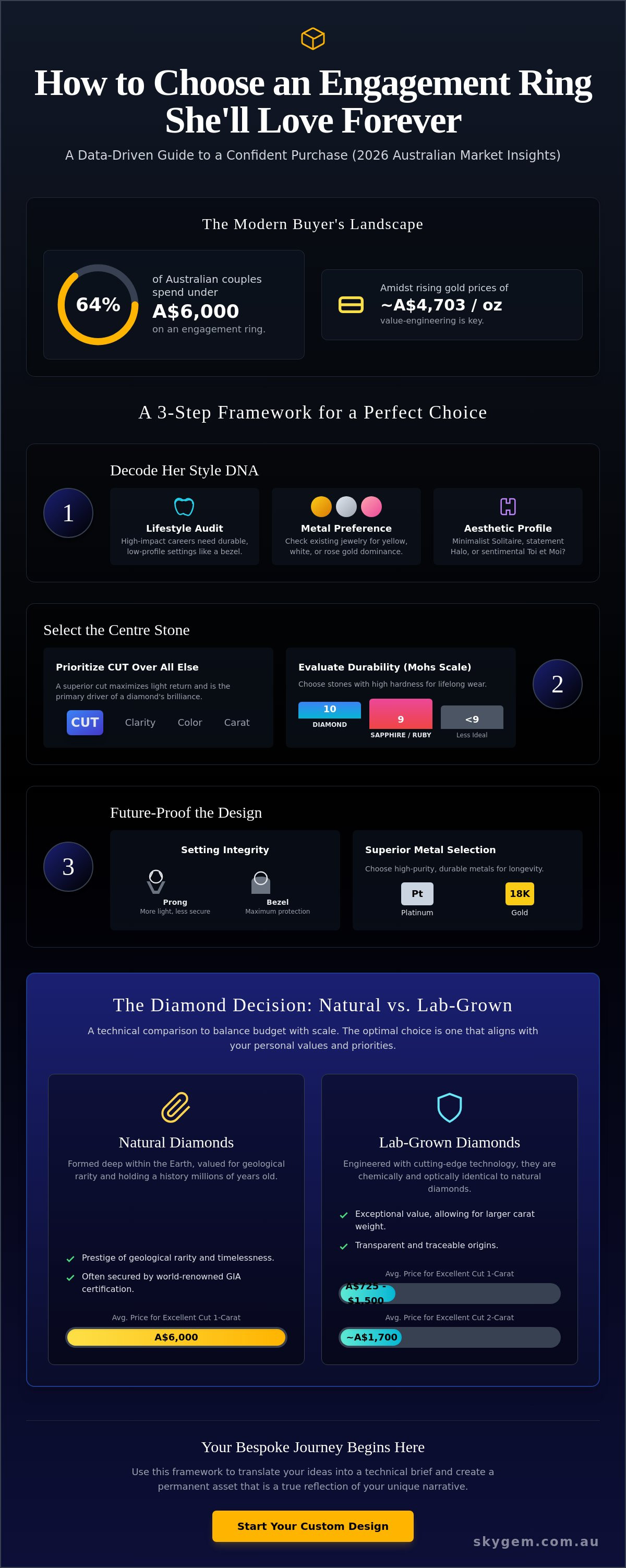
Did you know that 64% of Australian couples now spend under A$6,000 on an engagement ring, even as the price of gold has climbed to approximately A$4,702.85 per ounce as of May 2026? This shift highlights a growing demand for precision-engineered value over traditional retail markups. You likely feel the pressure of balancing a significant investment with the desire for a piece that captures a unique personal narrative. It's common to experience analysis paralysis when comparing 1-carat natural diamonds against high-performance lab-grown alternatives. Understanding how to choose an engagement ring she'll love forever requires moving beyond marketing hype and focusing on the intersection of engineering excellence and timeless design.
We agree that a ring should be a permanent asset, not a temporary fashion statement. This expert guide provides a structured framework to help you evaluate technical specifications, from GIA certification to the structural benefits of sculptural bezel settings. You'll gain the confidence to select a ring that meets rigorous quality standards while perfectly reflecting her individual style. We'll explore the 2026 shift toward Australian-led design and provide a step-by-step path to a confident, informed purchase.
Key Takeaways
- Identify her unique Style DNA by evaluating her current wardrobe and lifestyle requirements to ensure the final design remains a permanent staple of her collection.
- Discover how to choose an engagement ring she'll love forever by prioritising light performance and structural integrity over marketing-driven metrics.
- Compare the technical benefits of GIA-certified natural diamonds against lab-grown alternatives to achieve the optimal balance of scale and value for your budget.
- Learn to future-proof your investment by selecting settings and metals, like platinum or 18K gold, that provide superior protection for the centre stone.
- Understand the bespoke process, including how to translate abstract ideas into a technical brief and verify gemstone authenticity through professional reports.
Decoding Her Style DNA: The Research Phase
Determining how to choose an engagement ring she'll love forever begins with a rigorous audit of her Style DNA. This concept represents the technical intersection of her daily wardrobe, existing jewellery collection, and lifestyle requirements. It isn't merely about aesthetics; it's about architectural compatibility. You must employ the 'Observation Method' to identify recurring patterns in her preferences. Look for metal tone consistency and stone orientation. For a historical and cultural overview of engagement rings, one can see how these preferences have evolved from simple bands to complex bespoke structures that reflect personal identity.
Lifestyle considerations are paramount. If her career involves high-impact activity, such as nursing or engineering, a high-set prong design may be impractical. Instead, a bezel setting or a low-profile Solitaire engagement ring offers better durability and safety. When interpreting social media data, such as a Pinterest board, look for the 'common denominator' across saved images rather than trying to replicate a single low-resolution photo. This ensures the final piece is a permanent asset that integrates seamlessly with her daily life.
Metal Tones and Aesthetic Cohesion
Analysing her current jewellery collection reveals whether she favours the crisp, clinical precision of 18K white gold or the traditional warmth of yellow gold. While yellow gold remains a top choice in 2026 for its vintage contrast, rose gold offers a contemporary, romantic appeal that suits specific skin tones. If her wardrobe is a mix of metals, a bespoke design can bridge these gaps by incorporating dual-tone elements. This strategy ensures the ring remains versatile and compliant with all her existing accessories.
Minimalism vs. Maximalism
The choice between minimalism and maximalism dictates the core architecture of the ring. A minimalist partner typically prefers a Solitaire, where the focus remains entirely on the technical brilliance of the centre stone. Conversely, those desiring a more significant visual impact may lean toward Halo or Trilogy settings, which expand the luminous footprint of the piece. The 'Toi et Moi' trend, featuring two contrasting stones, is ideal for the fashion-forward partner who values a unique sentimental narrative. By identifying these preferences early, you move from guesswork to a data-driven design process that guarantees satisfaction.
Selecting the Centre Stone: Diamonds, Sapphires, and Beyond
Understanding how to choose an engagement ring she'll love forever involves a deep dive into the physical properties of the centre stone. While aesthetic appeal is the initial draw, technical specifications dictate the long-term performance of the piece. We prioritise Cut above all other metrics. A superior cut ensures maximum light return, mirroring the precision required in high-end architectural lighting. To make an informed decision, you must consult expert resources on diamond quality and the 4Cs to understand how clarity and colour impact the stone's visual profile.
Durability is a non-negotiable requirement for a ring intended for lifelong wear. The Mohs Scale of Mineral Hardness serves as our primary reference for structural integrity. Diamonds, rated at 10, offer the highest resistance to scratching. Sapphires and Rubies follow closely at 9, making them excellent candidates for daily use. Stones with lower ratings may suffer from cumulative surface wear over decades, compromising the ring's brilliance. Selecting a stone with high hardness is a form of future-proofing your investment.
The Diamond Decision: Natural and Lab-Grown
In 2026, the choice between natural and lab-grown diamonds is often a matter of aligning budget with scale. A 1-carat natural diamond typically averages A$6,000, whereas lab-grown diamonds offer a more accessible entry point, with 1-carat stones of equivalent quality ranging from A$725 to A$1,500. Natural diamonds carry the prestige of geological rarity and are secured by GIA certification. Lab-grown stones provide a transparent, ethical origin and allow for larger carat weights, such as a 2-carat stone for approximately A$1,700. For those seeking a specific balance of size and heritage, you might browse our certified diamond inventory to compare technical data side-by-side.
The Allure of Coloured Gemstones
Coloured gemstones offer a level of personalisation that clear diamonds cannot replicate. Australian Sapphires are particularly prized for their unique 'fingerprints', featuring deep blues and sought-after teal hues that reflect local expertise. Teal and peach sapphires have emerged as premier choices in 2026 for bespoke rings. When sourcing rubies or emeralds, we recommend prioritising 'unheated' stones. These gems retain their natural colour without thermal intervention, ensuring the stone's internal structure remains stable for the long term. This focus on raw, unadulterated quality ensures the ring remains a permanent and evolving asset.
Structural Elegance: Choosing the Setting and Metal
While the centre stone often commands the most attention, the setting serves as the structural foundation that ensures its security. Selecting the right architecture is a critical component of how to choose an engagement ring she'll love forever. It's an engineering challenge that balances the desire for a high luminous footprint with the necessity of protecting the gemstone from daily impact. As of May 8, 2026, the price of gold has reached approximately A$4,702.85 per ounce. This significant increase in raw material costs makes it even more important to choose a design that offers long-term durability and minimal maintenance requirements.
The debate between low-profile and high-profile settings is a matter of practical wearability. High-profile settings elevate the stone to allow more light entry, but they're more susceptible to snagging on clothing or striking hard surfaces. Conversely, a low-profile design sits closer to the finger, providing a more streamlined silhouette that's ideal for active lifestyles. We also evaluate prong architecture with technical precision. A four-claw setting allows for maximum diamond exposure, while a six-claw setting provides redundant security, ensuring the stone remains seated even if one prong is compromised by a heavy blow.
Metal Integrity and Longevity
We consider 18K gold the industry standard for premium jewellery because its 75% gold content provides the perfect intersection of luxury and hardness. Platinum is the alternative for those seeking an heirloom-grade asset. It possesses unique work-hardening properties; rather than losing metal when scratched, platinum displaces it, developing a distinctive patina over time. It's important to schedule professional maintenance cycles every 12 to 18 months. These checks include prong tightening and ultrasonic cleaning to ensure the structural integrity remains compliant with the original design specifications.
Popular Setting Architectures
A Solitaire engagement ring represents the pinnacle of minimalist engineering, focusing entirely on a secure, 'floating' centre stone. For those seeking more visual volume, Halo and Pavé settings add significant visual weight by surrounding the centre stone with smaller diamonds. This architecture must be executed with precision to ensure the small stones don't compromise the band's strength. The Trilogy ring offers a balanced three-stone arrangement that requires careful technical calibration to ensure all three stones are aligned for optimal light performance across the entire surface.
The Bespoke Journey: How to Customise for a 'Yes'
The transition from a conceptual idea to a physical asset requires a methodical, step-by-step framework. This bespoke journey is the most reliable method for determining how to choose an engagement ring she'll love forever, as it eliminates the variables associated with mass-produced retail stock. The process begins with the initial consultation, where we translate her Style DNA into a comprehensive technical brief. This document serves as the project's foundation, ensuring every design choice aligns with her aesthetic and lifestyle requirements. It's a structured approach that mirrors the precision of a commercial architectural project.
Following the brief, you'll move to stone selection. This involves viewing loose diamonds or gemstones under professional lighting conditions to evaluate their true light performance. Unlike pre-set rings, viewing loose stones allows for a 360-degree inspection of the stone's inclusions and cut precision. Once the stone is secured, we utilise 3D CAD (Computer-Aided Design) software to create a digital prototype. This phase allows you to visualise the ring's architecture and refine the proportions before any metal is cast, acting as a critical fail-safe in the design process. Finally, our master jewellers execute the hand-finishing, a process that ensures the structural integrity and refined aesthetics of the final piece exceed standard retail benchmarks.
The Collaborative Design Process
Utilising a Custom Engagement Ring Service significantly reduces the risk of aesthetic mismatch. This partnership allows for the integration of personalised 'Easter eggs', such as hidden birthstones or engraved coordinates on the inner band. To ensure a successful project delivery, we recommend starting this process 6 to 8 weeks before your intended proposal date. This timeline accounts for stone sourcing, design refinements, and the rigorous quality control checks required for high-performance jewellery. Starting early doesn't just reduce stress; it guarantees the craftsmanship isn't compromised by a rushed production schedule.
Budgeting with Transparency
Effective budget allocation is essential for achieving maximum visual impact. In 2026, where a high-quality lab-grown 1-carat diamond can be sourced for between A$725 and A$1,500, you have more flexibility to invest in a superior setting. A value-driven approach focuses on sourcing stones that 'face up' larger than their carat weight suggests, such as elongated oval or marquise cuts. By focusing on material quality and technical craftsmanship rather than paying a 'brand name' tax, you ensure your capital is directed toward the tangible assets of the ring. To begin your technical consultation, book a bespoke design session with our specialist team.
Securing the Legacy: Final Checks and Proposal Readiness
The final phase of determining how to choose an engagement ring she'll love forever involves a rigorous technical verification of the finished asset. Once the craftsmanship is complete, you must ensure the physical stone matches its digital and paper records. Every GIA-certified diamond features a microscopic laser inscription on the girdle that corresponds to its unique report number. Verifying this inscription under a professional loupe is a standard compliance step that guarantees the integrity of your investment. This isn't just about peace of mind; it's about establishing a documented chain of custody for a high-value asset.
Technical precision extends to the ring's fit. While we aim for an exact measurement during the research phase, a 'near-miss' on sizing is a common variable. A professional jeweller views resizing as a routine technical adjustment rather than a structural failure. Our resizing policies ensure that the ring's architectural integrity remains uncompromised during the modification. It's better to propose with a slightly larger ring that can be adjusted down than to risk a piece that cannot be worn on the day of the proposal.
Documentation and Security
Before the ring leaves the boutique, a comprehensive retail replacement valuation must be issued. This document is essential for insurance compliance in Australia, providing a detailed breakdown of the metal weight, stone specifications, and current market value in A$. We recommend securing insurance coverage before the proposal occurs, as the risk of loss is statistically highest during travel or the proposal event itself. Our commitment to transparency includes providing a clear maintenance schedule. Regular ultrasonic cleaning and annual prong checks are necessary to manage the long-term thermal and mechanical stresses placed on the setting.
The Proposal and Beyond
Presentation is the final bridge between technical excellence and emotional impact. A high-quality ring box with integrated LED lighting can significantly enhance the stone's luminous efficacy during the reveal. You should also consider the engagement ring's profile in relation to future pairing. The height of the setting dictates whether a wedding band can sit flush against the engagement ring or if a contoured design is required for architectural compatibility. Planning for this 'stack' now prevents design conflicts during the wedding preparations.
Your relationship with a trusted specialist doesn't end when the box is opened. Ongoing support, from professional polishing to stone security audits, ensures the ring remains a permanent and evolving asset. To begin your bespoke journey with a team dedicated to engineering excellence, book a consultation with our expert team today.
Architecting a Permanent Symbol of Commitment
Selecting a ring that stands the test of time requires more than an aesthetic eye. It demands a technical understanding of material performance and structural design. You've now learned to audit her Style DNA and navigate the complex landscape of GIA-certified stones and unheated sapphires. By prioritising cut precision and setting integrity, you ensure the final piece remains a permanent asset that withstands decades of daily wear. This professional framework provides the clarity needed to understand how to choose an engagement ring she'll love forever without falling into the traps of mass-market retail. Precision matters.
Our team functions as your technical consultant throughout this process, offering expertise in both natural and lab-grown diamonds alongside rare, hand-finished gemstone settings. We focus on engineering excellence to deliver a result that balances architectural aesthetics with long-term durability. Start building your dream ring with SkyGem & Co. and move forward with the confidence that your selection is backed by expert craftsmanship and local Australian design. You're now equipped to make a decision that reflects both her unique story and your commitment to quality. Quality is permanent.
Frequently Asked Questions
How much should I realistically spend on an engagement ring in 2026?
You should realistically spend between A$2,000 and A$6,000, as nearly two-thirds of Australian couples currently operate within this range. While the average cost of an engagement ring in 2026 is approximately A$5,500 to A$6,500, we recommend a budget that avoids debt and focuses on material quality. This approach ensures the investment remains a sustainable asset for your future together without the pressure of outdated marketing rules.
What happens if I choose a ring and she wants to change the style?
Most professional boutiques provide a clear exchange or modification window to mitigate the risk of a style mismatch. If the original design doesn't align with her preferences, we can often reset the centre stone into a new architecture that better fits her Style DNA. This flexibility is a core benefit of working with a technical consultant. It ensures you can confidently learn how to choose an engagement ring she'll love forever without the fear of a permanent design error.
How do I find out her ring size without her knowing?
The most accurate method involves measuring the internal diameter of a ring she currently wears on her ring or middle finger. You can use a digital calliper for precision or bring the piece to our studio for a professional assessment. If a stealth measurement isn't possible, we recommend choosing a standard size L or M. These sizes allow for easier technical adjustments after the proposal without compromising the band's structural integrity.
Is a lab-grown diamond a 'real' diamond for an engagement ring?
Lab-grown diamonds are chemically, physically, and optically identical to natural diamonds. They consist of pure carbon and achieve a rating of 10 on the Mohs Scale, ensuring the same lifelong durability as mined stones. The primary difference lies in their origin and market value. A 1-carat lab-grown diamond currently costs between A$725 and A$1,500, offering a cost-effective solution for those prioritising scale and clarity over geological rarity.
How long does the custom design process actually take?
A bespoke project typically requires a timeline of 6 to 8 weeks from the initial consultation to final delivery. This duration accounts for stone sourcing, 3D CAD modelling, and the precision hand-finishing required for high-end jewellery. Starting the process at least two months in advance ensures all technical specifications are met without compromising quality. It also allows sufficient time for any necessary design refinements before the metal casting phase.
Can I use a family heirloom stone in a new bespoke setting?
We can integrate heirloom gemstones into new designs following a rigorous technical audit of the stone's condition. Our specialists assess the gemstone for surface abrasions or internal fractures that might affect its stability during the setting process. Once cleared, we can engineer a custom setting that respects the stone's heritage while modernising its aesthetic. This approach creates a unique link between family history and your personal narrative through expert craftsmanship.
What is the most durable gemstone for someone with an active lifestyle?
Diamonds remain the most durable choice due to their hardness rating of 10 on the Mohs Scale. For those seeking colour, Australian Sapphires and Rubies are excellent alternatives with a rating of 9. These stones resist surface scratching and daily impact better than softer gems like emeralds or aquamarines. Choosing a high-hardness stone ensures the ring remains a permanent asset that maintains its brilliance despite the rigors of an active lifestyle.
Should I choose platinum or white gold for a daily-wear ring?
Platinum is the superior choice for long-term durability because it's a dense metal that doesn't lose volume when scratched. It also requires less maintenance as it doesn't need rhodium plating to maintain its colour over time. While 18K white gold offers a crisp, bright finish at a lower initial price point, it requires periodic replating. For a ring intended for decades of daily wear, platinum's work-hardening properties offer better structural security for the centre stone.
Disclaimer
This article is for general informational purposes only and may include AI-assisted content. Pricing, specifications, and availability are subject to change. For accurate advice and current information, please contact SkyGem & Co. directly. Nothing in this content constitutes professional or financial advice.