
How to Care for Unheated Gemstones: The 2026 Preservation Guide

An unheated gemstone is a geological miracle that has survived millions of years of tectonic pressure, yet its natural integrity can be compromised in seconds by a common household chemical or a standard ultrasonic cleaner. If you own an untreated sapphire or ruby, you're holding a rare asset that has bypassed the industrial heat treatments used in the vast majority of the modern market. Learning how to care for unheated gemstones is not merely about aesthetics; it's a technical requirement for preserving a stone that remains exactly as nature intended.
You likely feel a deep responsibility to protect the value of these stones, but conflicting advice often makes routine maintenance feel like a risk. It's understandable to worry that a simple cleaning mistake might impact the clarity or surface of a high-value emerald or alexandrite. This 2026 preservation guide provides the exact protocols you need to safeguard your collection with confidence. You'll learn which specific chemicals to avoid, how to establish a safe daily cleaning routine, and how to maintain the documented provenance that drives the long-term investment value of your natural gems.
Key Takeaways
- Understand the geological significance of natural inclusions like "silk" and why these internal structures require a higher standard of technical care than treated stones.
- Implement the "Last On, First Off" protocol to safeguard your unheated ruby and emerald rings from the caustic effects of perfumes, cosmetics, and household chemicals.
- Master the professional "Safe Home Method" for routine cleaning, which is a key step in understanding how to care for unheated gemstones while avoiding the risks of ultrasonic equipment.
- Establish a consistent documentation process that links your preservation efforts to the stone's GIA certification, protecting both the aesthetic beauty and the long-term investment value of the asset.
Understanding the Rarity and Sensitivity of Unheated Gemstones
Unheated gemstones represent the apex of geological authenticity. These stones haven't undergone the high-temperature enhancements that most commercial gems endure to improve colour or clarity. In the Australian market, the premium for untreated stones has reached new heights. By 2026, data indicates that an unheated Burmese ruby can command a price three times higher than a heated stone of similar visual quality. This value is tied directly to the stone's natural state, which is why understanding gemstone treatments is the first step in protecting your investment.
Owners must adopt a preservation mindset to maintain these assets. Unlike heated stones, where internal structures have been fused or altered for stability, unheated gems are geological time capsules. They require a technical approach to maintenance that respects their original chemical and physical composition. Learning how to care for unheated gemstones ensures these rare specimens retain their certified status and market value over decades. When you invest in precious gemstones that are completely natural, you're managing a finite resource that is increasingly sought after as a stable form of portable wealth.
Why 'Unheated' Status Dictates Your Care Routine
Untreated stones often contain delicate natural features, such as rutile needles known as "silk" or minute fluid inclusions. High-heat treatments usually dissolve these features to improve transparency, but in unheated stones, they remain intact. These inclusions are evidence of natural origin, yet they react differently to external stressors than a solid, treated crystal would. If you expose an unheated sapphire to extreme temperature shifts or harsh chemicals, these internal features can expand or react, potentially causing internal fractures. Your care routine must account for the stone's provenance. The very inclusions that prove its "no-heat" status on a GIA report are the elements that require the most protection.
The Difference Between Durability and Sensitivity
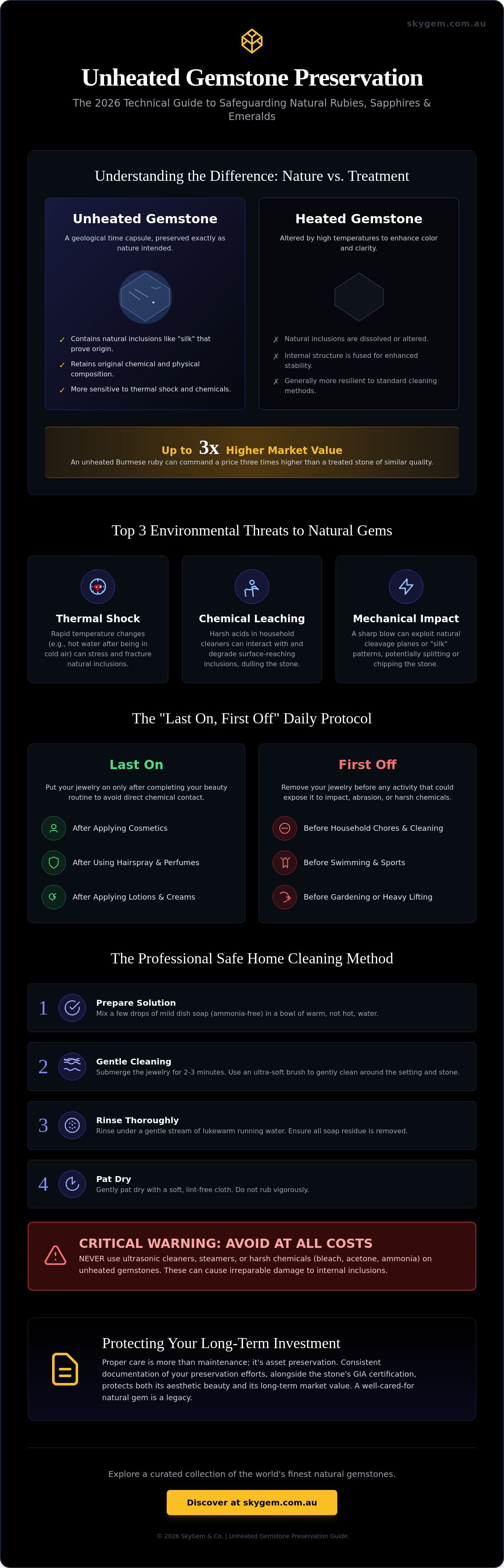
It's a common misconception that a high rating on the Mohs scale makes a stone indestructible. While an unheated sapphire or ruby sits at a 9, its internal toughness is a separate metric. Natural inclusions can create "cleavage" risks, where a sharp blow at the wrong angle could split the stone along a natural plane of weakness. To keep your gems secure, you must identify the top three environmental threats:
- Thermal Shock: Rapid transitions from freezing air to hot water can stress natural inclusions.
- Chemical Leaching: Certain acids found in heavy cleaners can interact with surface-reaching inclusions.
- Mechanical Impact: High-pressure environments or accidental drops can exploit internal "silk" patterns.
By understanding these technical vulnerabilities, you can adapt your daily habits to ensure the long-term viability of your natural jewellery collection.
The Science of Inclusions: Why Unheated Gems Require Specific Care
When you look through a loupe at an unheated sapphire, you might see fine, intersecting needles of rutile, commonly known as silk. While these features confirm the stone's natural origin, they also represent structural variables that don't exist in heat-treated gems. In heated stones, these needles are often dissolved or fused into the host crystal. In an unheated state, they remain distinct entities with their own physical properties. Understanding the relationship between these internal features and external forces is central to mastering how to care for unheated gemstones without risking permanent damage.
Beyond silk, many unheated specimens contain two-phase or three-phase inclusions. These are microscopic pockets trapped within the crystal containing combinations of liquid, gas, or even tiny solid crystals. These features are particularly prevalent in natural emeralds and certain sapphires. Because these trapped substances have different densities and expansion coefficients than the surrounding mineral, they're sensitive to environmental changes. If the stone is subjected to high-pressure cleaning or intense heat, these internal pockets can expand, exerting outward pressure that leads to "cleavage" or internal fracturing. This is why unheated stones are significantly more susceptible to damage during mechanical cleaning processes than their treated counterparts.
Thermal Shock and Expansion Risks
The primary risk to a natural stone's structural integrity is a phenomenon known as thermal shock. Thermal shock is the primary cause of internal fractures in natural gems. This occurs when a gemstone experiences a rapid, significant shift in temperature, causing the host crystal and its internal inclusions to expand or contract at different rates. For example, moving from a climate-controlled environment into a very hot car, or washing your hands in near-boiling water while wearing a ring, can trigger this stress. By following expert jewelry care tips, you can avoid these sudden transitions and keep the internal architecture of your stone stable.
Chemical Porosity and Surface Integrity
Many unheated stones, especially emeralds, possess surface-reaching inclusions or microscopic fissures. These are natural pathways where external substances can migrate into the stone. Household chemicals, heavy perfumes, and even skin oils can seep into these fissures over time. In unheated emeralds, which often rely on traditional natural oiling for clarity, harsh detergents can strip away these protective oils, leaving the stone looking dull or parched. Protecting the surface integrity of your natural rubies and sapphires requires a barrier-first approach to daily wear. If you're considering adding a rare, untreated piece to your collection, you may wish to view our range of natural sapphires to appreciate the unique internal characteristics that define these stones.
Daily Wear and Protection Strategies for Natural Stones
Maintaining the structural integrity of a rare, unheated sapphire or emerald requires more than periodic cleaning; it demands a disciplined approach to daily wear. Because these stones retain their natural internal features, they're more reactive to the environments we inhabit. The "Last On, First Off" rule is a fundamental protocol for any collector. By ensuring your jewellery is the final item you put on after applying perfumes and cosmetics, you prevent chemical films from settling into the microscopic surface-reaching inclusions common in untreated specimens.
High-risk activities pose a dual threat of chemical exposure and mechanical shock. Gardening introduces abrasive particulates that can micro-scratch the surface of a stone, while the heavy lifting involved in gym environments risks exploiting the internal cleavage planes discussed in the previous section. Even heavy household cleaning should be avoided while wearing natural gems. The choice of metal in your setting also plays a technical role in protection. Platinum is often preferred for its density and durability, providing a more secure "seat" for the stone's girdle compared to the higher malleability of 18K gold.
Managing Chemical Exposure
Chemical interactions can permanently alter the appearance of an unheated stone. You must avoid exposure to chlorine, bleach, and high-concentration hairsprays, as these substances can leach into fissures or cause the metal setting to become brittle. Over time, chemical buildup creates a dulling "mask" that obscures the natural lustre of an unheated sapphire. If your stone is accidentally exposed to harsh substances, immediately rinse it in lukewarm water and pat it dry with a lint-free cloth. Following professional guidance on how to clean precious jewelry is essential for preventing long-term surface degradation.
Safe Storage and Transport
Preservation continues even when the jewellery isn't being worn. Unheated stones should never be stored together in a single container. A diamond, being significantly harder, can easily scratch the surface of an unheated ruby or sapphire if they come into contact. Individual soft-lined pouches or SkyGem & Co.'s bespoke cases are ideal for maintaining physical separation. Humidity and light levels also matter; while most sapphires are stable, some unheated varieties can be sensitive to prolonged, intense UV exposure. A dedicated storage environment ensures your asset remains in the same condition as the day it was certified.
Learning how to care for unheated gemstones is an ongoing commitment to quality. By integrating these protection strategies into your lifestyle, you ensure the stone's geological story remains uncompromised for future generations.
Step-by-Step Cleaning and Professional Maintenance
Active maintenance is the secondary pillar of gemstone preservation. While daily protection prevents immediate accidents, a structured cleaning protocol removes the microscopic debris that accumulates in the intricate facets of a setting. When considering how to care for unheated gemstones, you must prioritise manual techniques over mechanical ones. High-frequency ultrasonic cleaners are a significant risk for untreated specimens. The rapid vibrations can agitate the natural fluid inclusions or "silk" patterns discussed earlier, potentially leading to internal structural failure or surface-reaching fractures.
Professional steam cleaning presents a similar hazard. The concentrated heat and pressure can induce thermal shock, especially in stones with three-phase inclusions like natural emeralds. For these reasons, the most reliable method for maintaining the brilliance of your collection is a controlled, low-impact approach that respects the stone's geological integrity. Consistency in this routine ensures that your natural sapphires and rubies retain their certified clarity without exposure to industrial stressors.
The Gentle Home Cleaning Protocol
The "Safe Home Method" is the industry standard for maintaining high-value natural jewellery. To begin, soak the piece in a bowl of lukewarm water mixed with a few drops of mild, pH-neutral detergent for ten to fifteen minutes. This softens organic buildup without reactive chemicals. Use a soft-bristled brush, preferably one with tapered bristles designed for delicate surfaces, to gently clean the underside of the stone and the gallery of the setting. Avoid using toothbrushes with firm bristles or abrasive polishing pastes, as these can micro-scratch the metal or dislodge stones. Finish by rinsing in a separate bowl of clean water and patting the piece dry with a lint-free microfibre cloth. Always check that the prongs are secure before and after this process.
Professional Inspections: The Six-Month Rule
Home cleaning cannot replace the technical oversight of a master jeweller. We recommend a professional inspection every six months to ensure the long-term viability of your setting. During these sessions, a specialist examines the piece under high magnification to identify prong wear, stone movement, or surface micro-scratches that may require attention. Professional polishing of the metal can be safely performed to restore lustre, provided the unheated stone is protected from the heat generated by the polishing wheel. This proactive approach prevents the loss of a rare asset due to mechanical setting failure. To ensure your collection remains in peak condition, you can explore SkyGem & Co.'s jewellery maintenance services for expert technical support.
If you're looking to add another investment-grade piece to your collection, view our latest range of natural rubies to see the results of expert preservation firsthand.
Ensuring Long-Term Integrity for Bespoke Gemstone Jewellery
The long-term value of an untreated asset is inextricably linked to its physical condition and the documentation that supports it. When you master how to care for unheated gemstones, you're not just maintaining a piece of jewellery; you're managing a high-performance investment. A GIA or GRS certificate describes a stone at a specific point in time. If the stone suffers surface abrasions or internal stress due to poor maintenance, that certificate may no longer reflect the stone's market reality. Maintaining the stone in its "as-certified" state is essential for ensuring it remains a liquid asset in the global market. Professional appraisals should be updated every two to three years to reflect the rising premiums for untreated stones.
Documenting your care routine is a practical step for future insurance or resale purposes. Keeping a log of professional inspections and cleanings provides a "service history" for your jewellery, much like one would maintain for a fine timepiece or a rare vehicle. This level of detail builds confidence for insurers and future collectors, proving that the stone's natural integrity has been prioritized throughout its ownership. This is particularly vital for high-value items like natural rubies, where the absence of heat treatment is the primary driver of the stone's valuation.
Retaining Provenance and Value
Original lab reports should be stored in a UV-protected, climate-controlled environment to prevent the degradation of security features or paper quality. In the 2026 market, where a 2.50-carat unheated ruby of top quality can reach A$120,000, even a minor chip is a significant financial event. Unlike heated stones, where certain surface flaws might be mitigated through further treatment, an unheated stone's value relies on its untouched nature. Any repair work that requires recutting will reduce the carat weight, often dropping the stone into a lower price bracket. Verifying the "unheated" status during every professional service ensures that no accidental heat is applied during routine repairs, which would instantly void the stone's premium status.
Partnering with a Specialist Jeweller
Generic high-street jewellers often lack the technical equipment or specialized training to handle the nuances of untreated gems. They may use standard repair techniques that involve high-heat torches near the setting, which can be catastrophic for an unheated sapphire's internal "silk" or fluid inclusions. At SkyGem & Co., we act as technical consultants for your collection, applying a bespoke approach to every repair or inspection. We understand that natural stones require a different engineering logic than treated or lab-grown alternatives. To ensure your investment remains protected, book a consultation to inspect your unheated gemstone today and receive a professional assessment of its current integrity.
Securing the Future of Your Natural Assets
Preserving the geological integrity of an untreated stone is a technical partnership between the collector and the specialist. By mastering how to care for unheated gemstones, you ensure that the delicate internal silk and fluid inclusions remain stable against environmental stressors. This disciplined approach to daily wear, combined with the low-impact "Safe Home Method" of cleaning, is what protects the long-term investment value of your collection. Consistency is the primary driver of longevity for these rare assets.
As specialists in unheated ruby and sapphire, SkyGem & Co. provides the technical oversight required for high-value portfolios. Our focus on GIA Certified Natural Diamonds and Gemstones, paired with expert bespoke design in Australia, ensures each piece is engineered for both aesthetic impact and structural durability. We invite you to explore our curated collection of rare unheated sapphires and rubies to find a specimen that meets your standards for natural beauty. Your dedication to these preservation protocols will ensure your natural treasures remain a vibrant legacy for generations.
Frequently Asked Questions
Can I use an ultrasonic cleaner for my unheated sapphire?
You should avoid using an ultrasonic cleaner for an unheated sapphire. The high-frequency vibrations can agitate natural internal features like silk or fluid inclusions, potentially leading to internal fractures. While heated stones are often more structurally uniform due to the melting of inclusions, unheated specimens retain their original geological architecture. This makes them more susceptible to mechanical stress during the cleaning process; manual cleaning is always the safer alternative.
Is it safe to wear an unheated ruby engagement ring every day?
It's safe for daily wear provided you follow a disciplined protection strategy. Rubies possess a Mohs hardness of 9, making them resistant to surface scratching, but their unheated status means natural inclusions remain intact. These features can act as points of structural weakness if the ring sustains a sharp impact. Removing the ring during high-risk activities like gym sessions or heavy household cleaning is essential for the long-term preservation of the stone.
How do I know if my gemstone is unheated or treated?
The only reliable way to confirm a stone's treatment status is through a report from a reputable laboratory like the GIA. Gemologists use advanced spectroscopy and microscopic analysis to look for signs of heat, such as melted inclusions or altered silk patterns. When learning how to care for unheated gemstones, always refer to your certification to ensure you're applying the correct technical maintenance protocols for an untreated specimen.
What should I do if my unheated stone looks cloudy?
Cloudiness is typically caused by a buildup of skin oils, lotions, or soap residue on the stone's facets. You should first attempt the Safe Home Method using lukewarm water and mild detergent as outlined in this guide. If the cloudiness remains after a thorough manual cleaning, it may indicate that a surface-reaching inclusion has absorbed a substance or that the stone requires a professional assessment to check for structural changes.
Does heat treatment make a gemstone harder or more durable?
Heat treatment doesn't change the Mohs hardness of a gemstone, but it can alter its internal stability. By dissolving or fusing inclusions, heat treatment can create a more uniform internal structure in some cases. However, unheated stones are valued precisely because they haven't been subjected to these artificial changes. Their natural state requires a more nuanced care routine to protect the original geological features that define their rarity and investment value.
Can an unheated gemstone be 're-oiled' if it loses its luster?
Traditional oiling is a standard practice for natural emeralds to improve clarity, and these can be professionally re-oiled if the original substance is stripped away. However, unheated rubies and sapphires are not typically oiled. If these stones lose their luster, it's usually due to surface debris or micro-abrasions rather than a loss of internal oil. Professional polishing of the metal setting often restores the overall brilliance without touching the stone itself.
Why is chlorine particularly dangerous for gemstone settings?
Chlorine is a highly reactive chemical that attacks the base metals used in gold alloys, such as copper or nickel. This process, known as stress corrosion cracking, can cause the prongs of a setting to become brittle and eventually fail. For owners of rare unheated stones, a setting failure could lead to the loss of the entire asset. Always remove your jewellery before entering swimming pools or handling household bleach to maintain structural integrity.
Should I remove my unheated gemstone ring before washing my hands?
You should remove your ring before washing your hands to prevent soap films from accumulating behind the stone. Over time, these residues create a dulling mask that's difficult to remove without professional intervention. Some modern hand soaps contain abrasive particles or harsh chemicals that could interact with surface-reaching inclusions in untreated gems. Taking this small precaution is a key part of how to care for unheated gemstones effectively on a daily basis.
Disclaimer
This article is for general informational purposes only and may include AI-assisted content. Pricing, specifications, and availability are subject to change. For accurate advice and current information, please contact SkyGem & Co. directly. Nothing in this content constitutes professional or financial advice.