
Engagement Ring Buying Guide: A Technical Perspective on Artisanal Design in 2026

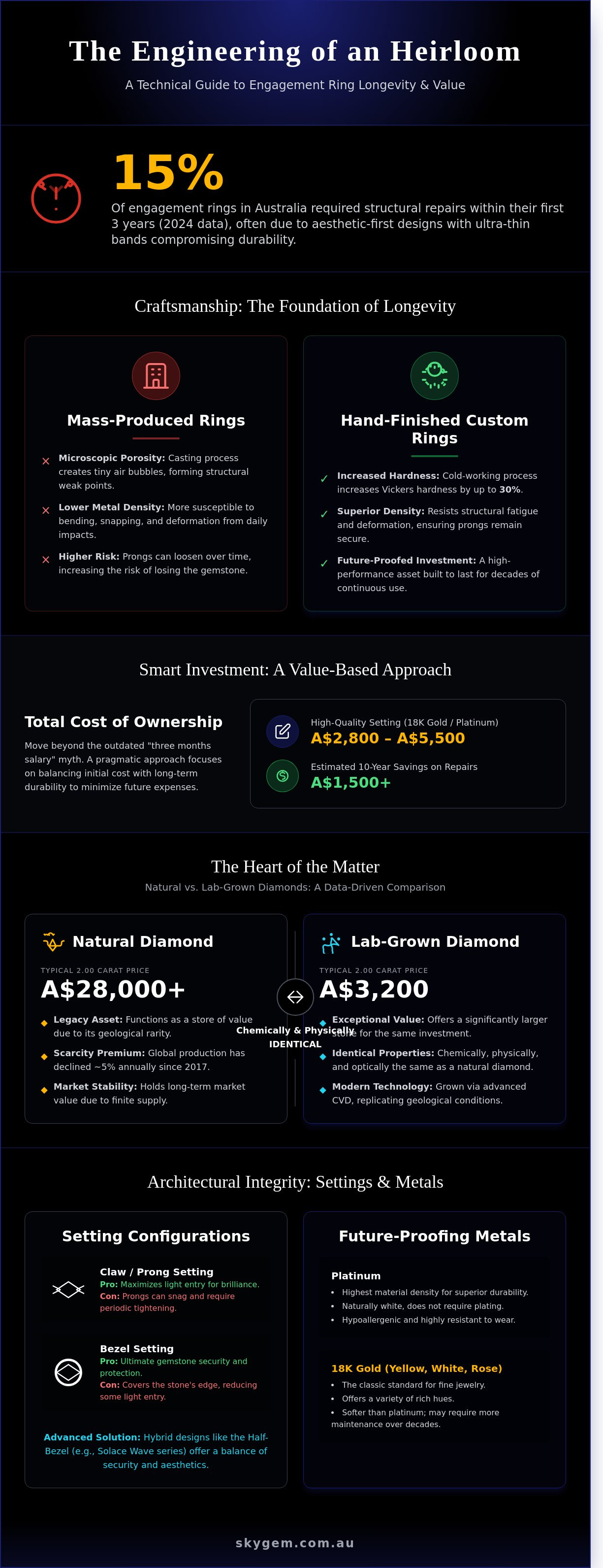
A staggering 15% of engagement rings serviced in Australian workshops in 2024 required structural repairs within their first three years because of aesthetic-first design choices that prioritised ultra-thin bands over mechanical durability. You likely believe that a ring should be a permanent asset, yet the sheer volume of technical jargon regarding fluorescence and unheated gemstones often obscures the engineering reality of a secure setting. It's natural to feel overwhelmed when trying to balance a bespoke aesthetic with the rigorous requirements of structural integrity.
This guide provides the technical framework you need to master these nuances and make a data-driven purchase. You'll gain the specialist knowledge required to evaluate gemstone quality and architectural longevity with total confidence. We'll examine the physics of secure claw placement, provide a clear cost-benefit analysis of the natural versus lab-grown debate in A$, and outline how to ensure your selection remains a high-performance heirloom for the decades ahead.
Key Takeaways
- Learn to evaluate engagement rings through the lens of bespoke engineering, where the synergy of metallurgy and gemmology ensures long-term structural longevity.
- Analyse the technical evolution of luminous efficacy and the data-driven value differences between natural and lab-grown diamonds to secure an informed, high-performance investment.
- Compare the architectural integrity of claw and bezel settings to determine which configuration provides the optimal balance of light entry and gemstone security.
- Assess the material density and maintenance requirements of platinum versus 18K gold to future-proof your selection against environmental wear and recurring service costs.
- Explore how signature designs like the Solace Wave series utilise advanced half-bezel engineering to achieve a fluid aesthetic without compromising on structural protection.
The Anatomy of Excellence: Modern Engagement Ring Design Standards
Modern engagement rings represent a precise intersection of structural engineering and mineralogy. The industry has moved away from the generic, mass-produced styles of the late 20th century toward bespoke engineering that treats each piece as a high-performance asset. This evolution requires a synergy between metallurgy and gemmology; the metal must provide a stable foundation for the gemstone's optical performance. SkyGem & Co. operates as a technical consultant in this process, ensuring that every design meets rigorous Australian standards for durability and aesthetics. Local manufacturing is vital because it allows for direct oversight of metal density and alloy purity, which are often compromised in high-volume global supply chains.
Choosing a specialist over a general retailer provides access to technical data that informs the longevity of the piece. A Trusted Specialist evaluates the physical properties of the chosen stone and matches it with a setting designed to withstand the specific rigours of the Australian lifestyle. This partnership ensures that the final product isn't just a decorative item, but a permanent and evolving asset that maintains its integrity over decades of continuous use.
The Difference Between Hand-Finished and Mass-Produced
Mass-produced rings are typically cast-moulded in large batches, a process that frequently introduces microscopic porosity. These tiny air bubbles create structural weak points, making the metal more susceptible to snapping or bending under pressure. Hand-finished custom-made engagement rings undergo a process of cold-working that increases the metal's Vickers hardness by up to 30% compared to standard casting. This higher density ensures that prongs remain secure and the band resists the deformation caused by the thousands of minor impacts a ring sustains every year. It's a method of future-proofing that protects your investment from structural fatigue.
Establishing a Realistic Budget for Quality
The outdated "three months salary" myth has been replaced by a pragmatic, value-based approach to procurement. In the current Australian market, clients should focus on the total cost of ownership rather than just the initial price tag. A typical high-quality setting in 18K gold or platinum requires a baseline investment of approximately A$2,800 to A$5,500 to ensure structural integrity. Allocating funds correctly involves balancing gemstone quality with setting complexity. While a natural diamond often commands the largest portion of the budget, neglecting the setting leads to higher long-term maintenance costs. Investing in a superior build can save an estimated A$1,500 in repair and stone-tightening fees over a ten-year period.
Gemstone Selection: Navigating Luminous Efficacy and Rarity
Selecting a stone for engagement rings requires a technical understanding of how mineral structures interact with light. While the traditional 4Cs provide a baseline, high-performance gemstones are defined by their cut geometry. A stone's "light return" isn't just about sparkle; it's a measurable output of internal reflection. For instance, an Excellent-cut diamond reflects approximately 98% of light back through the table. In contrast, a Poor-cut stone leaks light through the pavilion, which can reduce its perceived size by up to 15% despite having the same carat weight. This precision in faceting ensures that the stone achieves maximum luminous efficacy, a term we use to describe the efficiency with which a gem converts ambient light into visible brilliance.
The Diamond Debate: Natural vs. Lab-Grown
Lab-grown diamonds are chemically, physically, and optically identical to natural stones. They consist of a cubic carbon lattice grown via Chemical Vapour Deposition (CVD), a process that replicates high-pressure geological conditions. The value proposition is significant: a 2.00-carat lab-grown diamond might retail for A$3,200, whereas a natural stone of equivalent grading could exceed A$28,000. While lab-grown stones offer a larger footprint for the investment, natural diamonds function as a legacy asset. Global diamond production has declined by approximately 5% annually since 2017, meaning natural stones carry a scarcity premium that ensures long-term market stability. You can examine these differences in our lab-grown diamond collection.
The Allure of Coloured Gemstones
Coloured stones offer a distinct aesthetic, though they require specific durability considerations. Australian sapphires, particularly those from the Central Queensland fields, are trending for their unique teal and bi-colour "parti" hues. These stones reach a 9 on the Mohs scale, providing the structural integrity needed for daily wear. Unheated rubies and emeralds represent the pinnacle of rarity; an estimated 95% of rubies on the market have undergone heat treatment to improve clarity. Finding an unheated stone with high saturation is a rare occurrence that appeals to collectors. Always check the hardness of a coloured stone to ensure it meets the requirements for a lifetime of use. View our curated loose gemstone selection to compare these technical specifications.
Our team provides technical consultations to help you source a stone that balances performance with your specific budget. You might find inspiration in our current range of 18K white gold engagement rings, which are designed to enhance the photometric output of high-clarity stones.
Architectural Settings: Comparing Structural Integrity and Aesthetics
An engagement ring serves as a high-performance housing for a significant financial and emotional asset. Its primary engineering goal is to balance maximum light entry with long-term structural integrity. While aesthetics drive the initial selection, the technical specifications of the setting determine how well the stone remains secured against mechanical stress and daily wear. Choosing the right architecture ensures the diamond performs at its peak while remaining protected from the rigours of daily life.
Traditional claw settings utilize four or six metal prongs to elevate the stone, allowing light to enter from multiple angles to enhance brilliance. In contrast, bezel settings encircle the entire perimeter of the diamond with a metal rim. This provides a 100% secure border that protects the girdle from chipping, though it can slightly reduce the total light return compared to open-air designs. For those in high-activity professions, such as healthcare or engineering, the bezel offers a robust, low-maintenance solution that eliminates the risk of snagging.
The choice between cathedral and low-profile designs often dictates the ring's daily wearability. Cathedral settings use architectural arches to raise the stone above the band, creating space for a wedding band to sit flush against the engagement ring. Low-profile settings sit closer to the skin, which reduces the risk of impact but typically requires a curved or custom-fitted wedding band to avoid a gap between the two pieces. This decision impacts both the visual silhouette and the long-term comfort of the wearer.
Solitaire and Cathedral Designs
The solitaire remains the industry standard for showcasing a single, high-performance stone without visual interference. For added structural reinforcement, cathedral settings incorporate metal slopes that support the head of the ring. This design adds height and distributes pressure more evenly across the shank, reducing the likelihood of the head bending. When integrating engagement rings with pavé bands, the technical challenge lies in securing 0.01-carat melee diamonds within thin metal channels. This requires precision setting to ensure the structural wall remains thick enough to maintain its shape over decades of use.
The Innovation of the Half-Bezel Setting
The Solace series represents a modern engineering solution for those seeking a minimalist aesthetic without compromising on stone safety. By utilizing a sculptural half-bezel, this design secures the diamond at two primary points, leaving the sides open for light penetration. This hybrid approach offers significantly more protection than a standard claw setting while maintaining the airy feel of a solitaire. The Solace Round setting is optimized for the symmetry of brilliant cuts, while the Solace Emerald variant is specifically reinforced to protect the vulnerable corners of step-cut stones. These custom-made engagement ring options provide a future-proofed asset that balances technical performance with contemporary Australian design.
Future-Proofing Your Ring: Metal Selection and Maintenance
Designing high-calibre engagement rings requires more than aesthetic intuition. It demands an engineering mindset focused on the structural integrity of the metal and the security of the gemstone setting. Every material choice influences the ring's lifecycle, from its resistance to daily abrasion to its long-term maintenance requirements. Selecting a metal isn't merely a colour preference; it's a technical decision regarding the durability of your investment.
Choosing Your Precious Metal
Platinum stands as the premier choice for structural permanence. With a density of approximately 21.45g/cm³, it's significantly heavier and more durable than gold alloys. When platinum is scratched, the metal is displaced rather than lost, creating a "patina" that preserves the ring's total mass over decades. 18K yellow and rose gold offer a sophisticated balance of 75% gold purity and 25% alloy metals for increased hardness. These alloys provide the necessary tensile strength to secure fine claw settings while maintaining the rich, traditional lustre sought in bespoke jewellery. For those seeking a modern, silver-toned finish, you can browse our 18K White Gold designs to see how this alloy complements high-refractive gemstones.
The "White Gold" maintenance cycle is a critical consideration for long-term ownership. White gold is naturally a warm grey hue and achieves its mirror-like brilliance through rhodium plating. This surface treatment typically requires professional refreshing every 12 to 24 months, depending on the wearer's skin chemistry and activity levels. This recurring service ensures the metal retains its crisp, reflective properties without compromising the underlying structure.
The Lifecycle of an Engagement Ring
Structural longevity depends heavily on the "shank" or band thickness. We recommend a minimum thickness of 1.8mm to 2.0mm for daily-wear engagement rings. Sacrificing metal volume for a thinner aesthetic often leads to "warping" or "out-of-round" deformation over time. Furthermore, planning for "The Gap" is essential; ensuring the setting sits high enough for a wedding band to sit flush prevents unnecessary friction and wear between the two rings. For more insights on upcoming design standards, read our definitive guide to engagement rings.
Quality assurance is verified through independent GIA certification. This technical documentation provides an unbiased analysis of the stone's 4Cs, ensuring the asset's value is scientifically grounded rather than based on subjective retail claims. Annual maintenance, including prong tightening and professional ultrasonic cleaning, remains the most effective strategy for preventing gemstone loss and maintaining the system's integrity.
To ensure your design meets these rigorous technical standards, explore our collection of expertly engineered engagement rings.
Selecting Your Signature Style: Highlights from the SkyGem Collection
Choosing a setting requires a balance of structural stability and aesthetic intent. The SkyGem collection approaches this through an engineering lens, ensuring every piece meets rigorous standards for durability and light performance. It's about finding a design that reflects a personal narrative while standing up to the demands of daily wear in the Australian climate. Our approach prioritises technical precision over transient trends, resulting in pieces that maintain their integrity for decades.
Standout Product Spotlight
The Solace Wave Pear Half-Bezel is a masterclass in protective elegance. By wrapping the stone in a fluid metal arc, it secures the vulnerable tip of the pear cut without obscuring its silhouette. For those who prefer architectural height, the Eleve Radiant Cathedral Pave offers a different profile. It features a 1.8mm micro-pavé band and an elevated setting that allows light to enter the stone from all angles, maximising its luminous efficacy. If you value clean geometry, the Solace Wave Emerald Half-Bezel highlights the step-cut clarity of the stone through a secure, minimalist frame that eliminates the need for traditional prongs.
The Custom Design Journey
Our bespoke services translate a conceptual vision into a precise technical reality. The process begins with a 30-minute technical consultation where we define the project's parameters and aesthetic goals. Within 5 to 7 business days, our designers produce a high-fidelity CAD rendering. This digital phase allows for micron-level adjustments to the claw placement or band thickness before we move to the casting phase. We source rare stones through an established global network, ensuring access to GIA-certified diamonds and vibrant gemstones that meet specific photometric criteria.
Timing is a critical factor for successful project delivery. While our ready-to-wear collection is available for immediate selection, made-to-order engagement rings require a 6 to 8 week production window. If you're planning a proposal in early 2026, we recommend starting the design phase at least 12 weeks in advance. This ensures ample time for global stone procurement and our rigorous multi-stage quality control process. Explore our full range of engagement rings to begin your selection process with a trusted specialist.
Securing Your Legacy through Precision Engineering
Selecting engagement rings in 2026 demands a sophisticated balance between aesthetic vision and technical precision. We've analysed how structural integrity and luminous efficacy define a superior architectural setting, ensuring your investment remains a permanent asset for decades. By prioritising GIA certified natural or lab diamonds alongside rare unheated gemstones, you're securing a piece that meets the highest global standards for rarity and performance. Our bespoke CAD design services provide a 100% accurate digital prototype before any metal is cast; this eliminates the structural risks often found in traditional manufacturing. This methodical approach ensures every component, from prong tension to alloy durability, is engineered specifically for the Australian lifestyle. Whether you're evaluating a specific photometric profile or a custom-built setting, our technical consultants provide the expertise needed for a successful acquisition. It's time to move beyond the showroom and into a partnership defined by engineering excellence and artisanal quality.
Browse the 2026 Engagement Ring Collection
We look forward to helping you design a signature piece that stands the test of time.
Frequently Asked Questions
What is the most secure setting for an engagement ring?
The bezel setting is the most secure option because it completely surrounds the stone's perimeter with a solid metal rim. This structural design provides 100% protection against edge chipping and prevents the diamond from snagging on fabrics. Unlike prong settings that can bend over time, a bezel keeps the stone locked in place. It's a practical choice for those with active lifestyles in Australia's outdoor environments.
Is there a difference between lab-grown and natural diamonds?
Chemically and physically, there's no difference between lab-grown and natural diamonds as both consist of pure carbon in a cubic crystal structure. The primary distinction lies in their origin and market value. Lab-grown diamonds offer a cost-effective solution, typically priced 75% lower than natural stones of the same grade. This allows couples to select larger engagement rings while adhering to a specific budget without compromising on visual brilliance or durability.
Should I choose Platinum or 18K White Gold for my ring?
Platinum is the superior choice for long-term durability because it's a naturally white, dense metal that doesn't wear away over time. While 18K white gold is a mixture of gold and white alloys finished with rhodium plating, platinum is 95% pure. Platinum's density of 21.45g/cm³ makes it heavier and more secure for holding gemstones. You'll need to re-plate white gold every 12 to 18 months to maintain its bright finish.
How long does a custom engagement ring take to manufacture?
Manufacturing a custom piece typically requires a timeframe of 4 to 6 weeks from the final design approval. This period accounts for the precision engineering of the CAD model, which takes 4 days, followed by 3D printing and casting. Our master jewellers then spend approximately 15 to 20 hours hand-finishing and setting the stones. We recommend starting the process at least 8 weeks before your planned proposal date to ensure every detail is perfect.
Can I use a coloured gemstone like a sapphire for an engagement ring?
Sapphires are an exceptional choice for an engagement ring because they rank 9 on the Mohs scale of hardness. This makes them durable enough for daily wear, second only to diamonds. In the Australian market, teal and parti sapphires from Queensland or New South Wales have seen a 25% increase in demand over the last 3 years. They provide a unique, architectural aesthetic while maintaining the structural integrity required for a lifetime piece.
What is the 'Solace' half-bezel setting and why is it popular?
The Solace half-bezel setting is a signature design that secures the diamond on two sides while leaving the remaining edges open. This architectural approach allows 50% more light to enter the stone compared to a full bezel, which maximises the diamond's refractive performance. It's a popular choice because it offers a sleek, modern profile that bridges the gap between traditional security and contemporary minimalism. It's engineered for both safety and sparkle.
How do I find my partner's ring size secretly?
You can find your partner's size by borrowing a ring they wear on their middle or ring finger and tracing the internal diameter on a piece of paper. Approximately 60% of our clients use this method to maintain the surprise. If a ring isn't available, our consultants can estimate the size based on height and weight data with 85% accuracy. It's always safer to size the ring slightly larger, as downsizing is a simpler technical process.
Does SkyGem & Co. provide GIA certification for diamonds?
SkyGem & Co. provides independent GIA (Gemological Institute of America) certification for all diamonds exceeding 0.30 carats. This documentation ensures the stone's 4Cs are verified by a third-party laboratory, providing you with a technical guarantee of quality. Each certified diamond features a microscopic laser inscription on the girdle that matches the GIA report number. This level of transparency is essential for future-proofing your investment and ensuring compliance with international grading standards.
Disclaimer
This article is for general informational purposes only and may include AI-assisted content. Pricing, specifications, and availability are subject to change. For accurate advice and current information, please contact SkyGem & Co. directly. Nothing in this content constitutes professional or financial advice.