
Emerald Rings Melbourne: The 2026 Guide to Bespoke Green Gemstones

An emerald’s internal "jardin" isn't a collection of flaws to be hidden; it is a biological fingerprint that confirms its natural origin and inherent value. When sourcing emerald rings melbourne, you likely feel overwhelmed by the lack of a standard grading system like the 4Cs used for diamonds. It's common to experience uncertainty regarding structural inclusions or the ethical traceability of the supply chain. We recognise that selecting a gemstone requires a technical assessment that matches your aesthetic vision.
This guide provides the clarity you need to identify "clean" stones with high saturation while evaluating the 2026 market for untreated and "no oil" specimens. You'll learn which protective bespoke settings best safeguard these Type III gems and how to verify prestigious provenance through the latest GIA origin reporting standards. By focusing on technical precision and regional design expertise, you can secure a bespoke piece that serves as a permanent and evolving asset.
Key Takeaways
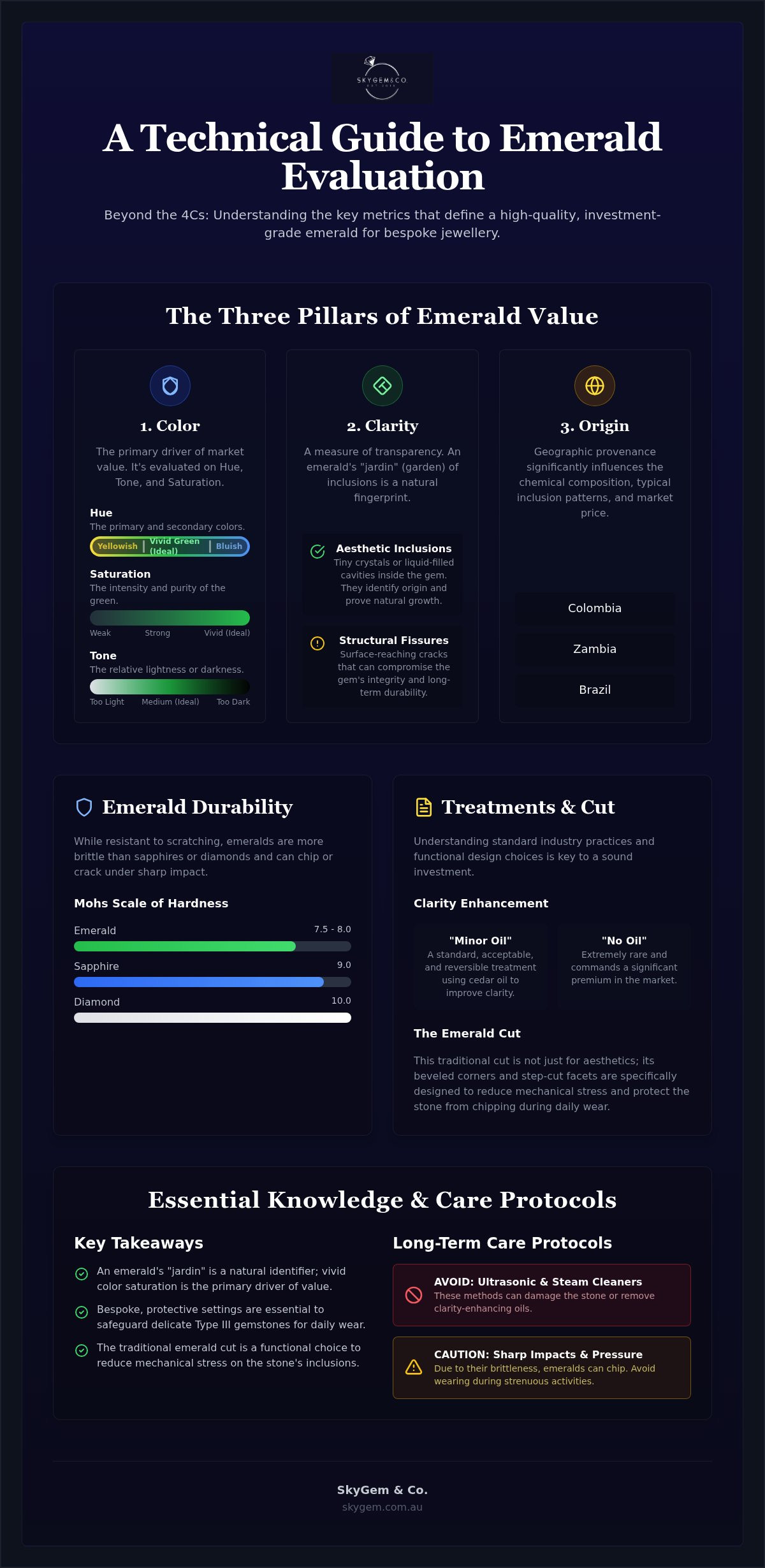
- Understand that an emerald’s "jardin" is a natural identifier of origin, where vivid colour saturation serves as the primary driver of market value over traditional clarity.
- Discover why the bespoke design process for emerald rings melbourne is essential for engineering protective settings that safeguard these delicate Type III gemstones for daily wear.
- Learn to evaluate the technical distinction between "Minor Oil" and "No Oil" treatments to ensure your investment aligns with 2026 gemstone market standards.
- Identify why the traditional emerald cut is a functional design choice specifically developed to reduce mechanical stress on the stone’s structural inclusions.
- Master the critical maintenance protocols required for long-term viability, including the strict avoidance of ultrasonic and steam cleaning systems.
Understanding the Emerald: Nature’s Most Captivating Gemstone
Emeralds are a distinct variety of the mineral beryl. Their signature green hue results from trace amounts of chromium and vanadium within the crystal lattice. For those seeking a comprehensive overview of emeralds, it's essential to understand that these specific elements create the vivid saturation that distinguishes them from other green beryls. Unlike the high-pressure environment where diamonds form, emeralds grow in hydrothermal veins where tectonic shifts occur. This volatile geological history is exactly why emeralds are naturally more included than diamonds or sapphires. These internal features are known as the "jardin," or garden, representing a unique identifier for every natural emerald. In modern design, these stones symbolise renewal and growth, offering a sophisticated alternative for bespoke jewellery projects that value character over clinical perfection.
The Science of the Jardin: Inclusions vs. Flaws
A flawless emerald is an extreme rarity in nature. If a stone appears perfectly clear to the naked eye, it often serves as a red flag for synthetic lab-grown alternatives. Collectors and gemologists view the jardin as a map of the stone's natural history. However, we make a technical distinction between aesthetic inclusions, like tiny crystals or liquid-filled cavities, and structural fissures that reach the surface. While aesthetic markers act as a "fingerprint" to identify the stone’s geographic origin, surface-reaching fissures can compromise the integrity of emerald rings melbourne. Expert selection focuses on stones where the jardin enhances the character without creating mechanical weak points. This assessment is vital for ensuring the stone can withstand the setting process and daily wear over several decades.
Emerald Durability on the Mohs Scale
On the Mohs scale of mineral hardness, emeralds rank between 7.5 and 8. This indicates a high resistance to scratching, but it doesn't account for toughness or resistance to breakage. Emeralds possess a higher degree of brittleness compared to sapphires, which rank at 9, or diamonds at 10. This physical property means that while an emerald won't scratch easily, it can chip or crack if subjected to sharp impacts or extreme pressure. This inherent vulnerability is a primary reason why we advocate for precise engineering in custom settings. Because of their unique chemical and physical composition, emeralds require specific care protocols that avoid thermal shock and mechanical vibration. By understanding these performance metrics, you can better appreciate the technical requirements of owning a premium green gemstone.
Evaluating Emerald Quality: The Three Pillars of Value
Emerald value is assessed through a technical lens that prioritises visual performance over the rigid clarity standards applied to diamonds. To understand Emerald Quality Factors, one must evaluate the three primary pillars: Colour, Clarity, and Origin. While diamonds rely on the absence of colour, the opposite is true for emeralds. High-end collectors prioritise saturation, which is the intensity of the green hue, over mere darkness. A stone that is too dark can appear "inky" or "dead," lacking the internal fire required for premium emerald rings melbourne.
Clarity in emeralds is a measure of transparency rather than the absence of inclusions. Because nearly all natural emeralds contain surface-reaching fissures, the industry uses cedar oil to fill these voids and improve visual clarity. This is a standard, reversible treatment. We look for stones with high transparency, where light passes through the crystal lattice without being blocked by excessive "jardin." A slightly included stone with exceptional transparency is often more valuable than a "clean" stone that appears cloudy or opaque.
The Chromatic Spectrum: Hue, Tone, and Saturation
The ideal emerald displays a vivid primary green hue, often with a slight bluish secondary tone. Secondary tones of yellow or grey can detract from the stone's vibrancy and significantly lower its market value. When evaluating loose stones for natural emerald rings, it's vital to view them under varied lighting. Daylight often reveals the true saturation, while incandescent light may shift the perceived hue. We recommend assessing stones in neutral environments to ensure the colour remains consistent across different settings.
Global Origins: Colombia vs. Zambia vs. Brazil
Geographic origin influences both the chemical composition and the price of the gemstone. Colombian stones, particularly from the Muzo or Chivor mines, are renowned for their "warm" glow and pure green hue. In contrast, Zambian emeralds often possess higher iron content, resulting in a "cooler" bluish-green and exceptional clarity. Brazilian stones are typically lighter in tone but offer excellent transparency for daily wear. While origin can drive prestige, SkyGem & Co. selects stones based on their individual optical performance and structural integrity. Finding the right balance between origin and aesthetics ensures your bespoke project achieves its maximum potential.
Selecting the Perfect Setting: Balancing Aesthetics and Protection
Selecting a setting for an emerald requires a different engineering approach than for a diamond. While diamond settings focus primarily on light refraction, emerald settings must prioritise the physical security of the stone. Given that emeralds possess a brittleness that belies their 7.5 to 8 Mohs hardness, the metal architecture must act as a protective exoskeleton. This is a critical consideration for anyone commissioning emerald rings melbourne, as the wrong design can lead to premature chipping or structural failure under mechanical stress.
The traditional emerald cut, characterised by its rectangular step facets and bevelled corners, was specifically developed to address these mineral properties. By removing the sharp points found in a princess or marquise cut, lapidaries created a shape that is inherently less prone to fracturing during the setting process. To further enhance this protection, we often utilise "V-prongs." These specialised claws wrap around the vulnerable cropped corners, providing a metal shield against side impacts without obscuring the stone's vivid saturation or internal jardin.
Protective Settings: Bezel vs. Prong
A bezel setting offers the highest level of security by completely encircling the gemstone's perimeter with a thin rim of precious metal. This design is particularly effective for those with active lifestyles, as it protects the stone's edges from direct contact with hard surfaces. Alternatively, a well-engineered prong setting can be used to maximise light entry, which is essential for showcasing the depth of colour in high-saturation stones. For those seeking a compromise, a halo setting provides a decorative buffer. By surrounding the emerald with a perimeter of smaller diamonds, the design creates a physical "crumple zone" that absorbs minor knocks before they can reach the centre stone.
Metal Choice and Colour Enhancement
The choice of metal significantly influences the perceived hue of the gemstone. Traditionally, 18K yellow gold is the preferred choice because the warm tones of the metal complement the green saturation, often making the colour appear richer. For a more contemporary aesthetic, platinum or white gold offers a high-contrast backdrop that allows bluish-green tones to stand out with architectural precision. You can explore our collection of 18K White Gold Engagement Rings to see how this cool-toned metal provides a crisp finish to bespoke designs. Ultimately, the metal choice should act as a functional partner to the stone, ensuring long-term viability and aesthetic harmony.
The Bespoke Journey: Creating a Custom Emerald Ring
A bespoke approach is the most effective method for ensuring the long-term viability of an emerald ring. Because every emerald possesses a unique "jardin" and specific physical dimensions, a standardised setting often fails to provide the necessary support. When commissioning emerald rings melbourne, the design process acts as a technical partnership between the client and the jeweller. This ensures that aesthetic goals are met without compromising the stone's structural integrity. Off-the-shelf rings rarely account for the specific cleavage planes or internal inclusions of an individual gemstone, which increases the risk of damage during the setting phase.
Step 1: Sourcing the Loose Gemstone
The process begins with the curation of loose stones. A seasoned expert filters through hundreds of specimens to find a stone that balances saturation, transparency, and durability. It's vital to view natural emeralds in their loose state before they are secured in metal. This allows for a 360-degree inspection of the stone's inclusions and any surface-reaching fissures that might be obscured by a setting. We prioritise stones with reputable lab certification, such as GIA reports, which provide an objective analysis of origin and treatment levels. This transparency is essential for verifying the quality of emerald rings melbourne and ensuring the investment is sound.
Step 2: CAD Design and Prototyping
Once the stone is selected, we utilise Computer-Aided Design (CAD) to engineer the ring architecture. Unlike mass-produced jewellery, a custom-made engagement ring is built specifically around the unique proportions of the emerald. This micron-level precision ensures that every prong and bezel provides optimal tension without putting unnecessary pressure on the gemstone. Clients can review 3D renders and physical prototypes to adjust proportions, ensuring the final piece reflects their vision while adhering to rigorous engineering standards. This phase is critical for identifying potential mechanical failures before the casting process begins.
The final phase involves meticulous quality control checks. We examine the finished piece under high magnification to confirm that the setting process hasn't induced any stress fractures in the beryl crystal. This methodical approach transforms a delicate gemstone into a durable legacy asset. If you are ready to begin your project, you can book a bespoke consultation to view our current inventory of ethically sourced stones.
Investment and Care: Preserving Your Emerald for Generations
An emerald is more than a decorative acquisition; it's a legacy asset that requires a specific technical maintenance schedule to ensure its long-term viability. In the Australian market, the demand for natural emeralds remains high, driven by their scarcity and the unique character of their internal jardin. However, the very features that make them captivating also dictate their care requirements. Unlike diamonds or sapphires, emeralds possess a physical sensitivity to environmental changes and mechanical vibrations. Viewing your gemstone as a permanent asset requires a shift from passive ownership to active preservation.
Daily Care and Cleaning Protocols
Maintaining the lustre of your gemstone requires a gentle, non-invasive approach. You should never place emerald rings melbourne in an ultrasonic or steam cleaner. The high-frequency vibrations of an ultrasonic system can exacerbate internal inclusions or strip away the essential oils used to enhance clarity. Similarly, steam cleaners pose a significant risk of thermal shock, which can lead to structural fractures in the beryl crystal. For effective at-home maintenance, we recommend a disciplined cleaning routine:
- Use lukewarm water mixed with a small amount of mild, pH-neutral detergent.
- Gently agitate the setting with a soft-bristled brush to remove accumulated dust and skin oils.
- Dry the piece thoroughly with a lint-free microfibre cloth to prevent water spots.
It's equally important to avoid exposing the stone to harsh chemicals, perfumes, or sudden temperature shifts. We advise an annual professional inspection to verify the integrity of the setting. These regular checks ensure that prongs haven't shifted and that the stone remains securely seated within the protective architecture we engineered during the bespoke process.
The SkyGem & Co. Commitment
Our role extends beyond the initial design phase; we act as technical consultants for the entire lifespan of your jewellery. We prioritise education and transparency in every interaction, ensuring you understand the specific performance metrics and care requirements of your gemstone. By focusing on long-term viability rather than a one-off purchase, we help you maintain the stone's value and aesthetic impact for decades to come.
If you are ready to begin a new project, we invite you to explore the possibilities of Custom Made Engagement Rings through a dedicated design session. We'll guide you through the selection of loose stones and the engineering of a setting that balances aesthetic impact with structural safety. Start your journey toward a one-of-a-kind emerald masterpiece today and secure a piece of natural history that will last for generations.
Securing Your Legacy in Green
Securing a gemstone of such historical and geological significance requires a technical perspective that prioritises structural integrity alongside visual brilliance. We've explored how the value of an emerald is found in the balance of vivid saturation and the unique "jardin" of its inclusions. By utilising expert CAD design for bespoke protection, you ensure your investment is engineered to withstand the rigours of daily wear. Our independent, family-owned boutique focuses on providing ethically sourced, GIA-certified gemstones that meet the highest standards of the 2026 market.
When commissioning emerald rings melbourne, it's essential to partner with a specialist who understands the intersection of mineralogy and architectural design. We act as your technical consultant, guiding you from the initial loose stone selection to the final quality control checks. This methodical approach transforms a delicate beryl crystal into a permanent asset you can wear with quiet confidence. We invite you to explore our curated collection of Natural Emerald Rings and begin creating a masterpiece that will endure for generations.
Frequently Asked Questions
Are emerald rings suitable for everyday wear as engagement rings?
Emerald rings are suitable for daily wear if the setting is engineered for protection. While their 7.5 to 8 hardness resists scratches, their inherent brittleness means they can chip upon sharp impact. We recommend bezel or V-prong settings to shield the stone's edges. By choosing a bespoke design for emerald rings melbourne, you ensure the architecture accounts for these physical properties, allowing for a durable engagement ring that lasts a lifetime.
What is the difference between natural and lab-grown emeralds?
Natural emeralds form over millions of years in hydrothermal veins, acquiring a unique internal "jardin" of inclusions. Lab-grown emeralds share the same chemical profile but lack the geological history and prestigious provenance of natural stones. Collectors value natural specimens for their rarity and long-term investment potential. Identifying a natural stone involves looking for complex three-phase inclusions that synthetic processes can't perfectly replicate, ensuring your piece remains a unique asset.
Why do most emeralds have oil treatments?
Oil treatments are a standard industry practice because natural emeralds almost always contain surface-reaching fissures. Colourless cedar oil is used to fill these microscopic voids, significantly improving the stone's transparency and visual saturation. This treatment is considered reversible and doesn't change the stone's permanent structure. When evaluating quality, we look for stones with "minor oil" or "no oil" designations, as these represent the highest tier of gemstone purity and value.
How much should I expect to spend on a high-quality emerald ring?
The investment required for a premium emerald depends on technical factors such as geographic origin and the degree of clarity enhancement. Colombian stones with "no oil" designations command the highest premiums due to their rarity and vivid saturation. Zambian and Brazilian stones offer different price points based on their specific hue and transparency. We focus on sourcing stones that provide the best balance of optical performance and structural integrity for your specific bespoke project.
Which metal is best for an emerald engagement ring?
18K Yellow Gold is the traditional choice for emeralds because its warm tones naturally enhance the green saturation of the beryl. For a more modern, architectural look, platinum or 18K white gold provides a sharp contrast that makes bluish-green hues appear more vivid. The best metal choice ultimately depends on your desired aesthetic and the protective requirements of the setting. Each metal offers different levels of durability and maintenance needs over time.
How can I tell if an emerald is real or synthetic?
Distinguishing between natural and synthetic emeralds requires high-magnification inspection of the stone's internal features. Natural stones typically display a complex "jardin" of liquid, gas, and crystal inclusions. Synthetic emeralds often show uniform growth patterns or "nailhead" inclusions that don't occur in nature. Because of these technical nuances, we always recommend obtaining a GIA report or similar independent certification to verify the stone's natural origin and any treatments it has undergone.
What does "Jardin" mean when referring to emeralds?
The term "jardin" refers to the unique internal landscape of inclusions found within a natural emerald. These features include tiny crystals of other minerals, liquid-filled cavities, and gas bubbles that formed during the stone's geological development. Rather than viewing these as flaws, collectors celebrate the jardin as a hallmark of natural origin. A well-balanced jardin adds character to the stone and serves as a definitive fingerprint that separates natural emeralds from their synthetic counterparts.
Can an emerald ring be resized or repaired easily?
Resizing or repairing emerald jewellery is a delicate process that requires specialised expertise. Because emeralds are sensitive to extreme heat and pressure, a jeweller must often unset the gemstone before performing any torch work on the metal band. This prevents thermal shock from damaging the stone or stripping away clarity-enhancing oils. We recommend only trusting these tasks to a bespoke specialist who understands the mechanical vulnerabilities of beryl to ensure the stone's long-term safety.
Disclaimer
This article is for general informational purposes only and may include AI-assisted content. Pricing, specifications, and availability are subject to change. For accurate advice and current information, please contact SkyGem & Co. directly. Nothing in this content constitutes professional or financial advice.