
Designing a Two-Stone Toi et Moi Ring: A Practical Guide

What if the two stones don’t need to match to make a ring feel balanced? Designing a two-stone toi et moi ring is about bringing different shapes, proportions or colours together in a composition that feels intentional, not competing. It’s natural to wonder whether an oval and a pear, or a diamond and a coloured gemstone, will sit harmoniously on the hand.
The key is to consider each stone in relation to the other and to the ring as a whole. Their outlines, face-up dimensions, orientation and spacing all influence the finished look. The setting and band shape also affect the ring’s profile and how the design feels to wear. A distinctive pairing can be expressive and personal without losing visual coherence.
This guide explains how to choose a meaningful stone combination, assess balance and plan setting details. You’ll also see how bespoke design decisions, from the initial composition to CAD development and final stone setting, shape the result. Use the practical prompts to prepare for a conversation with a jeweller and turn your ideas into a clear starting point.
Key Takeaways
- Set your priorities first, including the meaning behind the stones and the visual character you want the ring to express.
- When designing a two-stone toi et moi ring, compare each stone’s outline, apparent size and orientation with the other stone, rather than relying on matching shapes.
- Consider how prongs, bezels and connecting metal affect the relationship between the stones and the overall setting style.
- Use reference images to communicate the mood you like, and note the specific details that appeal to you.
- SkyGem & Co.’s bespoke process develops a design through CAD to final stone setting, supported by a team with over 100 years of combined experience.
Designing a Two-Stone Toi et Moi Ring Starts with Your Priorities
A Toi et Moi ring is built around two centre stones, giving each one a distinct place in the design. Before deciding which stones look best together, consider what you want the pair to communicate and how you want the ring to feel on the hand. A clear starting point makes later choices easier to discuss and refine.
Separate the meaning from the styling. The stones might represent shared qualities, a significant milestone or two individual tastes brought together. Those ideas can inform the design without requiring the stones to match. The aim is a considered visual relationship: each stone retains its character while contributing to one coherent ring.
What should a two-stone ring express?
Try describing the story in a sentence before choosing a setting. For example, “two different personalities, joined by a shared commitment” suggests contrast with a clear connection. “A reminder of a particular milestone” may lead you to consider colours or stone types with personal meaning. Use these ideas as starting points, not fixed design rules.
Symbolism and styling work together, but they aren’t the same thing. A stone may be meaningful because of its origin or personal association, while its colour and outline shape the ring’s appearance. Keep both considerations visible in a short brief so attractive reference images don’t overshadow what matters to the wearer. For a broader overview of the Toi et Moi ring, including its history and symbolism, see the reference.
Which design choices belong in the initial brief?
Start with broad preferences rather than trying to specify every detail. Note the qualities you want the jeweller to explore, and separate firm priorities from ideas you’re open to changing as the composition develops.
- Stone types: Record whether you’re considering diamonds, sapphires, rubies, emeralds or a combination.
- Colour direction: Describe the palette you prefer, such as coordinated tones, strong contrast or a neutral stone beside a coloured gemstone.
- Shape preferences: Identify outlines you’re drawn to, and note whether you prefer symmetry or a more individual, mismatched look.
- Lifestyle priorities: Consider how often the ring will be worn and any practical preferences to include in the design discussion.
- Desired feeling: Choose words such as understated, expressive, balanced or sculptural to explain the mood you want, not just what the ring should resemble.
Collecting these notes is the first practical step in designing a two-stone toi et moi ring. You can also save reference images and add a comment to each one about the detail you like, such as the colour contrast or the way the stones are positioned. Treat images as visual prompts, not specifications to copy. If you’re exploring the precious gemstones available, consider which qualities connect to your story and which simply appeal aesthetically.
Keep the brief flexible. It should guide the conversation, not lock the design before the stones and their relationship have been considered together.
Pairing Two Centre Stones: Shape, Scale, Colour, and Character
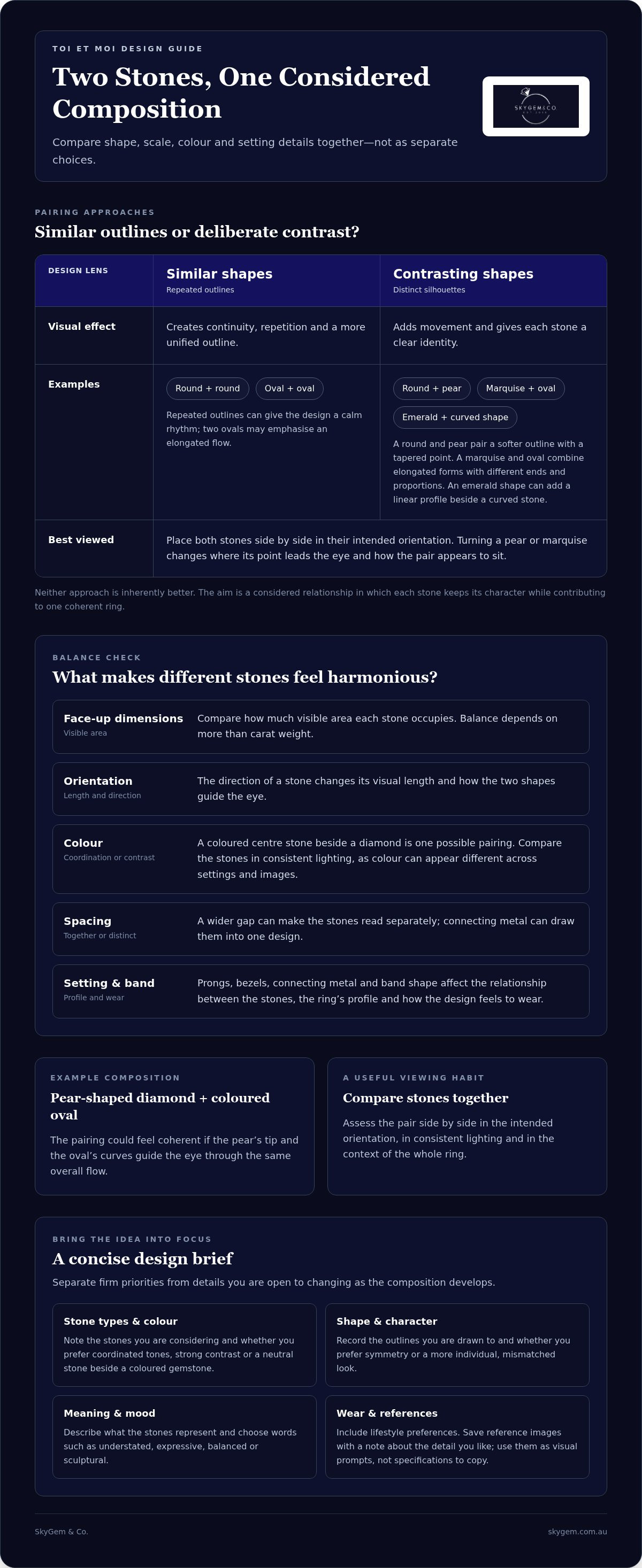
A pairing can feel harmonious without using identical stones. Assess how their outlines, apparent size, colour and direction interact as one composition. When designing a two-stone toi et moi ring, view the stones side by side in the intended orientation instead of judging each one in isolation.
How do different stone shapes work together?
Similar outlines create continuity. Two round stones, for instance, can give a design a calm, repeated rhythm, while two ovals may emphasise an elongated flow. Contrasting silhouettes introduce more visual movement: a round beside a pear balances a softer outline with a tapered point, while a marquise beside an oval combines elongated forms with different ends and proportions. An emerald shape can add a defined, linear profile beside a more curved stone.
Neither approach is inherently better. Repetition can make the pairing feel unified; contrast can give each stone a clear identity. View the stones in the intended orientation, because turning a pear or marquise changes where its point leads the eye and how the pair appears to sit. The Gemological Institute of America’s history of romantic symbolism in Toi et Moi rings offers further context for the style’s appeal.
How can two stones feel balanced without matching?
Balance depends on more than carat weight. Face-up dimensions show how much visible area each stone occupies, while orientation changes its visual length and direction. A stone that looks larger may be balanced by a smaller one if the second has a prominent outline or colour. Spacing and surrounding metal matter too: a wider gap can make the stones read separately, while connecting metal can draw them into one design.
Use contrast deliberately. For example, a pear-shaped diamond beside a coloured oval could feel coherent if their tips and curves guide the eye through the same overall flow. Explore the precious gemstone options for colour pairings, including a coloured centre stone beside a diamond. Compare stones in consistent lighting as well as in photographs, since colour can appear different across settings and images.
| Pairing approach | Possible visual effect |
|---|---|
| Similar shapes | Creates repetition and a more unified outline. |
| Contrasting shapes | Adds movement and makes each stone’s character distinct. |
| Different apparent sizes | Establishes a focal point while allowing the second stone to complement it. |
When comparing options, look at the silhouette first, then colour and spacing. A composition is easier to read when one feature leads and the others support it. Compare several pairings from above and from the side, and note which feels balanced from both views. This turns personal taste into clear design decisions without requiring the stones to match.
Choosing a Setting That Connects the Stones and Supports the Design
The setting determines how the stones relate to each other after their shapes and colours have been chosen. Prongs can leave more of each outline visible, while a bezel frames a stone with a more continuous metal edge. Neither approach is automatically right for every pairing. The effect depends on the stones’ outlines, orientation and placement in the ring.
A two-stone setting also needs to resolve the space between the centres. Metal can create a visual bridge or frame each stone as a distinct element. The goal is to make the composition read clearly, rather than letting the setting appear disconnected from the stones.
How does the setting change the visual connection?
An open presentation can make the individual stone outlines more prominent, while a more enclosed look gives the edges a stronger metal frame. Prongs and bezels offer different visual treatments, but protection depends on the particular stone and setting geometry. Don’t assume it from the setting label alone. Assess the proposed design for the stones being used.
Height and spacing affect the silhouette. Stones set closer together may read as one joined composition, while a wider gap can emphasise their individuality. Setting height also changes the ring’s profile from the side, so consider both the top-down outline and the side view rather than choosing from a single image.
What should the band and setting resolve together?
Band width and profile contribute to the visual weight beneath the two centres. A fine band may keep attention on the stones, while a broader or more sculpted profile can create a stronger foundation. These are design relationships, not fixed rules: the stones’ apparent size, their orientation and the amount of visible metal all influence the result.
Develop placement and setting structure as one decision. If one stone is angled towards the other, for example, the band and connecting metal need to support that direction without obscuring the intended outline. A jeweller can assess the proposed arrangement in a design drawing before it moves towards making.
Include everyday use in the discussion. Describe how the ring will be worn and what matters to you, such as a lower-looking profile or an open presentation. These preferences help shape the design, but durability, stone protection and care depend on the specific materials and construction, not appearance alone.
- View the whole ring: Compare the top and side profiles, not just the stones viewed from above.
- Check the relationship: Consider whether the metal joins the stones visually or gives each one a separate frame.
- Plan for other rings: If you expect to wear a wedding band alongside it, assess the fit with that band as part of the design.
These linked decisions help a two-stone toi et moi ring look intentional and suit the wearer. A bespoke process, from CAD design through to stone setting, gives the composition a practical path from concept to finished piece.
Turn Your Toi et Moi Ideas into a Clear Design Plan
A useful design plan records decisions without trying to become a fully engineered drawing. It helps distinguish what’s settled from what still needs discussion, so an early preference isn’t mistaken for a final specification. Use it to track how the concept develops and why particular choices are being considered.
Organise the work in sequence:
- Define priorities. Record what the design needs to achieve and mark any non-negotiable requirements.
- Shortlist stones. Keep candidate options together so you can consider the pairing as a complete design, not as separate purchases.
- Compare pairings. Note the strengths and questions raised by each combination, including what you’d like expert input to resolve.
- Refine setting details. Capture the decisions that affect how the chosen arrangement carries through into the ring’s structure and finish.
For each stage, label decisions as “agreed”, “under consideration” or “to discuss”. This simple distinction keeps the brief useful as ideas change. It also gives you a practical way to prepare for a consultation without settling technical details in advance.
What should you prepare before a bespoke design consultation?
Bring your decision notes and identify the questions you most want answered. You might want to understand how your concept can be developed in CAD or which design choices need further discussion before progressing. Note any alternatives you’re open to, so the conversation can explore options without losing sight of your chosen direction.
SkyGem & Co.’s custom-made engagement ring design process develops a tailored concept. A concise brief keeps the conversation centred on the decisions that matter to you while leaving room for specialist guidance.
How does a design move from idea to finished ring?
The design discussion establishes the direction, CAD supports development of the concept, and the work proceeds through to final stone setting. At each point, keep track of what has been resolved and what remains open. This record helps you review the design as it advances, particularly when a small adjustment may affect the relationship between the stones or the overall composition.
A bespoke design develops through discussion and CAD before progressing to final stone setting.
With SkyGem & Co., designing a two-stone toi et moi ring can start with preferences and questions rather than a finished plan. Virtual or in-store consultations by appointment give you the opportunity to discuss the direction and identify the next decisions together.
Create a Bespoke Toi et Moi Ring with SkyGem & Co.
A bespoke design gives you room to shape a distinctive two-stone ring around the wearer, rather than beginning with a fixed arrangement. At SkyGem & Co., the process brings personal preferences into a considered composition, guided by designers, jewellers, diamond setters and gemologists with over 100 years of combined experience. Their expertise helps develop a design in which both stones have purpose and the finished ring feels cohesive.
Material choices can include natural diamonds, lab-grown diamonds, sapphires, rubies and emeralds. Natural and lab-grown diamonds are distinct options, and the right choice depends on your preferences for each stone. For a two-stone design, discuss how the chosen materials work together visually and how the setting and finish support the overall direction.
What expert guidance contributes to a two-stone design
Two stones create more design variables than a single centre stone. Their proportions, orientation and relationship to the band need to be considered together, so a change to one element may affect the balance of the whole. SkyGem & Co.’s team brings design and gem expertise to these decisions, helping translate your priorities into a coherent plan and develop it through CAD design to stone setting.
Precision finishing is part of creating jewellery intended to last. The design process gives close attention to how the elements come together. SkyGem & Co.’s transparent, year-round value philosophy supports a considered approach to bespoke craftsmanship without relying on seasonal sales to define value.
How to take the next step with your design
You don’t need to arrive with a finished design. Begin with what you know: the stones or colours you’re drawn to, the meaning you want the ring to carry, and how you’d like it to look and feel. A consultation can clarify which decisions are ready to make and where further exploration may help, including how the stone pairing, setting and band can work as one design.
Bring a short list of priorities and reference images that communicate the mood you have in mind. The images can guide discussion without becoming specifications to copy. SkyGem & Co. offers virtual and in-store consultations by appointment, so you can discuss your design in the format that suits you.
For anyone designing a two-stone toi et moi ring, a personal consultation is a practical way to move from an initial idea to a considered design direction. Discussing the stones and their relationship with a specialist can bring clarity to the choices ahead.
Take the First Step Towards a Ring That Feels Like Yours
The design process doesn’t end when the ring is complete. Keeping a record of the final stone details and design decisions gives you a useful reference for future conversations about the piece. It also preserves the thinking behind choices that might otherwise be difficult to recall.
As you move from considering options to approving a final design, review the whole ring rather than focusing only on individual details. That final perspective helps confirm that the result still reflects what mattered to you at the outset. Designing a two-stone toi et moi ring is a considered process, and clarity at each stage helps the finished piece feel intentional.
Let the design become a personal marker of this moment, with details chosen thoughtfully and made meaningful through the life of the ring.
Frequently Asked Questions
What does “toi et moi” mean in ring design?
The French phrase translates as “you and me”. Its meaning in a ring can be personal rather than tied to a fixed symbolic code. If you want the design to carry a particular story, decide what you’d like each element to represent and whether that meaning should be apparent to others or remain personal. This can guide your choices without requiring a literal motif.
Can a toi et moi ring combine a diamond with a coloured gemstone?
Yes. A diamond can be set alongside a coloured gemstone, with the design developed around the individual stones. SkyGem & Co. works with diamonds and coloured gemstones, including sapphires, rubies and emeralds. As you consider a combination, note what you value in each stone and discuss the pair as a complete design rather than assuming both materials should be treated in exactly the same way.
Do the two stones in a toi et moi ring need to be the same size?
No. Don’t rely on carat weight alone to judge visible size. Carat measures weight, while a stone’s outline and proportions affect how large it appears from above. Compare face-up measurements as well as weights to give yourself a clearer basis for discussing the intended look before the setting is finalised.
Can two different diamond origins be used in one toi et moi ring?
Yes, a design can combine a natural diamond and a lab-grown diamond. They have different origins, so keep the details for each stone distinct in your design notes and any accompanying records. Don’t infer origin from appearance alone. Discussing the stones individually helps keep their descriptions clear from selection through design and setting.
How can a toi et moi engagement ring work with a wedding band?
If you already own a wedding band, bring it to the design discussion so the pair can be considered together. If you haven’t chosen one yet, note that you expect to wear a band alongside the engagement ring. This gives the design a practical reference point and helps clarify whether you prefer the rings to sit close together or have a visible separation.
Can an existing two-stone ring be resized later?
SkyGem & Co. provides resizing for existing customers. Whether a particular two-stone ring can be resized depends on its construction and how the settings relate to the band. The ring’s design needs to be assessed before work begins, as not every two-stone setting can be resized in the same way.
Disclaimer
This article is for general informational purposes only and may include AI-assisted content. Pricing, specifications, and availability are subject to change. For accurate advice and current information, please contact SkyGem & Co. directly. Nothing in this content constitutes professional or financial advice.