
Custom Ring Hidden Details: Meaningful Personal Touches

What if the most personal part of a ring is a detail only its wearer knows is there? A classic silhouette can hold a private story without adding visible decoration, which is why hidden details to add to a custom ring deserve as much thought as the centre stone and setting. The key is choosing a feature with genuine meaning, not adding an extra simply because there is room.
A discreet engraving, a small gemstone tucked into the setting or a symbolic motif in the gallery can each carry a different message while preserving the ring’s outward style. The right choice should also suit the wearer’s daily life: placement and finish matter for comfort, durability and future care. A meaningful idea works best when it is planned as part of the whole design.
This guide compares subtle options and the stories they can represent, then explains how each may work with different ring silhouettes and routines. It also covers what to include in a bespoke design brief, so the jeweller can translate your idea into a considered design. SkyGem & Co. creates bespoke jewellery from CAD design through to final stone setting, bringing personal details into the design from the outset.
Key Takeaways
- Start with the story you want the ring to carry, then choose a detail that expresses it with purpose.
- Compare engraving, a concealed gemstone and subtle metalwork by meaning, visibility, comfort and care.
- Consider the ring’s construction alongside its appearance so a personal feature works for everyday wear.
- Use the phrase hidden details to add to a custom ring as a prompt to explore options that preserve the ring’s silhouette.
- Prepare a clear design brief by choosing one primary detail first, then discussing how it can be integrated into the overall ring.
Hidden details in a custom ring: personal meaning without changing the silhouette
A ring can feel deeply personal without announcing its story to everyone who sees it. You may want the clean lines of a classic design to remain the focus while including a private reminder of a person, place or promise. Thoughtful personalisation can sit within the design rather than compete with it.
A hidden detail is a deliberate design feature that is mainly visible to the wearer or someone they choose to show. Unlike a visible accent, which changes the ring’s appearance from above or at a glance, a private feature adds meaning without becoming a prominent part of its outline, colour or setting. The aim is a coherent design, not an extra detail for its own sake.
Engagement rings carry different meanings across cultures and personal traditions; Engagement Ring Traditions and Symbolism offers broader context on how materials and designs have expressed commitment. A hidden feature gives you room to shape that symbolism around your own story.
Where can a hidden detail sit on a ring?
The inside of the band is a natural place for a short engraving, such as a date, initials or a phrase with meaning to you. Because it faces the finger, it stays out of view during everyday wear. Underneath the centre stone, the setting’s gallery can provide another discreet place for a small motif or a concealed gemstone incorporated into the design.
Placement affects how a detail is experienced. An engraving inside the band remains private unless the ring is removed or shown. A feature in the gallery may be visible from a particular angle, while a gemstone set beneath the centre stone can add a personal note without drawing attention from above. Each position needs to be considered as part of the ring’s construction, so the detail feels intentional rather than added on.
Why choose a personal detail that stays private?
A date might mark a first meeting, while a phrase could recall words shared between you. A simple symbol may represent a place, family connection or personal milestone. Its value comes from the association you give it, not from how elaborate it looks. Choosing a detail with a clear connection to your story helps keep the design considered and avoids decoration without purpose.
Subtle placement also lets the main design retain its visual simplicity. From above, the ring can stay true to your preferred silhouette; the personal element becomes something you can discover or share on your terms. If you are developing a bespoke engagement ring design, describing both the story and how discreet you want the detail to be gives the design team a useful starting point. The best hidden detail feels integrated with the ring, not separate from it.
Custom Ring Details: Engraving, Gems & Metalwork
Once you have a story in mind, choose a form that suits both the ring and the way you want the detail to be seen. These ideas are starting points, not a checklist. A date may matter more than a gemstone; a subtle line of metalwork may feel more natural than a message. The most considered hidden details to add to a custom ring have a clear personal connection and a placement that does not distract from the main design.
| Detail | Possible meaning | Typical placement and visibility |
|---|---|---|
| Engraved initials, date or phrase | A shared milestone, private words or personal reference | Inside the band; seen when the ring is removed or shown |
| Birthstone or meaningful gem | A loved one, significant month or personal association | Beneath the centre stone or within the setting; visible from selected angles |
| Small motif or metalwork | A symbol linked to a shared memory or value | Under the setting or in the gallery; discreet from above |
Engraving and hidden messages inside the band
Engraving can hold initials, a meaningful date, a short phrase or a private reference that would look out of place on the ring’s exterior. The inside of the band is discreet, but space is limited, so concise wording is easier to plan and read. Choose words you expect to value beyond the proposal moment, whether that is a date with lasting significance or a phrase that still feels true in everyday life.
Think about the usable interior surface and how the message will sit within it. Initials or a significant date can be easier to fit than a long inscription. If you are considering a phrase, focus on its essential words rather than trying to capture an entire story. This keeps the message clear and helps the engraving feel intentional. If the ring may need resizing later, raise that during design planning because changes to the band can affect the engraved area.
Concealed gemstones, symbols and setting details
A birthstone or another personally significant gemstone can add a quiet point of colour beneath the centre stone or within the setting. A small motif or fine metalwork in the gallery can also represent a shared interest or memory. Because these features sit away from the ring’s top view, they can complement the centre stone rather than compete with it. Their exact form and placement depend on the setting’s construction.
Practical design matters alongside symbolism. Integrate the feature so it does not create an uncomfortable point against the finger or interfere with the setting’s structure. A protected position can keep a detail discreet, while its location will also affect how it can be cleaned or inspected. Engraving may be affected by later work on the band, so mention any plans that could change its fit during the design discussion.
Bring the story behind your preferred detail to a personalised consultation, then consider its placement and visibility as part of the complete design. SkyGem & Co.’s bespoke process runs from CAD design through to final stone setting, connecting the idea to its finished form.
Which hidden ring detail is right for you? Compare meaning, comfort and design
The best choice depends on the story you want to honour, how discreet the detail should be and how the ring is constructed for everyday wear. Before choosing among hidden details to add to a custom ring, look at the existing silhouette and decide whether the feature should remain fully concealed or be visible from a particular angle.
A simple setting may offer room for a small gallery motif or a concealed gemstone without changing the ring’s top view. A more detailed setting already has visual elements beneath the centre stone, so an additional feature may need to be especially restrained. In either case, the personal detail should support the centre design rather than compete with it.
How do you balance a private detail with the ring’s design?
Think about when you want the detail to be seen. If it is meant only for the wearer, an engraving inside the band or a feature beneath the setting may suit. If you would like to show it occasionally, a gallery detail visible from the side could be a better fit. Share a reference or explain the story behind the idea so its scale and placement can be considered as part of the full design.
Placement determines how often the feature catches the eye. An inside-band engraving is generally hidden during wear, while a detail beneath the centre stone may be glimpsed when the ring is tilted. A motif in an open gallery can be more noticeable from the side. As a starting point, the band interior suits private words, the protected area beneath the centre stone suits a discreet gem, and the gallery can accommodate a motif visible from an angle, depending on the setting’s construction.
Could a hidden feature affect comfort or care?
It can, depending on its position and finish. An engraving or metalwork detail inside the band should be assessed against the surface that rests on the finger, with a smooth, comfortable feel in mind. Likewise, an exposed edge near the setting deserves attention if the ring will be worn daily. The aim is to integrate the feature without creating an uncomfortable contact point or compromising the setting’s design.
Care is another design consideration. A concealed stone or detailed gallery may need access for cleaning and inspection, depending on how it is set. The setting’s structure and the feature’s location influence what can be reached during routine care, so plan these together rather than treating the detail as a final add-on. No placement is automatically maintenance-free or right for every ring.
- Engraving: offers a private message, with comfort shaped by its position and finish inside the band.
- Concealed gemstone: carries personal significance, while its setting and access affect future care.
- Gallery motif: adds symbolic detail visible from selected angles, with visibility and protection dependent on the setting.
Use meaning, visibility, comfort and upkeep as a joint decision. A bespoke design consultation can help translate those priorities into a feature that suits the ring’s construction and the wearer’s daily routine.
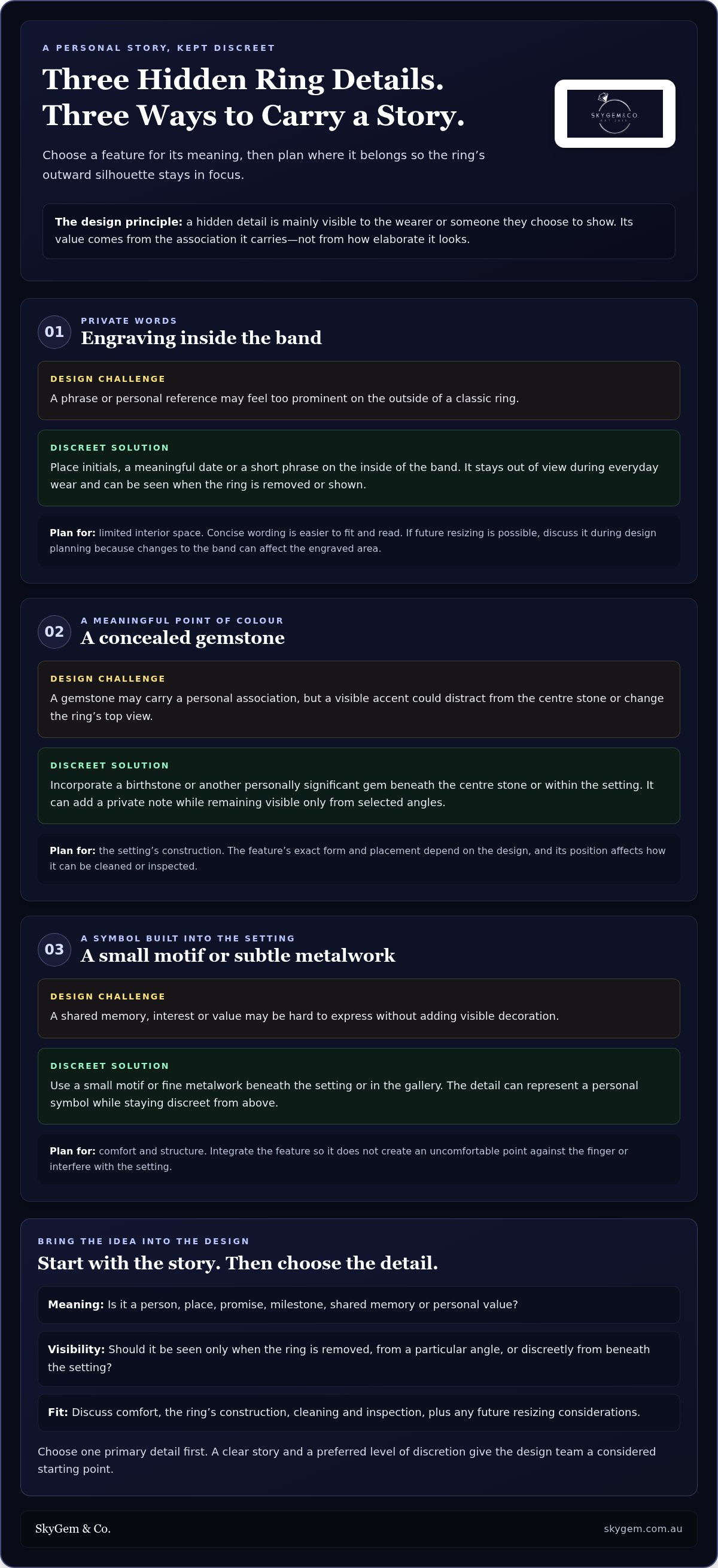
How to turn a personal story into a clear hidden-detail design brief
A useful design brief starts with why the detail matters, not with a list of decorative possibilities. When you can explain the story, intended visibility and practical priorities, the jeweller can help translate that meaning into a feature that works with the ring’s construction. Use this process to organise your thoughts before a bespoke consultation.
What should you decide before a bespoke consultation?
Write the personal meaning in one or two sentences before choosing how to represent it. You do not need to share private details; a simple description of the memory or value you want the ring to honour is enough to guide the design conversation.
- Begin with the story. Identify the person, place, relationship detail or shared value you want the ring to represent. Keep the explanation focused on what makes it meaningful.
- Choose one primary detail. Decide whether the central idea is a short engraving, a significant gemstone or a subtle motif. Make this the anchor rather than combining several symbols before the main concept is clear.
- Set the visibility. Specify whether the feature should be private to the wearer, visible only when the ring is removed or shareable from a particular angle. This helps narrow the possible placements.
- Describe the design preference. Note the preferred location, such as inside the band or beneath the setting. If relevant, identify a material or gemstone preference while leaving room to consider how it fits the ring’s structure.
- Gather references and rank ideas. Bring relevant words, dates, symbols or visual references. Mark each idea as essential, optional or unsuitable, and consider how it will relate to the ring’s scale and everyday use.
How can you keep the final design focused?
A clear brief prioritises meaning and function over a growing collection of embellishments. For a ring worn every day, include practical preferences such as a smooth interior feel, discreet placement and ease of future cleaning. The design team can then consider how the chosen detail relates to the setting and the ring’s proportions.
Hypothetical example: Someone wants to honour a shared love of the night sky but prefers a plain exterior. They could make a small star motif beneath the setting the primary detail, note that it should be hidden from the top view and list an inside-band date as optional. This communicates the story and priorities without prescribing a finished design.
These prompts help you explain what matters while remaining open to refinement. For broader context on developing a ring from an idea, explore SkyGem & Co.’s bespoke engagement ring design guide. A personalised consultation can shape the brief through CAD design and into the final stone setting.
Create a bespoke ring with a hidden detail at SkyGem & Co.
Once you have a meaningful direction in mind, a personalised consultation is the next step. You do not need to arrive with a finished design. A clear idea of what the detail represents, how discreet it should be and what matters for everyday wear gives the conversation a practical starting point. From there, the concept can be considered in relation to the ring’s silhouette, setting and overall construction.
How SkyGem develops a bespoke design with you
SkyGem & Co. offers personalised consultations by virtual appointment or in-store appointment. You can share the meaning behind an engraving, gemstone or motif, then discuss its intended placement and visibility. The team brings over 100 years of combined experience across designers, diamond setters, jewellers and gemologists to the process, considering how a personal detail can sit coherently within the design.
Bespoke design and manufacturing spans CAD design through to final stone setting. The design concept is developed with the feature in mind, then carried through the making and setting stages. Thoughtful placement and precision-finished craftsmanship help the hidden detail belong to the whole ring rather than read as an afterthought.
For example, if you are considering a small gemstone beneath the centre stone, explain why that gem matters and how visible you would like it to be. The design conversation can then consider the setting’s construction and how the feature relates to the ring’s proportions. The same approach applies to an inscription or a subtle metalwork detail: begin with its meaning, then shape its form around the design.
Plan your next step with a focused design idea
Before the consultation, note your chosen detail and the story it represents. Include preferences about placement, visibility, comfort or care, along with a reference image if it helps communicate your direction. You can keep personal information private and share only what is useful to the design process. A focused starting point makes it easier to discuss which elements are essential and where the design can be refined.
SkyGem’s bespoke engagement ring design approach brings your priorities into a made-to-order concept, with design and manufacturing continuing through to final stone setting. Whether your idea is an engraving, a concealed gemstone or a fine motif, the consultation lets you discuss its meaning alongside the ring’s construction. The aim is a considered result that reflects the wearer’s story while remaining true to the desired outward design.
Give your ring a story that lasts
The most meaningful hidden detail is not necessarily the most intricate. It is the one that still feels true long after the proposal, whether it marks a shared memory, reflects a value or simply makes the ring feel unmistakably yours. As you consider hidden details to add to a custom ring, focus on a meaning you will be glad to carry through everyday life, then let that intention guide the design.
You do not need every design choice settled before taking the next step. Bring your idea, a few notes about what it represents and any preferences for how discreet it should be. A personalised conversation can help turn that starting point into a thoughtful design direction.
Your story deserves a considered place in the ring. Start with the detail that matters most, then schedule a personalised custom jewellery consultation with SkyGem & Co. to explore its design.
Frequently Asked Questions
Can you add an engraving inside a custom ring?
Yes, an inside-band engraving can be incorporated into a custom ring design. The available space and the band’s shape influence how much text can fit and how easily it can be read. Initials or a significant date may suit a narrow interior better than a full sentence. If the ring may need resizing later, mention this during design planning because changes to the band can affect the engraved area.
What can you engrave inside an engagement ring?
You could engrave initials, a date, a short phrase or a reference that has meaning to you both. A date might mark when you met, while a few words could recall a shared promise. Before settling on the wording, consider whether it will still feel relevant years from now. Keep spelling, punctuation and capitalisation clear in your design notes so the intended message is unambiguous.
Can a birthstone be hidden beneath a ring’s centre stone?
A birthstone can be considered as a concealed accent beneath a centre stone if the setting’s construction allows for it. The gemstone’s position, size and setting need to work with the ring’s structure, rather than simply occupy available space. You might choose a stone associated with a child, partner or important month. Discuss how it will be secured and accessed for cleaning as part of the design.
Do hidden details change the look of a ring when it is worn?
They may leave the top view unchanged, but the effect depends on where the feature sits. An engraving inside the band will not usually be visible while the ring is on the finger; a motif beneath the setting may appear from a side angle. If you want the ring to look simple from above, describe that as a design priority and consider the viewing angles during the design process.
Can hidden details affect a ring’s comfort or durability?
They can, depending on placement and construction. An inscription or raised metalwork on the band’s inner surface may be noticeable against the finger, while an exposed feature near the setting may be more vulnerable to knocks. For a ring worn daily, discuss smooth contact surfaces, protection for any small stones and how the setting can be cleaned. The finished design needs to balance the detail with the ring’s intended use.
How do you choose a meaningful hidden detail for a custom ring?
Start by naming the memory, person or value you want the ring to represent, then choose one feature that expresses it clearly. Hidden details to add to a custom ring might include a short inscription, a significant gemstone or a small motif, but the best fit depends on the wearer’s preferences and the ring’s design. Decide how private it should be and note any comfort or care priorities before discussing options.
Can you add a hidden detail to a classic solitaire ring?
Yes, a classic solitaire can be designed with a discreet feature while keeping its centre stone as the visual focus. An engraving inside the band is one option; a small motif or gemstone beneath the setting may also be considered if it works with the construction. The design should account for the solitaire’s proportions and setting, so the added detail feels integrated rather than distracting from the stone.
Disclaimer
This article is for general informational purposes only and may include AI-assisted content. Pricing, specifications, and availability are subject to change. For accurate advice and current information, please contact SkyGem & Co. directly. Nothing in this content constitutes professional or financial advice.