
Custom Engagement Ring Warranty in Australia: What to Check Before You Buy

Could a custom engagement ring look perfect at collection, yet leave you unsure what happens if a setting loosens or the ring needs resizing? Before approving a design, understand what a custom engagement ring warranty Australia jewellers provide actually covers, and how its terms relate to your rights under Australian Consumer Law.
It’s reasonable to want clear answers about workmanship, everyday wear, accidental damage and aftercare, especially when a ring is made to your specifications. A jeweller’s voluntary warranty is not the same as a returns policy, and neither replaces consumer guarantees that may apply to your purchase.
This guide explains the differences and gives you a practical checklist for reviewing repairs, resizing, care requirements and claim steps before you commit. For a bespoke design, agreeing on the materials, approved specifications and written terms helps set clear expectations. A design consultation is also a useful time to discuss aftercare and make informed decisions about the ring’s long-term care.
Key Takeaways
- Compare warranty duration, covered components, exclusions, claim steps and required documents before approving your ring.
- Keep the approved design and material specifications with your purchase records so you can refer to the agreed details later.
- For a custom engagement ring warranty Australia, read the written terms closely and note how they address care, resizing and damage.
- Follow the ring’s care guidance and record any concerns. Careful handling alone doesn’t determine whether a claim is accepted.
- Use your design consultation to align stone selection, design decisions and written purchase expectations before committing.
Why a Custom Engagement Ring Warranty Deserves a Closer Look
Wanting reassurance before approving a one-of-a-kind ring is reasonable. You’re choosing details specific to you, so it helps to understand what a written warranty promises and what it leaves to other policies or legal rights. The phrase custom engagement ring warranty Australia doesn’t describe one standard package. The terms depend on the seller’s written promise for that purchase.
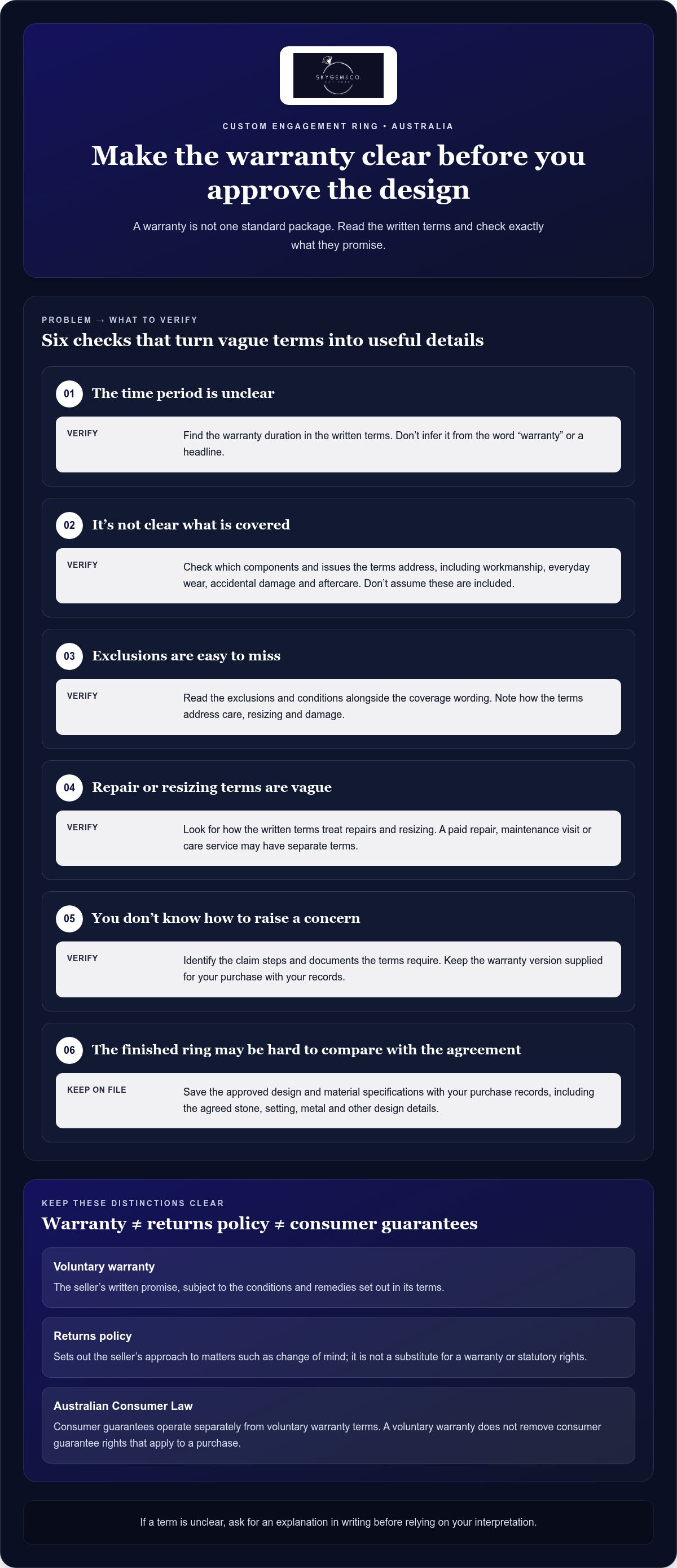
A voluntary warranty is a seller’s written promise about specified goods or services, subject to the conditions and remedies set out in its terms. The word “warranty” alone doesn’t tell you how long protection lasts, which parts are covered, what exclusions apply or what remedy may be offered.
What does a custom engagement ring warranty mean?
Read the warranty document or terms attached to the sale instead of inferring coverage from a headline or verbal summary. A promise about a fault in materials or workmanship differs from a paid repair, maintenance visit or general care service. Those services may have separate terms, so don’t assume they form part of the warranty.
Returns are another matter. A returns policy sets out the seller’s approach to issues such as change of mind; it isn’t a substitute for a warranty or statutory rights. Australian Consumer Law provides consumer guarantees that operate separately from voluntary warranty terms. The Australian Consumer Law framework includes protections for goods, and a voluntary warranty doesn’t remove consumer guarantee rights that apply to a purchase. A change-of-mind return, a repair service and a claim about a product fault are different questions, even if a policy page discusses them together.
Why custom design makes clear terms especially useful
For a bespoke ring, the approved specification is the reference point for understanding what you ordered. It can identify the selected stone, setting, metal and other agreed design details. Recording the final choices helps distinguish the finished piece from an early concept or an alternative discussed during design. If you choose a lab-grown diamond, for example, having that choice in the specification makes the purchase details clear. SkyGem & Co. provides information about its lab-grown diamonds in Australia.
SkyGem & Co. creates bespoke engagement rings around clients’ preferences and budgets. As design decisions are finalised, make sure the written specification reflects the agreed choices and keep it with the purchase terms. This shared reference makes later conversations about the ring more specific, without implying that every issue is covered by a warranty. Discussing the design, materials and written terms together helps set expectations before you commit.
Warranty Terms and Australian Consumer Guarantees Are Not the Same
Once you’ve gathered the documents relating to your ring, check how clearly they describe the seller’s commitments and the purchase itself. A brief summary may leave important details unresolved. Read the full wording and compare it with the final design specification, invoice and written statements made during the sale. If a term is unclear, ask for an explanation in writing before relying on your interpretation.
What a voluntary warranty can set out
Read the warranty as a document with a defined scope, not as a general assurance about the ring. Check whether it identifies the relevant product or service, the period and conditions, and how to raise a concern. Note whether it explains what information may be needed to assess the matter. If the document doesn’t clearly identify what a term refers to, its meaning may be difficult to apply, so precise wording matters.
Keep the version supplied for your purchase with your records. If a summary, sales conversation or later email seems to differ from the formal terms, retain both and ask for the difference to be clarified in writing. This gives you a record of what was communicated without assuming that a particular statement changes the terms or determines the outcome of a claim.
How consumer guarantees fit alongside a warranty
Australian Consumer Law also addresses services associated with a custom purchase, including design work. Consumer guarantees can require services to be provided with due care and skill; how that applies depends on the service, the agreed scope and the circumstances. For example, if a completed design appears different from the approved specification, the approval record and related communications may help explain what was agreed. They don’t, by themselves, establish the legal outcome.
A question about how a ring was made may differ from a concern about the design service or a later repair. Identify which part of the transaction your concern relates to, then gather the relevant agreement, approvals and correspondence before seeking guidance. The ACCC’s consumer rights and guarantees information outlines the Australian framework. For a specific situation, consider current official guidance or legal advice.
Keeping the discussion focused makes it easier to explain your concern. Identify the particular term, design approval or service that relates to the issue, then describe what happened against that record. The facts and applicable law determine how an individual matter is assessed.
Compare Custom Engagement Ring Warranties With This Checklist
Use the written terms as a comparison tool, not just a headline. Check which parts of the ring and types of issues the document addresses, how long the promise applies, and what steps you must take to raise a concern.
Warranty coverage depends on the exact written terms attached to the purchase, not on the word “warranty” alone. Compare the detail, not just the duration. A longer stated period may still leave important questions unanswered if covered components, exclusions or claim steps aren’t clear.
| Term | Question to resolve | Why it matters |
|---|---|---|
| Duration and start date | When does coverage begin, and how long does it apply? | Clarifies the period described by the voluntary promise and any stated time limits. |
| Covered components | Do the terms address the setting, workmanship, metal and gemstone, or only specified parts? | A ring has distinct elements. Clear wording helps identify what the terms refer to if an issue arises. |
| Exclusions and conditions | Are there stated exclusions or care conditions, and how are they described? | Shows which situations the written promise may not address. Don’t assume an exclusion applies unless it appears in the terms. |
| Repairs, resizing and maintenance | Are these covered, offered separately, or subject to different terms? | A repair or routine maintenance service isn’t automatically warranty coverage. Resizing may also have separate conditions. |
| Accidental damage | Do the terms explain how accidental damage is treated? | Separates damage questions from concerns about workmanship or materials assessed under the written terms. |
| Claim steps and evidence | Where should a claim be made, what assessment steps apply, and what documents are needed? | Knowing the process in advance helps you keep useful records and understand what information may be requested. |
Match coverage to the ring’s components
Check that the wording connects the promise to your finished ring. If it refers to a setting, for instance, look for language explaining which aspect of the setting is addressed. Terms may describe exclusions in different ways, so read the actual wording rather than assuming routine wear, damage or a particular component is automatically included or excluded. Keep routine care separate from a fault or issue assessed under the warranty.
Locate the dates, evidence and claim channel
Find the start date, contact method and any assessment steps in writing. Keep the documents together so you can refer to the same specification and terms if you need to raise a concern. Useful records include:
- Receipt, invoice or other proof of purchase
- Final design and material specifications
- Warranty terms supplied for the purchase
- Care instructions and any written aftercare information
- Relevant correspondence about the ring or a concern
For a custom engagement ring warranty Australia buyers can assess confidently, use this checklist during the design discussion. In a bespoke ring project, agreeing on details and recording the final specification gives you a useful reference for understanding both the purchase and its written terms.
Protect Your Ring and Keep Useful Records After Purchase
Once you wear the ring regularly, a simple care routine can help you notice changes and respond thoughtfully. Follow the care guidance supplied with your purchase, but don’t treat routine care as proof that a later issue will qualify for warranty coverage. Careful handling doesn’t guarantee that a claim will be accepted; the written terms and circumstances still matter.
Build a practical care record
Make brief notes when the ring receives attention or its condition changes instead of relying on memory. A dated photograph taken during routine care can provide a useful reference if you later notice a difference. If the ring is professionally assessed, resized or repaired, record what was done and keep the assessment or service paperwork. This gives you a timeline of the ring’s condition and any work, separate from the original purchase file.
A useful ongoing log might note:
- When you first observed a change and what you noticed
- Relevant care or maintenance you carried out
- The date and nature of any professional assessment or work
- Any instructions provided after that assessment or work
Keep entries factual. For example, “stone appears to move when touched” is more useful than guessing why it may have shifted. If you’re unsure what has changed, don’t attempt adjustments yourself, as altering the ring can make its condition harder to describe accurately.
Respond to a concern without jumping to conclusions
If you notice a problem, pause wearing the ring if you’re concerned that continued wear could affect it. Then compare what you observed with the care guidance and relevant written terms. Describe the issue rather than trying to diagnose it or decide in advance whether it is covered. A jeweller may need to assess the ring and consider the facts before explaining the next steps under the applicable terms.
- Note the date and describe the visible or noticeable change in plain language.
- Take photographs that show the concern clearly, without manipulating the ring to reproduce it.
- Review the relevant terms for instructions on raising a concern.
- Use the process provided with the purchase when contacting the original seller, and keep a record of the discussion.
Resizing, repair work, routine maintenance and accidental damage may be treated differently under individual policies. Don’t assume that a particular action automatically voids or preserves coverage. If you’re considering work on the ring, review the terms first and keep a record of what is done. The cause of a concern and the applicable policy wording may need to be assessed.
Good aftercare means maintaining the ring thoughtfully and being able to explain its history, not securing a predetermined claim outcome. During a custom engagement ring consultation, you can discuss care expectations alongside the design so you understand how to look after the finished piece.
Make Warranty Clarity Part of Your Custom Ring Design Journey
A considered custom ring begins with more than a visual idea. Confidence grows when your preferences are translated into a clear design, you understand the selected materials, and the purchase terms are part of the decision rather than an afterthought. For a custom engagement ring warranty Australia buyers should assess, understand the written promise alongside the final ring specification. Neither document replaces the other.
Bring design decisions and purchase terms together
A consultation gives you space to discuss the look you want, a stone that suits your preferences and budget, and how the finished design should come together. Those decisions shape the purchase: a natural or lab-grown diamond, a coloured gemstone, the setting and the metal all contribute to the agreed specification. SkyGem & Co. creates bespoke engagement rings around individual preferences and budgets, helping clients develop a design that reflects their priorities.
As the design takes shape, review the final specification and written terms as related but distinct documents. The specification records what you’ve agreed to buy; the terms explain the seller’s stated commitments and conditions. Considering both alongside craftsmanship and aesthetics helps you form a grounded view of the purchase. Exploring the engagement ring range can help you identify design features or settings to discuss as you shape a bespoke piece.
Prepare for a considered consultation
You don’t need every design decision settled before the conversation begins. A few clear preferences can give it direction while leaving room to refine details together. Bring reference images or notes about shapes and settings you like, along with gemstone preferences. If you’re choosing between options, note what matters most, such as appearance, material or how the ring fits your budget.
Prepare focused questions about the written purchase terms and aftercare, too. Ask to review the terms that apply to the finished ring, understand any stated conditions and identify how to raise a concern. These questions help you understand the documents; they aren’t assumptions that a particular issue will be covered. Record the agreed design details and keep the relevant written information together before committing.
SkyGem’s consultation-led bespoke process connects design choices with clear purchase expectations. The aim is to make decisions with a shared understanding of the intended ring and the terms that accompany it, without presuming a particular warranty duration, coverage or outcome. A well-considered design should feel right aesthetically and be supported by specifications and conditions you’ve had the opportunity to understand.
Move Forward With a Design You Understand
Choosing a ring is personal, and confidence comes from being comfortable with both the design and the documents that accompany it. Treat the custom engagement ring warranty Australia terms as part of your purchase decision, not as fine print to revisit only if something goes wrong. You don’t need to predict every future concern, but you should understand what you’re approving and where to find the relevant information later.
Bring your preferences, gemstone ideas and questions about written terms into the design conversation. Considering these points together can help you make decisions at a pace that feels right and move towards a ring that reflects your intentions.
A thoughtful start can make the path from first idea to final choice feel clear and rewarding.
Frequently Asked Questions
Does a custom engagement ring warranty replace Australian Consumer Law rights?
No. A voluntary warranty doesn’t replace consumer guarantees that may apply under Australian Consumer Law. If you’re unsure how the law relates to your circumstances, consult current ACCC guidance or seek legal advice. The ACCC’s consumer rights and guarantees information is a useful starting point. Before raising a concern, note what happened, when you noticed it and what you’d like clarified.
What should a custom engagement ring warranty cover?
Check that the terms supplied for your order can be matched to your specific ring, rather than relying on a general product description. Compare the wording with your final invoice and approved design, including the selected stone, setting configuration and metal. Note any terms defining the covered issue, excluded situations and action to take. Matching the documents to the finished ring is especially useful if design details changed during approval.
Can resizing affect a custom engagement ring warranty?
Before arranging resizing, describe the proposed change to the original seller and request written guidance on how it relates to the terms for your purchase. The effect can depend on the policy wording and the work involved. Keep the response with any later assessment or resizing invoice. Avoid relying on a general statement about resizing, since it may not address your ring’s construction or circumstances.
What happens if a gemstone becomes loose after purchase?
If you notice movement, avoid testing it repeatedly or trying to adjust the setting yourself. Keep the ring somewhere secure and take clear photographs showing the stone and its setting. Note when you first observed the movement, such as during wear or cleaning, without assuming that this identifies the cause. Then use the contact process supplied with your purchase and follow any assessment instructions.
How long does a custom engagement ring warranty last in Australia?
Check the terms for the stated duration and the event that starts it, such as the date specified in the purchase documents. Don’t assume the start date is when you first wore or received the ring if the wording defines it differently. Save the terms supplied at purchase and make a note of any relevant date. A voluntary warranty period alone doesn’t settle whether other legal rights apply.
Does a warranty cover accidental damage to a custom engagement ring?
Coverage depends on the terms and the facts of the incident. If damage occurs, record when and where you noticed it and what you were doing immediately beforehand. Avoid attempting a repair before understanding the assessment process, and keep the ring in its current condition if it can be stored safely. The seller may need to examine it before explaining how the written terms apply; approval of a claim isn’t assured.
Are repairs and routine maintenance included in a ring warranty?
Check whether maintenance is described as part of the warranty or as a separate service. If you’re unsure how to care for a particular gemstone or setting, seek guidance suited to that design rather than applying a general cleaning method. Keep records of any maintenance or repair, including the work performed and any care advice provided. That history can help inform future decisions about the ring’s upkeep.
Disclaimer
This article is for general informational purposes only and may include AI-assisted content. Pricing, specifications, and availability are subject to change. For accurate advice and current information, please contact SkyGem & Co. directly. Nothing in this content constitutes professional or financial advice.