
Cost of a 2 Carat Natural Ruby: The 2026 Price & Quality Guide

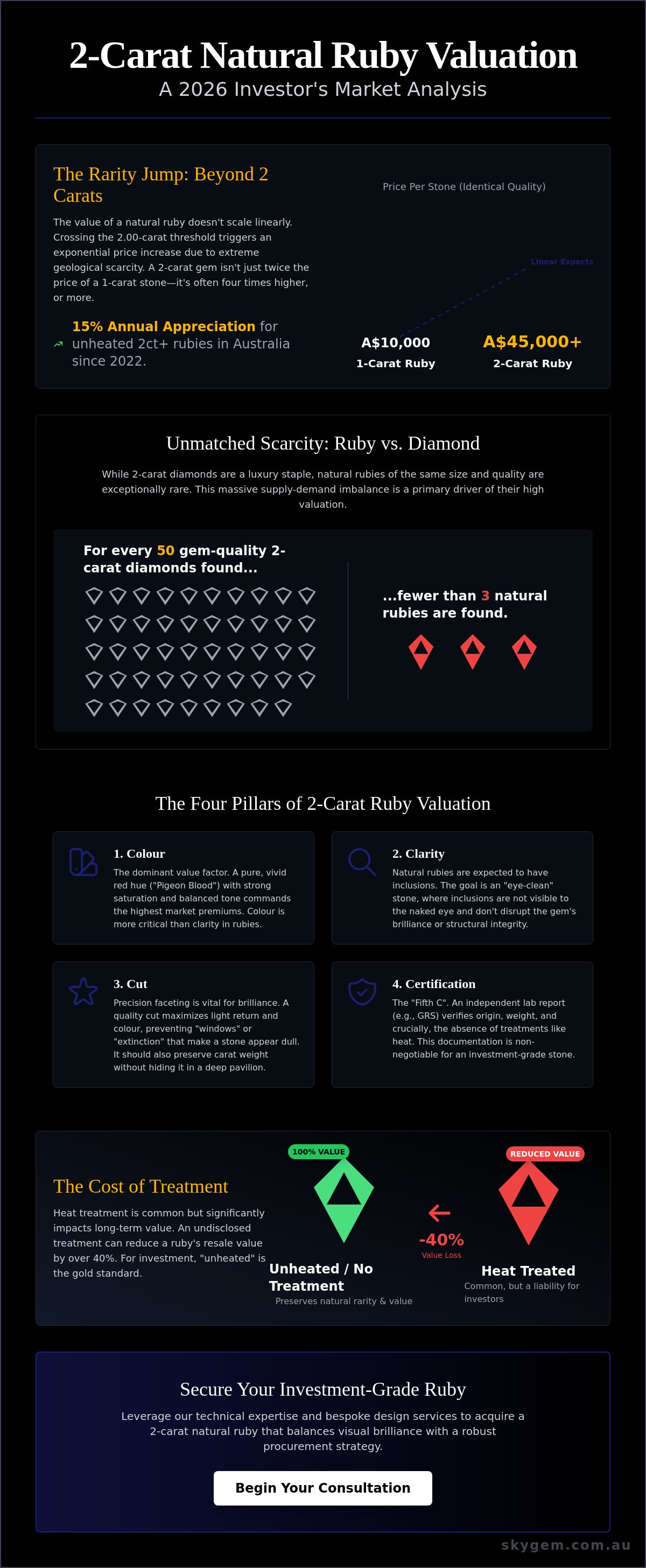
Why does a 2-carat stone often command a price four times higher than its 1-carat counterpart? In the current 2026 market, the cost of a 2 carat natural ruby is dictated by a steep exponential curve rather than a linear weight increase. This shift reflects the extreme scarcity of geological conditions required to produce a gem-quality corundum of this size without significant inclusions. For Australian collectors, understanding this valuation jump is critical to ensuring your purchase remains a resilient asset. Since 2022, high-quality unheated rubies in this weight class have seen a 15% annual appreciation in the local market, making precision in selection more important than ever.
You likely recognise that finding a genuine, untreated gemstone feels increasingly difficult as synthetic alternatives become more sophisticated. It's a valid concern, as a single undisclosed heat treatment can diminish a stone's resale value by over 40% in a professional appraisal. We've designed this guide to demystify the technical factors that define market value, from interpreting the nuances of a GRS report to identifying the premium associated with specific origins. You'll gain a structured framework to evaluate colour saturation and treatment status with the confidence of a technical specialist. We will break down the 2026 pricing tiers and the specific quality markers that separate a commercial stone from a true investment-grade gem.
Key Takeaways
- Understand the "rarity jump" that occurs at the 2.00-carat threshold and why these specimens are significantly scarcer in the Australian market than diamonds of equivalent weight.
- Evaluate how technical specifications, such as colour saturation and tonal balance, serve as the primary drivers for long-term asset value and aesthetic performance.
- Review the projected 2026 market data to determine the current cost of a 2 carat natural ruby, accounting for the price disparity between commercial-grade and investment-grade stones.
- Identify the significant valuation premiums associated with unheated gemstones compared to heat-treated varieties to ensure your acquisition aligns with your portfolio objectives.
- Discover how to leverage bespoke consultation and Australian-led design to find aesthetic "sweet spots" that balance visual brilliance with precise procurement strategies.
The 2-Carat Benchmark: Why Size Matters in Natural Rubies
The 2.00-carat threshold represents a critical inflection point in the global gemstone market. For collectors and investors, hitting this specific mark isn't just about physical dimensions; it's about entering an elite bracket of geological rarity. While a 1.98-carat stone might appear identical to the naked eye, the cost of a 2 carat natural ruby often carries a premium of 30% to 50% over its slightly lighter counterparts. This "price jump" reflects the market's preference for whole-number benchmarks and the extreme difficulty of finding high-quality rough material that survives the cutting process at this weight.
Comparing these stones to diamonds provides a clear perspective on their scarcity. In the current market, 2-carat diamonds are a standard luxury staple available in most high-end inventories. Natural rubies are different. For every 50 gem-quality diamonds weighing 2 carats, industry reports suggest that fewer than three rubies of comparable saturation and clarity are recovered. This massive supply-demand imbalance means the price per carat increases exponentially. If a 1-carat ruby costs A$10,000, a 2-carat stone of the same quality won't simply cost A$20,000; it's more likely to be valued at A$45,000 or more depending on its origin and treatment status.
Carat Weight vs. Visual Dimensions
Ruby has a specific gravity of approximately 4.0, which makes it significantly denser than a diamond. Because of this density, a 2-carat ruby will always look smaller than a 2-carat diamond. To ensure you're getting a stone with a good "face-up" appearance, you must evaluate the millimetre dimensions rather than just the weight. For a 2-carat oval cut, a well-proportioned stone should measure approximately 8.0 x 6.0 mm. Avoid stones with "deep cuts" where excess weight is hidden in the pavilion. These stones might hit the 2-carat mark on a scale, but they'll look like a 1.5-carat stone once set in one of our engagement rings.
The Scarcity of Gem-Quality Corundum
The geological recipe for a ruby is incredibly volatile. Chromium provides the vibrant red colour, but it also causes internal fractures and inclusions during the crystal's growth. Finding a crystal large enough and clean enough to yield a 2-carat finished gem is a rare event in any mine. As we move into 2026, supply from traditional regions like Mogok remains severely restricted, while the primary deposits in Mozambique are producing fewer large, high-clarity stones than in previous decades. This ongoing supply crunch has solidified the 2-carat mark as the definitive entry point for investment-grade rubies. Data from major auction houses over the last five years shows that stones of this size have maintained a steady appreciation rate of 10% annually, making them a reliable asset for long-term portfolios.
The Four Pillars of 2-Carat Ruby Valuation
Calculating the cost of a 2 carat natural ruby requires a technical understanding of the four primary value drivers. Unlike diamonds, where clarity often takes a front seat, ruby valuation is dominated by colour. A 2-carat stone sits at a critical weight threshold where rarity increases exponentially. This makes the precision of its grading vital for both collectors and investors who prioritise long-term asset stability. Every minor shift in quality at this carat weight can result in price differences of thousands of dollars.
- Colour: This includes hue, tone, and saturation. A pure red hue with vivid saturation commands the highest market premiums.
- Clarity: Natural rubies are rarely "flawless." Experts look for "eye-clean" stones where inclusions don't disrupt light return or aesthetics.
- Cut: Precision faceting ensures the stone doesn't "leak" light through the pavilion. Poorly cut stones often have "windows" that make a 2-carat stone look dull.
- Certification: This "Fifth C" provides the objective data required to justify a high-tier price point and verify the absence of synthetic treatments.
Defining "Pigeon Blood" Red
The term "Pigeon Blood" isn't just marketing fluff; it's a specific technical grade. To qualify, a ruby must exhibit a vivid red hue with a medium-dark tone and high saturation. Most importantly, these stones often possess strong red fluorescence. This chemical reaction to UV light makes the stone appear to glow from within, even in low-light environments. In the Australian market, a certified Pigeon Blood designation can add a premium of 40% to 100% over a standard "vivid red" stone of the same weight.
Clarity and Inclusions: The "Fingerprints" of Nature
Inclusions serve as a ruby's internal identification. Fine, needle-like rutile inclusions, known as "silk," are highly prized by gemmologists. Their presence often confirms a stone hasn't undergone high-heat treatment, which is a key factor in the cost of a 2 carat natural ruby. However, buyers must be wary of "feathers" or large fractures. While small inclusions are expected, any reaching the surface can compromise the stone's structural integrity, especially during the setting process in a high-pressure jewellery mount.
The Importance of Reputable Certification
When investing in a 2-carat gemstone, paperwork from a top-tier laboratory like GIA or SSEF is mandatory. These certificates confirm the stone's geographic origin and heat-treatment status. A certificate acts as a safeguard for your insurance valuation and future resale potential. Without it, the risk of misidentification is too high for a professional-grade purchase. You can learn about our GIA certified natural diamonds and gemstones to see how documented quality impacts long-term value. For those seeking specific advice on a particular stone, consulting with a specialist ensures your choice meets Australian compliance and quality standards.
Market Pricing: What to Expect for a 2-Carat Ruby in 2026
The global gemstone market in 2026 presents a complex environment for investors and collectors. For a commercial-grade specimen, the cost of a 2 carat natural ruby currently starts near A$9,500. Investment-grade stones with "Pigeon's Blood" saturation and high transparency can exceed A$160,000. Recent data from the Australian luxury sector shows that fine gemstone prices have risen by 14% since early 2024. This growth is fuelled by limited supply from primary deposits and a shift toward tangible asset classes that offer a hedge against currency volatility.
The Heat Treatment Discount
Heat treatment is applied to roughly 95% of all rubies to stabilise colour and improve transparency. This treatment is permanent and widely accepted within the trade. However, it creates a steep price hierarchy. An unheated 2-carat ruby typically commands a premium of 70% to 130% over a heated counterpart. Bespoke jewellery designers prioritise unheated stones for their rarity. These specimens represent the top 1% of the world's ruby production and hold their value better during economic shifts. The cost of a 2 carat natural ruby that has not been enhanced reflects its status as a geological anomaly.
Origin Premiums: From Mogok to Mozambique
The "Burma Premium" remains a dominant force in gemstone valuation. Stones from the Mogok Valley command the highest prices due to their unique fluorescence and historical prestige. Mozambique has emerged as a formidable alternative. Since 2009, the Montepuez deposits have provided rubies with exceptional clarity and size. Gemmological laboratories determine these origins through trace element analysis, identifying specific chemical signatures like iron content. A Mozambique ruby offers high-level aesthetics at roughly 40% less than a Burmese equivalent, making it a pragmatic choice for many Australian buyers who value performance and visual impact.
Loose Stones vs. Set Jewellery Pricing
Buying a loose stone provides total visibility into the gem's structural integrity. It allows you to inspect the pavilion and girdle for any inclusions that might be hidden by a setting. You can explore our collection of loose rubies to assess the cut and clarity before committing to a custom design. The final project cost is also influenced by the choice of precious metal. Platinum is often preferred for its strength and neutral colour, though it adds approximately A$1,800 to A$2,600 to the setting price compared to 18K gold. This decision impacts both the architectural aesthetic and the long-term maintenance requirements of the piece.
Investment Potential and Aesthetic "Sweet Spots"
A 2-carat natural ruby functions as a highly portable asset and a reliable hedge against currency fluctuations. Unlike larger 5-carat specimens that cater to a niche collector market, the 2-carat size remains the most liquid tier for resale. It sits at the intersection of high-value rarity and consumer demand, making it easier to divest through Australian auction houses or private dealers. When evaluating the cost of a 2 carat natural ruby, investors should view the stone as a permanent asset. The rarity of unheated material in this weight class has seen consistent price appreciation, often outperforming traditional equity benchmarks over ten-year cycles. High-quality rubies are finite resources, and as mines in Burma and Mozambique face depletion, the 2-carat mark represents a stable entry point for wealth preservation.
Finding value requires a technical approach to the "Four Cs." While colour is non-negotiable, clarity offers a strategic "sweet spot." Natural rubies are rarely internally flawless; in fact, "silk" inclusions can verify a stone's natural origin. Choosing a stone with "eye-clean" inclusions allows you to secure a superior colour grade without the exponential price premium of a loupe-clean gem. This prioritisation ensures the stone's visual performance remains high while staying within a realistic budget. It's a balance of engineering the best visual outcome for the price paid.
The Hidden Dangers of Low-Cost Rubies
Bargain-priced rubies frequently hide significant structural vulnerabilities. Lead-glass filling is a common treatment where fractured corundum is infused with high-lead content glass to artificially enhance transparency. These stones aren't durable. They can react poorly to common household acids or the heat from a jeweler's torch during routine maintenance. Diffusion-treated rubies, which use chemicals to alter surface colour, are equally problematic for high-wear jewellery. Don't risk your investment on these unstable treatments. Always verify the stone's origin and treatment status with a specialist who maintains a physical boutique presence in Australia to ensure compliance with local consumer guarantees and industry standards.
Maximising Your Budget
Smart buyers look for "under-size" stones to optimise their investment. A 1.90-carat ruby can offer a 25% price reduction compared to a 2.05-carat stone, despite having nearly identical physical dimensions. This price cliff occurs because of the psychological premium placed on the 2-carat threshold. Additionally, choosing an oval or pear cut increases the "face-up" appearance, making the gem look larger than a round cut of the same weight. If you're looking to balance stone quality with a bespoke design, you can explore custom made engagement rings for any budget to find a solution that doesn't compromise on engineering or aesthetics. This approach allows you to direct more of the cost of a 2 carat natural ruby into the quality of the stone itself rather than just the weight.
Sourcing a 2-Carat Natural Ruby with SkyGem & Co.
SkyGem & Co. operates with a technical precision that mirrors the geological complexity of the gemstones we source. When evaluating the cost of a 2 carat natural ruby, the final figure reflects more than just the stone's weight; it incorporates the rigorous ethical standards and supply chain transparency we maintain. Our procurement process bypasses standard retail channels, instead utilizing a global network of primary suppliers in regions like Mozambique and Madagascar. This direct access allows us to secure specific colour profiles, such as the high-intensity vivid red often sought for investment, while ensuring every stone complies with modern ethical standards.
We view ourselves as technical consultants rather than traditional retailers. Every investment-grade ruby undergoes a multi-stage verification process where we examine the internal crystal structure and thermal history. This ensures the stone's long-term stability and performance. Our focus on engineering excellence ensures that your acquisition remains a durable asset for decades. We prioritise data-driven selection, providing clients with comprehensive photometric insights and origin documentation to justify the market value of their chosen gemstone.
Bespoke Design for Exceptional Stones
A 2-carat ruby represents a significant geological rarity, and it requires a setting engineered specifically for its unique physical dimensions. We don't use mass-produced casts. Instead, our Melbourne-based team utilizes high-resolution CAD modelling to create a structure that protects the ruby's girdle while maximising light entry. Every piece is hand-finished, with individual prongs shaped to the specific curvature of the stone. This custom-engineered approach ensures the setting supports the stone's longevity. For a deeper look at our technical process, explore our Bespoke Engagement Rings: The Definitive Guide to Custom Design.
Expert Consultations
Selecting a stone of this magnitude requires an objective, professional environment. During a private viewing of loose gemstones, we present rubies under controlled 5500K daylight-balanced lighting, as well as warmer ambient conditions. This reveals how the ruby's fluorescence and saturation shift in different Australian environments. We provide full disclosure on all treatment statuses and origin reports. To begin your selection process with a technical specialist, you can book an engagement ring consultation at our studio. Understanding the total cost of a 2 carat natural ruby involves assessing these technical nuances in person to ensure the stone meets your specific performance requirements.
Securing Your Investment in a 2-Carat Natural Ruby
Selecting a gemstone of this magnitude involves more than an aesthetic choice; it's a technical acquisition that demands rigorous scrutiny. The cost of a 2 carat natural ruby in 2026 is driven by the intersection of scarcity and global demand, specifically for stones that exhibit high clarity and minimal thermal treatment. By focusing on the four pillars of valuation and prioritising GIA or SSEF certification, you ensure your purchase remains a stable asset within the Australian market.
SkyGem & Co. functions as your technical consultant in this process. As a family-owned boutique, we leverage direct sourcing from reputable global suppliers to bypass traditional retail markups while maintaining strict compliance with international grading standards. Our role is to provide the gemmological expertise required to find a stone that meets your specific aesthetic requirements and long-term goals. We invite you to view our curated selection of natural rubies and bespoke rings to begin your journey. Finding the perfect balance of quality and performance is a rewarding pursuit that starts with the right data.
Frequently Asked Questions
Is a 2-carat natural ruby more expensive than a 2-carat diamond?
A 2-carat natural ruby can significantly exceed the price of a 2-carat diamond if it possesses exceptional colour and clarity. While a high-quality 2-carat diamond may cost between A$30,000 and A$60,000, a premium unheated Burmese ruby of the same weight can reach prices over A$100,000. This price disparity occurs because fine rubies are rarer than diamonds in nature, especially in sizes exceeding one carat.
What is the average price range for a 2-carat natural ruby in Australia?
The cost of a 2 carat natural ruby in the Australian market typically ranges from A$5,000 for commercial-grade stones to over A$50,000 for investment-quality specimens. Mid-range stones with decent transparency and standard heat treatment usually sit between A$8,000 and A$18,000. These figures reflect current 2024 market trends and include local GST requirements for Australian buyers.
Does heat treatment make a ruby "fake" or less natural?
Heat treatment doesn't make a ruby fake; it's a standard industry practice used to improve colour and clarity in 95% of rubies found on the market. This process mimics the natural volcanic heat that forms gemstones within the Earth's crust. While the stone remains natural, unheated rubies command a price premium of 50% to 100% due to their extreme rarity in the geological record.
Why is origin so important for the price of a 2-carat ruby?
Origin serves as a primary value driver because specific locations produce stones with unique chemical signatures and historical prestige. A 2-carat ruby from Mogok, Myanmar, can be worth three times more than a similar stone from Mozambique or Thailand. Professional labs like the GIA or GAA identify these origins through trace element analysis to justify these significant price variations for collectors.
How can I tell if a 2-carat ruby is unheated without a certificate?
You can't reliably determine if a ruby is unheated without a professional gemmological report from a technical lab. Microscopic examination is required to identify intact rutile needles, which melt at high temperatures during the heating process. If a seller claims a stone is unheated without documentation, it's a technical risk that should be avoided by any serious investor or jewellery buyer.
What is the best setting for a 2-carat ruby engagement ring?
An 18k yellow gold or platinum claw setting is the most secure and aesthetically pleasing choice for a 2-carat ruby. Yellow gold enhances the richness of the red hues, while platinum provides superior durability for the 9.0 Mohs hardness of the stone. A halo of D-F colour diamonds can also provide a high-contrast frame that increases the visual impact of the centre stone.
Will a 2-carat natural ruby appreciate in value over time?
Historically, high-quality natural rubies have shown a consistent annual appreciation rate of 5% to 8% over the last decade. The cost of a 2 carat natural ruby is expected to rise as traditional mines reach depletion and global demand for "Big Three" gemstones increases. Unheated stones with "Pigeon's Blood" grading offer the highest potential for long-term capital growth in the Australian investment market.
Can I use a 2-carat ruby for an everyday engagement ring?
Rubies are excellent for everyday wear because they've a hardness of 9 on the Mohs scale, second only to diamonds. This makes them highly resistant to scratching and daily abrasion in a professional or domestic environment. You'll find that a 2-carat ruby maintains its structural integrity over decades, provided you avoid harsh chemicals and choose a protective setting that shields the stone's edges.
Disclaimer
This article is for general informational purposes only and may include AI-assisted content. Pricing, specifications, and availability are subject to change. For accurate advice and current information, please contact SkyGem & Co. directly. Nothing in this content constitutes professional or financial advice.