
Cleaning a Ruby Ring at Home: The Expert Guide to Restoring Fiery Brilliance

A ruby that appears pink or cloudy is rarely a sign of an inferior gemstone; it is almost always a result of microscopic debris blocking the stone’s internal light paths. You likely chose your piece for its deep red hue and exceptional durability, so it's naturally frustrating when everyday oils and soaps dull that brilliance. Learning the professional approach to cleaning a ruby ring at home is the most effective way to maintain its structural integrity and aesthetic value without risking chemical damage or loosening the setting.
We understand the hesitation that comes with handling high-value jewellery, especially when you are uncertain if your gemstone has undergone specific heat or fracture-filling treatments. This guide provides technical, safe techniques to restore your ruby’s original lustre while ensuring the claws and mount remain secure. We will outline a repeatable maintenance routine that mirrors the precision used by Australian specialists, ensuring your gemstone remains a high-performing asset rather than a dulled accessory. By following these engineering-grade steps, you can achieve a professional finish that protects the stone's long-term value and fiery visual performance.
Key Takeaways
- Understand the technical properties of corundum to mitigate the risks associated with thermal shock and chemical exposure during maintenance.
- Implement a methodical process for cleaning a ruby ring at home using filtered water and mild surfactants to restore the gemstone's photometric brilliance.
- Differentiate between heat-treated and lead-glass filled rubies to ensure your maintenance protocol aligns with the specific durability requirements of the gemstone’s treatment.
- Optimise the longevity of 18K gold and platinum settings by identifying and targeting high-accumulation zones where organic debris impacts structural health.
- Establish a long-term care schedule that integrates professional inspections to future-proof your jewellery and address restoration needs beyond the scope of home care.
Understanding Ruby Durability and Home Cleaning Safety
Rubies belong to the corundum family, a mineral class recognised for its exceptional resilience and structural stability. Ranking at 9 on the Mohs scale, rubies are second only to diamonds in terms of mineral hardness. This high rating indicates a significant resistance to surface scratches, yet Ruby durability and hardness doesn't make the gemstone indestructible. Sudden temperature shifts, known as thermal shock, or exposure to aggressive household chemicals can compromise the integrity of the stone or its metal setting. Successful cleaning a ruby ring at home focuses on the gentle removal of accumulated skin oils, lotions, and environmental particulates that dull the stone's natural brilliance without introducing mechanical stress.
The Science of Corundum and Lustre
The iconic "pigeon blood" red hue of a high-quality ruby is the result of light interacting with chromium trace elements within the corundum crystal lattice. When a stone is clean, light enters the crown, refracts through the pavilion, and returns to the eye as a vibrant flash of colour. Grime acts as an opaque barrier that interrupts this light path, resulting in a flat, lifeless appearance. It's vital to distinguish between surface debris and internal inclusions. While inclusions are permanent characteristics of the stone's growth, surface dirt is a removable obstacle to peak performance. Removing these lipids and dust particles restores the refractive efficiency of the gemstone.
When to Avoid Home Cleaning Entirely
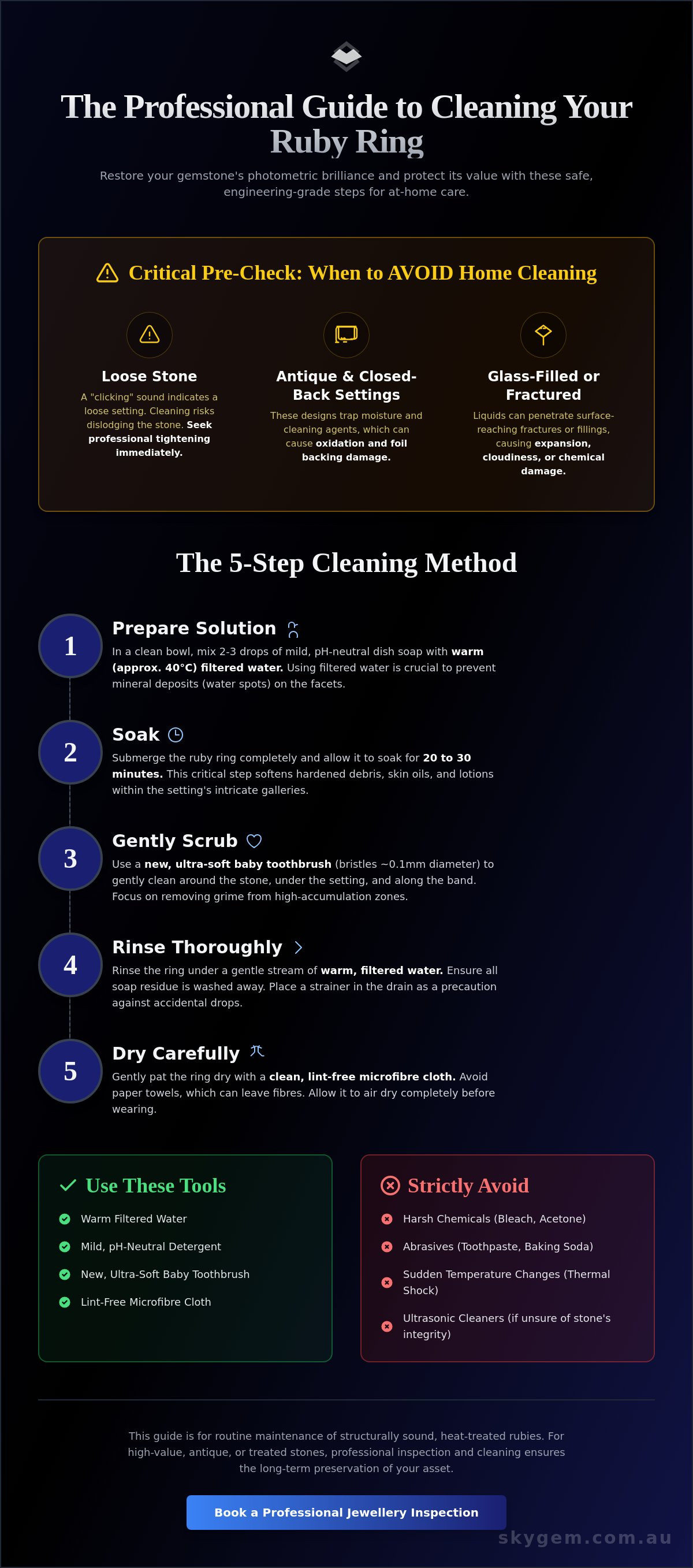
A technical assessment of the jewellery's structural integrity is a mandatory first step before any maintenance. If you hear a distinct "clicking" sound when tapping the setting, the stone is likely loose and requires professional tightening by a jeweller. Antique rings often feature "closed-back" settings where the pavilion is encased in metal. These designs trap moisture and cleaning agents, which leads to long-term oxidation or damage to delicate foil backings. Additionally, rubies with significant surface-reaching fractures or those that have been glass-filled shouldn't be cleaned with standard home methods. The risk of liquid entering these fissures and causing expansion or chemical reactions is high. In these instances, cleaning a ruby ring at home is ill-advised, and a professional consultation is the only safe path forward. For those looking to invest in high-clarity stones, viewing a range of loose rubies can help identify the structural standards expected in premium jewellery.
While the ruby itself is chemically stable, the metals used in settings, such as 18k gold or platinum, are susceptible to damage from common household products. "Home remedies" like toothpaste contain abrasives that can scratch precious metals, while bleach can cause stress corrosion cracking in gold alloys. Maintaining a high-performance standard for your jewellery involves using only pH-neutral solutions that respect the engineering of the entire piece. Avoid any abrasive tools that could mar the polished finish of the band or the facets of the stone.
The Professional Method for Cleaning a Ruby Ring at Home
Maintaining the structural integrity and optical performance of a gemstone requires a methodical approach. While rubies are exceptionally durable, scoring a 9 on the Mohs scale, the buildup of daily contaminants like skin oils and lotions can significantly degrade their light return. Successfully cleaning a ruby ring at home relies on patience and the correct chemical balance rather than physical force.
Begin by preparing a solution of warm, filtered water. Using filtered water prevents mineral deposits from forming "water spots" on the gemstone's facets. The temperature should be approximately 40 degrees Celsius; it's warm enough to break down organic lipids but not hot enough to cause thermal shock to stones with significant inclusions. Add two drops of a mild, pH-neutral detergent. Submerge the ring and allow it to soak for 20 to 30 minutes. This duration is critical for softening hardened debris in the intricate galleries of the setting.
Essential Tools for the Home Jeweller
Precision is key when selecting your equipment. A new baby toothbrush is the industry standard for home maintenance. These brushes feature bristles that are typically 0.1mm in diameter, which is significantly finer and softer than the 0.2mm bristles found on standard "soft" adult brushes. This allows for deeper penetration into the setting without risking micro-abrasions on softer metal alloys like 18K gold.
Avoid dish soaps containing moisturisers, dyes, or heavy fragrances. These additives are designed to stay on the skin, meaning they'll also leave a microscopic film on the ruby's surface, effectively "greasing" the stone and killing its fire. For grime trapped behind the prongs where bristles can't reach, use a sharpened wooden toothpick. Wood is softer than metal and gemstone, making it a safe tool for dislodging stubborn 1.0mm particles of dirt.
The 'Double Bowl' Safety Technique
Risk management is a core component of professional jewellery care. Never clean your jewellery directly over an open sink or drain. Instead, adopt a two-bowl system. Use the first bowl for the detergent soak and the second bowl for a clean water rinse. This setup ensures that if a stone has become loose due to wear, it's recovered in the bowl rather than lost in the plumbing. Industry data suggests that a significant percentage of gemstone loss occurs during improper cleaning routines.
Once the rinse is complete, dry the piece with a lint-free microfibre cloth. Avoid paper towels, as their wood-pulp fibres can be abrasive to high-polish metal surfaces. Before wearing the piece again, perform a simple "tap test" with your fingernail to ensure the stone is secure. If you notice any movement, it's time to consult a specialist about a professional custom setting adjustment to protect your investment. Regular cleaning a ruby ring at home is the most effective way to identify these maintenance needs before they lead to a lost gemstone.
Treatment-Specific Care: Glass-Filled vs. Heat-Treated Rubies
Understanding the technical composition of your gemstone is the first step toward safe maintenance. Most rubies sold in Australia undergo some form of enhancement. Statistics from the Gemological Institute of America (GIA) indicate that approximately 95% of rubies are heat-treated to improve their saturation and clarity. While these stones are generally robust, other treatments require a more delicate touch when cleaning a ruby ring at home.
Natural, unheated rubies represent the top tier of the market and often command prices exceeding A$10,000 per carat for high-quality specimens. These stones are the most resilient because their internal structure hasn't been chemically altered. However, the most common commercial enhancement is lead-glass filling. This is a clarity enhancement method where fractures are filled with high-refractive index glass to improve transparency. Before you begin, check your GIA or GRS certificate for terms like "Heat-treated," "H(a)," or "Lead-glass filled." If you're unsure about your stone's origin, you can view our collection of certified rubies to understand the documentation standards required for high-value gems.
The Danger of Acidic Cleaners
Lead-glass fillings are highly susceptible to chemical erosion. Common household substances like lemon juice, white vinegar, or even certain commercial 'ultrasonic solutions' can etch the surface of these fillings. This chemical reaction causes the filling to deteriorate, leaving the ruby with a 'frosted' or cloudy appearance that's difficult to reverse. Because lead-glass filling is a clarity enhancement method designed to hide fractures, any damage to the glass makes those internal cracks visible again. Always avoid any cleaning agent with a low pH level to maintain the stone's integrity.
Ultrasonic Cleaners: Friend or Foe?
While heat-treated rubies are generally stable enough for ultrasonic cleaning, we advise extreme caution. The high-frequency sound waves can cause significant issues for specific stone types:
- Filling Instability: In glass-filled stones, the vibrations can cause the filling to separate from the host ruby, leading to structural failure.
- Inclusion Stress: Rubies with high levels of natural inclusions may shatter under the pressure of ultrasonic waves.
- Setting Security: Constant vibration can loosen the metal prongs of your setting, risking the loss of the stone.
SkyGem recommends that you skip the ultrasonic machine when cleaning a ruby ring at home. The risk of irreversible damage to a lead-glass filled stone is too high for a DIY environment. Stick to manual methods that allow for constant visual inspection of the jewellery's condition to ensure the long-term success of your maintenance routine.
Setting Maintenance: Protecting the Gold and Platinum
While the ruby is the focal point, the structural integrity of the metal setting requires equal attention during maintenance. Most debris accumulates on the underside of the setting, specifically in the gallery where the pavilion of the ruby sits. This buildup acts as an insulator, blocking light and reducing the stone's refractive performance. When cleaning a ruby ring at home, you must identify how your specific metal reacts to environmental factors to avoid compromising the mount.
18K gold and platinum exhibit different physical properties under maintenance. Platinum is a dense, naturally white metal that resists oxidation, whereas 18K gold is an alloy containing 75% pure gold mixed with other metals for durability. While platinum is highly resistant to chemical cleaners, 18K gold can be more sensitive to harsh abrasives. Always perform a 'prong check' after cleaning by gently rubbing a microfibre cloth over the setting. If the fabric snags on a prong, it indicates the metal has lifted or shifted. This requires immediate professional attention to prevent stone loss.
To maintain a mirror finish, the drying phase is critical. Water spots left to air-dry on gold or platinum surfaces create a dull film that obscures the metal's natural lustre. Use a soft, lint-free cloth to buff the metal immediately after rinsing. This ensures the surface remains free of mineral deposits often found in Australian tap water, which can leave a residue if not managed promptly.
Caring for 18K White Gold and Rhodium Plating
Cleaning a ruby ring at home effectively removes surface contaminants but won't restore the rhodium plating once it begins to wear. White gold is naturally slightly warm in tone. If you notice a yellowish tint appearing on the band or prongs, it indicates the rhodium layer has thinned through friction. For those seeking a fresh start with a high-performance mount, you can explore the structural details of SkyGem's 18K White Gold collection to understand the standard of a high-quality finish.
Special Considerations for Bespoke and Halo Settings
Complex designs, such as bespoke engagement rings, feature intricate galleries and tight crevices that trap moisture. Halo settings are particularly delicate because they house numerous small 'melee' diamonds. High-pressure scrubbing can loosen these secondary stones. Use a soft-bristled brush with minimal pressure. To ensure no moisture remains in deep crevices, use a canister of compressed air at a low-pressure setting to drive out remaining droplets. This prevents the long-term accumulation of grime in hard-to-reach areas and protects the setting's internal architecture.
If your setting shows signs of wear or loose prongs, it's time for a professional assessment. View our full engagement ring range to see how precision engineering ensures long-term durability and brilliance.
Beyond Home Care: Professional Inspection and Restoration
While routine cleaning a ruby ring at home maintains surface sparkle, it cannot replace the technical oversight of a qualified jeweller. Professional maintenance acts as a preventative audit for your jewellery, identifying structural vulnerabilities that are invisible to the naked eye. We recommend a professional "check-up" every six to twelve months to ensure the long-term integrity of the setting and the security of the gemstone. This schedule is particularly vital for rings worn daily, where friction and environmental exposure accelerate metal fatigue.
Expert intervention involves more than just aesthetics. A jeweller uses 10x magnification loupes and digital microscopic tools to inspect prong thickness and the condition of the gallery. Over time, gold and platinum prongs wear down through constant contact with hard surfaces. If a prong becomes too thin, it risks snapping, which leads to the immediate loss of the stone. Professional restoration often includes "tipping," where new metal is added to the prongs to reinforce the hold on the gemstone, future-proofing the piece against accidental damage.
The Professional 'Clean and Polish' Service
A professional service utilises high-pressure steam cleaners and industrial-grade ultrasonic tanks. These systems use specific frequencies to dislodge compacted debris from the tightest tolerances of the setting, areas that manual cleaning a ruby ring at home simply cannot reach. Following the deep clean, technical buffing wheels and polishing compounds are used to remove micro-scratches from the metal surface. This process restores the original mirror-like finish of the band, which significantly enhances the perceived colour and saturation of your natural ruby. This level of restoration provides the peace of mind that comes from knowing your investment is both secure and aesthetically optimised.
Safe Storage for Ruby Jewellery
Proper storage is the final step in a comprehensive care cycle. Rubies are exceptionally hard, ranking 9 on the Mohs scale, yet they are not indestructible. They should never be stored in a way that allows them to touch other gemstones. Diamonds, which sit at 10 on the Mohs scale, can easily scratch the surface of a ruby if they rub together in a shared container. Similarly, a ruby can scratch softer gemstones like emeralds or opals. We advise using fabric-lined jewellery boxes with individual, padded compartments to prevent contact.
For those with high-value pieces, maintaining updated documentation is essential. Professional inspections often coincide with insurance valuation updates, ensuring your coverage reflects current Australian market rates for fine gemstones. This methodical approach to care, from home maintenance to professional auditing, ensures your jewellery remains a permanent asset. For those seeking expert advice or bespoke design services, contact SkyGem & Co. for professional maintenance or custom enquiries.
Protecting Your Investment Through Professional Maintenance
Maintaining the structural integrity and optical brilliance of a ruby requires a technical understanding of the stone's specific treatment history. Although rubies rank at 9 on the Mohs scale, their safety depends on using pH-neutral solutions and avoiding ultrasonic cleaners that can compromise glass-filled inclusions. Mastering the process of cleaning a ruby ring at home provides a reliable interim solution for daily wear, but it doesn't replace the precision of a bench-led inspection conducted every 12 months. This proactive approach ensures that the thermal stability and clarity of the gemstone remain uncompromised by environmental contaminants.
SkyGem & Co. brings technical expertise in unheated and natural rubies to every restoration project. Our specialists provide comprehensive jewellery maintenance and repair, ensuring that gold and platinum settings remain secure while your gemstone's fiery red hue is fully restored. We also offer expert bespoke design services for those looking to future-proof their collection. Regular professional assessments help identify micro-wear before it leads to stone loss, protecting your asset for the long term.
Book a professional cleaning and inspection at SkyGem & Co. to ensure your jewellery receives the highest standard of care. Your ruby deserves a lifetime of brilliance.
Frequently Asked Questions
Can I use boiling water to clean my ruby ring?
You should avoid using boiling water to clean your ruby ring. Sudden temperature shifts can cause thermal shock, leading to internal fractures or cleavage in the gemstone. While rubies have a high melting point, the inclusions within natural stones expand at different rates, which can compromise structural integrity. Stick to lukewarm water around 35 to 40 degrees Celsius for a safe and effective result.
Is it safe to use an ultrasonic cleaner for my ruby engagement ring?
Ultrasonic cleaners are generally safe for untreated rubies, but you must exercise caution with many modern stones. Approximately 90% of rubies on the market undergo heat treatment or lead-glass filling to improve clarity. The high-frequency vibrations can shatter glass-filled cavities or loosen stones in delicate pavé settings. Professional jewellers in Australia recommend a manual inspection of the setting before using these devices.
How often should I clean my ruby ring at home?
You should perform a light cleaning of your ruby ring every 14 days to prevent the buildup of skin oils and lotions. A more thorough session for cleaning a ruby ring at home is recommended once per month to maintain its refractive index and brilliance. Consistent maintenance ensures that debris doesn't accumulate in the gallery or underneath the stone, which can dull its natural fire over time.
Will cleaning my ruby ring make the stone loose?
Cleaning your ruby ring won't cause a stone to become loose, but it often reveals existing structural issues. Dirt and hardened grime can act as a temporary cement that holds a loose stone in place. Once you remove this debris, you might notice a slight rattle. It's best to check your prongs every 6 months to ensure the security of the gemstone's housing.
Can I use Windex or ammonia-based cleaners on my ruby?
You can use diluted ammonia-based cleaners like Windex, provided the solution is mixed at a ratio of 1 part cleaner to 6 parts water. Ammonia is effective at breaking down organic fats and oils that accumulate on the stone's surface. However, avoid this method if your ring features porous side stones like pearls or opals. For a standard gold or platinum ruby ring, a 10 minute soak is sufficient.
What should I do if my ruby looks cloudy even after cleaning?
If your ruby remains cloudy after a thorough wash, it's likely due to surface abrasions or hard water deposits. Calcium and magnesium in Australian tap water can leave a film on the gemstone's facets. Try a final rinse with distilled water and a lint-free cloth. If the cloudiness persists, the stone may have internal silk inclusions or surface reaching fractures that require professional repolishing.
Is there a difference between cleaning a natural and a lab-grown ruby?
There's no functional difference in the method for cleaning a ruby ring at home whether the stone is natural or lab-grown. Both varieties share a hardness of 9 on the Mohs scale and identical chemical properties. However, lab-grown rubies lack the lead-glass fillings often found in natural specimens, making them slightly more resistant to chemical cleaners. Both require gentle handling to preserve the metal setting's lustre.
Can I clean my ruby ring with baking soda?
You shouldn't use baking soda to clean your ruby ring. While rubies are exceptionally hard, baking soda is an abrasive paste that can create micro-scratches on the surface of gold or platinum settings. These tiny scratches accumulate over 6 to 12 months, leading to a dull, matte appearance on the metal. A pH-neutral dish soap is a much safer alternative for maintaining the ring's architectural finish.
Disclaimer
This article is for general informational purposes only and may include AI-assisted content. Pricing, specifications, and availability are subject to change. For accurate advice and current information, please contact SkyGem & Co. directly. Nothing in this content constitutes professional or financial advice.