
Choosing a Ring for a Second Marriage: A Personal Guide

What if the right ring for a second marriage has nothing to do with the ring you chose before? Choosing a ring for a second marriage can bring up questions about etiquette, whether a new design should feel familiar or different, and how to balance meaning with a comfortable budget. There’s no required style or rule to follow. The choice can reflect the relationship you’re building now.
It’s understandable to want a ring that feels significant without letting past choices define it. You and your partner can decide together what matters most, whether that’s a natural or lab-grown diamond, a coloured gemstone, a particular silhouette, or a detail with personal meaning. Your preferences don’t need to match anyone else’s expectations.
This guide shows how to clarify your priorities, discuss style and budget, and consider a bespoke design that feels distinctly yours. A jeweller can help turn your ideas into a considered ring, bringing together the details that matter to both of you without pressure to repeat an earlier choice.
Key Takeaways
- Identify the design details and everyday-wear priorities that matter most to you.
- Choosing a ring for a second marriage doesn’t require following a fixed etiquette. You can choose together, agree on preferences first, or keep the final selection a surprise.
- Set a comfortable budget and use it to guide trade-offs between design priorities, rather than relying on a standard price expectation.
- Shortlist a few designs, then refine the stone, setting, and other details around what feels right for both of you.
- A bespoke consultation can help translate your shared preferences and story into a considered ring design.
Choosing a Ring for a Second Marriage Starts With Your Story
There’s no single template for a second-marriage ring. Begin with the relationship you’re celebrating, not assumptions about what someone remarrying should wear. Earlier relationships or jewellery may carry strong feelings for some people, while others feel they have little bearing on a new choice. Either response is valid. The useful question is which preferences are yours, which you share with your partner, and what you want this ring to represent.
Think beyond whether the ring should resemble a previous one. You might choose a familiar silhouette because it still feels like you, or prefer a visibly different design to mark a new chapter. Neither choice has to compare the relationships or explain your history. A personal tradition can guide your choice, but it isn’t a universal requirement.
What should a second-marriage engagement ring represent?
Consider a shared value, memory, or quality of your relationship that you’d like the ring to call to mind. Perhaps it’s time spent outdoors together, a commitment to family, or the calm and humour you bring to daily life. These ideas can inform the design, the material or stone, or even how the ring is presented. No style or stone has a fixed meaning for every couple. Its significance comes from what it means to you.
Before naming a specific design, describe the feeling you want the ring to evoke. Words such as “understated”, “expressive”, or “grounded” can turn a personal idea into practical design preferences. You could also decide that the proposal itself, rather than a particular ring feature, will hold the most meaning. The history and symbolism of wedding rings offers context on how ring traditions have developed, but your own symbolism can be distinct.
Does a second marriage call for different ring etiquette?
No fixed etiquette determines whether you should wear an engagement ring, what it should look like, or whether it should differ from a ring you’ve worn before. Treat wearing one as a personal choice. Family expectations and customs may matter to you, but they are personal considerations, not universal instructions for every couple. You can honour a family tradition, adapt it, or choose an approach that better reflects your relationship.
If expectations are causing uncertainty, discuss them with your partner before they become design constraints. Share what feels meaningful, what you’d rather avoid, and whether you want the decision to be collaborative or a surprise. This makes room for different histories without asking the ring to settle or represent them. Choosing a ring for a second marriage becomes clearer when you define your own priorities instead of trying to meet an assumed standard.
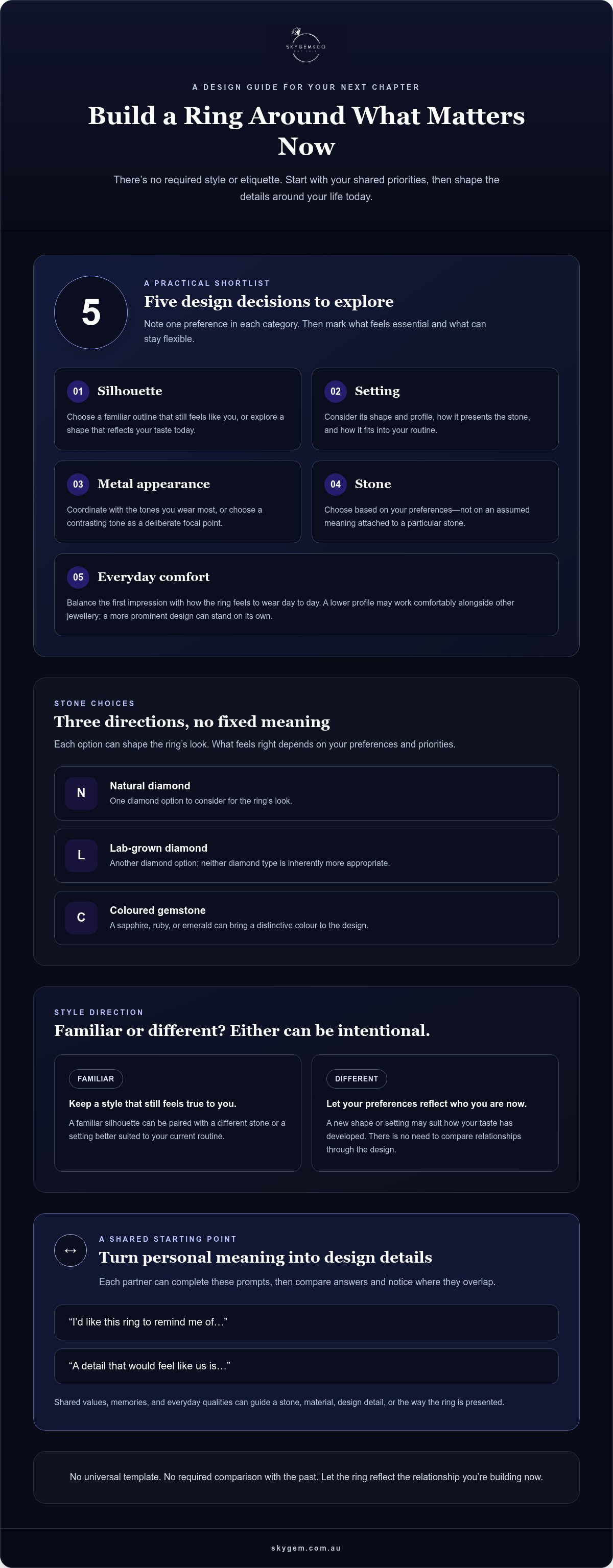
To make the conversation concrete, each partner can complete these prompts: “I’d like this ring to remind me of…” and “A detail that would feel like us is…”. Compare your answers and note where they overlap. That shared starting point can guide the design decisions that follow.
Choose a Ring Design That Reflects Your Preferences Today
Once you’ve identified what feels meaningful, translate those preferences into design decisions. Consider the ring’s silhouette, setting, stone, metal, and how it will feel to wear day to day. You might prefer a lower profile that works comfortably alongside other jewellery, or a more prominent design that stands on its own. Practical details matter as much as the first impression.
Browsing different engagement ring designs can help you spot what consistently appeals to you. Rather than choosing from a rulebook, compare a few styles and note what you like about each: its outline, level of detail, or the way it presents the stone.
Should your new ring look different from your previous one?
A different shape or setting can reflect how your taste has developed, but difference isn’t a requirement. If a familiar style still feels comfortable and true to you, choosing it again can be just as intentional. Focus on what appeals to you now, rather than treating a previous ring as either a pattern to repeat or a design you must avoid.
Compare individual features instead of making it an all-or-nothing decision. You may want a similar silhouette with a different stone, or a familiar stone in a setting that better suits your current routine. The historical context of engagement rings can offer perspective on how ring designs have evolved, while your own choice can remain grounded in your present-day taste.
How can metal and gemstone choices make the ring feel personal?
Consider how the ring’s metal colour and finish will sit alongside jewellery you already wear. If you reach for similar tones most days, a coordinating choice may feel natural. A contrasting tone can create a deliberate focal point. Think about the setting, too. Its shape and profile affect the ring’s overall appearance and how it fits into your routine, so describe what feels comfortable as well as what looks appealing.
Natural diamonds, lab-grown diamonds, and coloured gemstones offer different ways to shape the ring’s look. Neither diamond type nor a coloured stone is inherently more appropriate for a second marriage. You could be drawn to a diamond’s brightness or the distinctive colour of a sapphire, ruby, or emerald. The right choice depends on your preferences and priorities, not a presumed message about your relationship.
For a useful shortlist, note one preference in each category: silhouette, setting, metal appearance, stone, and everyday comfort. Then mark which details are essential and which are flexible. A personalised consultation can help turn that shortlist into a considered bespoke design, particularly when you’re balancing visual preferences with practical wear. This gives you a clear starting point for a ring that feels like yours today.
Second-Marriage Ring Etiquette: Make the Choice Without Pressure
Remarrying doesn’t require you to follow a different ring custom, or to wear an engagement ring at all. The right approach is the one that fits your relationship and the wearer’s preferences. Choosing a ring for a second marriage can involve practical decisions about how to select it, but no option is more correct simply because it’s a later marriage.
Couples can choose together, keep the ring a surprise, or agree on preferences before a proposal. Each approach balances participation and surprise differently:
- Choose together if you both want to compare designs and make the decision collaboratively.
- Keep it a surprise if the recipient enjoys that gesture and you already understand their preferences.
- Agree on preferences first if you want the proposal to remain a surprise while making sure the ring reflects the wearer’s taste.
Whichever approach you choose, discuss a comfortable budget together before exploring designs. A shared limit can guide decisions without turning the ring into a measure of commitment. Decide which elements matter most, then consider where you’re comfortable being flexible. There’s no universal amount couples need to spend.
How can couples handle different opinions about rings?
Start by identifying the priorities you share, such as comfortable everyday wear, personal meaning, or a particular design direction. If family or friends have strong expectations, talk privately with your partner about what feels helpful and what feels like pressure. You could say, “We appreciate how much this means to you, and we’re making the choice that suits us.” This keeps the conversation respectful while making the couple’s decision clear.
Different views don’t have to become a contest over who is right. A relative may value a familiar custom, while the wearer prefers a simpler or more individual design. You can listen without promising to follow every suggestion. Agreeing on the priorities you’ll use to assess options makes outside opinions easier to consider without letting them set the direction.
Is it meaningful to reuse or adapt an heirloom ring?
An heirloom can be a meaningful choice, but it isn’t an expectation for a second marriage. Consider its personal history and how that history feels to both of you. Then think about whether the ring suits the wearer’s taste and everyday preferences. You can value an heirloom’s significance and still decide that a different ring is the better fit.
If you value a family connection but the original design doesn’t feel right, a bespoke redesign can carry an idea or meaningful material into a ring that better reflects the wearer. Before settling on a direction, discuss what you want to preserve and what you’d like to change. An heirloom can inform the design without dictating it.
A Practical Way to Narrow Down Your Second-Marriage Ring
A clear process can make choosing a ring for a second marriage feel more manageable. Instead of comparing every feature at once, agree on what matters, then assess each design against the same priorities. This keeps the decision grounded in the wearer’s preferences and your shared budget, rather than letting a large number of options blur together.
What should you decide before comparing rings?
Start with a short brief you can refer to as you explore. Record your preferred metal appearance, overall style, stone type, and any everyday-wear needs. Discuss whether the ring should work alongside existing jewellery and whether you expect it to sit with a wedding band. A ring that looks appealing on its own may need a different profile or shape if pairing is a priority.
Agree on the buying approach, too. Decide whether one partner will choose the ring, you’ll select it together, or you’ll discuss preferences before a surprise proposal. Set a comfortable budget as a shared boundary, not a target to reach. If you find that a design’s most important feature changes your priorities, revisit the budget together before moving ahead.
Useful prompts include:
- What jewellery does the wearer reach for most often, and what do they rarely wear?
- Does their daily routine make a lower-profile or less prominent design preferable?
- Should the ring coordinate with an existing band, or will the pairing be decided later?
- Which matters most: the stone, the overall silhouette, the metal appearance, or a particular detail?
How can you make a shortlist feel manageable?
Once you’ve agreed on your brief, compare a small group of designs rather than browsing without a clear stopping point. Use the same criteria for each option: how well it suits daily wear, reflects the wearer’s taste, fits the budget, and works with a band if that matters. Clear priorities make comparisons useful because they show which differences actually affect your decision.
Separate essential details from flexible ones. For example, a particular stone type may be non-negotiable, while the setting or visual proportions can remain open. This distinction helps you discuss trade-offs without treating every feature as equally important. If you’re considering a custom design, a bespoke engagement ring design can bring several preferences together and be refined around the priorities you’ve established.
Before making a final decision, revisit your notes and check that the leading option still feels right in practical terms, not only appealing at first glance. If you’re choosing as a couple, each person can name their strongest preference and any remaining concern. This final comparison helps clarify whether you’re ready to settle on a design or need to adjust the brief.
Create a Bespoke Ring for the Relationship You’re Building
A shortlist can reveal what you both value, while a bespoke design can bring those preferences together in an individual, considered way. A consultation gives you space to discuss the wearer’s style, the story you want the ring to reflect, preferred materials and stones, and the budget you’ve agreed on. You don’t need to arrive with a finished design. Clear preferences, even if they’re still taking shape, provide a practical starting point.
What happens when you explore a bespoke engagement ring?
A design discussion connects your priorities to choices about the ring’s overall direction, materials, and stone. You might bring reference images, describe details you like, or explain how you want the ring to feel. There’s no need to use a particular motif to represent your story. A considered combination of design elements can make a ring personal without spelling out its meaning to anyone else.
SkyGem & Co. creates bespoke engagement rings using natural diamonds, lab-grown diamonds, and precious gemstones. A personalised consultation can help you consider which options align with your preferences and budget, then guide the design towards a precision-finished piece. Explore bespoke engagement ring design as one way to turn shared ideas into a considered design.
Bring a concise set of notes: the details you want to retain, those you’re open to changing, and practical considerations such as how the ring will be worn. If you’re adapting an idea from an heirloom or a previous design, explain what appeals to you about it. That helps the jeweller understand the preference behind the reference, rather than simply reproduce its appearance.
How can expert guidance make the next step clearer?
Personal design guidance can turn broad preferences into choices you can assess together. SkyGem & Co.’s designers, diamond setters, jewellers, and gemologists bring over 100 years of combined experience to their work. Their expertise supports a careful discussion of materials, stone preferences, and design priorities, with your budget in view. This can be especially useful when you agree on the feeling you want but aren’t sure how to express it in the ring’s details.
Virtual consultations and in-store appointments are available by appointment, so couples can discuss a design together or involve the wearer in the process. Use the conversation to refine your shortlist, explore how different preferences might work together, and identify which decisions still need consideration. Bespoke design doesn’t require a dramatic or highly detailed concept. It can begin with a simple preference and develop through thoughtful discussion.
To explore a ring shaped around your relationship and priorities, book a personalised jewellery consultation with SkyGem & Co.
Let Your Next Chapter Shape the Design
The ring doesn’t need to carry every detail of your story. It can mark the chapter you’re building together, with its meaning deepening through the life you share. As you move from ideas to a finished design, give yourselves room to make considered choices without measuring them against another couple’s expectations.
Choosing a ring for a second marriage can feel more grounded when the decision reflects who you are now. You might begin with a clear preference or discover what matters through the design process. Either way, the aim isn’t to meet a standard. It’s to choose something you’ll feel comfortable wearing and glad to have chosen together.
Your next chapter deserves a choice that feels like yours. Start with a consultation to explore a ring design shaped around your preferences, story, and budget.
Frequently Asked Questions
Is there a rule about wearing an engagement ring for a second marriage?
No, there’s no universal rule requiring an engagement ring for a second marriage or prescribing its style. Decide based on whether wearing one feels meaningful and comfortable to you. If you’re unsure, consider whether you’d enjoy wearing a ring beyond the proposal or whether another piece of jewellery would feel more natural. Your preference, rather than a presumed custom, can guide the decision.
Can a couple choose not to exchange an engagement ring when marrying again?
Yes. A couple can decide that an engagement ring isn’t part of how they want to mark their commitment. You might prefer to celebrate the proposal another way, choose wedding bands later, or exchange no jewellery at all. Discuss what feels significant to both of you so neither partner assumes a ring is expected. You can revisit the choice if your preferences change.
Should a second engagement ring be different from the first one?
No, it doesn’t have to be different. If a familiar shape or look still suits your taste, choosing it again can be intentional rather than a repetition by default. Compare designs you’re drawn to with the jewellery you currently wear. You may want the same overall look or prefer to change just one element, such as the stone or setting.
Can I use a family heirloom as an engagement ring for a second marriage?
Yes, an heirloom can be chosen if its history and appearance feel right to the wearer. Discuss what the ring represents within the family and whether that meaning feels comfortable for both partners. If you’re attached to the story but not the current appearance, a bespoke design discussion can explore whether elements of the heirloom could inform a new ring.
How much should you spend on an engagement ring for a second marriage?
There’s no set amount you should spend. Choose a budget that feels comfortable for your circumstances, and use it to compare designs rather than measure the relationship. Agree on a maximum before browsing, then identify which features matter most within that limit. If your priorities shift, discuss the trade-offs together before changing your budget.
Should we choose the ring together or keep it a surprise?
Either approach can work. If the wearer has specific preferences, choosing together makes those details easier to communicate. To keep the proposal a surprise, discuss broad preferences first, such as whether they favour a simple or more detailed look, then make the final selection yourself. Choose an approach that balances the recipient’s taste with the kind of proposal you both want.
Can a coloured gemstone be suitable for a second-marriage engagement ring?
Yes. A coloured gemstone can be a meaningful choice if it suits the wearer’s taste. It isn’t more or less appropriate because of the marriage history. SkyGem & Co. offers precious gemstones including sapphires, rubies, and emeralds. Consider which colours the wearer enjoys and how the stone will sit with their usual jewellery. A preference for colour can be reason enough, without needing a symbolic explanation.
Can a bespoke ring include details that represent a blended family?
Yes, a bespoke design discussion can explore ways to express what a blended family means to you. Describe a shared value or family memory and discuss whether a subtle design detail could reflect it. There’s no need to assign a separate symbol to each person or make the meaning obvious to others. A personalised consultation can help turn your idea into a considered design direction.