
Can a Jeweller Source a Specific Rare Gemstone for Me?

If you’re asking, “can a jeweller source a specific rare gemstone for me”, the answer depends on what you’re looking for and whether suppliers can offer a suitable stone. The exact colour, size or shape you imagine may not be available, so it helps to know which features are essential and where you could be flexible before starting a search.
A clear brief gives the search a practical starting point. Share the gemstone type, preferred colour, dimensions, cut, treatment preferences and budget, then ask how those priorities may affect the options a jeweller can explore through supplier networks. Before deciding, find out what information is available about each stone, including documentation, provenance and any independent laboratory reporting. Compare candidates beyond photographs where practical. At SkyGem & Co., gemstone sourcing can form part of a collaborative brief-and-review process, with the possibility of creating a bespoke piece once you approve a suitable stone.
Key Takeaways
- “Rare” can mean an unusual gemstone variety or a precise combination of colour, size, cut and origin, so define what matters most to you.
- If you’re asking “can a jeweller source a specific rare gemstone for me”, the answer depends on whether suppliers can offer a suitable match, not simply on how rare the stone is.
- Separate must-haves from preferences in your brief. Include the gemstone type, appearance, shape, size and budget to help focus supplier enquiries.
- Compare candidate stones against your priorities and the available evidence, rather than relying on a single photograph or description.
- Once you approve a suitable stone, it may become the starting point for a bespoke jewellery design shaped around your goals.
Can a Jeweller Source a Specific Rare Gemstone? What Is Realistic
A jeweller may be able to search supplier networks for a gemstone that fits your brief, but no search can guarantee an exact match. If you’re asking, “can a jeweller source a specific rare gemstone for me”, the practical answer depends on what you mean by “specific” and whether a suitable stone is available. Sourcing a loose gemstone to your requirements is different from choosing a ready-made piece or selecting from current stock. It may involve enquiries to reputable suppliers rather than choosing from stones already available to view.
What does “specific rare gemstone” mean to a jeweller?
A useful request names the gemstone species and describes the qualities you want. You might ask about alexandrite, ruby, emerald or sapphire, then explain your preferred colour, shape, dimensions, origin or visual character. A general introduction to what is a gemstone can help clarify the broader category, but your brief should identify the features that matter for your choice.
Each additional requirement narrows the search. A sapphire in a preferred colour may offer more options than one that must also meet precise dimensions, have a particular cut and come from a stated origin. Discuss these traits as separate priorities instead of treating them as an all-or-nothing specification.
When might a jeweller be unable to find an exact match?
Supplier availability may be limited, and stones of the same species can differ in appearance. Your preferred colour, size, cut or origin may not all occur together in a suitable candidate. Some priorities can also compete. For example, insisting on exact dimensions may reduce your options if appearance matters most. A jeweller can explain what candidates are available, but you decide whether any differences are acceptable.
A sourcing request starts a search. It doesn’t guarantee that a stone meeting every specification will be available. Before reviewing candidates, define what counts as a “close match” to you. Would you consider a different shape if the colour were right, or a slightly different size if the overall appearance suited your design? Making that distinction clear helps prevent a near-match from being mistaken for the exact stone you requested.
How Does a Jeweller Search for a Rare Gemstone?
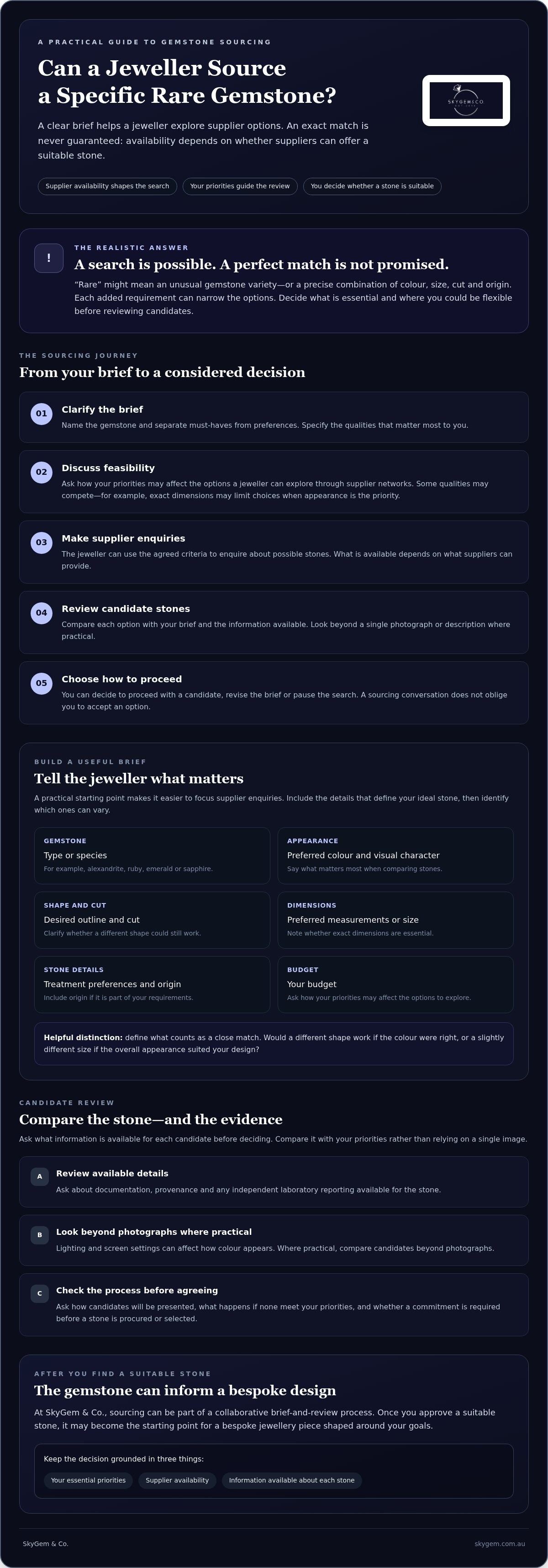
A gemstone search usually moves through stages, with each step helping establish whether the request is workable before you decide to proceed. If you’re wondering, “can a jeweller source a specific rare gemstone for me”, a jeweller can turn your preferences into criteria for supplier enquiries, then present potential candidates for your review. Timing and outcomes vary, so ask about the next step rather than relying on an assumed timeframe.
- Clarify the brief: identify essential requirements and which preferences could be flexible.
- Check feasibility: discuss whether the combination of features seems practical to pursue.
- Enquire with suppliers: use the agreed criteria to look for possible stones.
- Review candidates: assess how each option compares with your brief and what evidence is available.
- Decide: choose whether to proceed with a candidate, revise the brief or pause the search.
What happens after you share your gemstone brief?
The jeweller may clarify which details affect the search, such as whether colour or dimensions are non-negotiable and which other qualities can vary. This turns a personal preference into practical criteria to share with suppliers. A jeweller with a sourcing network can make enquiries through it, but the options depend on what suppliers can provide. If provenance or responsible practices matter to you, mention that early and ask what information is available. Responsible sourcing guidelines offer useful context for discussing transparency.
Before the search moves forward, confirm how candidate stones will be presented and what happens if none meet your priorities. Discuss any commitment required before a stone is procured or selected, so you understand the process before agreeing to proceed. A search is a conversation, not an obligation to accept an option.
How are sourced gemstone options presented for review?
Ask what material is available for each candidate, such as clear images, video, measurements and relevant documentation. Photographs can help with an initial comparison, but lighting and screen settings may affect how colour appears. Where practical, inspect the stone in person. If that isn’t possible, ask what remote viewing can and can’t show, and whether additional views or information are available. Confirm the details of any report rather than assuming one will be provided.
The process moves from a clear brief to supplier enquiries, candidate review and an informed decision, with approval at each stage. To explore gemstone categories that may help shape your preferences, view gemstone options.
How to Assess a Rare Gemstone Before You Choose It
Assess a promising candidate against your brief, not just its label or a polished photograph. If you’re asking, “can a jeweller source a specific rare gemstone for me”, reviewing the stone’s actual features and the evidence available can help you decide whether it suits your needs. Use a comparison table to keep the review focused and make any differences between your request and the candidate clear.
| Requested feature | Observed feature | Evidence available | Buyer priority |
|---|---|---|---|
| Preferred colour | Record the appearance under the viewing conditions provided | Images, video or direct inspection | Must-have or preference |
| Transparency and visible inclusions | Note what can be seen and where | Close-up views or inspection | Must-have or preference |
| Cut and dimensions | Compare the shape and measurements with your brief | Measurements and available stone details | Must-have or preference |
| Treatment information | Record what has been disclosed, or what remains unknown | Seller information or stone-specific documentation | Must-have or preference |
Which gemstone characteristics should you compare?
Review colour, transparency, cut, dimensions and visible inclusions in the context of the design you have in mind. Colour can look different under varied lighting or on a screen, so ask for suitable views and, where practical, inspect the stone directly. Your intended jewellery design also affects which trade-offs matter. A particular shape may be essential for the setting, while a small variation in another feature may be acceptable. For background on gemstone categories, see precious gemstones. The GIA Gem Encyclopedia can also help you explore gemstone characteristics.
What documentation can help you make an informed decision?
Ask what documentation accompanies the specific stone, who issued it and what it covers. Availability and scope vary by gemstone, so don’t assume every stone has a standard report or that a report alone establishes overall quality. Ask the jeweller to disclose known treatments and identify any limits in the available information, including details that haven’t been independently assessed. If a report is provided, check that its description corresponds to the stone you’re considering. Then weigh that evidence alongside your own visual assessment and the priorities in your brief.
How to Write a Useful Brief for a Rare-Gem Search
A clear brief helps a jeweller understand both the stone you picture and the limits you’re willing to consider. If you’re asking, “can a jeweller source a specific rare gemstone for me”, ranked preferences make it easier to assess what to search for and where flexibility may be possible. You don’t need specialist terminology. Plain descriptions, reference images and clear priorities are a practical starting point.
Which details should you include in your request?
Use this template to organise the information before discussing your search:
- Gemstone type: the species or variety you have in mind, if known.
- Preferred appearance: describe the colour and visual character in everyday language. Include reference images if they help.
- Shape and size: note your preferred cut and approximate dimensions, or say if these can vary.
- Jewellery intention: explain whether the stone is for a ring or another design, and share any setting ideas you have.
- Budget: provide a range in A$ so the jeweller can consider options within your intended spend.
- Treatment and documentation: state any treatment preferences and whether stone-specific documentation is a priority.
Be specific where you can, but don’t guess at technical details. Phrases such as “cool blue-green” or “soft peach” can communicate a colour direction. A reference image can add context, but shouldn’t be treated as a precise colour specification.
How can you keep the search flexible without losing your vision?
Rank your criteria before the search begins. Mark each as a must-have, a preference or a possible compromise, then agree with the jeweller on what counts as an acceptable alternative. For instance, you might keep colour and budget fixed while allowing the shape to vary. Or you might consider different dimensions if the overall appearance and fit for the intended design remain suitable.
State deal-breakers clearly, including treatments you don’t want or information you need before considering a stone. This gives the jeweller room to identify realistic options without assuming you’ll accept a near-match. Ask how you’ll review candidates and agree on next steps before committing. A useful brief doesn’t need to predict every detail. It needs to make your priorities clear enough for a focused, collaborative search.
What to Expect When a Jeweller Sources a Gemstone for Bespoke Jewellery
A suitable loose gemstone can become the starting point for a bespoke piece, with its proportions and appearance informing the design. The process links stone selection to practical decisions about how the gem will be set and worn. A consultation can help you discuss gemstone preferences, design goals and budget together, so the proposed piece is developed around an approved stone rather than assumptions about what may be available.
Approval matters at each stage. Before proceeding, make sure you’re comfortable with the specific stone and the design details discussed. If a candidate doesn’t suit your brief, ask what alternatives or next steps are possible instead of assuming you need to accept it.
Can a jeweller design a piece around the gemstone you source?
Yes, a sourced stone may guide the design, but the suitable setting depends on its individual shape, dimensions and other characteristics. A jeweller can discuss how these factors relate to your design ideas, then develop options for your review. The final design shouldn’t be assumed before the stone has been assessed. If you’re considering a ring, discuss how the gem’s proportions could inform the setting and other design choices.
Share how you want the piece to look and feel, along with any practical priorities. The jeweller can explain how those goals relate to the candidate stone and proposed setting, helping you weigh aesthetic preferences against the features of the gem itself.
What should you ask before starting a sourcing consultation?
Bring your gemstone brief and ask what additional information would help begin the search. Clarify how candidate stones will be presented, what information or documentation may accompany each one, and how you’ll approve the specific stone before design work proceeds. Discuss how your budget informs both the sourcing brief and the design conversation, and confirm when decisions or commitments are required.
If you’re uncertain about a feature or preference, say so. A consultation can help you refine the brief and understand how stone choice, design goals and budget fit together. This gives you a clearer basis for reviewing options without presuming that a particular stone or design is guaranteed.
Turn a Clear Gemstone Brief into Your Next Step
So, can a jeweller source a specific rare gemstone for me? A jeweller may be able to search through supplier networks, but availability and an exact match can’t be guaranteed. Define which features matter most, separate essentials from preferences, and review each candidate’s appearance and available documentation before committing.
At SkyGem & Co., procuring specific loose gemstones through reputable suppliers worldwide is part of the bespoke design and manufacturing service. An expert consultation can help you shape your brief, discuss your design goals and budget, and consider how an approved stone could inform a tailored piece. The decision remains yours at each stage, from reviewing a candidate to agreeing on design details.
Start with the qualities you value most, even if you’re still refining the details. A considered brief gives you a practical foundation for exploring what may be possible.
Frequently Asked Questions
Can a jeweller source any gemstone I request?
A jeweller may be able to search supplier networks for a requested gemstone, but can’t guarantee an exact stone or every combination of features. Availability depends on the gemstone type, preferred appearance, dimensions, treatment requirements, documentation and budget. If you’re wondering “can a jeweller source a specific rare gemstone for me”, share your priorities early and ask which features may need flexibility. A clear brief helps establish what may be feasible before you decide how to proceed.
How long does it take a jeweller to source a rare gemstone?
There’s no universal timeframe for sourcing a rare gemstone. The search depends on how specific your brief is, what suppliers can currently offer and whether any candidates meet your priorities. Ask how the jeweller will keep you informed and what happens if the first enquiries don’t identify a suitable stone. Treat an estimated period as guidance for your request, not a guarantee, unless the jeweller confirms that expectation for your circumstances.
What information should I give a jeweller when asking them to find a gemstone?
Share the gemstone type, if known, your preferred colour, shape and approximate size, the intended jewellery design, and your budget. Mark which details are essential and which are preferences, so the search can remain focused without becoming unnecessarily restrictive. Reference images can help communicate the look you have in mind. Also mention treatment preferences and whether documentation is important. A clear brief helps the jeweller assess options without assuming every detail can be matched.
Can I request an untreated gemstone?
Yes, you can tell the jeweller that an untreated gemstone is a priority and ask what evidence is available for each candidate. Don’t assume appearance alone can establish a stone’s treatment history, or that every gemstone has a laboratory report. If documentation is provided, ask who issued it and what it assesses, and clarify whether it addresses treatment. Include this preference in your initial brief so the jeweller can factor it into the search.
How can I check that a rare gemstone is genuine?
Ask what information supports the gemstone’s identification and whether documentation accompanies that specific stone. If an independent report is available, confirm who issued it and what it covers, as report availability and scope can vary. Review the stone through suitable images or inspect it in person where practical. A report can provide useful evidence, but it shouldn’t replace questions about the stone or your own assessment. Clarify anything uncertain before approving the purchase or design.
Can a jeweller make a custom ring with a gemstone they source?
A jeweller offering bespoke design may be able to procure a loose gemstone and discuss creating a ring around it. The stone’s shape and dimensions can influence the setting and design, so ask how selection and design approvals fit together. SkyGem & Co. includes specific loose gemstone procurement in its bespoke design and manufacturing service, working with reputable suppliers worldwide. A consultation can help you discuss your gemstone request, design intentions and budget without assuming a particular stone will be available.
Disclaimer
This article is for general informational purposes only and may include AI-assisted content. Pricing, specifications, and availability are subject to change. For accurate advice and current information, please contact SkyGem & Co. directly. Nothing in this content constitutes professional or financial advice.