
Alexandrite Engagement Rings: How to Choose the Gemstone and Setting

If you’re searching for “alexandrite engagement rings melbourne,” start by comparing the individual gemstones, not just the descriptions. Alexandrite is known for changing appearance under different lighting, but natural, treated and lab-created stones can be difficult to compare without clear information.
A beautiful first impression matters, but so do the details behind it. Consider how the stone looks in different light, what its documentation confirms and whether the proposed ring suits your preferences and everyday wear.
This guide covers what to assess when comparing alexandrites, which details to clarify about natural and lab-created stones, and how a setting and metal can complement the centre stone. It also suggests practical questions for a specialist consultation, including questions about availability, origin, treatment and identification documents. With those answers, you can choose a documented stone for its individual character, then shape the ring around how you want to wear it.
Key Takeaways
- Compare each alexandrite’s colour change, overall appearance and cut in person or through clear stone information, rather than relying on broad descriptions.
- Ask what documentation confirms about a stone’s identity, origin and treatment before deciding between natural and lab-created options.
- Choose a setting by weighing visibility, coverage, profile and personal style against the actual gemstone.
- Bring reference images, questions, design priorities and a budget range to help focus the consultation.
- A bespoke design can bring the selected alexandrite, setting and metal together around your preferences.
Alexandrite engagement rings Melbourne: what makes this gemstone distinctive?
Alexandrite is a variety of chrysoberyl valued for its colour-changing appearance. This effect, often called the alexandrite effect, describes a visible difference in the gemstone’s colour under different light sources. The Alexandrite mineral variety overview explains the gem’s mineralogical background and the scientific basis of this characteristic.
The effect varies from stone to stone. One alexandrite may show a more noticeable shift, while another may appear subtler. You might prefer a particular face-up colour, or be more interested in how clearly the colour changes as the lighting shifts. Whenever possible, assess the actual stone rather than treating a label or photograph as a complete representation.
How does alexandrite change colour?
Alexandrite can present a different balance of colours under different light sources. The precise appearance depends on both the gemstone and the lighting, so don’t assume every stone will show the same colours or the same strength of change.
Viewing conditions matter when comparing stones. Lighting, camera settings and the display used to view an image can all affect how a gemstone appears. Ask which lighting was used and whether images show the same stone under each condition. If viewing in person is possible, compare the stone under more than one suitable light source. Ask for clear viewing information and check that any identification documents refer to that specific stone.
Why choose alexandrite for an engagement ring?
Alexandrite may appeal if you want a centre stone with an individual, changing appearance. Its visual character can guide the ring’s design, from a simple setting that keeps attention on the stone to a more detailed composition. The right choice comes down to the gemstone and the features you want the design to highlight.
Consider what you want to bring forward, then discuss how the setting and metal might complement the actual stone. SkyGem & Co. lists alexandrite among its gemstone categories, but confirm current availability and stone details directly. The alexandrite gemstone collection is a place to explore relevant stones and consider what appeals to you.
How to assess an alexandrite before choosing a ring
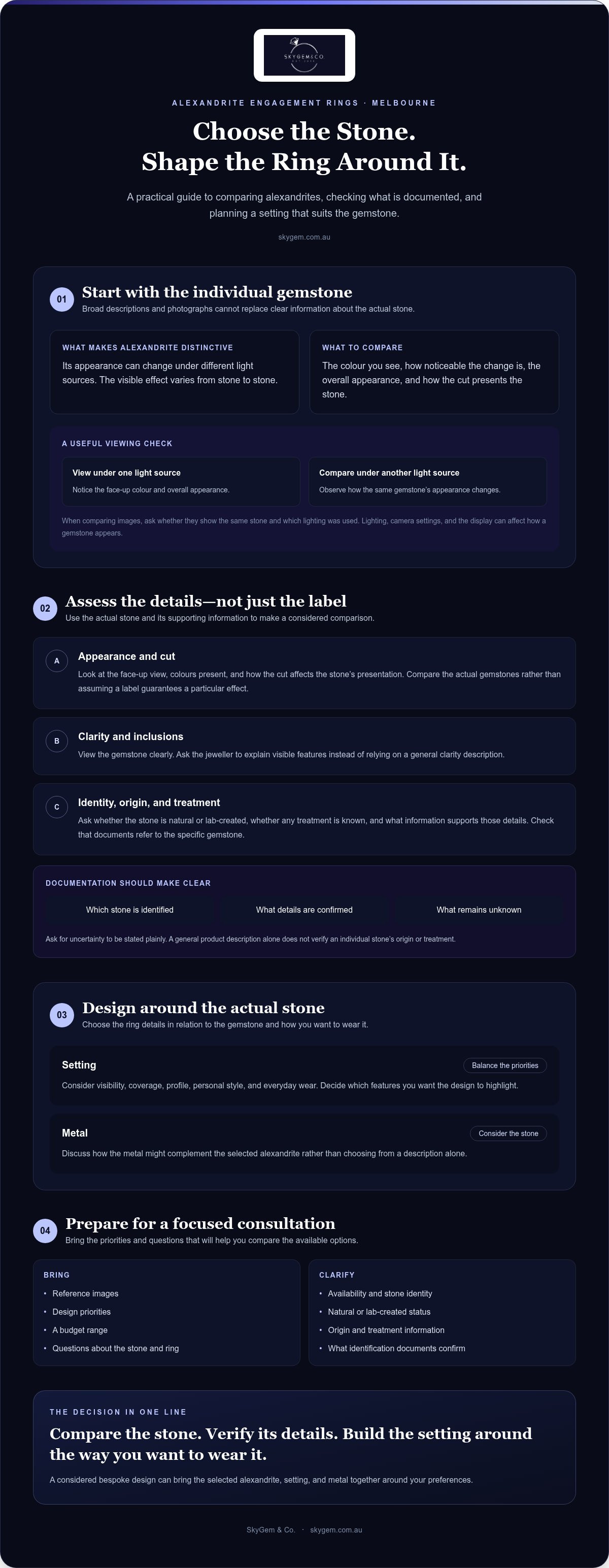
Evaluate each gemstone by its appearance and supporting information, rather than relying on broad labels such as “strong colour change” or “excellent clarity”. These descriptions don’t replace seeing the actual stone or understanding what its documentation confirms. A useful comparison looks at the stone’s appearance, how its cut presents it, and whether its identity and other details are clearly stated.
The Gemological Institute of America’s overview of alexandrite’s chameleon-like qualities offers background on the gemstone’s colour-change properties. When comparing images, ask whether they show the same stone under different lighting conditions. Photos taken in different environments may not be directly comparable, so request details about how each image was made. If suitable viewing options are available, examine the stone under more than one light source.
Which stone details should buyers compare?
Start with the face-up appearance, or what you see when looking down at the gemstone. Consider the colours visible, the stone’s overall appearance and whether you like the way its cut presents it. Ask how the cut affects the face-up view and colour presentation. These characteristics vary, so compare the actual stones rather than assuming that a particular cut or description guarantees a specific effect.
Assess clarity and inclusions in context, too. View the gemstone clearly and ask the jeweller to explain any visible features instead of relying on a general promise about clarity. Request information that identifies the specific stone and clarifies what is documented. If its origin, treatment or another detail is unknown or unsupported, ask for that uncertainty to be stated plainly.
What should you ask about origin and treatment?
Ask whether the alexandrite is natural or lab-created, and don’t infer this from its appearance. Check whether any treatment is known and what documentation supports the description. Confirm that documents refer to the exact gemstone being considered, and ask which details they do and don’t establish. A general product description isn’t enough to verify the origin or treatment of an individual stone.
Before choosing, ask: What is this stone’s identity? Is it natural or lab-created? What do I see in its appearance and inclusions? How does its cut affect its face-up presentation? What origin, treatment and identification details are documented? This checklist supports a specific discussion without implying a universal grading standard. A specialist consultation can help you review the available information and decide which characteristics matter most to you.
How stone, setting, and metal choices shape the ring
Choose a setting with the selected alexandrite in mind, rather than choosing from a reference image alone. The stone’s shape and dimensions affect how it sits in the ring, while the design influences its visibility and profile. First decide which priorities matter most: an open view of the gemstone, more coverage, a lower profile or a particular aesthetic.
Which setting suits your priorities?
Use this comparison to guide the discussion, not as a promise of how a setting will perform. Ask the jeweller to consider the proposed design alongside the actual stone and your wear preferences.
| Design priority | What to discuss |
|---|---|
| Stone visibility | How open the design is around the centre stone and whether it keeps attention on the gemstone. |
| More coverage | Whether a design that surrounds more of the stone suits your preference for coverage. |
| Lower profile | How high the stone sits above the band and whether that profile suits your daily routine. |
| Personal style | Whether you prefer a minimal look or more detail around the centre stone. |
Ask how the setting accommodates the alexandrite’s specific shape and dimensions, and what trade-offs the design involves. Your activities and preferences can help guide the choice. For example, someone who often uses their hands for practical tasks may prefer a different profile from someone who prioritises a more prominent presentation. Neither preference makes one setting universally right.
How should you choose the metal and accents?
Compare metal colours beside the actual gemstone and against jewellery you already wear. Different metal colours can create different visual impressions, but there’s no single correct choice. Consider how each option looks with the stone in the lighting conditions that matter to you.
Accent diamonds are optional. They can add detail, while a simpler design may keep the alexandrite as the main focus. Consider whether accents complement the centre stone’s colour and shape or draw attention away from it. Choose what suits your style, rather than assuming accent stones are necessary.
Consider the metal, accents and setting together with the selected gemstone. SkyGem & Co.’s bespoke engagement-ring guide provides broader design context. Before confirming the design, discuss how each choice works with the actual stone and your priorities.
What to prepare before an alexandrite ring consultation
A little preparation helps make a jewellery consultation more focused. You don’t need to have every decision made. Bring a sense of what matters to you and questions that will help clarify the specific stone and the ring design.
- Set out your preferences. Note the colour appearance you’re drawn to, your preferred ring profile and metal colour, and whether you like the idea of accent stones. Reference images can help communicate your taste, but treat them as inspiration, not confirmation that a particular product, gemstone or named collection is available.
- Prepare questions about the stone. Ask whether the specific alexandrite is available, how it’s identified as natural or lab-created, and what is known about its origin and treatment. Request supporting documentation and confirm that it relates to the stone being considered. If information isn’t available, ask for that to be made clear.
- Prioritise the design. Share which details matter most, such as keeping the centre stone prominent, choosing a lower profile or designing around everyday wear. Ask how the proposed setting accommodates the selected stone, and confirm the bespoke process stages, including design review and final stone setting.
- Decide on a budget range. Set a range before the discussion, then ask how the stone and design choices can be tailored to it. A clear range helps focus the conversation without requiring you to settle on every design detail in advance.
Explain why particular reference images appeal to you. Is it the band shape, metal colour, the way the gemstone is framed or the overall profile? Identifying those details gives the jeweller useful direction while leaving room to develop a design around the actual alexandrite and its confirmed characteristics.
SkyGem & Co. offers expert consultations and a bespoke design service that includes consultation through CAD design and stone setting. Use the discussion to clarify stone availability and documentation, and ask how design changes are reviewed before the setting is finalised.
From alexandrite selection to a considered bespoke ring
A bespoke ring takes shape through a series of decisions: clarify what you want from the gemstone, review a suitable stone, agree on the setting and other design priorities, then confirm the specifications. Treating these as separate steps makes it easier to check that the design reflects both the selected alexandrite and how you intend to wear the ring.
How does a bespoke ring process help?
SkyGem & Co.’s bespoke service includes expert consultation, CAD design and stone setting. These stages create opportunities to discuss how the proposed design relates to the selected gemstone and your priorities. A CAD design can help you review details before they’re finalised, and the stone-setting stage brings the chosen gem into the agreed design. Confirm timing and stone availability directly.
For an overview of the design service, see the custom engagement ring design page. Use the consultation to coordinate stone and setting decisions rather than treating them as separate choices. If the stone’s dimensions or appearance lead you to reconsider a design feature, discuss that before approving the final specifications.
What should you confirm before approving the design?
Before approving the design, check that the details are clear and refer to the specific gemstone and ring under discussion:
- Gemstone identity: Confirm whether the alexandrite is natural or lab-created, and ask what is known about its origin and treatment.
- Supporting information: Review available identification or certification documents, and clarify which details aren’t documented or confirmed.
- Design priorities: Check that the setting, metal and any accent stones reflect your agreed choices and accommodate the selected gemstone.
- Approved specifications: Ask for the final design details to be explained before approving the ring to proceed to production.
Clear confirmation helps avoid relying on assumptions about the stone or design. To discuss your preferences and questions with a specialist, you can schedule a jewellery consultation.
Make your next ring decision with confidence
A considered alexandrite ring starts with the individual gemstone. Compare its appearance, ask what its documentation confirms, and clarify its identity, origin and treatment details. Then choose the setting and metal around the stone and the wearer’s preferences, rather than selecting design features in isolation.
SkyGem & Co. offers expert consultations and bespoke engagement-ring design, including CAD design through final stone setting. A consultation can help bring those decisions together, clarify available stone information and review the design before approval.
With clear questions and an agreed understanding of the design, you can move forward at your own pace and create a ring that feels thoughtfully chosen.
Frequently Asked Questions
Does alexandrite change colour in every type of light?
Alexandrite can appear different colours under different light sources, but the effect isn’t identical in every stone or guaranteed under every lighting condition. The visible change depends on the gemstone and the light illuminating it. When comparing stones, ask how they were photographed or filmed and, where possible, view the same stone under more than one suitable light source.
Is alexandrite suitable for an engagement ring?
Alexandrite can be considered for an engagement ring, but suitability depends on the specific gemstone, its setting and how the ring will be worn. Ask a specialist how the proposed design accommodates the stone. Your daily activities and preferences can help guide the setting choice, so the ring balances appearance with practical wear considerations.
How can I tell whether alexandrite is natural or lab-created?
Ask whether the specific stone is natural or lab-created, and request supporting identification documents if available. Appearance alone isn’t a dependable way to establish how a gemstone was created. Confirm that any documentation refers to the actual stone being considered, and ask whether its origin or treatment is known. A specialist can explain what the available documents do and don’t confirm.
What should I ask before buying an alexandrite engagement ring?
Ask what identifies the gemstone, whether it’s natural or lab-created, and what is known about its origin, treatment and documentation. Check how the stone appears under different lighting and how its cut and inclusions affect its overall look. Discuss how the proposed setting suits the stone and your wear preferences, then confirm the ring’s design details before approving them.
Can an alexandrite engagement ring be made to a custom design?
Yes, a bespoke design can be developed around an alexandrite, subject to confirming a suitable stone’s availability. SkyGem & Co. offers expert consultations and bespoke engagement-ring design, including consultation, CAD design and final stone setting. Discuss the design in relation to the selected gemstone and your preferences, and confirm the stone details and design stages before proceeding.
How should I care for an alexandrite engagement ring?
Ask the jeweller for care advice based on the specific alexandrite and its setting, rather than assuming all rings need identical handling. Confirm how to clean the ring safely and whether any activities or cleaning methods should be avoided. If the gemstone or setting is knocked or appears loose, seek advice before wearing it again. Regular attention to the setting can help you identify concerns early.
Can I choose the alexandrite before deciding on the setting?
Yes, selecting the stone first can help guide the setting design. Its dimensions, shape and appearance give the jeweller practical details to consider when discussing the ring’s profile and how prominently the gemstone will sit. Bring your preferences to that discussion, then review how the proposed design accommodates the chosen stone before confirming the final specifications.
Disclaimer
This article is for general informational purposes only and may include AI-assisted content. Pricing, specifications, and availability are subject to change. For accurate advice and current information, please contact SkyGem & Co. directly. Nothing in this content constitutes professional or financial advice.