
10 Essential Questions to Ask When Buying a Ruby: The 2026 Expert Guide

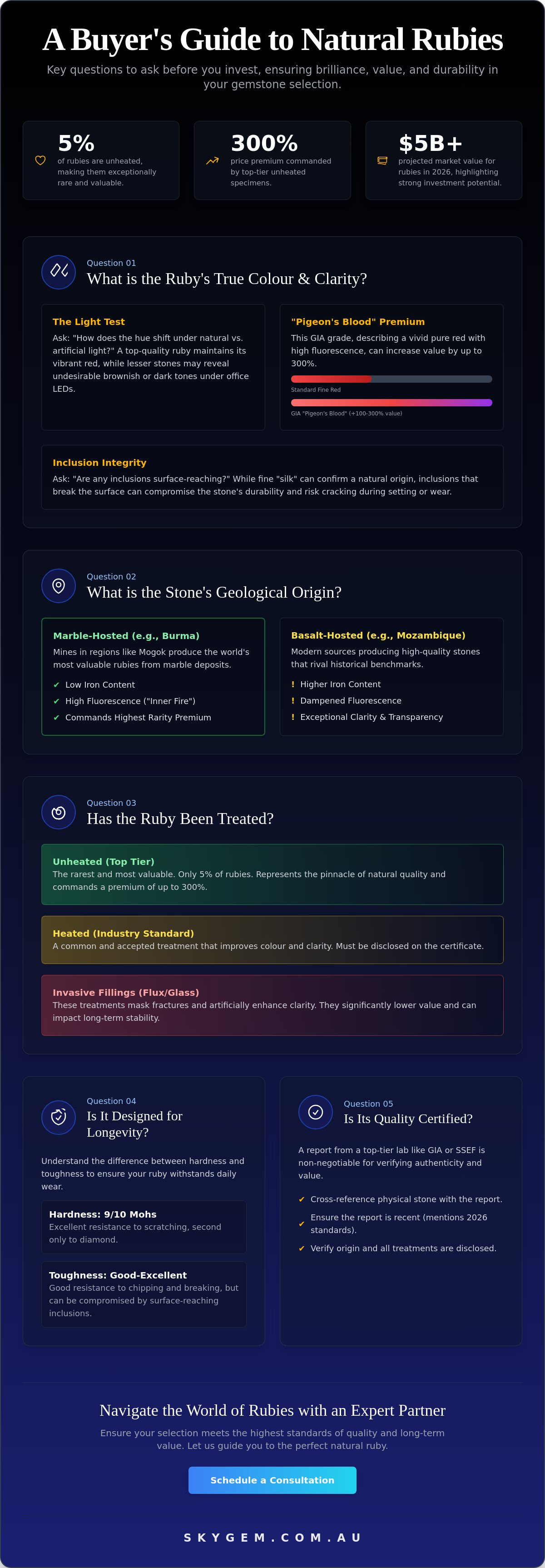
Did you know that only 5% of the world's rubies remain completely unheated, yet these rare specimens command a price premium of up to 300%? In a 2026 market valued at over $5 billion, the difference between a high-yield investment and a depreciating asset often comes down to the specific questions to ask when buying a ruby. You likely feel the pressure of choosing a stone that balances aesthetic brilliance with technical integrity. It's natural to feel concerned about the prevalence of synthetic stones or the complex import legalities surrounding the JADE Act.
We view every gemstone selection as a technical partnership. This guide provides a professional framework to evaluate ruby quality, ensuring your selection meets the highest standards of durability and long-term value. We'll examine the 2026 GIA report updates, the impact of Mozambique versus Burmese origins, and how to verify treatment history before you commit to a bespoke setting. You'll gain the specific knowledge needed to interpret a certification report and choose a natural ruby with absolute confidence.
Key Takeaways
- Define the technical relationship between chromium content and fluorescence to distinguish between vague marketing terms and genuine optical performance.
- Analyze how geological provenance, such as marble-hosted deposits, acts as a performance metric for a stone's rarity and historical value.
- Identify the critical questions to ask when buying a ruby to separate industry-standard heat treatments from invasive procedures like flux or glass filling.
- Distinguish between mineral hardness and structural toughness to select a ruby ring design that ensures long-term viability and resistance to chipping.
- Verify the authenticity of natural rubies by cross-referencing physical stone characteristics with the latest 2026 GIA and SSEF certification standards.
Understanding Ruby Quality: Questions About Colour and Clarity
The red glow of a ruby isn't just a visual trait; it's a measurable physical property. This phenomenon, known as fluorescence, occurs when chromium atoms within the crystal lattice react to ultraviolet light. High chromium levels define the finest natural rubies, providing a vibrant "inner fire" that distinguishes them from other red gemstones. Understanding Ruby gemstone properties is essential because these technical nuances dictate the stone's performance across various environments. Preparing a specific list of questions to ask when buying a ruby ensures you aren't swayed by subjective marketing terms that lack technical backing.
One of the most critical questions to ask when buying a ruby is: "How does this ruby’s hue shift under natural versus artificial light?" Many stones appear vivid red under direct sunlight but may reveal brownish or overly dark tones under standard office LED lighting. This shift is particularly relevant when evaluating "Pigeon’s Blood" rubies. While marketers use this term frequently, it technically describes a vivid, pure red with high fluorescence and a slight purplish tint. According to 2026 market data, a GIA report confirming this specific grade can increase a stone's value by 100% to 300% compared to standard fine red specimens.
The Nuances of Ruby Hue, Tone, and Saturation
Hue represents the primary color, but secondary overtones like orange or purple significantly impact the final valuation. While a slight purplish overtone is often desired in premium specimens, an orange overtone can make a stone appear less saturated. Saturation defines the vividness of the red; it should be intense and consistent throughout the gem. Tone is the most overlooked factor, describing how light or dark the stone appears. If the tone is too dark, the ruby looks black in low light. If it's too light, the stone may be classified as a pink sapphire, drastically altering its market position.
Evaluating Inclusions and Structural Integrity
Clarity standards for rubies differ fundamentally from diamonds. While "eye-clean" diamonds are the industry benchmark, perfectly clean rubies are exceptionally rare. You'll often encounter "silk," which consists of fine rutile needles that scatter light and confirm the stone is a natural, unheated specimen. However, you must specifically ask: "Are there any surface-reaching inclusions that threaten the stone’s longevity?" Inclusions that reach the surface can act as cleavage planes, increasing the risk of the stone cracking during the setting process or under the rigors of daily wear. Distinguishing between character-giving silk and structural flaws is vital for the long-term viability of your purchase.
The Provenance Factor: Questions Regarding Ruby Origin
Origin is more than a geographic label; it serves as a technical performance metric that dictates a stone's rarity and historical value. When you evaluate a potential purchase, asking for documentary evidence or a lab report confirming provenance is non-negotiable. This is among the most vital questions to ask when buying a ruby, as the geological environment of the mine directly influences the gem's chemical makeup. For instance, marble-hosted rubies from regions like Burma are typically low in iron, which allows for higher fluorescence. Conversely, basalt-hosted rubies contain higher iron levels; this iron acts as a quencher that can dampen the stone's characteristic glow.
Mozambique has established itself as the modern standard for high-quality, ethically sourced stones. These deposits produce rubies with exceptional clarity and transparency that rival historical benchmarks from older mines. To understand how these geographic factors converge with other grading criteria, you may consult GIA's guide to ruby quality. If you are beginning your search, reviewing the diverse sourcing options at SkyGem & Co. Gemstones provides a practical starting point for comparing regional characteristics and finding a stone that aligns with your technical requirements.
Burmese Rubies and the Rarity Premium
Mogok rubies remain the world's most valuable due to their unique low-iron geology. This lack of iron allows the chromium within the crystal to react intensely to ultraviolet light, creating a visual "pop" that basalt-hosted stones cannot replicate. As of 2026, the investment outlook for Burmese stones is defined by a significant supply-side squeeze. Political instability and strict trade sanctions under the JADE Act have restricted new imports into major markets. This makes existing, certified Burmese rubies highly prized assets that command a significant per-carat premium over stones from other regions.
Ethical Sourcing and Regulatory Adherence
Supply chain transparency is a priority for the modern collector and investor. One of the essential questions to ask when buying a ruby is: "How do you ensure your suppliers meet international ethical standards?" Buying from an Australian business ensures that your purchase adheres to strict domestic consumer protections and international regulatory frameworks. This partnership approach guarantees that the stone's journey from the mine to the final setting is fully documented, providing you with confidence in both the stone's value and its ethical origins.
Treatment Transparency: Heated vs. Unheated Rubies
Transparency regarding gemstone treatments is the foundation of a secure investment. Approximately 95% of rubies entering the global market undergo heat treatment to enhance their colour and clarity. This process is a widely accepted industry standard rather than a flaw. Technical data on ruby origin and treatments confirms that stable heating has been practiced for centuries to dissolve rutile silk and intensify the red hue. It's a permanent enhancement that does not affect the stone's structural integrity. However, the remaining 5% of rubies that require no thermal intervention occupy a distinct collector status.
One of the definitive questions to ask when buying a ruby is: "Is this stone unheated, and if so, which independent lab has verified this?" Because unheated stones are exceptionally rare, they represent the pinnacle of the market. For those seeking this level of scarcity, exploring a curated Natural Rubies Collection provides a benchmark for the visual depth and character these stones possess. You must ensure that any claim of "unheated" is backed by a reputable laboratory report, as the price difference is substantial.
Identifying Glass-Filled and Beryllium Treated Stones
While standard heat is stable, non-traditional treatments like lead-glass filling or beryllium diffusion create significant risks. Glass-filled rubies are unsuitable for high-end bespoke jewellery because the fillers can react poorly to household chemicals or the heat from a jeweller's torch. You should specifically ask: "Has this ruby undergone any 'non-traditional' treatments like lead-glass filling?" These stones are essentially composite materials and don't hold the same long-term value or durability as a natural, traditionally heated ruby. Identifying these unstable fillers is a critical step in your due diligence process.
The Value Proposition of Unheated Rubies
The market premium for unheated specimens is a primary driver for collectors. An unheated ruby can command a market value 2x to 3x higher than a heated stone of similar visual appearance. In the context of unheated specimens, "natural" refers to a stone whose colour and clarity are entirely the result of geological pressure and temperature, without human thermal intervention. This rarity makes them top-tier assets. For a detailed breakdown of how these treatments influence current market rates, consulting the SkyGem & Co. Ruby Price Guide will help you align your budget with the technical specifications of your chosen stone. Understanding these questions to ask when buying a ruby allows you to distinguish between a beautiful gemstone and a truly rare investment piece.
Designing for Longevity: Questions About Settings and Durability
Technical durability is a dual-metric assessment comprising hardness and toughness. While many buyers focus on the Mohs scale, where rubies rank at a 9, it's the stone's toughness that ensures it survives a significant impact. Hardness refers to scratch resistance, whereas toughness indicates the gem's ability to resist chipping or fracturing. Because rubies lack a natural cleavage plane, they are the premier choice for engagement rings after diamonds. One of the practical questions to ask when buying a ruby involves its structural integrity for daily wear. A stone with a high Mohs rating is an evolving asset that can be passed down through generations if protected by a correctly engineered setting.
Setting choice isn't purely an aesthetic decision; it's a protective measure for the stone's most vulnerable points. You should ask your consultant: "Which setting style will best protect the edges of this specific ruby shape?" For instance, marquise or pear cuts require V-prongs to shield their delicate tips from accidental strikes. Hand-finished settings provide a level of precision and metal density that mass-produced castings cannot match, ensuring the claws remain secure over decades. If you are planning a unique piece, exploring Custom Engagement Rings allows you to integrate these protective features into a bespoke design that balances elegance with mechanical stability.
Performance Metrics: The Mohs Scale vs. Real-World Wear
A ruby's 9/10 Mohs rating means it's resistant to the environmental abrasives that scratch softer gems like emeralds or opals. This stability allows rubies to maintain their polish over decades of constant use. When discussing maintenance, one of the questions to ask when buying a ruby is: "Are there any specific maintenance requirements for this particular stone?" Generally, natural and traditionally heated rubies react well to ultrasonic cleaning and standard jewellery detergents. They are chemically stable and don't lose their lustre when exposed to common household chemicals, though you should always avoid concentrated acids that could affect the metal setting.
Setting a Ruby for Maximum Light Performance
Strategic prong placement can either enhance a ruby's natural brilliance or inadvertently highlight areas of colour zoning. If a stone has a slight secondary overtone, the choice of metal can shift its appearance. Platinum or white gold provides a cool contrast that makes a vivid red "pop," while 18K yellow gold can add warmth to a stone that might otherwise appear slightly too cool or purplish. You must ask: "How will the metal choice impact the perceived saturation of the red?" A technical consultant can demonstrate how different alloys interact with the ruby’s specific hue to achieve the most balanced visual outcome.
Secure the longevity of your investment by partnering with the experts at SkyGem & Co. to design a bespoke ruby engagement ring that prioritises both structural protection and aesthetic precision.
Certification and the Final Purchase Consultation
The technical anchor of any gemstone acquisition is the independent laboratory report. For high-value rubies, documentation from the GIA, GRS, or SSEF is non-negotiable. These reports provide an objective analysis that removes the ambiguity of "market terms" and replaces them with verifiable data. During your final review, you must cross-reference the 'Stone ID' on the report with the physical gem. This ensures the stone you are viewing is the exact specimen described in the technical findings. A professional consultant will facilitate this process by using a 10x loupe or a digital microscope to show you specific inclusions that match the report's plot map.
One of the most critical questions to ask when buying a ruby during the final consultation is: "Does the certificate mention any 'minor residues' or 'clarity enhancements'?" While standard heat is acceptable, the presence of flux residues or significant clarity enhancements can impact the stone's long-term value and structural integrity. We view this final stage as a technical partnership. Our role is to act as your consultant, ensuring every specification on the report aligns with your expectations for quality and rarity. To begin this collaborative process, you can book a consultation with SkyGem & Co. to review our certified inventory.
Reading a GIA Ruby Report Like an Expert
The GIA implemented a significant gemstone report overhaul in 2026, making the 'Comments' section more vital than ever. This area is where gemologists note subtle details that don't fit into standard grading categories. You should look for specific mentions of geographic origin, which is an optional but essential add-on for high-value specimens. An 'Origin' opinion provides the historical and geological context that drives market premium. You should also ask: "Can we view the stone under a 10x loupe to match the report’s inclusion map?" This exercise confirms the stone's identity and helps you understand its unique internal character.
The SkyGem & Co. Bespoke Experience
Our bespoke process transitions seamlessly from loose stone procurement to technical design. Once you've selected a certified ruby, our specialists use CAD technology to create a setting that respects the stone's specific dimensions and protective requirements. Working with a boutique provides you with direct access to technical specialists who understand the intersection of aesthetic design and mechanical stability. As you finalise your purchase, your final question should be: "What is the long-term service and maintenance plan for this piece?" We treat every custom-made engagement ring as a permanent asset, providing the ongoing care necessary to ensure its brilliance and structural integrity remain intact for generations.
Securing Your Ruby Investment for the Future
Selecting a ruby requires a synthesis of technical data and aesthetic preference. By mastering the questions to ask when buying a ruby, you shift from a passive consumer to an informed partner in the design process. You now understand how chromium-driven fluorescence and geological provenance dictate a stone's rarity; you also recognize the critical importance of verifying treatment history through a GIA or SSEF report. These technical benchmarks ensure your selection possesses the structural integrity and market value required for a generational asset.
Our GIA-trained consultants are ready to guide you through the procurement of ethically sourced natural and unheated rubies. We combine this technical expertise with bespoke hand-finished craftsmanship to ensure your project’s long-term viability. It's a methodical approach that prioritizes performance over hype. When you're ready to apply these insights to a specific design, you can design your bespoke ruby engagement ring with SkyGem & Co. today. We look forward to establishing a reliable partnership for your next significant acquisition.
Frequently Asked Questions
Is it better to buy a heated or unheated ruby for an engagement ring?
Both heated and unheated rubies are technically suitable for the daily wear required of an engagement ring. Heat treatment is a stable and permanent enhancement that improves colour and clarity without compromising the stone's structural integrity. While unheated rubies command a significant rarity premium, a traditionally heated stone offers excellent value and durability for a bespoke setting. Your choice should depend on whether you prioritise absolute geological rarity or visual performance within a specific budget.
What is the most expensive colour for a ruby?
The most expensive colour is a vivid, pure red often described as "Pigeon's Blood." This specific hue features a slight purplish secondary overtone and high levels of fluorescence. According to 2026 market standards, this colour grade can more than double a stone's value compared to standard red specimens. The intensity of the red is driven by chromium content within the crystal lattice, which creates a vibrant glow under both natural and artificial light sources.
How can I tell if a ruby is real or synthetic at home?
Identifying a synthetic ruby at home is exceptionally difficult because lab-grown stones are chemically and physically identical to natural ones. While a 10x loupe might reveal curved growth lines in some older flame-fusion synthetics, modern flux-grown stones require advanced spectroscopic analysis. Reliable verification always requires a report from a top-tier laboratory like the GIA to ensure the stone's natural origin. Professional gemologists use specialised equipment to detect microscopic inclusions that are impossible to see with the naked eye.
Does the origin of a ruby really affect its price?
Geographic origin significantly impacts a ruby's market value due to rarity and specific geological characteristics. Understanding how provenance drives value is one of the most important questions to ask when buying a ruby. Burmese rubies from the Mogok region command the highest prices because of their low iron content and high fluorescence. However, ethically sourced rubies from Mozambique have become the modern standard, offering exceptional clarity and transparency that often rivals historical specimens from older, more expensive mines.
Are rubies more durable than sapphires for daily wear?
Rubies and sapphires share the same mineral species, corundum, and therefore possess identical durability metrics. Both rank at a 9 on the Mohs scale of mineral hardness, making them the most durable gemstones for daily wear after diamonds. Their high resistance to scratching and structural toughness ensures they remain stable in various setting styles. They are an ideal choice for a permanent asset, provided they don't contain surface-reaching inclusions that could compromise the stone's integrity during the setting process.
What should I look for on a GIA ruby certificate?
When reviewing a GIA certificate, focus on the "Results" and "Comments" sections to identify the stone's technical profile. These areas disclose any detected treatments, such as heating or lead-glass filling, which are essential questions to ask when buying a ruby. You should also verify the geographic origin and cross-reference the inclusion plot map with the physical stone to confirm its identity. The 2026 report updates provide clearer data on clarity enhancements and any residues that might affect the stone's value.
Is 'Pigeon's Blood' a technical grade or a marketing term?
"Pigeon's Blood" serves as both a traditional trade term and a high-level colour grade used by major laboratories. While it is often used loosely in marketing, labs like GRS and GIA apply strict criteria regarding hue, saturation, and fluorescence before assigning this designation. It technically describes a vivid red with a soft glow that remains consistent under different lighting conditions. This grade represents the pinnacle of ruby quality and carries a significant price premium in the global gemstone market.
How much should I expect to pay for a 1-carat high-quality ruby?
Market pricing for a 1-carat ruby is determined by the intersection of colour saturation, clarity, and treatment status. Unheated stones with a vivid red hue and high transparency represent the highest price tier in the 2026 market due to their extreme scarcity. Conversely, traditionally heated rubies with minor inclusions provide a more accessible entry point for bespoke jewellery. You should consult a technical specialist to compare current market data against the specific characteristics and certification of your chosen gemstone.
Disclaimer
This article is for general informational purposes only and may include AI-assisted content. Pricing, specifications, and availability are subject to change. For accurate advice and current information, please contact SkyGem & Co. directly. Nothing in this content constitutes professional or financial advice.