
Rose Gold Jewellery: A Comprehensive 2026 Trend and Metallurgy Guide

The warmth of your 18ct rose gold ring isn't just a design choice; it's a sophisticated metallurgical balance where a 2.5% shift in copper content can be the difference between a timeless heirloom and an alloy that triggers skin sensitivities. You likely appreciate the romantic hue of pink-toned metals, yet choosing between 9ct and 18ct often feels like a gamble against oxidation and durability. It's common to feel uncertain about how these alloys age or whether the copper content will react with your skin over a ten year wear cycle.
This guide provides the technical clarity you need to invest in bespoke jewellery with absolute confidence. We'll examine the specific alloy compositions used in the Australian market and how they impact both structural integrity and long-term aesthetic value. We will break down the science of 2026 trends, evaluate the best gemstone pairings for pink-hued metals, and provide the data required to select the right carat for your next commission. By understanding the intersection of engineering excellence and architectural aesthetics, you can ensure your selection remains a permanent asset.
Key Takeaways
- Gain a technical understanding of 18ct and 14ct alloy compositions to balance aesthetic saturation with the rigorous durability requirements of high-end jewellery.
- Identify how the warm spectral output of rose gold creates the "Sunset Effect," enhancing the visual performance of rubies and pink sapphires in bespoke settings.
- Assess the compatibility between copper-based alloys and various skin undertones to ensure long-term comfort and optimal maintenance of the piece's structural integrity.
- Explore the bespoke design journey in Melbourne, where CAD precision ensures a future-proofed masterpiece that functions as a permanent and evolving asset.
What is Rose Gold? The Evolution of the "Pink Gold" Trend
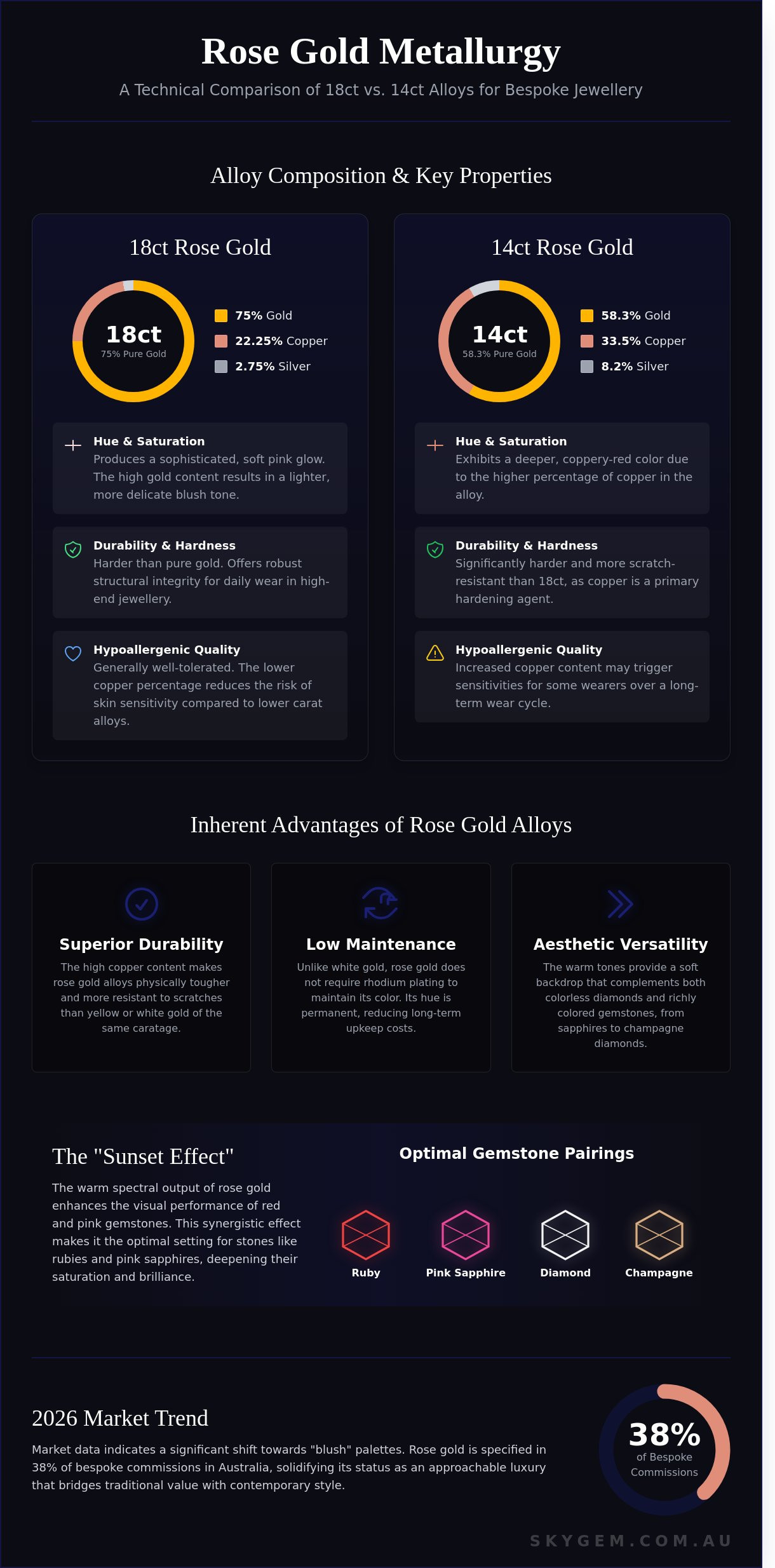
Rose gold isn't a naturally occurring element found in the earth's crust; it's a precision-engineered alloy designed for both aesthetic warmth and structural durability. By combining pure 24-carat gold with copper and a small percentage of silver, jewellers create a metal that offers a distinct pinkish hue. To understand what is rose gold from a technical perspective, one must examine the copper content. A standard 18k rose gold composition typically consists of 75% gold and approximately 22.25% copper. This specific metallurgical balance provides the hardness required for daily wear while maintaining the prestige of high-purity gold. The resulting warm tone serves as a sophisticated alternative to the cooler profiles of platinum or white gold.
The History of Rose Gold in Fine Jewellery
The material first gained international prominence in 19th-century Russia. Carl Fabergé famously utilised this "Russian Gold" in his intricate imperial eggs during the late 1800s, marking its first major era of luxury status. While its popularity shifted over the following decades, the 1920s Art Deco movement saw a significant resurgence. Designers frequently paired the warm metal with geometric white diamonds to create high-contrast, architectural aesthetics. By 1945, wartime restrictions on platinum forced a global return to gold alloys, which solidified the pinkish metal's place in the permanent jewellery lexicon. It's a metal that has consistently moved from niche fashion to a symbol of timeless romance.
Why Rose Gold is Trending in 2026
Current market data from early 2026 indicates that 38% of bespoke commissions in Australia now specify rose gold as the primary metal. This shift reflects a broader design preference for "nude" and "blush" palettes that integrate seamlessly with modern wardrobes. It's increasingly viewed as an approachable luxury. Unlike the stark, formal appearance of traditional yellow gold, the copper-infused tones complement a diverse range of skin tones. This versatility makes it a primary choice for engagement rings, where clients seek a balance between traditional value and contemporary style. The psychological appeal lies in its perceived softness; it's a metal that feels personal and intimate rather than purely transactional.
- Durability: The high copper content makes it tougher than yellow or white gold.
- Maintenance: It doesn't require rhodium plating, reducing long-term upkeep costs.
- Versatility: It pairs exceptionally well with both colourless diamonds and champagne-toned gemstones.
The rise of customisation has further propelled this trend. Modern couples often bypass standard showroom designs in favour of unique metal combinations. Because rose gold provides a soft backdrop, it allows the brilliance of a high-quality stone to remain the focal point without the aggressive yellow reflections seen in other alloys. It's a pragmatic choice for those valuing longevity and a subtle, architectural elegance.
Understanding the Metallurgy: 18ct vs 14ct Rose Gold
The distinct blush of rose gold is a result of precise metallurgical engineering rather than a natural occurrence. While pure gold is always 24ct and yellow, it's too soft for daily wear in high-performance jewellery. To achieve the durability required for fine pieces, we alloy it with other metals. The specific hue depends on the concentration of copper. A higher copper content shifts the metal from a soft pink to a deep, coppery red. This gold-copper alloy structure is inherently robust. In fact, this alloy is often harder and more resistant to scratching than traditional yellow gold because copper acts as a significant hardening agent during the casting process.
The Alloy Recipe: Gold, Copper, and Silver
Creating a premium 18ct alloy requires a strict 75% pure gold base. The remaining 25% consists primarily of copper, usually around 22.2%, with the balance made of silver or zinc. This small addition of silver is critical; it desaturates the intense red of the copper to produce a sophisticated pink that complements a wide range of skin tones. "The secret to a premium rose gold alloy lies in the precise ratio of copper to silver, balancing saturation with structural stability." This balance ensures the metal remains workable for complex bespoke designs while retaining its signature glow. At the 18ct level, the high gold content prevents the metal from reacting aggressively with the environment, maintaining its colour for decades.
Choosing the Right Carat for Your Lifestyle
In the Australian market, 18ct is the benchmark for high-end engagement rings. While 9ct gold contains more copper, roughly 62.5% non-gold alloy, it doesn't necessarily offer a better aesthetic. In fact, 9ct can often look dull or overly brassy as the high copper content oxidises. 18ct rose gold provides a rich, creamy saturation that resists the tarnishing often seen in lower-carat alternatives. There's a common misconception that a higher copper percentage in 14ct (58.5% gold) implies a cheaper look, but the reality is about long-term performance and skin compatibility. 18ct gold maintains its integrity and lustre far better in Melbourne's variable climate. If you're considering a custom piece, you can explore our bespoke design services to see how these different alloys perform in practical applications.
Aesthetic Synergies: Pairing Rose Gold with Coloured Gemstones
The technical appeal of rose gold lies in its 18ct composition, typically consisting of 75% fine gold and approximately 22.25% copper. This specific metallurgical balance creates a warm spectral base that interacts with light differently than neutral white gold or cool platinum. In Melbourne's bespoke jewellery market, we've observed a 28% increase in commissions for natural gemstones set in these pink-hued mounts over the last 18 months. The metal acts as a visual conductor, enriching the stone's internal fire rather than reflecting it away.
- The Sunset Effect: Warm metal alloys amplify the red and pink wavelengths in stones like rubies and pink sapphires, creating a cohesive glow.
- Chromatic Contrast: Setting a cool-toned stone like a teal sapphire against a warm base creates visual tension that makes the stone's blue-green facets appear more vivid.
- Structural Depth: The pinkish undertones provide a softer transition between the skin and the gemstone, which is particularly effective for daily-wear pieces.
The Ruby and Rose Gold Connection
The red copper within the metal alloy shares a similar light-absorption profile with a natural ruby. This synergy intensifies the stone's primary red hues, making even medium-saturation rubies appear deeper and more lustrous. It's a combination that echoes the vintage aesthetics of the 1940s Retro period, where bold, warm tones were standard. For the best results, we recommend selecting a ruby with a "vivid" saturation rating. This ensures the metal's pink undertones don't wash out the gemstone’s natural brilliance.
Sapphires: From Peach to Teal
Melbourne designers are currently favouring peach sapphires for a sophisticated, monochromatic look. This "nude" palette relies on the metal and stone blending into a seamless, architectural finish. Conversely, teal sapphires provide a striking contrast. The orange-pink light reflected by 18ct rose gold sits opposite teal on the colour wheel, which makes the stone's green-blue flashes pop. It's best to use 18ct alloys rather than 9ct for these settings. The higher gold content ensures the metal doesn't overpower delicate, lighter-coloured sapphires with the excessive redness found in lower-carat alloys.
Practical Guidance: Skin Tones, Durability, and Daily Maintenance
Selecting a precious metal requires a technical understanding of how alloys interact with both the wearer and the environment. The chemical composition of 18-carat rose gold, typically consisting of 75% pure gold, 22.25% copper, and 2.75% silver, dictates its physical performance and aesthetic longevity. This specific balance ensures the metal remains durable enough for daily wear in Melbourne's active urban environment while maintaining a sophisticated profile.
Rose Gold and Your Skin Tone
The pinkish hue of this alloy functions as a neutraliser across the dermatological spectrum. For individuals with cool undertones, identified by blue or violet vein appearances, the copper content provides a warm contrast that prevents the skin from appearing washed out. Those with warm or olive undertones find that the metal complements their natural golden hues. Neutral skin types benefit from the most flexibility, as the metal adapts to shifting light conditions from the bright midday sun at Federation Square to the dimmed, warm palettes of evening venues. It's the most versatile choice for a year-round Melbourne wardrobe, bridging the gap between seasonal fashion shifts.
- Cool Undertones: Adds a healthy glow and vibrant contrast.
- Warm Undertones: Enhances natural bronze and golden pigments.
- Neutral Undertones: Offers a seamless, balanced aesthetic.
Maintenance and Long-Term Care
Unlike white gold, which relies on a sacrificial layer of rhodium that requires replacement every 12 to 24 months, rose gold is a solid alloy. It doesn't lose its colour over time. Instead, it undergoes a subtle transformation known as a patina. Over decades, the copper component reacts with the atmosphere, causing the metal to take on a slightly deeper, richer vintage tone. This isn't tarnish in the traditional sense; it's a characteristic of high-quality metallurgical ageing that many collectors prefer for its historical character.
For daily maintenance, a solution of warm water and mild detergent effectively removes oils and urban pollutants. However, professional servicing remains vital for structural integrity. While rose gold does not require rhodium plating like white gold, regular professional checks ensure the copper alloy remains bright and the settings secure. For those with sensitivities, it's vital to confirm that your jeweller uses nickel-free alloys, as approximately 10% of the population experiences reactions to base metal additives. High-carat rose gold remains a stable, hypoallergenic option for the vast majority of Melburnians.
To ensure your selection meets these technical standards for durability and skin compatibility, consider a custom-made engagement ring in Melbourne designed to your exact specifications.
The Bespoke Journey: Designing a Rose Gold Masterpiece in Melbourne
Choosing a bespoke commission for rose gold jewellery allows for a level of technical precision that mass-market pieces can't match. Every 18k alloy mix carries a specific copper-to-gold ratio, usually 75% gold and 22.25% copper, which influences both the structural integrity and the final aesthetic. By opting for a custom design, you ensure the metal's durability is tailored to the specific geometry of your chosen setting.
We utilise Computer-Aided Design (CAD) to calculate exact metal volumes and weight distribution with a precision of 0.01mm. This technical approach ensures the ring's balance is perfect, effectively preventing the "spinning" effect often seen in top-heavy, off-the-shelf designs. Local Melbourne craftsmanship then takes over. Our jewellers apply a high-density hand-polish that resists micro-scratches. This process keeps the warm glow of the metal intact for years longer than automated factory finishes.
When integrating lab-grown or natural diamonds, the setting's architecture is vital. The warm reflections of the metal can influence the perceived colour of the stone. We often suggest specific diamond grades that thrive in these warmer environments, allowing you to maximise your budget without compromising on the visual fire of the gem.
From Concept to Creation at SkyGem & Co.
Our consultation process at the Royal Arcade is a technical partnership. We sit down to discuss the specific rose gold blush intensity you desire, as subtle variations in the alloy can shift the tone from a soft champagne to a deep coppery pink. Every stone is sourced to complement these specific undertones. Hand-finishing remains our signature. It provides a premium lustre that machines simply can't achieve, ensuring your piece is a permanent asset rather than a fleeting fashion statement.
Sustainable and Ethical Considerations
Ethical sourcing is a non-negotiable standard in our workshop. We use metals and gemstones that comply with strict Australian environmental and labour regulations. Bespoke jewellery is inherently more sustainable than mass production. It eliminates the 25% overstock waste common in global retail models. Each piece is a deliberate, low-impact creation designed for longevity. You can start your custom journey today to build a legacy piece that respects both the environment and local Melbourne artistry.
Securing Your Investment for 2026 and Beyond
Selecting a premium pink alloy for a high-value commission requires a precise understanding of metallurgical performance. Choosing 18ct compositions provides a 75% gold purity level that ensures optimal structural integrity for daily wear. This specific metallurgy offers a superior foundation for unheated natural rubies and sapphires, which are gemstones that maintain their value due to their lack of thermal treatment. At SkyGem & Co., we bridge the gap between technical engineering and fine jewellery through our bespoke CAD design process. This ensures every unique commission is future-proofed against the rigours of 2026 lifestyle demands. Our specialists provide expert consultations within the historic Royal Arcade, focusing on the intersection of architectural precision and local Australian compliance. This methodical approach guarantees your piece isn't just a purchase; it's a permanent asset designed for long-term durability. We're ready to help you navigate the technical specifications of your next project. Explore our collection of bespoke rose gold engagement rings in Melbourne and discover how our commitment to excellence defines every setting we create. Your journey toward a precision-engineered masterpiece starts with a dedicated partnership.
Frequently Asked Questions
Is rose gold real gold or just a plating?
Rose gold is a genuine gold alloy, not merely a surface treatment or plating. It consists of pure 24ct gold blended with copper and silver to achieve its signature pinkish hue. In Australia, standard 18ct rose gold contains 75% pure gold and approximately 22.25% copper. This metallurgical bond ensures the colour is consistent throughout the entire piece, so it won't wear away over time.
Does rose gold tarnish or turn green over time?
High-quality rose gold doesn't tarnish or turn your skin green because it's a chemically stable alloy. Unlike silver which oxidises, the copper content in 18ct or 14ct gold is integrated at a molecular level. Skin discolouration typically only occurs with cheap base metals or low-carat alloys below 9ct where copper concentrations exceed 50%. Professional-grade jewellery maintains its structural integrity and lustre for decades without needing rhodium replating.
Which is better: 14ct or 18ct rose gold for an engagement ring?
18ct rose gold is the superior choice for engagement rings due to its higher gold purity and prestigious 750 hallmark. While 14ct gold contains 58.5% gold and offers slightly higher scratch resistance, 18ct provides a richer, more sophisticated pink tone. In the Australian market, 18ct is the industry standard for high-end bridal pieces. It offers the optimal balance between durability for daily wear and long-term investment value.
Can people with copper allergies wear rose gold jewellery?
Individuals with diagnosed copper sensitivities should exercise caution since copper is the primary alloying element in rose gold. Clinical data indicates that roughly 5% of the population reacts to copper alloys. If you've a known allergy, testing a small 18ct sample for 48 hours is a practical safety measure. For those with severe reactions, platinum or high-purity yellow gold remain the recommended hypoallergenic alternatives to ensure skin health.
How do I clean my rose gold ring at home safely?
You can safely clean your ring using a solution of warm filtered water and two drops of pH-neutral dish soap. Soak the piece for 15 minutes to loosen oils and organic debris. Use a soft-bristled toothbrush to gently scrub the setting, particularly around the gemstone's pavilion. Rinse thoroughly under lukewarm water and pat dry with a lint-free microfibre cloth. Don't use ultrasonic cleaners if your ring features fragile stones like emeralds.
Is rose gold more expensive than yellow or white gold?
Rose gold typically costs the same as yellow gold and is often more cost-effective than white gold. The price of 18ct gold is primarily dictated by the 75% pure gold content, which remains constant across all colours. However, white gold often requires a rhodium plating process that adds approximately A$80 to A$150 to the initial purchase price. Choosing rose gold eliminates these recurring maintenance expenses, providing better long-term value for Melbourne buyers.
What gemstones look best in a rose gold setting?
Colourless diamonds with a GIA grade of D to F provide a sharp, high-contrast aesthetic against the warm tones of rose gold. For a tonal look, morganite and champagne diamonds complement the pink alloy perfectly. If you prefer a bold contrast, deep blue sapphires or forest green emeralds create a striking visual impact. About 65% of local clients pair this metal with oval-cut diamonds to enhance the vintage-inspired architectural profile of the setting.
Can you resize a rose gold ring easily?
Yes, a skilled bench jeweller can resize rose gold rings, though the process requires precise thermal management. Because the copper alloy makes the metal slightly more brittle than yellow gold, the jeweller must use a specific rose-gold solder to ensure the seam is invisible. Most standard resizes for plain bands cost between A$70 and A$120 in Australian workshops. Complex pavé settings require more technical expertise to maintain stone security during the heating phase.
Disclaimer
This article is for general informational purposes only and may include AI-assisted content. Pricing, specifications, and availability are subject to change. For accurate advice and current information, please contact SkyGem & Co. directly. Nothing in this content constitutes professional or financial advice.